
Why Cross Stitch? How I Found the Craft That Finally Stuck
Posted by Tracey M. Kramer on 9th Feb 2019
A Note from Tracey Kramer
People ask me how I got into cross stitch. The honest answer is: I didn't really choose it. I went through knitting, crochet, rug hooking, and needlepoint first. Cross stitch found me at the end of that journey — and then it kept me.
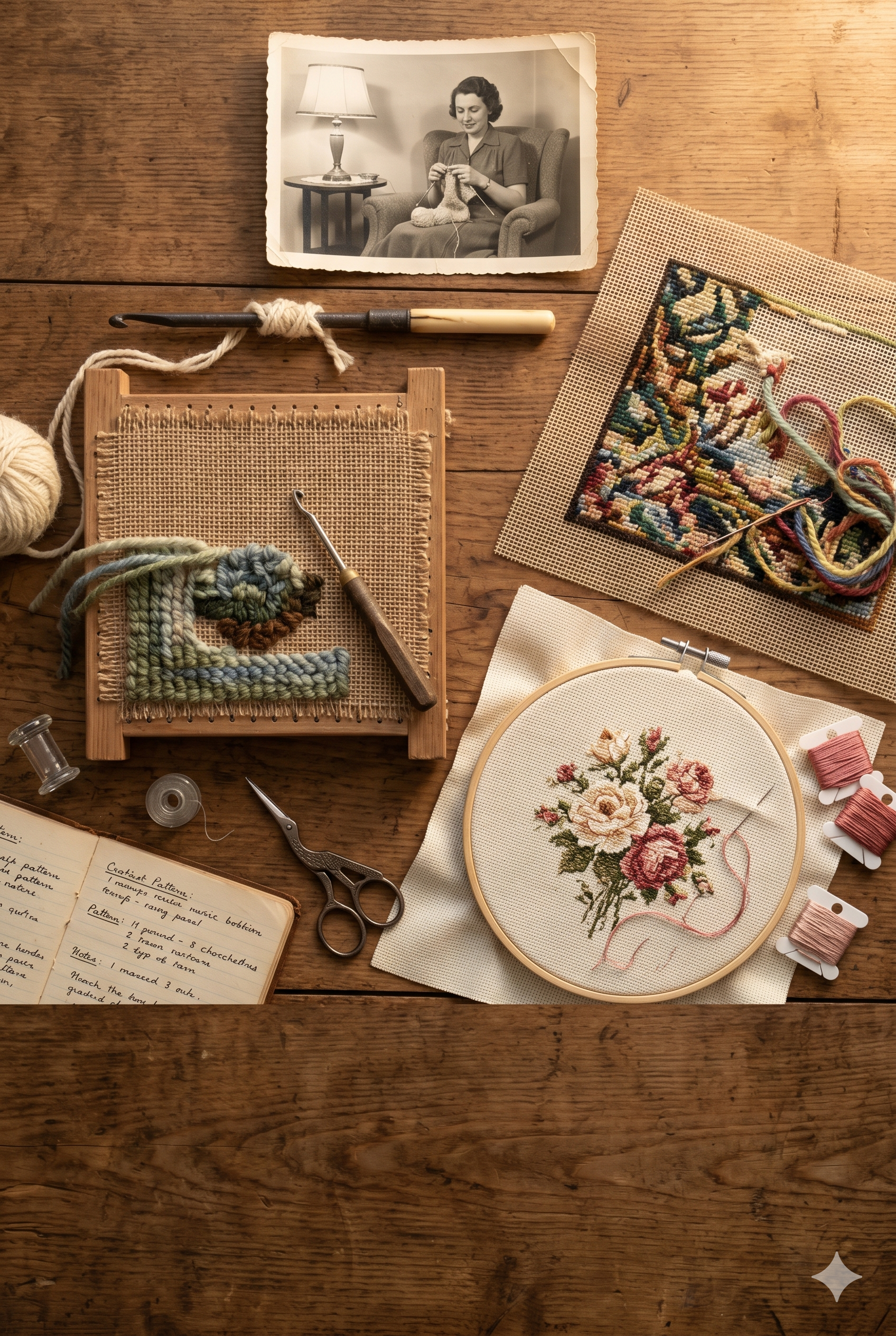
The path to cross stitch rarely goes in a straight line.
By Tracey Kramer • • 9 min read
Some people discover cross stitch the way you discover a great book — someone hands it to you at exactly the right moment. Others find it the way I did: by working through every other needlework craft first, getting absorbed in each one for a while, and then arriving at cross stitch almost by a process of elimination. When I finally got there, I understood almost immediately why it was the one that would stick.
I'm sharing my story here partly because people ask, and partly because I think it's useful. If you're someone who has tried other crafts and felt like none of them quite fit — too limited, too repetitive, too simple, or too complicated — I want you to understand why cross stitch might be the one that finally clicks for you. That's exactly what happened to me.
It Started With Knitting, at Age Eight
I learned to knit when I was eight years old. That's not an unusual story — plenty of women my generation had their first crafting experience with needles and yarn, usually at the hands of a mother, grandmother, or aunt who wanted to pass something along. Knitting was something I was capable of and patient enough to continue, but I wouldn't say it captured me. The rhythm of it was soothing, but the output felt limited. Scarves. Hats. Occasionally a sweater that never quite fit right.
What I remember most about learning to knit is the concentration it required in the early stages — counting rows, keeping tension consistent, not losing stitches off the needle. That same focused attention would turn out to be exactly what cross stitch rewards, but I wouldn't know that for years.
Knitting stayed with me as a background skill, something I returned to occasionally but never obsessed over. It was pleasant without being compelling. I was looking for something that would hold my attention more completely, and I didn't know what that was yet.
Crochet: More Flexible, Still Not It
Crochet came next, and I found it more satisfying than knitting in several ways. A single hook instead of two needles. More textural variety. More flexibility in construction — you can build in three dimensions with crochet in ways that knitting makes difficult. I made afghans, dishcloths, the occasional ornament. The portability of crochet was appealing — you can drop it in a bag and pick it up anywhere.
But crochet had the same fundamental limitation that knitting did for me: the finished work, while impressive by craft standards, didn't satisfy my desire for pictorial richness. I wanted to make things that looked like art — things that could be framed and hung on a wall and mistaken for something painted. Crochet, for all its virtuosity, doesn't do that. Its natural output is textural and three-dimensional, not pictorial and flat.
I stayed with crochet longer than knitting, but the restlessness was building.
Rug Hooking: A Different Kind of Art-Making
Rug hooking is the craft that most people outside the needlework world have no mental picture of — and it's genuinely beautiful. You work on a stiff canvas backing, pulling loops of cut wool strips through with a specialized hook to build up a dense, richly colored surface. Traditional rug hooking produces work that can legitimately hang on the wall as fine art; some of the best rug hooking you'll ever see is indistinguishable from textile paintings.
This was the closest I'd gotten to what I was looking for. Rug hooking had the pictorial quality I wanted. It could produce realistic landscapes and detailed figurative scenes. The wool colors, particularly when you worked with hand-dyed strips, were luminous in a way that synthetic yarn isn't. I was genuinely absorbed by it for a period.
The thing that ultimately moved me along from rug hooking wasn't the craft itself — it was the scale. Rug hooking is inherently large-scale work, and the finished pieces are, by definition, functional objects. A rug. A wall hanging of some weight and presence. That's wonderful, but what I kept wanting was something that could sit on a frame beside me in the evening, that I could carry to the living room or take on a trip, that existed on the scale of needlework rather than interior decoration. I needed something that fit my life more portably.
Needlepoint: Almost There
Needlepoint was the penultimate stop, and it came closer to everything I was looking for than anything before it. You work on canvas mesh with wool or silk thread, filling in a design with small angled stitches. The finished result has incredible textural richness and can reproduce pictorial subjects — landscapes, portraits, florals — with convincing realism. Many needlepoint canvases are hand-painted originals, and working one feels like you're collaborating with an artist.
I loved needlepoint. I still do. But cross stitch, when I finally arrived at it, had one quality that needlepoint couldn't match: reproducibility. Because cross stitch patterns are grid-based and universal — every stitch in the same size, every color mapped to a standard number system — a designer can chart virtually any image as a cross stitch pattern, and stitchers anywhere in the world can work the same design with confidence. The charted format creates clarity that hand-painted canvases don't have. And because the stitch itself is so consistent — every cross the same size, built on the same grid — the design work lives or dies on the quality of the color choices and the image selection, not the execution of exotic specialty stitches.
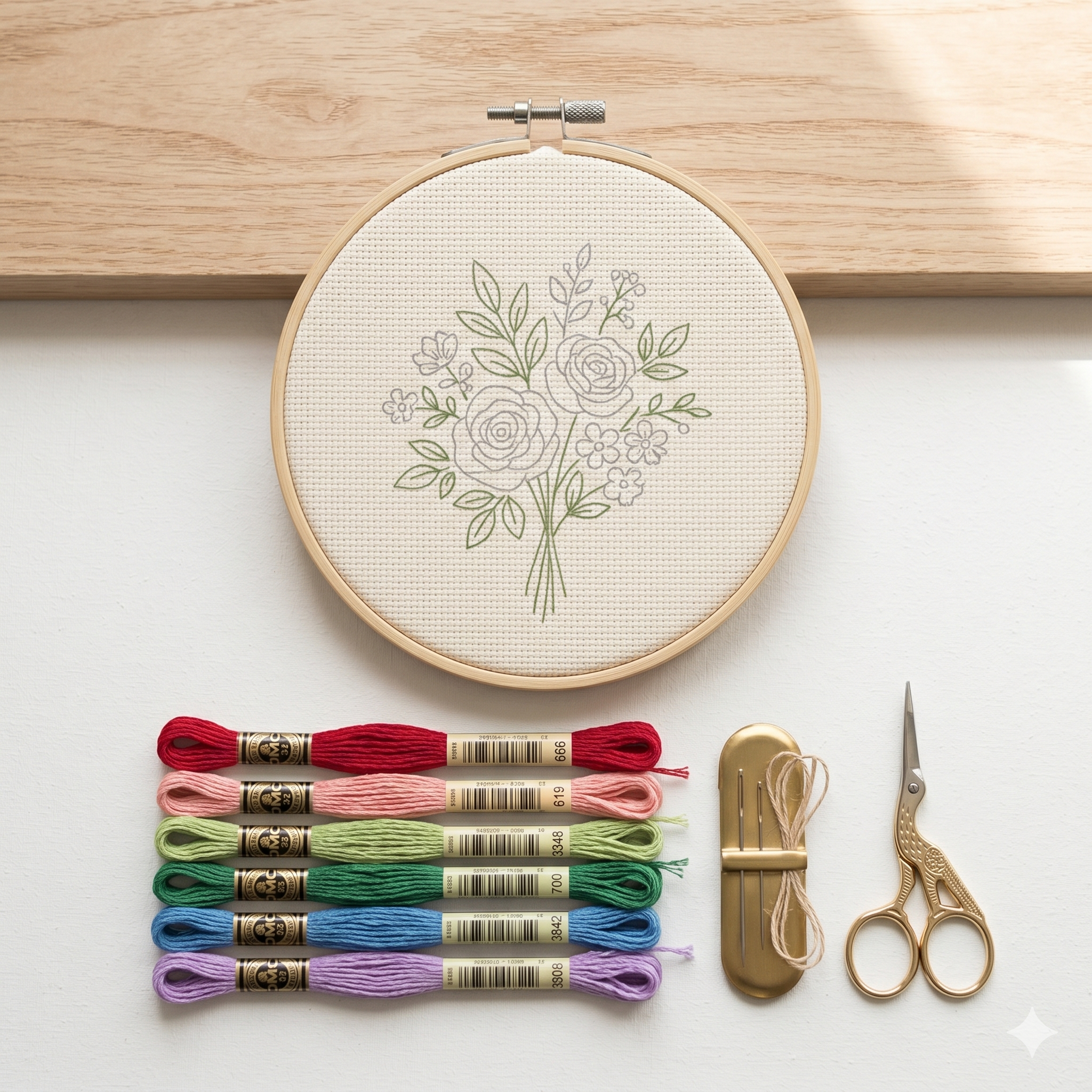
Ready to Start Your Own Journey?
Cross Stitch Starter Kit
If you've tried other crafts and never quite found your thing, a good starter kit gets you into cross stitch without a major commitment. Hoop, Aida cloth, needles, and basic DMC embroidery floss — everything you need to stitch your first 1,000 stitches and find out if it clicks for you.
See on Amazon"Every craft I'd worked through before cross stitch had something — but none of them had everything. Cross stitch was the one where the stitching rhythm, the visual ambition, and the portability all existed in the same place at the same time."
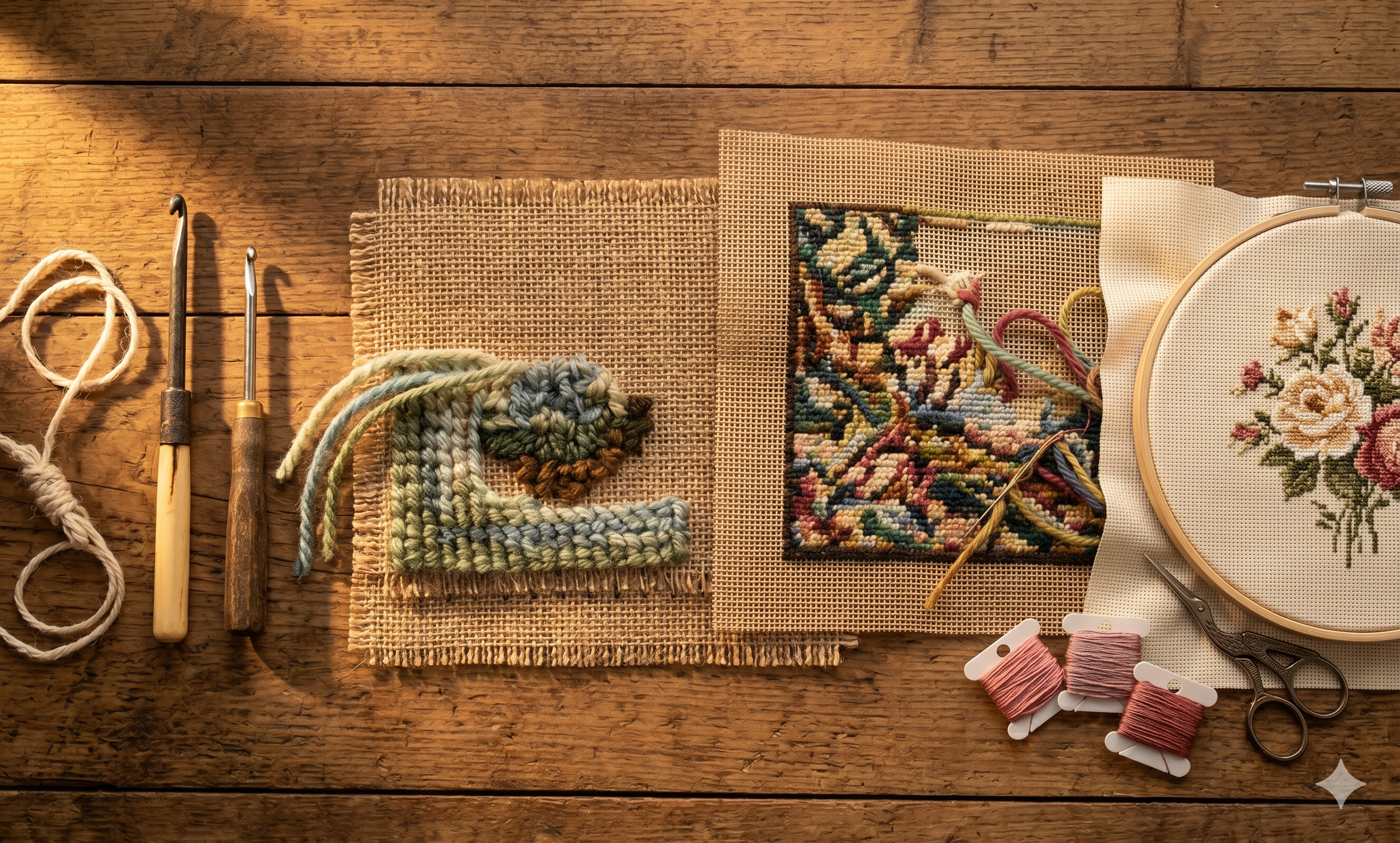
Every craft left me with skills — and cross stitch absorbed them all.
When Cross Stitch Finally Clicked
I came to cross stitch looking for a craft that could produce realistic, painterly images at a manageable scale — something I could pick up in the evening, carry with me, and put down without losing my place. I found all of that in cross stitch, and then I found something I hadn't expected: the meditative quality of the grid.
Cross stitch is, at its core, a counting craft. Every stitch occupies a specific square in a precise grid, and the act of counting, placing, and completing each stitch has a satisfying regularity to it. There's no improvisation — you either counted correctly or you didn't, and the feedback is immediate and unambiguous. For a person whose mind tends to run fast, that constrained clarity is genuinely restful. You can't multitask while counting cross stitches. The work demands just enough attention to quiet everything else.
I also found that the path from knitting through crochet through rug hooking through needlepoint had given me something useful: I understood thread, tension, fabric, color, and design at a level that most beginners don't have. Every craft I'd worked in before had built a piece of the foundation I needed to approach cross stitch with confidence. Nothing I'd learned was wasted. It had all been leading here, whether I'd known it or not.
From Stitcher to Designer: The Charles White Years
I stitched for years before I designed. Designing happened the way most things do in craft — gradually, and then suddenly. I worked my way through commercially available patterns, noticed what I liked and disliked in how they were charted, and started to understand the relationship between a source image and the cross stitch translation of it.
The series I'm perhaps best known for among serious stitchers is our Charles White series — figurative work based on the pastoral illustrations of the English artist Charles White. Working in that particular visual style taught me how to handle detailed figurative charting: how to simplify a complex image into a grid without losing its essential character, how to choose colors that maintain the luminosity of the original, how to size a pattern so the stitch count is achievable without losing detail.
That design sensibility — realistic, mature, richly colored, clearly charted — became the standard I still apply today. Every Sunrays pattern that leaves the studio reflects those same criteria.
Why the Journey Through Other Crafts Makes You a Better Cross Stitcher
If you've come to cross stitch from another needlework tradition — knitting, crochet, embroidery, needlepoint — you bring more than you realize. Experience with yarn and thread teaches you how to manage tension and separate strands. Embroidery experience gives you comfort with needles and fabric. Crochet's pattern-reading skills translate directly to working from a cross stitch chart. Needlepoint's familiarity with pictorial design and canvas grids is directly applicable.
None of it is wasted. The breadth of your needlework background is an asset in cross stitch, not a distraction from it. Cross stitch rewards the kind of patient, detail-oriented approach that every needlework craft develops.
And if this is your first needlework craft, that's fine too. Cross stitch is as good a place to start as any — the stitch itself is simple enough to learn in an afternoon, and the ceiling of what the craft can produce is as high as any other needlework tradition. You'll have everything you need within your first few hours at the frame, and you'll spend the rest of your stitching life discovering how far those fundamentals can take you.
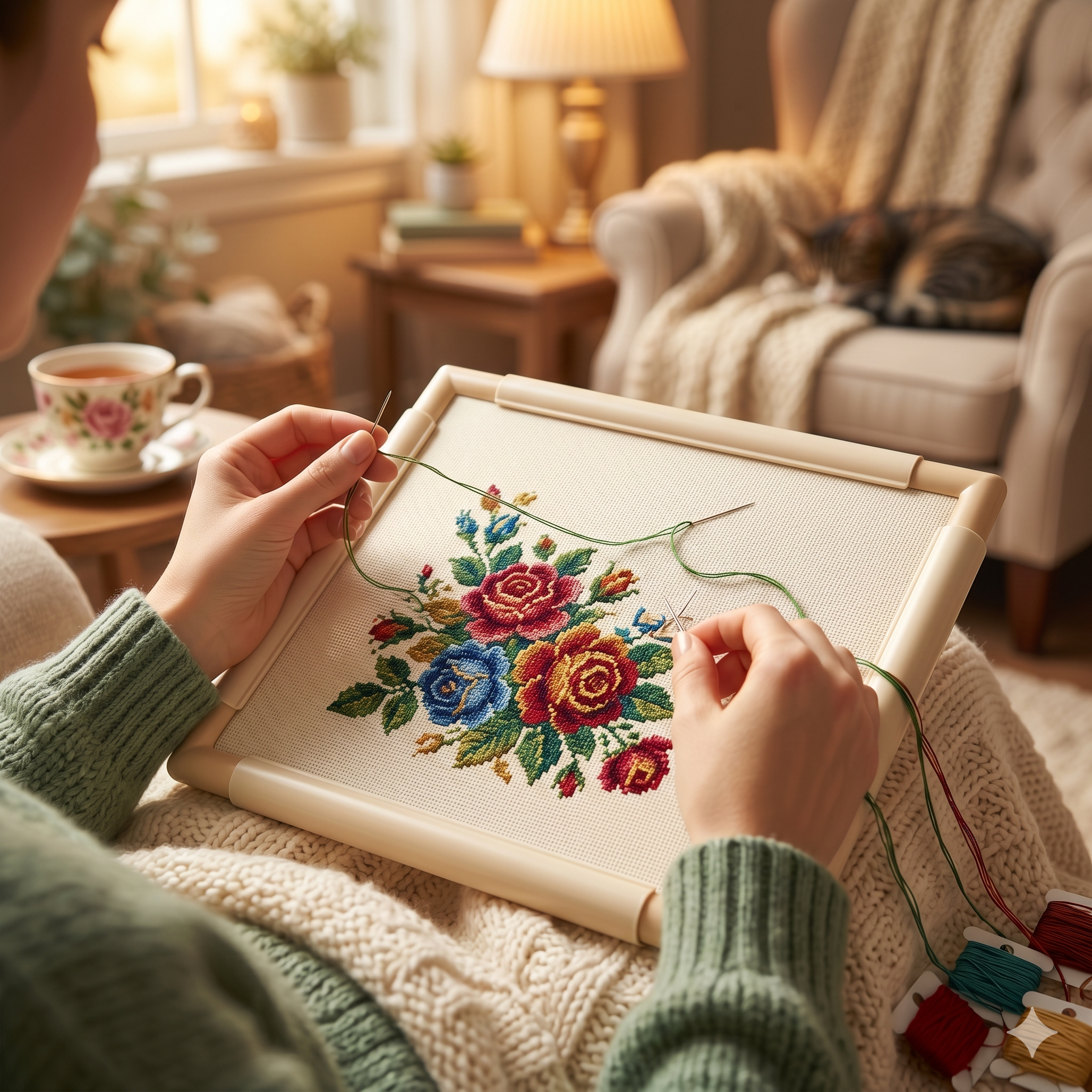
Worth the Upgrade
Lap Frame or Q-Snap Frame for Hands-Free Stitching
One of the upgrades that changed my stitching most significantly was moving from a hand-held hoop to a lap frame. Both hands free, consistent tension, and your arms don't tire after an hour. If you're planning to stitch a large or complex design, a lap frame is worth every penny.
See on AmazonJoin Tracey's Stitching List
New designs, stitching stories, and occasional VIP-only offers. From our Marysville studio to your inbox.
No spam. Unsubscribe any time.
What Twenty-Plus Years of Designing Has Taught Me
I've been designing and selling cross stitch patterns since 2004. Over those two decades I've watched the cross stitch world change in ways I didn't predict and stay the same in ways I could have predicted exactly. The patterns that sell in 2026 are different from the ones that sold in 2004. Social media has changed how stitchers find patterns and how they share their work. The online community has grown dramatically and brought younger stitchers into the craft in ways that older venues like guilds and shops never quite managed.
But the things that make a stitcher keep stitching are the same as they've always been. The rhythm. The color. The patience rewarded. The specific pleasure of watching a design emerge stitch by stitch from a blank piece of fabric. The pride in a finished piece that belongs on a wall. None of that changes with the medium, and none of it has changed in the twenty years I've been doing this.
What I design today reflects everything I learned in the crafts that came before cross stitch — the appreciation for wool's color depth from rug hooking, the figurative sensibility from needlepoint, the patience for long-haul projects from years of stitching before designing. It all ended up in the same place. That's what I mean when I say it's in the blood.
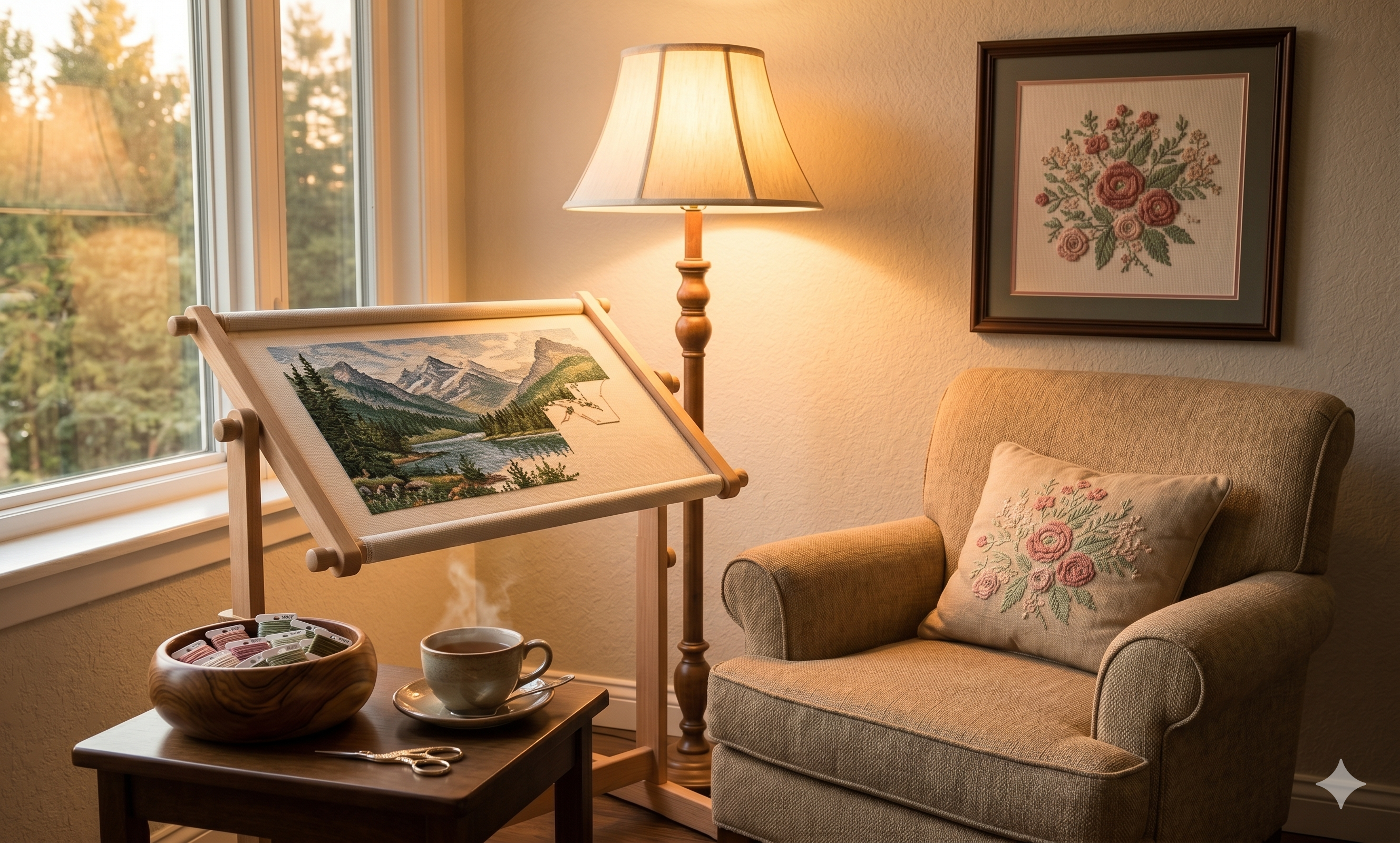
Twenty years later, the evening stitching sessions still feel the same as they always did.
If you want to see what two decades of designing looks like in practice, explore our Charles White collection or browse the Owner's Choice selection — the patterns Tracey would personally pick up first.
Keep Reading
What Do You Need to Cross Stitch? The Complete Beginner's Supply List
If this is your first time, here's the honest supply list — from the four absolute essentials to the lighting and organizational upgrades that change the experience entirely.
READ THE GUIDEThe Types of Cross Stitch Patterns I Prefer (and Ones I Avoid)
Two decades of stitching have given Tracey strong opinions about what makes a pattern worth 200 hours — and what makes her put it back on the shelf. Here's the honest version.
READ THE ARTICLE7 Reasons to Buy Your Cross Stitch Patterns from Sunrays Creations
What you're getting when you buy from an independent designer, and why it matters for the quality of your finished work.
READ THE ARTICLEFrequently Asked Questions
Is cross stitch easy to learn if you've never done needlework before?
Yes — the basic cross stitch is one of the simplest embroidery stitches in existence. You can learn the mechanics in an afternoon and be producing recognizable stitching within your first hour. The learning curve after that is mostly about patience, organization, and developing good habits around counting and tension.
If I've tried other crafts and not stuck with them, will cross stitch be different?
It depends on what you're looking for. If your restlessness in other crafts came from wanting more pictorial richness, more visual complexity, or a longer-term project that holds your interest, cross stitch addresses all of those. If your issue was finding crafts too time-consuming or detail-oriented, cross stitch may share those same friction points — it rewards patience and precision.
What is the difference between cross stitch and needlepoint?
Both are counted canvas needlework, but they work on different fabrics with different threads. Needlepoint uses canvas mesh with wool or silk, and the stitches can vary (tent stitch, basketweave, various decorative stitches). Cross stitch uses Aida cloth or evenweave linen with embroidery floss, and the primary stitch is the consistent X-shaped cross. Needlepoint canvases are often hand-painted; cross stitch patterns are charted on a grid. Both can produce stunning pictorial results.
How long does it take to complete a large cross stitch piece?
A large, detailed piece — say 30,000 or more stitches — can take anywhere from several months to a year or more of regular stitching. An experienced stitcher working an hour or two in the evening can produce roughly 500–800 stitches per session. The timeline varies enormously by project size, stitch count, and how consistently you work. The reward at the end is proportional.
What is the Charles White series from Sunrays Creations?
The Charles White series is a collection of Sunrays Creations cross stitch patterns based on the pastoral and figurative work of the English illustrator Charles White. The series features richly detailed figurative scenes — cottages, country lanes, gardens, domestic interiors — charted in Tracey's signature large-grid, high-color style. It's among the most popular series in the Sunrays catalog.
— Tracey Kramer
Founder & Designer, Sunrays Creations Needlearts
Hand-charted designs since 2004 • Marysville, Ohio