
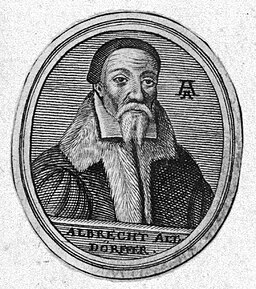
Albrecht Altdorfer (ca. 1480–1538) was a titan of the German Renaissance and the guiding spirit behind the Danube School. Born in Bavaria, he was likely trained by his father, Ulrich Altdorfer, a painter and miniaturist—a background that clearly influenced the exquisite, intricate detail found even in his largest works. Altdorfer rose to immense civic prominence in Regensburg, serving as the city’s official architect and a town councillor. His talent earned him the patronage of the highest order, including Holy Roman Emperor Maximilian I and Duke William IV of Bavaria, for whom he painted his towering masterpiece, "The Battle of Alexander at Issus". He is historically significant as the first Western artist since antiquity to paint "pure" landscapes—scenes entirely devoid of human figures, such as his famous "Landscape with a Footbridge". Altdorfer's style is defined by a poetic, almost mystical treatment of nature, featuring glowing sunset lighting, dense forests, and dramatic, saturated colors that verge on the expressionistic. Translating an Altdorfer piece into a counted cross stitch design allows you to explore these rich, atmospheric horizons and calligraphic foliage. Each stitch captures the pioneering spirit of the Renaissance, inviting you to recreate the wild, legendary forests of the Danube valley with timeless artistry and emotional depth.