
Black Aida Cloth: How to Cross Stitch on Dark Fabric
Posted by Tracey M. Kramer on 18th Jul 2019
A Note from Tracey Kramer
Stitching on dark Aida cloth is one of those things that intimidates beginners but becomes completely natural once you understand the adjustments it requires. The finished pieces are among the most dramatic and beautiful in needlework. Here's everything I've learned about making dark cloth work.
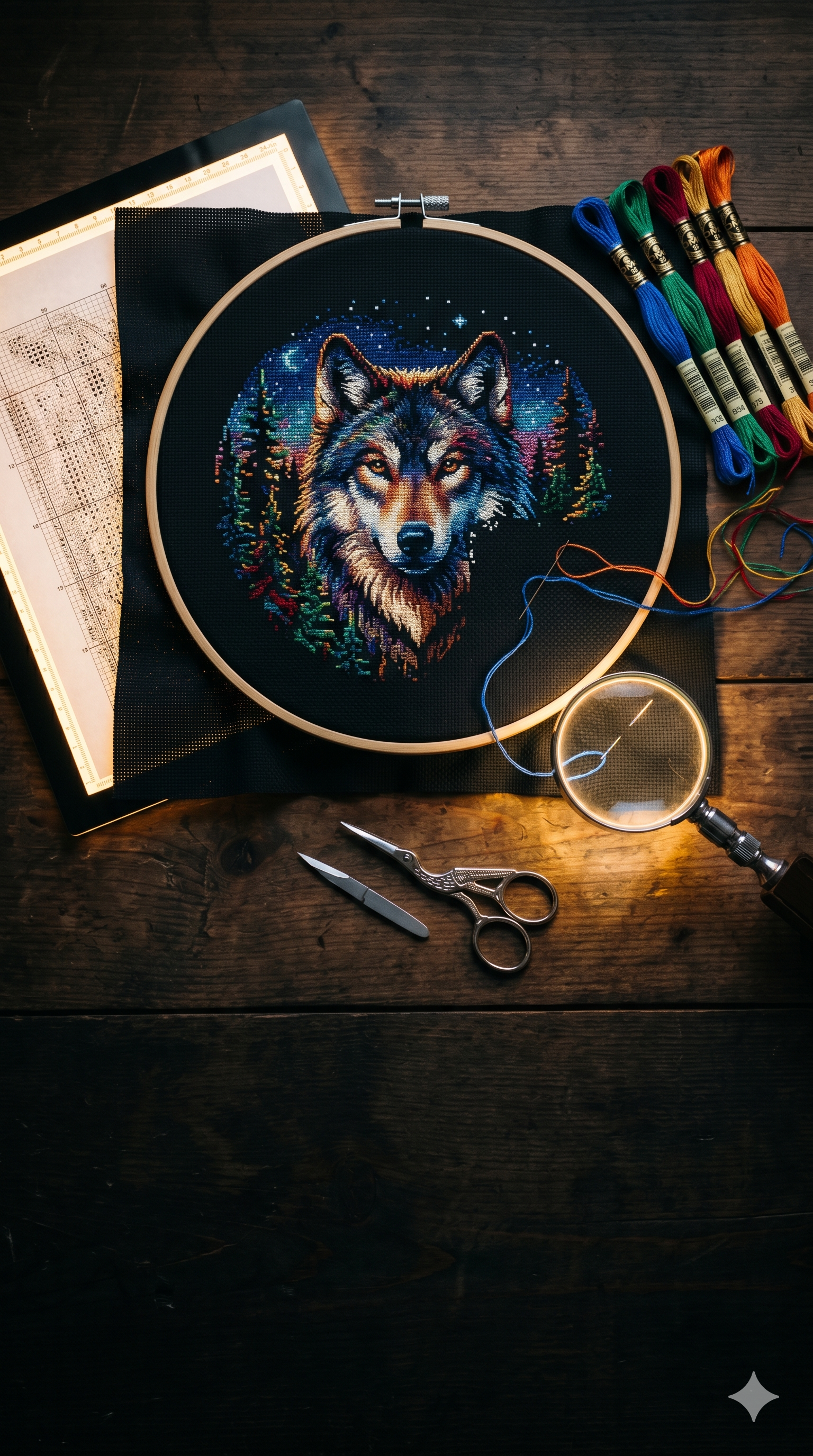
Vivid colors against dark fabric produce some of the most striking finished pieces in cross stitch.
By Tracey Kramer • • 10 min read
When most people picture cross stitch, they picture light-colored Aida cloth — cream or white — with colorful thread stitched across it. That's the default, the beginner-friendly starting point, and there's nothing wrong with it. But if you've never stitched on dark fabric, you're missing one of the most visually dramatic effects in the entire craft.
Vivid jewel tones against black Aida. Soft florals against deep navy. Silver and white thread against charcoal. Dark fabric backgrounds make colors sing in a way that cream or white fabric simply can't — the contrast amplifies every color placed against it. The result is a finished piece that looks luminous, almost as if it's lit from within.
The catch is that stitching on dark fabric requires a few specific adjustments. The holes are harder to see. The chart is harder to read by lamplight if the chart itself uses a dark background for the dark fabric areas. Dark thread on dark fabric disappears entirely until it's positioned against lighter areas. None of these challenges are difficult to solve, but they all require some preparation and the right tools.
Here is everything I know about stitching on dark Aida cloth — what makes it challenging, what tools help, and how to adjust your technique to make it as enjoyable as stitching on the lighter fabrics you're used to.
Why Dark Aida Cloth Produces Such Striking Finished Pieces
The visual principle at work is simple: contrast makes colors more vivid. When you place a rich red DMC stitch on cream Aida, it looks beautiful. When you place the same stitch on black Aida, it looks almost electric — the contrast between the thread color and the background is dramatically higher, and your eye reads the color as more saturated and intense.
This effect works especially well for certain subject categories: wildlife (a wolf, an eagle, a tiger — animals whose subjects benefit from drama), nocturnal or winter scenes, jewel-toned florals, fine art reproductions with rich dark backgrounds, and any pattern where the designer intended a gallery-quality, high-impact finished piece.
The Black Collection at Sunrays Creations was designed specifically for this effect — patterns charted with dark Aida in mind, where the black background is an integral part of the composition rather than just a surface to stitch on. If you've never seen one of these finished, find a few examples before you dismiss dark cloth work. The impact is genuinely different from anything produced on light fabric.
The Core Challenge: Finding the Holes
On 14-count white or cream Aida, finding the hole for your needle is effortless — the grid is clearly visible against the light background of the fabric. On 14-count black Aida, the grid holes are still there, but they're surrounded by dark thread rather than light thread. In standard lamplight, they can be genuinely difficult to see.
This is the central challenge of dark cloth stitching, and it's solved by two things in combination: better lighting and a lightpad underneath the fabric.
The lighting component is the same principle that applies to all cross stitch — a bright daylight-balanced lamp positioned to illuminate the fabric from above. But for dark cloth, the light needs to be brighter and more directional than you'd need for light fabric. What was adequate for cream Aida may not be adequate for black. Consider stepping up to a brighter lamp or positioning your existing lamp closer to the work surface.
The lightpad (or light box) is the more significant solution. A thin LED lightpad placed beneath your fabric — between the fabric and your frame or lap — shines light through the Aida weave from below, making the holes dramatically more visible by backlighting the fabric. The holes appear as small bright spots against the dark fabric, and finding them becomes as easy as stitching on light-colored cloth. A good slim LED lightpad (find on Amazon) is the single most useful tool for dark cloth stitching, and it also functions as a tracing and pattern transfer surface for other needlework applications.
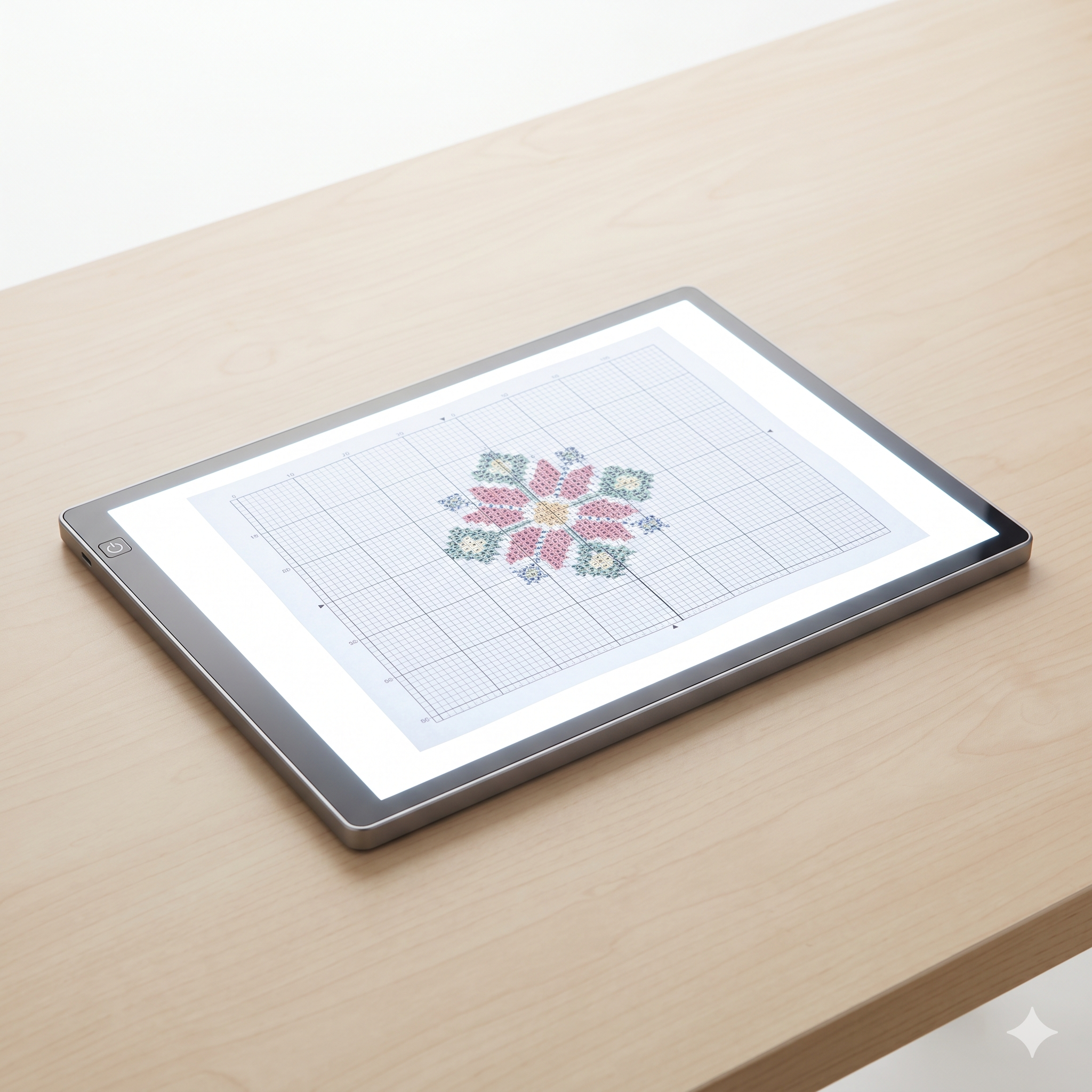
The Essential Dark Cloth Tool
Slim LED Lightpad for Cross Stitch
Placed beneath dark Aida cloth, a slim LED lightpad backlights the fabric and makes the grid holes instantly visible — transforming dark cloth stitching from a frustrating squinting exercise into something as easy as working on cream Aida. Also useful for tracing and pattern transfer. Essential for anyone serious about The Black Collection.
See on Amazon"A lightpad beneath dark Aida is the difference between squinting and stitching. Once you've tried it, you'll wonder how anyone does dark cloth work without one."
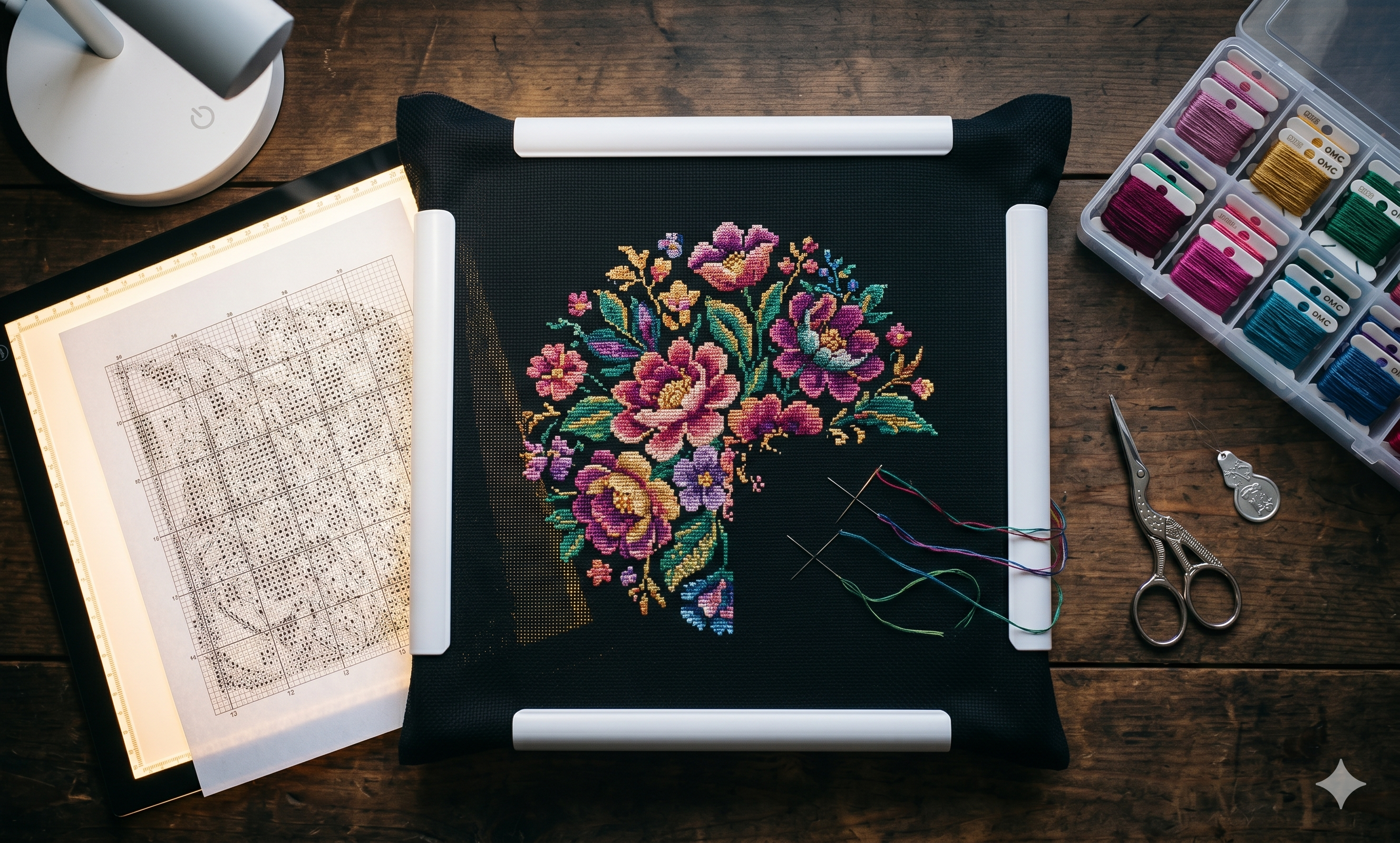
The right setup makes dark cloth stitching as manageable as any other project.
Magnification: Even More Important on Dark Fabric
On light Aida, magnification is a convenience for many stitchers — helpful but not essential for 14-count work. On dark Aida, a good magnifier moves from "nice to have" to "nearly essential."
The same contrast issue that makes holes hard to find also makes counted work harder to verify. When you're working a complex design with many colors in close proximity, you need to be confident that you've placed stitches in the right holes — and on dark fabric, that confirmation is harder to get with the naked eye at typical stitching distances.
A lighted magnifier — either a clip-on model for your hoop or a floor stand model that positions over your frame — solves both the visibility problem and the counting confidence problem simultaneously. The LED ring light illuminates the fabric from a close, direct angle that cuts through the dark cloth's camouflage effect, and the magnification makes hole placement confirmation effortless. Serious dark cloth stitchers consider this a non-negotiable tool.
Thread Management on Dark Cloth: Watch Your Dark Colors
On cream or white Aida, thread color management is relatively forgiving — most colors stand out clearly against the light background, and counting mistakes are easy to spot. On dark Aida, dark-colored threads — very dark navy, black, deep brown — can disappear almost entirely against the fabric, making miscounts extremely hard to catch until they're far enough along to create obvious pattern errors.
A few habits that help:
- → Work lighter colors first. In areas where both light and dark colors will appear, stitch the lighter colors first. They establish visible reference points that make placement of adjacent dark stitches easier to verify.
- → Use a lightpad continuously, not just to start. Keep the lightpad under your fabric throughout the project — not just when you're beginning a section. The consistent backlighting gives you a reference for hole visibility whenever you need it.
- → Count from a known anchor point every time. Rather than counting from the last stitch placed (which may be hard to see), develop the habit of counting from a visible anchor — a completed section of light-colored stitching, or the marked center of the fabric.
- → Mark your fabric center clearly. Use a water-erasable fabric marker to mark the center of your dark cloth before you begin. Finding center on dark fabric without a visible mark is much harder than on light fabric, and losing your orientation on a complex design is a very expensive mistake.
- → Check your count more often. On light Aida you might verify count every few stitches. On dark Aida, verify more frequently — especially in sections where the thread color is similar to the fabric. The lightpad makes this fast enough that it doesn't slow you down significantly.
Choosing Your Dark Aida Color
Dark Aida comes in black, very dark navy, charcoal, and dark grey, among other colors. The choice matters more than you might expect.
Black Aida provides the highest possible contrast for vivid colors — the effect is most dramatic on pure black. It's also the most demanding for visibility during stitching, since the grid holes are completely invisible without backlighting. Best suited for designs where the dramatic impact of the finished piece justifies the extra care required during stitching.
Dark Navy or Dark Grey Aida provides slightly more visibility of the fabric grid than pure black, making hole-finding marginally easier. The color contrast of finished stitching is still strong and dramatic. A good choice for stitchers new to dark cloth who want to experience the effect with slightly easier working conditions.
For your first dark cloth project, consider dark navy or dark grey rather than pure black. You'll still experience the dramatic color contrast of dark cloth work, with slightly more forgiving working conditions. Once the technique feels natural, move to black for maximum impact.
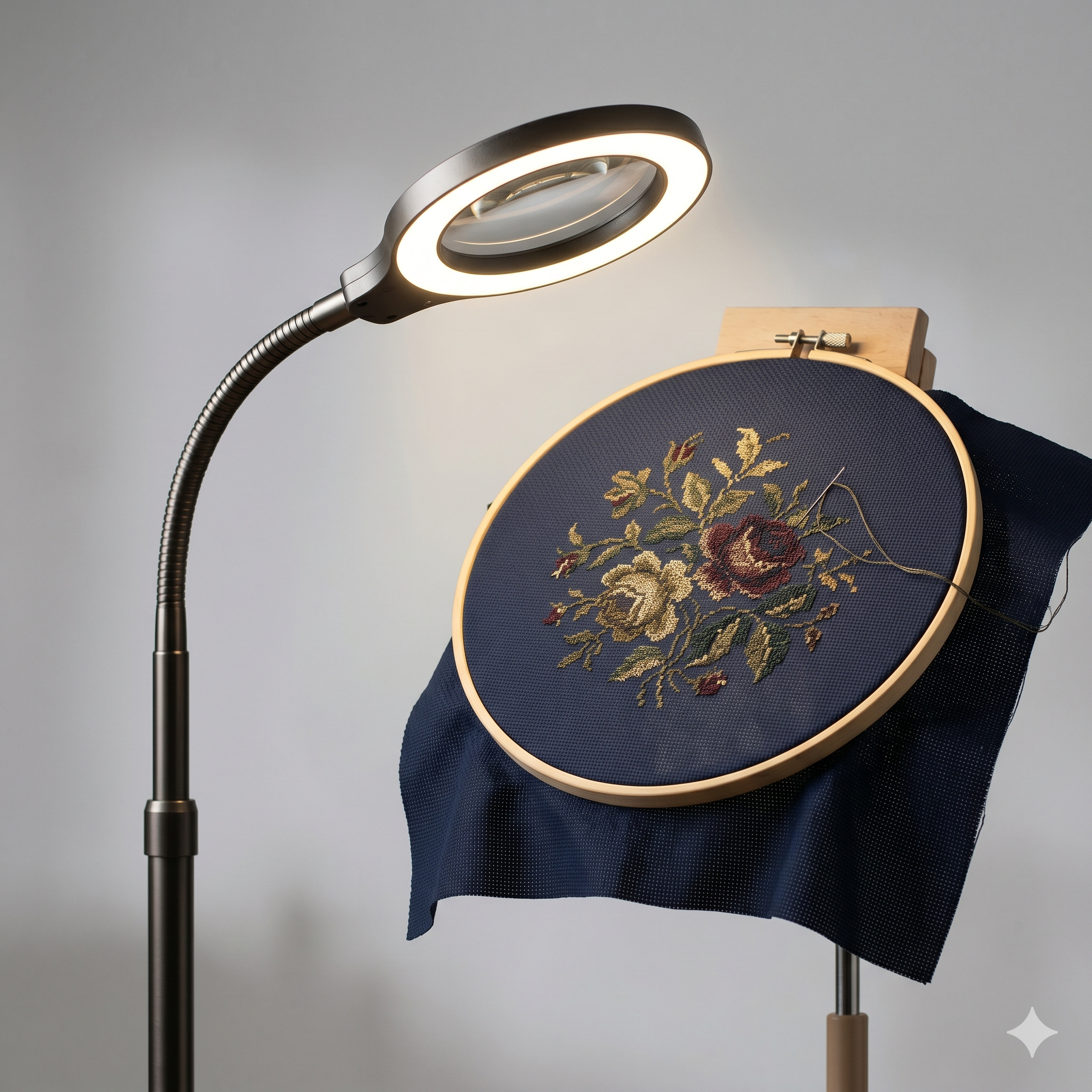
For Serious Dark Cloth Work
Lighted Floor Magnifier Stand
On dark Aida, a lighted floor magnifier stand moves from "nice to have" to "nearly essential." The LED ring light cuts through the dark fabric's camouflage effect, the magnification makes hole placement effortless, and both your hands stay free to stitch. Use it alongside the lightpad for maximum dark cloth visibility.
See on AmazonGet Dark Collection Updates from Tracey
New Black Collection designs, technique tips, and VIP-only offers — straight from our Marysville studio.
No spam. Unsubscribe any time.
Finishing Dark Cloth Work: Frame It Right
Dark Aida finished pieces have specific framing considerations. The drama of the dark background is maximized by framing choices that complement it — dark wood frames, black frames, or dark metal frames all work beautifully. Avoid white or very light-colored mats, which can visually disconnect the dark fabric from its surroundings. A narrow dark or gold mat, if any, keeps the eye on the stitching rather than drawing it away.
Dark Aida can be prone to showing finger oils and handling marks more clearly than light fabric, so handle the finished piece by the edges and consider wearing thin cotton gloves if you're doing extensive handling before framing. Washing finished dark cloth pieces — the standard practice for finishing light cloth work — should be done carefully. Test a small scrap first to ensure colorfastness, and never wring or twist dark Aida, as this can stretch and distort the grid.
Once framed properly, a dark Aida piece is something genuinely striking. The finished work has a presence on a wall that light-background pieces rarely match — the colors glow, the subjects seem to emerge from the background, and the whole composition reads as something between a textile and a painting. It's one of the best effects in cross stitch, and it's entirely accessible once you have the right tools and techniques in place.
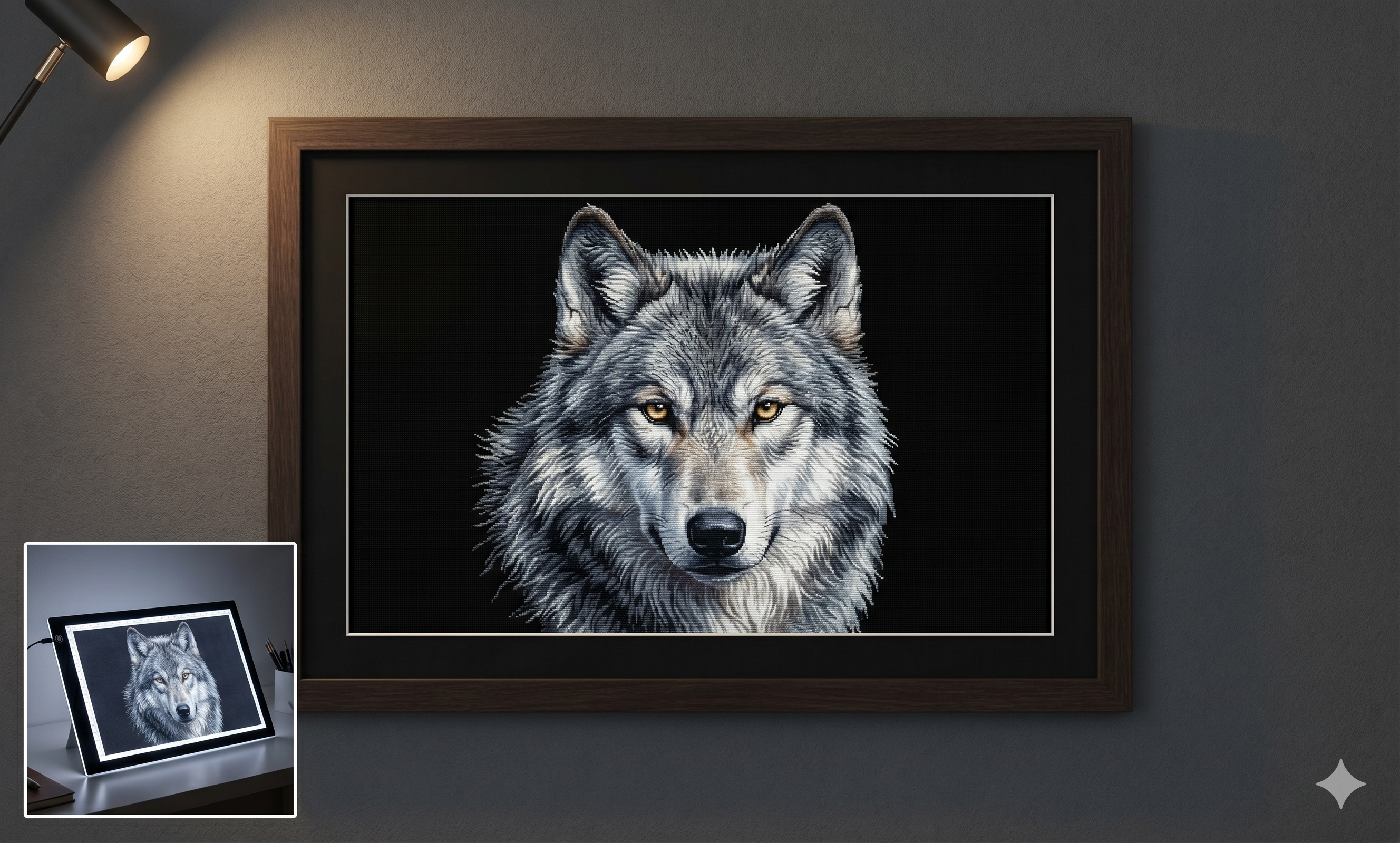
The finished result — colors that seem to glow against the dark background.
Ready to try your first dark cloth project? Browse our Black Collection — patterns designed specifically for dark Aida, with color palettes chosen to maximize the drama of the dark background.
Keep Reading
What Do You Need to Cross Stitch? The Complete Beginner's Supply List
The full supply list — including the lighting, magnification, and framing tools that matter most for all cross stitch work, dark fabric or light.
READ THE GUIDEThe Types of Cross Stitch Patterns I Prefer (and Ones I Avoid)
Tracey's honest take on pattern quality — including why dramatic, realistic subjects on dark backgrounds are some of the most satisfying work she does.
READ THE ARTICLECross Stitch FAQs: Everything Beginners Need to Know
What is cross stitch, how does it differ from embroidery, and what do you need to get started? Honest answers to the questions every beginner asks.
READ THE ARTICLEFrequently Asked Questions
How do you find the holes in dark Aida cloth?
The most effective method is a slim LED lightpad placed beneath the fabric. The backlighting makes the grid holes visible as small bright spots against the dark fabric, which transforms hole-finding from a frustrating squinting exercise into something as straightforward as stitching on light-colored Aida. A bright, direct-angled daylight lamp from above also helps significantly.
What is the best Aida cloth color to start with for dark background stitching?
Dark navy or dark charcoal grey for a first dark cloth project. These provide slightly more hole visibility than pure black while still producing dramatic color contrast in the finished piece. Once the technique feels natural, pure black Aida gives the maximum visual impact.
Do you need special thread for dark Aida cloth?
No — standard DMC embroidery floss works exactly as it does on light fabric. The main consideration is color selection: bold, high-saturation colors perform best against dark backgrounds. Muted or pastel colors lose much of their visual impact against black or dark navy. Metallics (DMC Light Effects range) are particularly striking on dark fabric.
Can you wash dark Aida cloth after finishing?
Yes, but with care. Test a scrap for colorfastness first — some dark-dyed Aida will bleed slightly when wet. Wash in cool water with a gentle detergent, rinse thoroughly, and roll in a clean towel to remove excess water. Never wring or twist. Iron from the back on a padded surface while still slightly damp.
What is the Sunrays Black Collection?
The Black Collection is a series of Sunrays Creations cross stitch patterns designed specifically for dark Aida cloth. The subjects — wildlife, dramatic florals, nocturnal and winter scenes — are chosen to maximize the visual impact of the dark background. Color palettes are calibrated for high-contrast, luminous results on black fabric.
— Tracey Kramer
Founder & Designer, Sunrays Creations Needlearts
Hand-charted designs since 2004 • Marysville, Ohio