
Is Cross Stitch Still Popular? It's Not Dying—It's Booming
Posted by Tracey M. Kramer on 21st Sep 2016
A Note from Tracey Kramer
I've been stitching for over thirty years, and I can tell you with complete confidence: this craft is not going anywhere. If anything, it's just getting started again.
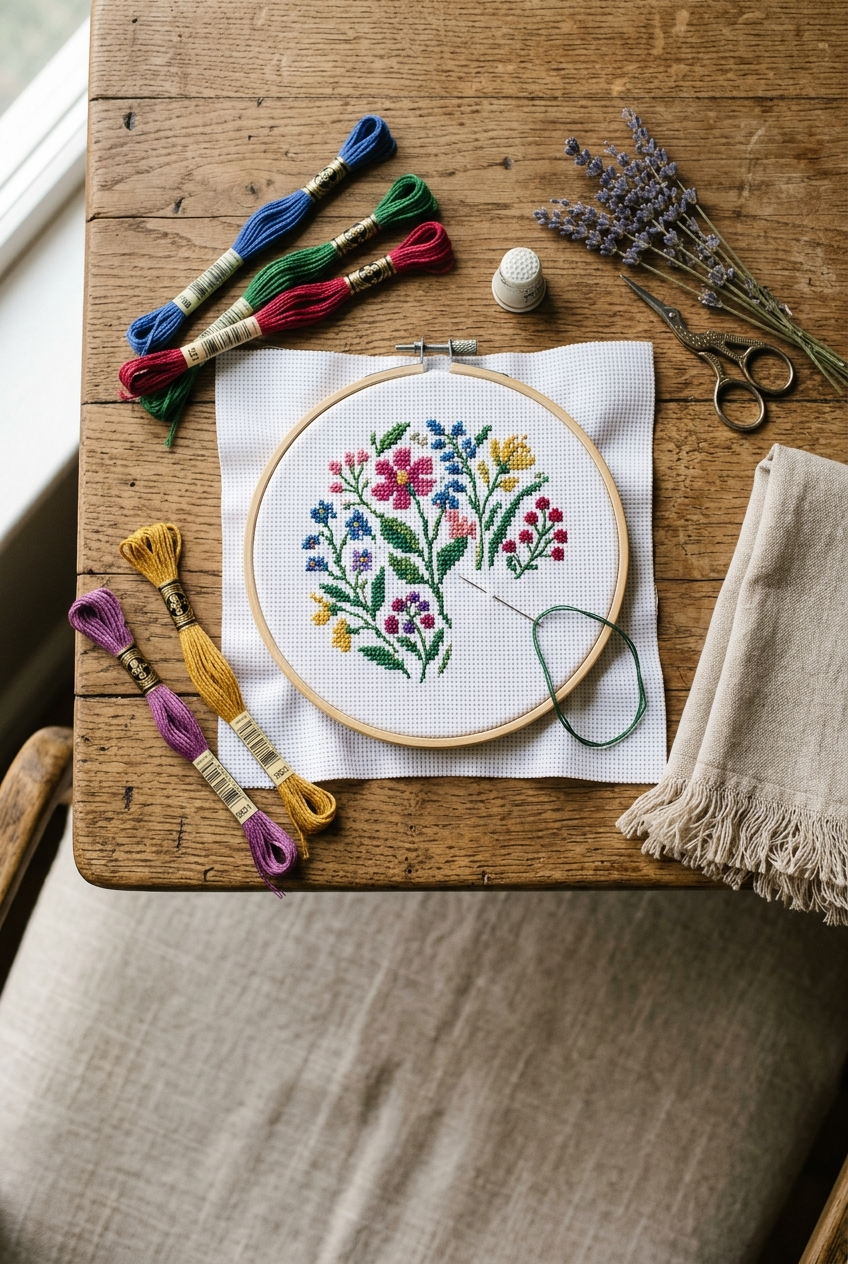
Colorful botanical cross stitch in wooden hoop surrounded by embroidery floss skeins on linen
By Tracey Kramer • • 12 min read
Someone asked me recently, 'Is cross stitch still popular?' And I almost laughed — not at them, but at the gap between what people assume and what I actually see happening every single day in this craft community. Let me tell you something: cross stitch is not a dying art. It is not fading into the past with lace doilies and butter churns. It is alive, it is loud, and right now it is having what I can only describe as a genuine cultural moment. The kind where people who never once picked up a needle are suddenly ordering kits, watching tutorials, and building entire online communities around a pastime that the skeptics have been calling 'old-fashioned' for the last two decades.
I opened Sunrays Creations back in 2004, and I have watched this market change shape more times than I can count. I remember when the big box craft stores — your Michaels, your Hobby Lobby — used to carry walls of cross stitch patterns. Then those displays got smaller. Then a lot of them went away entirely. And I know what some of you thought when that happened: you thought the craft was dying. I understand that impulse. When something disappears from the shelf in front of you, it feels like a loss. But here is the truth that most people missed entirely: those shelves didn't clear because demand dried up. They cleared because the market moved online, and when it moved online, it absolutely exploded. What looked like a retreat was actually a migration — and the new territory is enormous.
So whether you are someone who is thinking about picking up cross stitch for the first time and just needs a little permission, or a lapsed stitcher who set her hoop down five years ago and wonders if there is still a community waiting, or maybe someone who has been told this is an 'old lady hobby' and wants proof that it is not — I am talking directly to you today. Because you deserve the honest answer, and the honest answer is: this craft is not just surviving. It is thriving in ways that would genuinely surprise you.
Why the Empty Craft Store Shelf Is Actually Good News
Let's start with the thing that trips people up most: the disappearing retail display. I hear it constantly. 'Tracey, I went to the craft store and there was almost nothing. Is cross stitch dying?' No. What you are witnessing is not a funeral — it is a relocation. The internet changed how specialty crafts are bought and sold in exactly the same way it changed how people buy books, music, and shoes. The craft stores that remain are generalists trying to serve every hobby at once. They cannot afford the floor space for deep cross stitch inventory when they also need to stock resin molds, Cricut supplies, and forty types of yarn. It is a retail reality, not a reflection of demand.
The demand went somewhere, and that somewhere is online. If you sit down at your computer and type 'cross stitch' into Google right now, you will get tens of millions of results. When I checked not long ago, it was over 27 million entries in under a second. Etsy alone has hundreds of thousands of cross stitch pattern listings, and sales have grown year over year. Pattern designers — myself included — have built entire shops, communities, and livelihoods on the internet serving stitchers who know exactly what they want and know how to find it. The market did not shrink. It got more focused, more accessible, and frankly more exciting.
My shop at Sunrays Creations is one small example of what has happened across the industry. I design original counted cross stitch patterns — animals, botanicals, holiday pieces, Victorian portraits — all hand-charted, all available digitally or as printed charts. I do not need a shelf at a big box store to reach my customers. I need a good pattern, a website, and a community that trusts what I do. That is the new landscape of cross stitch, and it is healthier than the old one in a lot of ways. The barriers to finding exactly the right pattern, from a designer whose style speaks to you, have never been lower.
So the next time someone tells you cross stitch is dying because they couldn't find anything at the mall, gently redirect them. Tell them to look online. Tell them to search Etsy, Pinterest, Instagram, and yes — TikTok. What they will find is a thriving, multi-generational community of stitchers who are absolutely not putting their needles down.
Is Cross Stitch a Dying Art? Ask the Gen Z Stitchers on TikTok
If you want the single clearest evidence that cross stitch is not a dying art, spend about fifteen minutes on TikTok under the hashtag #crossstitch. What you will find is not what you expected. You will find young women in their early twenties pulling thread through Aida cloth on camera and getting hundreds of thousands of views. You will find millennials documenting entire project progress videos, from first stitch to finished frame. You will find complete beginners asking questions, experienced stitchers answering them, and a warmth and generosity of community that honestly makes my heart glad every single time I see it.
The generational shift in who is picking up this craft is real and it is significant. Cross stitch used to carry a certain stereotype — and look, I am not going to pretend that stereotype did not exist. But that image has been quietly and thoroughly dismantled over the last several years. What drove it? Partly the pandemic, when millions of people suddenly had time at home and needed something to do with their hands that wasn't another screen. Partly a broader cultural movement toward slow living, intentional making, and the kind of tactile satisfaction that a phone simply cannot provide. And partly just the natural cycle of trends — what one generation sets aside, the next generation discovers as something fresh and worth exploring.
I have seen this with my own customers. I have stitchers in their twenties ordering from Sunrays Creations who found me through Pinterest or a blog post, who had never cross stitched before, who are now on their fifth or sixth project and already thinking about which pattern to tackle next. These are not people who were raised with needle and thread. They came to it on their own, because they went looking for something meaningful and tactile and beautiful — and they found it. That is not a dying art. That is a craft finding a new generation.
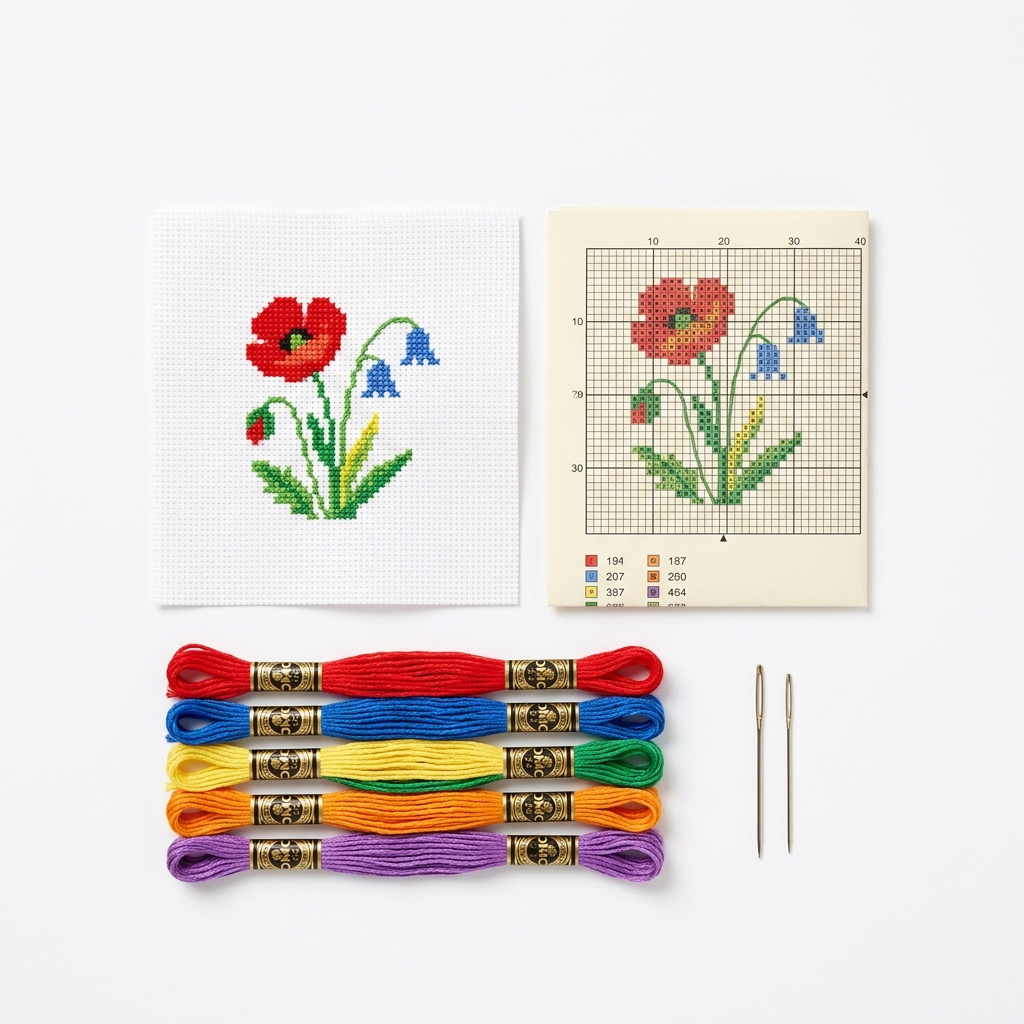
Tracey Recommends
Counted Cross Stitch Starter Kit — 14-Count Aida
Everything a new stitcher needs in one box: pre-printed Aida fabric, needles, floss, and a simple beginner pattern. If you're just starting out, this is exactly where to begin. No guesswork, no hunting for individual supplies — just pick it up and stitch.
See on AmazonWhat looked like a retreat from craft store shelves was actually a migration — and the new territory is enormous. Cross stitch is not a dying art. It is a living tradition actively recruiting new members.
The Thing No Screen Can Give You: Why Cross Stitch Keeps Coming Back
There is something I want to try to put into words, though I suspect every stitcher reading this already knows exactly what I mean. There is a moment — right at the start of a new piece — when you pull the needle through the cloth for the first time. The thread follows in a smooth pull, the fabric gives just slightly, and the first small X appears on the Aida. That moment is so quietly satisfying that it is almost hard to explain to someone who has never felt it. It is the satisfaction of a mark made by hand, of a skill applied, of something beginning that will eventually become something beautiful.
The meditative rhythm of cross stitch is one of the primary reasons it keeps finding new practitioners, especially now. We are living in a time of overwhelming digital noise. Every device we own is engineered to grab our attention and hold it, to pull us from one piece of content to the next, to make us feel busy while leaving us strangely empty. Cross stitch is the opposite of all of that. It requires your hands, your eyes, and just enough of your mind to count and follow the pattern — and in doing so, it occupies exactly the right amount of your brain to let the rest of it breathe. I have sorted through more problems over a hoop than I ever have staring at a screen.
Cross stitch, in itself, seems to be on the rise precisely because of this quality. As we live our daily lives and encounter more stress than ever before, this craft has proven itself time and again as something that genuinely calms the nervous system. There is research to support this now — the repetitive motion of needlework lowers cortisol, slows the heart rate, and produces something close to a meditative state. But I did not need a study to tell me that. I knew it thirty years ago when I first picked up a needle, and I know it now every time I sit down with a project at the end of a long day. Giving your hands something constructive and beautiful to do is so much better than wringing them helplessly over a problem you can't solve in that moment.
And in those quiet stitching sessions, when you don't want to talk to anyone about what's weighing on you, there is a kind of prayer in the rhythm of it — a working out of things in the presence of God, hands moving, mind gradually settling. I have found answers in those hours that no amount of anxious scrolling ever produced. That is part of why I believe this craft has endurance. It meets people where they actually are.
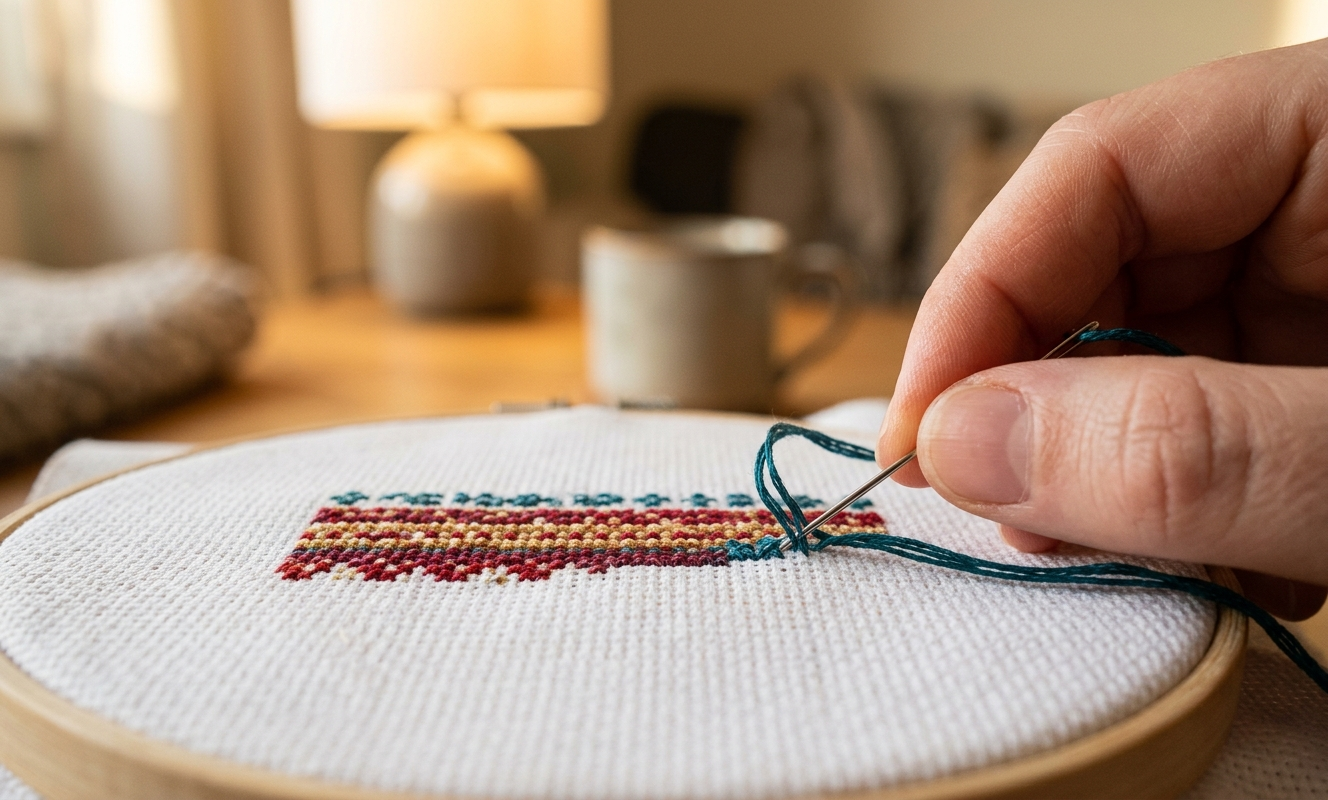
Close-up of needle pulling teal embroidery floss through white Aida fabric with completed cross stitches
Cross Stitch Lives On Through the People Who Teach It
One of the most powerful forces keeping cross stitch alive is exactly what you might expect: people teaching other people. I taught my daughters how to do counted cross stitch, and I will tell you honestly that some of my most treasured memories involve all of us sitting together with our hoops in hand, a good movie on, and the comfortable quiet of everyone doing something they love side by side. That is a kind of bonding that does not happen over a video game or a social media scroll. It happens when you make something together, or alongside each other, in the same room.
The tradition of passing this craft down through generations is one of its greatest strengths. When a mother teaches her daughter to stitch, she is not just passing on a technique — she is passing on patience, attention to detail, the ability to follow through on a long project, and a deep satisfaction in making something with your own hands. These are values that do not expire. They are as relevant today as they were fifty years ago, and I would argue they are more needed now than ever.
Cross stitch also lives on in the finished pieces that become heirlooms. Think about it: when one of my customers purchases a Sunrays Creations pattern, spends weeks or months stitching it, frames it, and gives it to a family member on a special occasion — that piece has a life far beyond the stitcher who made it. It gets hung on a wall. It gets passed down. Decades from now, someone's grandchild will look at a beautifully stitched botanical sampler or a Victorian portrait and want to know who made it and how. That is the long arc of this craft, and it is longer than any trend cycle. Heirlooms do not go out of style.
I genuinely believe we all have a responsibility here — not in a heavy, obligation kind of way, but in the best sense of the word. If you stitch, teach someone. If your daughter or niece or neighbor has ever shown even passing curiosity, put a needle in her hand and show her how it works. The community grows one stitcher at a time, and every person who learns this art from another person is a living thread in a tradition that stretches back centuries.
|
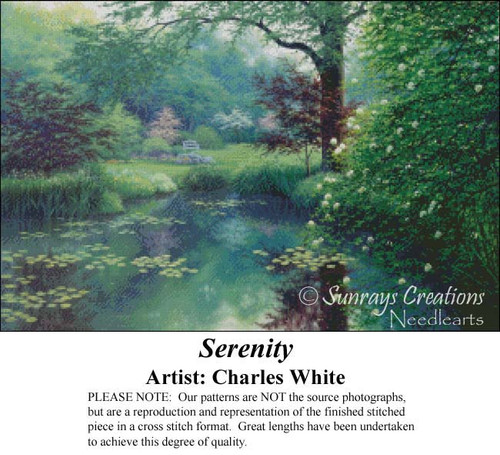
Patterns from the Sunrays Collection Tracey's Picks, designing cross stitch patterns since 2004 |
|||||
|
|||||
| Browse the full Sunrays collection → |

Tools That Welcome New Stitchers Into the Craft Today
If you are new to cross stitch, or coming back after a long break, the good news is that getting started has never been easier or more affordable. The range of quality supplies available online is genuinely excellent right now, and you do not need a lot to begin. A basic 14-count Aida starter kit will give you fabric, a needle, floss, and often a simple pattern all in one package — and that is truly all you need to stitch your first piece. Start there. Do not overthink the supplies on your first project. The embroidery hoop (find on Amazon) you mount your fabric in is one of the most important investments you will make as a beginner, and a simple round hoop in the eight or ten inch size will serve you well through many projects.
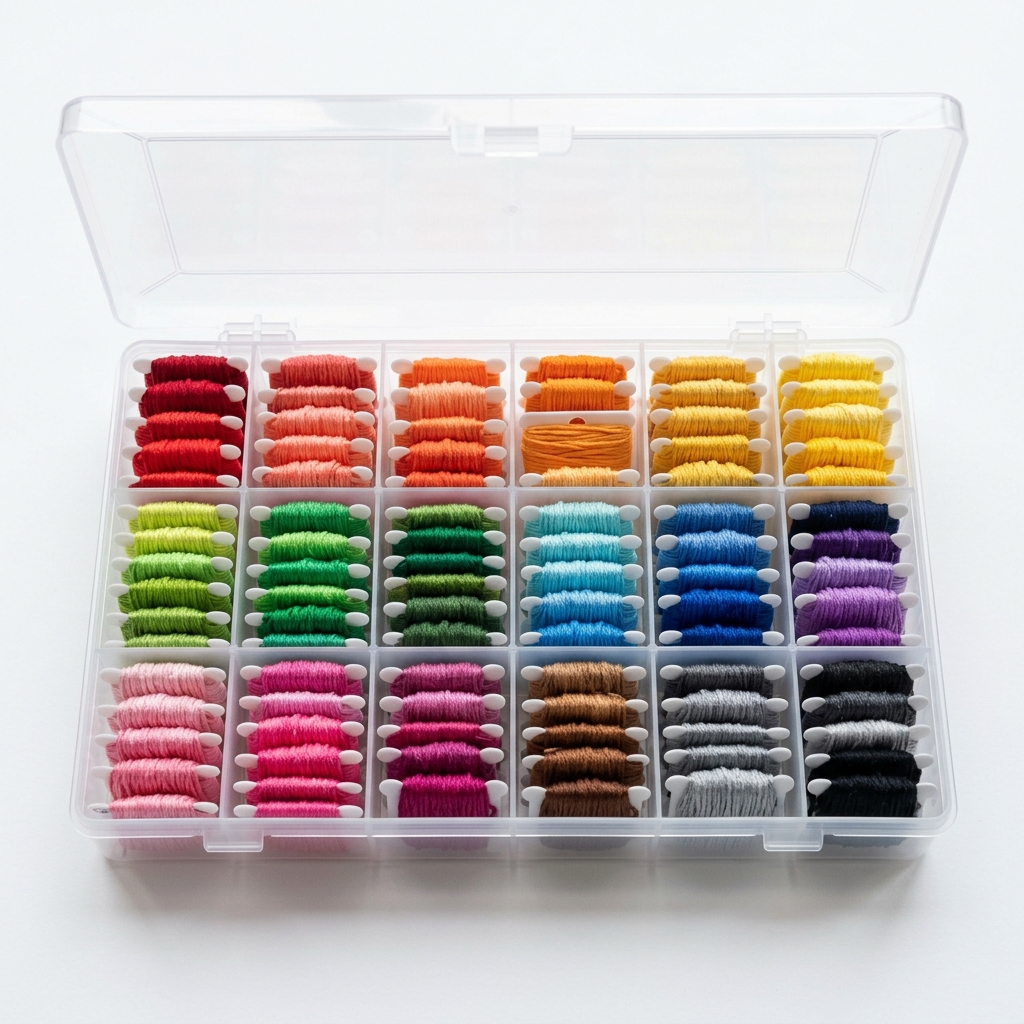
Once you catch the bug — and most people do — you will want to get organized. Embroidery floss has a way of multiplying rapidly once you start building a collection, and without a system, you end up with a tangled catastrophe in the bottom of a bag somewhere. I speak from experience on this. A good floss storage system is one of the most practical things a stitcher can invest in early, and it saves enormous amounts of time and frustration down the road. Ask any experienced stitcher and she will tell you the same thing.
As your skills grow, you might find yourself interested in a cross stitch book for beginners (find on Amazon) that walks through techniques in a more structured way — stitch types, reading charts, handling different fabric counts. These resources are genuinely helpful for building a solid foundation, and there are some excellent ones available right now that have been updated for contemporary stitchers. You might also consider a needle minder (find on Amazon), which is one of those small tools that seems trivial until you have lost your needle for the fifth time in a single sitting and finally understand why every serious stitcher owns one. It is a small magnetic tool that holds your needle to your fabric when you set it down, and once you have one, you will wonder how you managed without it.
For longer projects — the big pieces, the ambitious designs — many stitchers eventually move to a Q-snap frame (find on Amazon) rather than a traditional hoop. A Q-snap frame holds the fabric taut without the distortion that a hoop can cause over time, which matters a great deal on large or detailed pieces. It is not a beginner essential, but if you find yourself getting serious about the craft, it is absolutely worth looking into. The right tools make the experience smoother and more enjoyable, and an enjoyable experience is what keeps a stitcher coming back to the hoop.
Get Stitching Tips & New Patterns from Tracey
Honest advice, new Sunrays designs, and occasional VIP-only offers. No fluff.
No spam. Unsubscribe any time.
Tracey Recommends
Embroidery Floss Organizer Storage Box
Your floss collection will grow faster than you expect, and without a system, chaos follows quickly. A dedicated floss storage box with compartments and bobbins is one of the best early investments a stitcher can make. Future you will be grateful.
See on AmazonYou Are Part of What Keeps This Art Alive
I want to come back to the person who was told this is an 'old lady hobby' and roll my eyes on your behalf, just briefly. I have been stitching since I was young. I did not wait until I was old to find it meaningful. And the thousands of stitchers I interact with through Sunrays Creations, through social media, through this blog — they are not a monolith of any age, background, or life stage. They are teenagers and retirees and new mothers and college students and career women stitching at their kitchen tables after the kids go to bed. The 'old lady' framing was always a reduction, and it is less true today than it has ever been.
Here is what I want you to understand about the cultural moment cross stitch is in right now: it is not an accident. It is a response. People are tired of passive consumption. They want to make things. They want to hold something in their hands at the end of an evening and see real, tangible evidence of what they did with their time. Cross stitch provides that in a way that is accessible, portable, infinitely customizable, and deeply satisfying. That combination does not go out of style. It adapts. It finds new people. It keeps going.
The market research, the Google search volumes, the Etsy sales figures, the TikTok communities, the pattern shops that have launched and grown in the last decade — all of it points in one direction. Cross stitch is not a dying art. It is a living tradition that is actively recruiting new members, and the welcome mat is out. If you have been on the fence about starting, consider this your sign. If you are coming back after a break, the community is exactly where you left it, just bigger. And if someone told you this hobby is past its prime, well — grab a needle and prove them wrong. I will be right there stitching alongside you.
Cross stitch has been part of my life for over thirty years, and I genuinely cannot imagine that changing — not because I am sentimental about it, but because I watch new stitchers discover it every single week and fall in love with exactly what I fell in love with at the beginning. This craft has a way of holding people. If you are ready to see what all the excitement is about, or if you are looking for your next project as a returning stitcher, I would love for you to browse the pattern collection at Sunrays Creations. Something there might just be the piece you've been looking for.
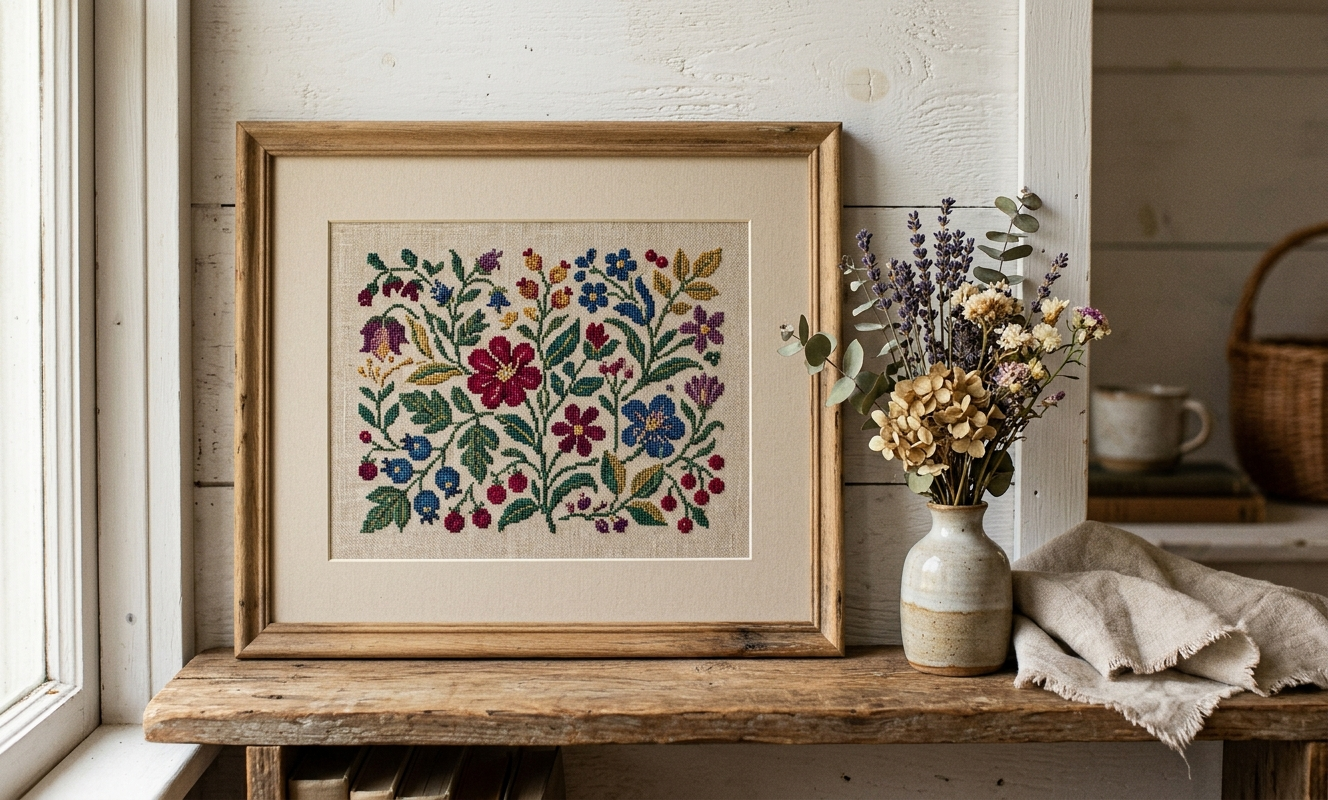
Framed completed botanical cross stitch piece in jewel tones leaning against whitewashed wooden wall
Keep Reading
What Do You Need to Cross Stitch?
If you're ready to start stitching, this guide walks through every supply you actually need — and what you can skip until later.
READ THE GUIDECross Stitch FAQs
New to the craft or coming back after a break? I answer the questions I hear most often from stitchers at every level.
READ THE ARTICLEWhy Buy from Sunrays Creations?
Hand-charted, original designs from a stitcher who has been at this for over thirty years. Here's what sets Sunrays patterns apart.
READ THE ARTICLEFrequently Asked Questions
Is cross stitch still popular in 2024?
Yes — and not just a little. Cross stitch has seen a significant resurgence driven by younger stitchers, growing online communities, and a broader cultural shift toward handmade and slow crafts. Search volumes, Etsy sales, and social media communities all point upward. The craft is genuinely thriving.
Is cross stitch a dying art?
Not at all. This is one of the most persistent myths about needlework, and it stems largely from the fact that big box craft stores reduced their cross stitch inventory. But that change reflects a market shift to online retail, not a decline in interest. The online cross stitch market is larger and more active than the old retail shelf model ever was.
Why did stores like Michaels and Hobby Lobby stop carrying as many cross stitch patterns?
Large retail chains need to maximize floor space across dozens of craft categories, and specialty items like cross stitch patterns are better served by dedicated online shops where the selection can be truly deep and searchable. The demand moved online, and the online market expanded to meet it. Sunrays Creations is one example of a pattern shop that exists entirely online and serves a thriving customer base.
Is cross stitch good for stress and anxiety?
Many stitchers — myself included — find it genuinely calming in a way that is hard to replicate with other activities. The repetitive motion of pulling thread through fabric, combined with the gentle concentration required to count and follow a pattern, produces something close to a meditative state. It gives your hands something constructive to do and quiets the mental noise in a way that screens simply cannot match.
Is cross stitch just for older women, or is it popular with younger people too?
The demographic has shifted significantly. TikTok, Instagram, and Pinterest are full of stitchers in their twenties and thirties who came to the craft on their own, often drawn by the slow-living movement and the appeal of making something tangible with their hands. Cross stitch has never been exclusively for any one group, and today's stitching community is genuinely multi-generational.
How do I get started with cross stitch as a complete beginner?
Start simple: a 14-count Aida starter kit gives you everything in one package and removes all the guesswork about which supplies to buy. Choose a small, straightforward pattern for your first project so you can complete it and feel that satisfying sense of accomplishment before moving on to something more complex. There are also excellent cross stitch books for beginners and countless free tutorials online to guide your first stitches.
-- Tracey Kramer
Founder & Designer, Sunrays Creations Needlearts
Hand-charted designs since 2004 • Marysville, Ohio