

Tackling Big Cross Stitch Projects; Tips for the Adventurous Stitcher
Posted by Tracey M. Kramer on 20th Sep 2018
Originally published 2016 — Updated April 2026 with new resources, product recommendations, and tips.
Tackling Big Cross Stitch Projects: Tips for the Adventurous Stitcher
“I’ll be honest with you — I have a closet full of them. Big projects I bought with every intention of starting, carefully set aside, and somehow never quite got around to. Sound familiar? There is something both thrilling and terrifying about unrolling a pattern that’s going to take you the better part of a year to finish. But here’s what I’ve learned after 22 years of stitching: the secret to tackling a big cross stitch project isn’t talent or patience. It’s preparation. Get your supplies organized, choose the right frame, and the rest takes care of itself one stitch at a time.”
— Tracey Kramer, Designer & Co-owner, Sunrays Creations
Step 1: Get Your Supplies Together
The first thing you need to do is get all of your supplies ready before you begin. Gather all of your floss for the project and get it organized. I personally use what is called a project box — a dedicated storage container that holds all of my floss for that particular project, wound on bobbins and labeled by DMC number. It keeps everything in one place and saves a tremendous amount of time hunting for the right color mid-stitch.
A good cross stitch floss organizer or project box is one of the best investments you can make before starting a BAP. Once you’re organized, half the battle is already won.

A project box keeps all your floss organized and ready for your BAP.
Step 2: Choose How to Hold Your Fabric
One of the things that keeps stitchers from wanting to get started on a big project is deciding what to use to hold your fabric in place while stitching. It can feel overwhelming, but once you pick your frame or holding method, half the battle is truly over.
For large wooden dowel floor frames, I love K’s Creations Stow-Away Portable Floor Stand — which is what I personally use. It adjusts up to 26 inches. Their lap frame with scroll frame or clamp adjusts all the way to 34 inches, which gives you a lot of room to grow. And if you’re working on an even larger project, their large floor model rug frame is an industrial-strength option that adjusts from 36” to 68” in width — not just for cross stitch but also for needlepoint tapestries.
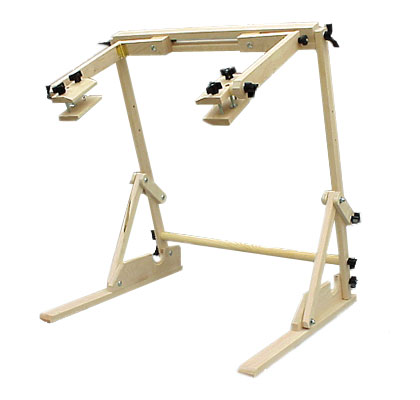
K’s Creations Stow-Away Portable Floor Stand — adjusts up to 26 inches.
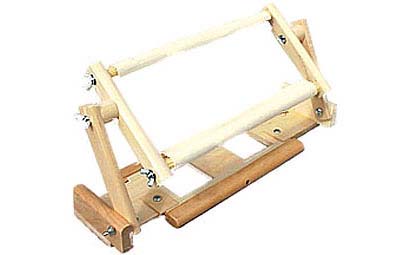
K’s Creations lap frame with scroll frame — adjusts up to 34 inches.
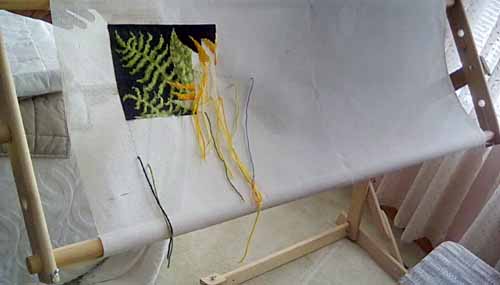
K’s Creations Rug Frame — adjusts from 36” to 68” for the largest projects.
For even larger projects — like a tablecloth for a very large table or a blanket for a king-size bed — your best bet is a Q-Snap frame or a large embroidery hoop. The framing can be moved to wherever you need it on the project. I use large binder clips to keep the excess fabric off the ground and free from getting dirty — they work perfectly for managing that extra canvas length.

Using binder clips to manage excess canvas on a long project.
Want a deeper dive on frames? Read our complete guide: Cross Stitch Hoops & Frames: Complete Guide
Our Top Picks for Large Project Frames
1. Q-Snap Frame
Q-Snaps are a favorite among serious stitchers for large projects. Unlike round hoops, the square corners keep fabric taut without distorting your aida cloth or creating those frustrating hoop marks. They’re especially great for BAPs because you can reposition them across the fabric without leaving creases.
Shop Q-Snap Frames on Amazon →
2. Large Embroidery Hoop
A large embroidery hoop in the 10”–14” range works beautifully for BAPs that don’t quite need a full floor frame setup. Look for beechwood hoops with a solid brass adjustment screw — cheap hoops will strip and slip, which is the last thing you need on a project you’ve invested months in.
Shop Large Embroidery Hoops on Amazon →
Step 3: Pace Yourself and Enjoy the Journey
Since you’re working on a large project, it’s important to pace yourself. You can work on it exclusively or, when you get tired of it, switch to something more short-term and then come back to the larger project. Whatever works best for you is fine — as long as you enjoy your project!
One thing that helps enormously is having a solid system for tracking your progress. With a BAP, you can’t hold all of it in your head. Check out our guide on easy ways to track your cross stitch progress for nine proven methods that keep you organized and motivated.
Before you put your first stitch in, make sure you know exactly where to begin on that large pattern. Our guide on where to start a large cross stitch pattern walks you through two foolproof methods so you never lose your place.
And when your masterpiece is finally finished and ready for the framers, read our guide on how to frame cross stitch projects — including the great glass vs. no glass debate that every stitcher eventually faces.
Frequently Asked Questions About Big Cross Stitch Projects
What is a BAP in cross stitch?
BAP stands for “Big Ass Project” — the cross stitch community’s affectionate term for any large-scale counted cross stitch project that spans many months or even years. BAPs are typically large fine art reproductions, detailed landscapes, or any piece with a very high stitch count that requires serious time commitment. They’re intimidating at first but deeply satisfying to complete.
What frame is best for large cross stitch projects?
For most BAPs, a scroll frame on a floor stand or lap stand is ideal. It holds your fabric flat without hoop marks, keeps both hands free for the two-handed stab method, and accommodates the large fabric dimensions a BAP requires. K’s Creations makes excellent floor frames that the cross stitch community trusts. For very large textile projects, a Q-Snap frame is another great option as it can be repositioned without distorting the fabric.
How do I keep a large cross stitch project organized?
A dedicated project box for your floss is the single best organization move you can make. Keep all threads for that project together, wound on bobbins and labeled by DMC number. Use a highlighter to mark off completed 10x10 blocks on your pattern as you go — it’s the most reliable progress tracking method for large projects.
How do I stop a big cross stitch project from getting dirty?
Always wash your hands before stitching. Use a grime guard to protect the edges of your hoop or frame from oils and dirt. Store your project in a clean pillowcase or project bag between sessions. For floor frame setups where long excess fabric hangs down, use binder clips to keep the canvas off the ground entirely.
Can beginners tackle a BAP?
Absolutely — but with a caveat. If you’re new to cross stitch, we recommend completing a few smaller projects first to build your confidence. Once you have that foundation, there’s no reason a determined beginner can’t take on a large project. Choose a BAP with large blocks of solid color rather than heavy confetti stitching — it’s much more forgiving for newer stitchers.
Affiliate Disclosure: This post contains affiliate links to Amazon and other retailers. If you purchase through these links, Sunrays Creations may earn a small commission at no extra cost to you. We only recommend products we genuinely use and love. Thank you for supporting our small, family-run business!
About the Author
Tracey Kramer is the designer and co-owner of Sunrays Creations, a family-run cross stitch pattern company based in Marysville, Ohio. With over 22 years of cross stitch experience, Tracey has stitched everything from small samplers to large fine art reproductions. All Sunrays patterns are designed by Tracey and finished as framed wall art. When she’s not stitching, she’s probably hunting for her next BAP.