
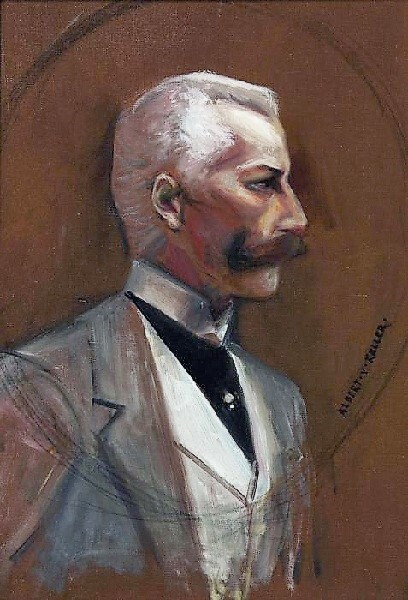
Albert von Keller (1844–1920) was a Swiss-born German painter and a co-founder of the Munich Secession, a movement that sought to break away from traditional academic constraints. Living through the late 19th and early 20th centuries, Keller was a master of Symbolism and Fin de Siècle Realism, often blending psychological depth with mystical or occult themes. After studying under Arthur von Ramberg, he gained significant fame and eventually secured the patronage of the Bavarian elite, earning a noble title for his contributions to the arts. He is best known for works like The Raising of the Daughter of Jairus and his series of hauntingly beautiful portraits of elegant women in ethereal interiors. His style is defined by a "painterly" approach—using loose, atmospheric brushwork and a sophisticated palette of muted silvers, deep velvets, and luminous skin tones. Translating Keller’s art into a counted cross stitch design offers a unique opportunity to capture the mystery and grace of the Belle Époque; the subtle color shifts and dramatic lighting in his work provide a rewarding challenge for stitchers looking to create a piece with true emotional resonance and historical allure.
|
22+ Years
Designing Patterns
|
Satisfaction
Guaranteed
|
Family-Owned
Since 2003
|
Loved by Stitchers
Worldwide
|