
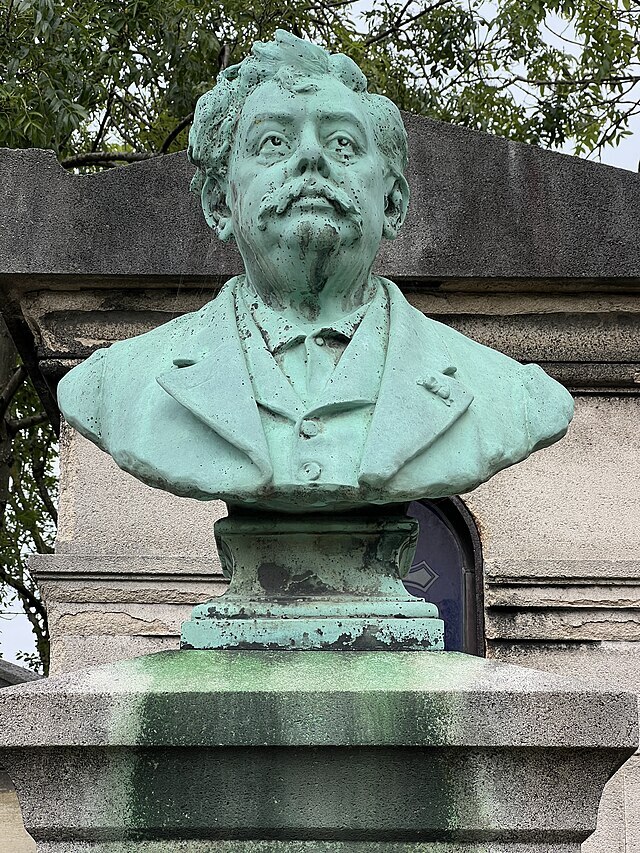
Eugène Bidau didn’t just paint still lifes; he constructed atmospheric theaters of nature. Born in the heart of the Vendée before conquering the elite art circles of Paris, Bidau became a powerhouse of the Academic style, celebrated for his legendary ability to blend floral delicacy with architectural scale. While many of his peers were content with small tabletop bouquets, Bidau reached for the monumental, creating massive, sun-drenched panels that transformed flowers, peacocks, and doves into a decorative masterclass. His talent was so legendary that he was commissioned to decorate the Hôtel de Ville in Paris, and his designs were later woven into prestigious tapestries by the Gobelins Factory for the 1900 World’s Fair.
For the passionate stitcher, a Bidau design is a high-impact journey through a garden of technical delights. His canvases are a powerhouse of "honey-soaked" highlights and "velvet shadows," demanding a sophisticated eye for blending to capture the iridescent sheen of a peacock’s feather or the soft translucence of a wisteria petal. When you embark on a Bidau project, prepare for a rewarding challenge in confetti-heavy floral arrangements that require precise tension to keep the massive coverage looking crisp and vibrant. It is an absolutely stash-worthy endeavor that turns your 14-count fabric into a window overlooking a legendary, perpetual spring—hoop-ready and destined to be the crown jewel of any needlework collection.
Further Reading & Historical Context: Discover the decorative mastery of Bidau’s larger-than-life works at The Rijksmuseum (search for 19th-century academic floral) and explore his biographical timeline via Britannica.
|
22+ Years
Designing Patterns
|
Satisfaction
Guaranteed
|
Family-Owned
Since 2003
|
Loved by Stitchers
Worldwide
|