
How to Count Cross Stitch Stitches Without Losing Your Place
Posted by Tracey M. Kramer on 21st Jul 2026
A Note from Tracey Kramer
I have been designing counted cross-stitch patterns since 2004, and in that time I have watched my customers stitch everything from wedding gifts to heirloom samplers. This is everything I know about this topic -- from real experience, not theory.
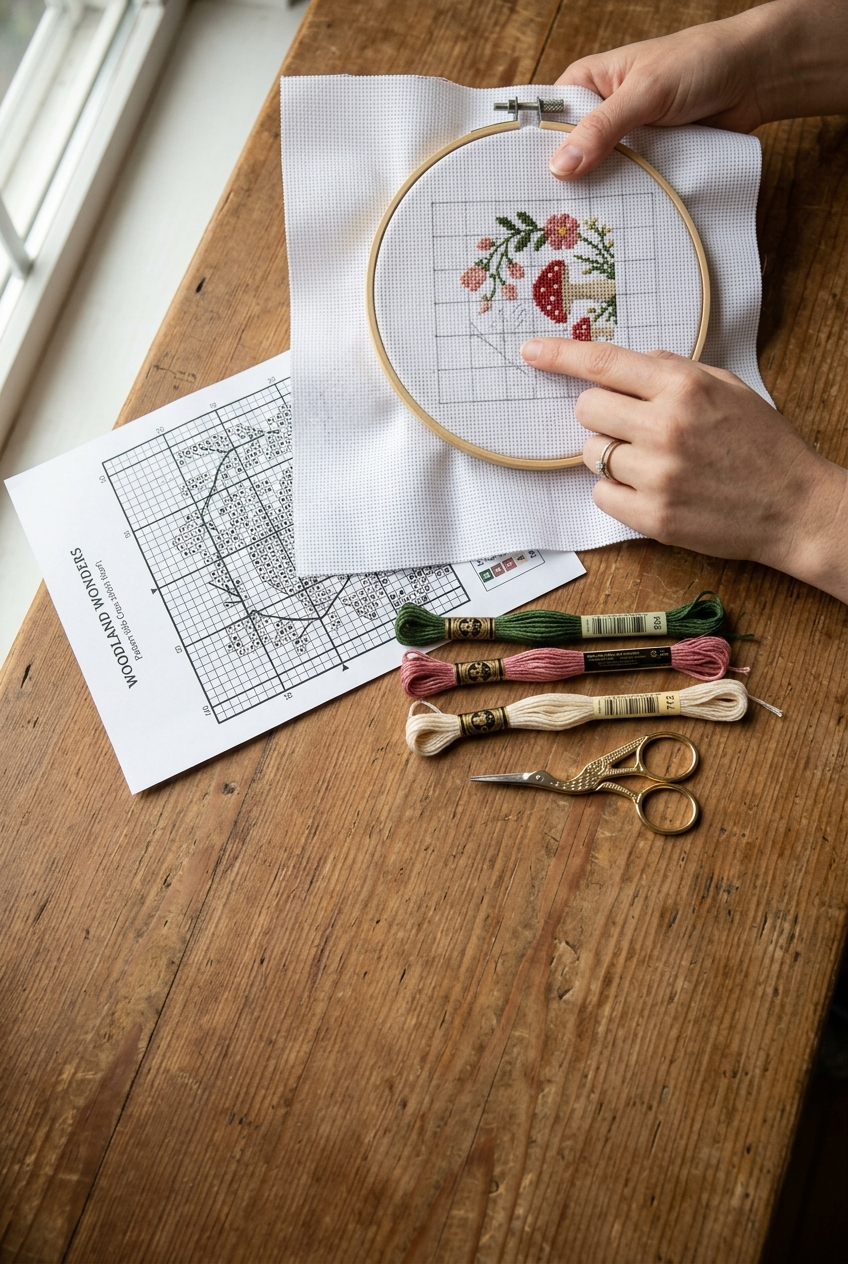
Hands counting cross stitch stitches on gridded 18-count Aida in a wooden hoop beside a chart
By Tracey Kramer • • 12 min read
If you've ever stitched a whole row, sat back to admire it, and realized every stitch is one square off from where it should be, welcome to the club. Counting cross stitch stitches without losing your place comes down to a handful of simple habits: grid your fabric, count from a fixed reference point, and verify before you commit floss to cloth. After 22 years of designing patterns, I can promise you that miscounting isn't a talent problem, it's a system problem, and systems are easy to fix.
Why Counting Goes Wrong in the First Place
Let me start by saying this: if you miscount, you are not bad at cross stitch. I've been doing this for over two decades, and I still catch myself off by a square when I get chatty during a stitch night. Miscounting happens because your eyes are asking a lot of a tiny, repeating grid. Aida cloth is a sea of identical little squares, and without landmarks, your brain simply loses track of which square is which.
The most common culprits are counting long stretches of empty fabric, working late under poor light, and trusting your memory instead of the chart. When you count 14 squares across a blank field, one blink and you're at 13 or 15. That single square错误 cascades. Suddenly your border doesn't meet, your motif is crooked, and you're staring down a frogging session that could have been avoided.
The other big one is confetti — those areas where single stitches of many colors scatter across the design with no solid blocks to anchor to. Confetti-heavy sections are miscounting minefields because there's nothing to lean on visually. The fix isn't stitching harder or squinting more. It's giving yourself reference points so you never have to count more than a few squares at a time.
Gridding: The Single Best Habit I Can Teach You
If you take one thing from this article, take this: grid your fabric before you stitch. Gridding means marking your Aida into 10x10 blocks that mirror the bold grid lines printed on your chart. When your fabric grid and your chart grid match, counting stops being a memory game. You're no longer counting from the edge of the fabric across dozens of squares. You're counting inside a 10x10 box, and ten is a number your eye can trust.
I grid with a fine-tip removable marker or with sewing thread in a contrasting color, laid in running stitches every ten squares. Both work. The washable marker is faster; the thread method never risks a permanent mark if you're nervous about it. Either way, the goal is the same — turn one giant confusing field into a tidy set of small, countable rooms.
On 18-count Aida, which is my design standard, those 10x10 blocks are small but perfectly manageable once you're set up with good light. Gridding pairs beautifully with the parking method on larger charts, but even on a small design it saves you from the dreaded discovery that your whole piece drifted three squares to the left. I wrote a full walkthrough on this because it genuinely changes everything about how confidently you stitch.
One quick note on tools: a fine-tip water soluble fabric marker (find on Amazon) is worth every penny for gridding. Test it on a scrap corner first, mark your lines, and know that it lifts away cleanly when your project is finished and ready to wash.

Tracey Recommends
Flutesan 8 Pcs Cross Stitch Accessories and Tools 11.5 x 4.7 Inch Metal Magnet Board Chart Knitting Pattern Holder 2 Bookmark Magnifier with Ruler 1 Bracket 4 Magnet Strips for Crafts Work Supplies
When you can see each square clearly, you count what's actually there instead of guessing. This is the single upgrade I recommend most for stitchers who fight miscounts on fine 18-count Aida. Your eyes will thank you after a long session.
Check Current Price →Miscounting isn't a talent problem, it's a system problem, and systems are easy to fix. A five-minute setup saves an hour of frogging.
Count From Something, Never From Nothing
The golden rule of not losing your place is to always count from a fixed reference, never from thin air. Your reference can be the center of the design, a grid line, a completed block of stitches, or the edge of a motif you've already placed. What you never want to do is count 20 empty squares out from the last thing you stitched and hope you landed right.
I always start a new project at or near the center. Most patterns mark center with little arrows on the top and side of the chart, and finding fabric center is as simple as folding your Aida in half, then in half again, and pressing a light crease. Starting center means any counting error stays small and contained instead of pushing your entire design off the fabric.
As you work outward, treat every finished section as a new landmark. Counting three squares over from a solid block you can see is reliable. Counting fifteen squares over from the fabric edge is not. This is also why I never count across a big blank gap in one go — I stitch to a known point, then count the short distance from there.
When you do have to cross open fabric, count out loud or tap each square with your needle tip. It feels silly the first time. It also cuts your miscounts dramatically because saying "one, two, three" forces your eye to actually land on each square instead of skimming.
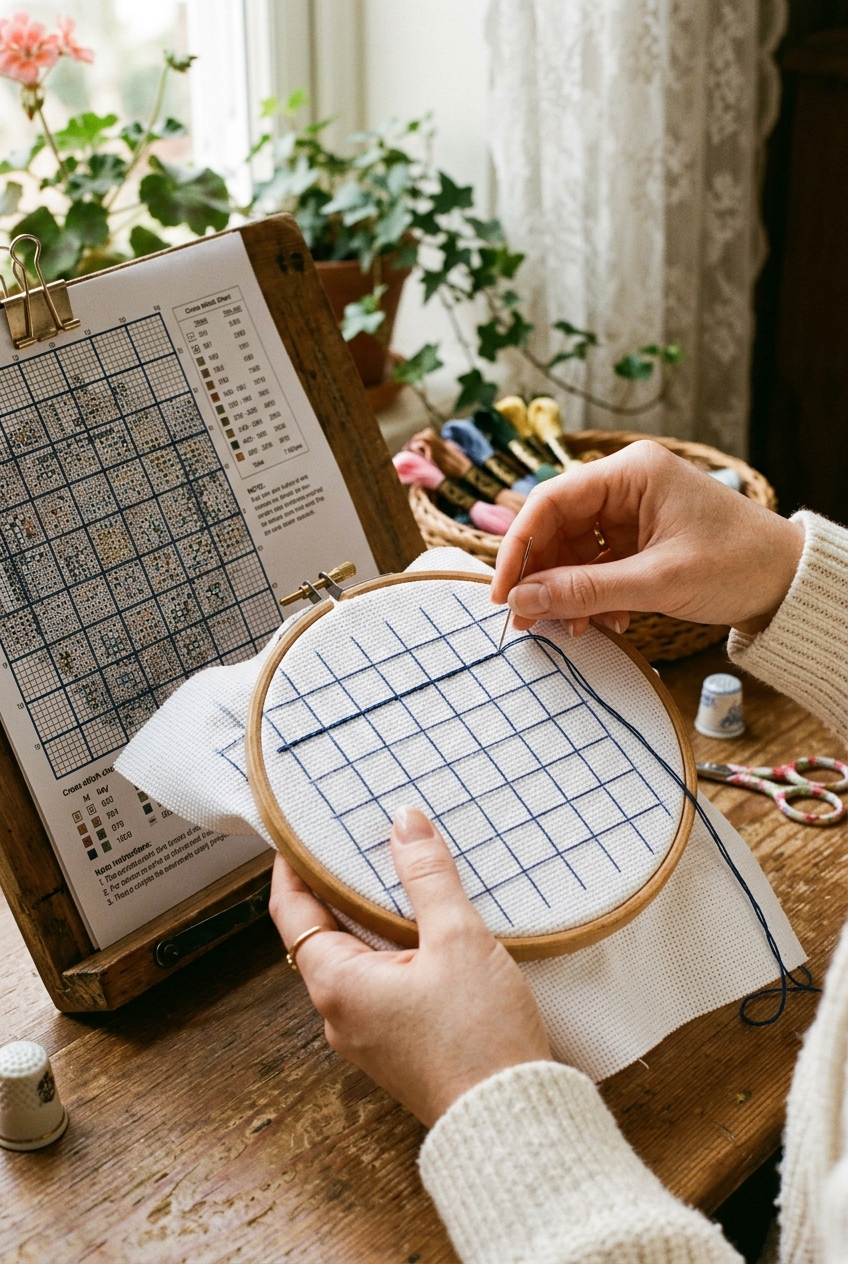
Stitcher gridding white Aida fabric into 10x10 blocks with contrasting thread beside a cross stitch chart
Reading the Chart So the Chart Does the Work
A good chart is built to help you count, and learning to lean on its structure is half the battle. Those bold lines every ten squares aren't decoration. They're your best friend. Match them to your fabric grid and let the chart carry the counting load instead of your tired eyes.
I work one bold-grid box at a time. I look at a single 10x10 section on the chart, stitch that exact box on my gridded fabric, then move to the next. This box-by-box approach means a mistake can only ever be as big as one small box, and you'll catch it before it spreads. It's the counted cross stitch equivalent of measuring twice and cutting once.
Keep your place on the chart with a magnetic board (find on Amazon), sticky notes, or a highlighter if you're working from a printed pattern you don't mind marking. For a digital pattern, most stitchers use a phone or tablet app that lets you zoom in and mark off finished stitches as you go. Losing your place on the chart is just as common as losing it on the fabric, so give your eyes a clear "you are here" at all times.
If reading symbols still feels like decoding hieroglyphics, that's normal at the start. The symbols, the color key, the grid, and the arrows all work together once they click, and they click faster than you'd think with a little practice on a simple design.
|
Patterns from the Sunrays Collection Tracey's Picks, designing cross stitch patterns since 2004 |
|||||
|
|||||
| Browse the full Sunrays collection → |



Light, Magnification, and the Setup That Prevents Half Your Errors
Here's the truth almost nobody tells beginners: most counting mistakes are really seeing mistakes. If you can't clearly distinguish one square from the next, no amount of careful counting will save you. Good light is genuinely the most important tool you own, and I say that as someone surrounded by fancy gadgets.
A daylight-balanced task lamp (find on Amazon) positioned over your work eliminates the shadows that blur the holes in your Aida. If you're over 40, or stitching dark fabric, or working with a fine 18-count weave, add magnification. A magnifier lamp with light (find on Amazon) takes the strain off completely and lets you see individual squares crisply, which means you count what's actually there instead of guessing.
Your hoop matters too. I stitch on a 5 to 6 inch wooden or plastic embroidery hoop because keeping the fabric taut keeps the grid holes open and evenly spaced. Slack fabric bunches the squares together and makes counting harder than it needs to be. Some stitchers prefer Q-snaps, and that's a fine alternative, but a good hoop with even tension has always been my personal go-to.
Set yourself up before you thread a single needle: task lamp on, magnification ready if you need it, fabric taut in the hoop, chart propped where you can see it without craning. A five-minute setup saves an hour of frogging. That trade is one I'll take every single time.
Get Stitching Tips & New Patterns from Tracey
Honest advice, new Sunrays designs, and occasional VIP-only offers. No fluff.
No spam. Unsubscribe any time.

Tracey Recommends
Clover 3164 Pattern Chart Magnetic Gage Place Marker Set, 8-1/2-Inch and 11-3/4-Inch, Green
Gridding your Aida into 10x10 blocks turns counting from a memory game into a simple check. A fine-tip water soluble marker lays down clean lines that wash right out when your piece is finished. Test on a scrap corner first, then grid with confidence.
Check Current Price →Simple Verification Habits That Catch Mistakes Early
The stitchers who rarely frog aren't luckier than the rest of us. They just verify constantly. The habit I recommend most is a quick count-check every time you finish a bold-grid box. Ten across, ten down — does your stitched box match the chart box? If yes, keep going. If no, you've only lost a few minutes, not an evening.
For borders and frames, count the full run before you commit. I stitch borders in one direction first, counting the whole line, then turn the corner. A border that's off by even one square won't close, and there's nothing more heartbreaking than discovering that at the very end of a piece.
When something looks wrong, stop and investigate immediately rather than pushing forward hoping it resolves. It won't. Trace back to your last verified landmark — usually a completed grid box or your center point — and recount from there. Catching an error three stitches in is a shrug. Catching it thirty stitches in is a night of frogging.
And give yourself grace. Every stitcher on FlossTube has a story about the day they missed a symbol and unpicked half a WIP. It happens to all of us. The systems in this article won't make you perfect, but they'll turn most of your would-be disasters into quick, easy fixes.
Counting confidently isn't about being naturally precise — it's about setting up small habits that catch mistakes before they grow. Grid your fabric, count from a landmark, verify each box, and light your space well, and you'll spend far more time stitching than frogging. When you're ready to put these habits to work, come browse the Sunrays Creations pattern collection and pick a design that makes you excited to sit down and count.
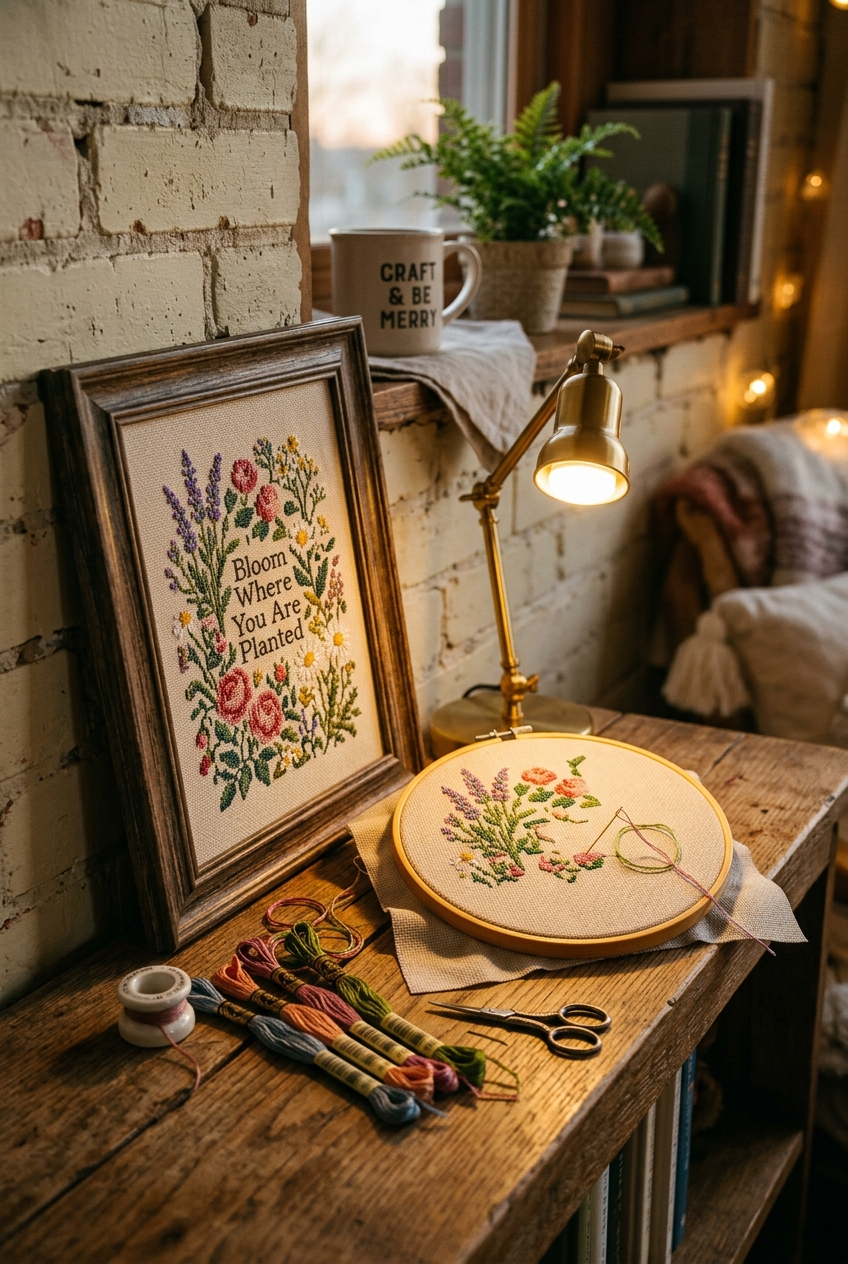
Finished framed cross stitch wall art beside a work in progress hoop in a cozy lit room
Keep Reading
How to Grid Your Cross Stitch Fabric (And Why It Changes Everything)
Gridding is the single best habit for staying on count, and this full walkthrough shows you exactly how to mark your Aida into countable 10x10 blocks.
Read the Gridding GuideHow to Read a Cross Stitch Pattern: A Complete Guide for New Stitchers
Learning to lean on your chart's structure is half the battle against miscounting. This guide breaks down symbols, keys, and grid lines step by step.
Learn to Read ChartsWhat Is Frogging in Cross Stitch? (And How to Do It Without Losing Your Mind)
Even with good counting habits, everyone frogs eventually. Here's how to unpick stitches cleanly and get back on track without the heartbreak.
Master FroggingFrequently Asked Questions
How do I count cross stitch stitches without losing my place?
Grid your fabric into 10x10 blocks that match your chart, always count from a fixed reference like the center or a completed block, and work one bold-grid box at a time. These systems keep any error contained to a small area instead of drifting across your whole design.
Why do I keep miscounting my cross stitch?
Miscounting usually comes from counting long stretches of empty fabric, poor lighting, and trusting memory over the chart. Aida is a sea of identical squares, so without landmarks your eye loses track. It's a system problem, not a talent problem, and it's easy to fix with gridding and good light.
Does gridding really help with counting?
Yes, gridding is the single best habit for staying on count. When your fabric's 10x10 blocks match the bold lines on your chart, you never count more than ten squares at a time, and you catch mistakes before they spread beyond one small box.
Where should I start a cross stitch project to avoid miscounting?
Start at or near the center of the design, which most patterns mark with arrows on the top and side of the chart. Find fabric center by folding your Aida in half twice and pressing a light crease. Starting center keeps any counting error small and contained.
How can lighting reduce cross stitch counting mistakes?
Most counting mistakes are really seeing mistakes. A daylight-balanced task lamp eliminates shadows that blur the holes in your Aida, and magnification helps you see individual squares crisply on fine 18-count weave. When you can see clearly, you count what's actually there instead of guessing.
What should I do when I notice a counting mistake?
Stop and investigate immediately rather than pushing forward hoping it resolves. Trace back to your last verified landmark, usually a completed grid box or your center point, and recount from there. Catching an error a few stitches in is a shrug; catching it thirty stitches in is a night of frogging.
-- Tracey Kramer
Founder & Designer, Sunrays Creations Needlearts
Hand-charted designs since 2004 • Marysville, Ohio