
The Complete Cross Stitch Glossary: 50 Terms Every Stitcher Needs to Know
Posted by Tracey M. Kramer on 1st Jul 2026
A Note from Tracey Kramer
I have been designing counted cross-stitch patterns since 2004, and in that time I have watched my customers stitch everything from wedding gifts to heirloom samplers. This is everything I know about this topic -- from real experience, not theory.
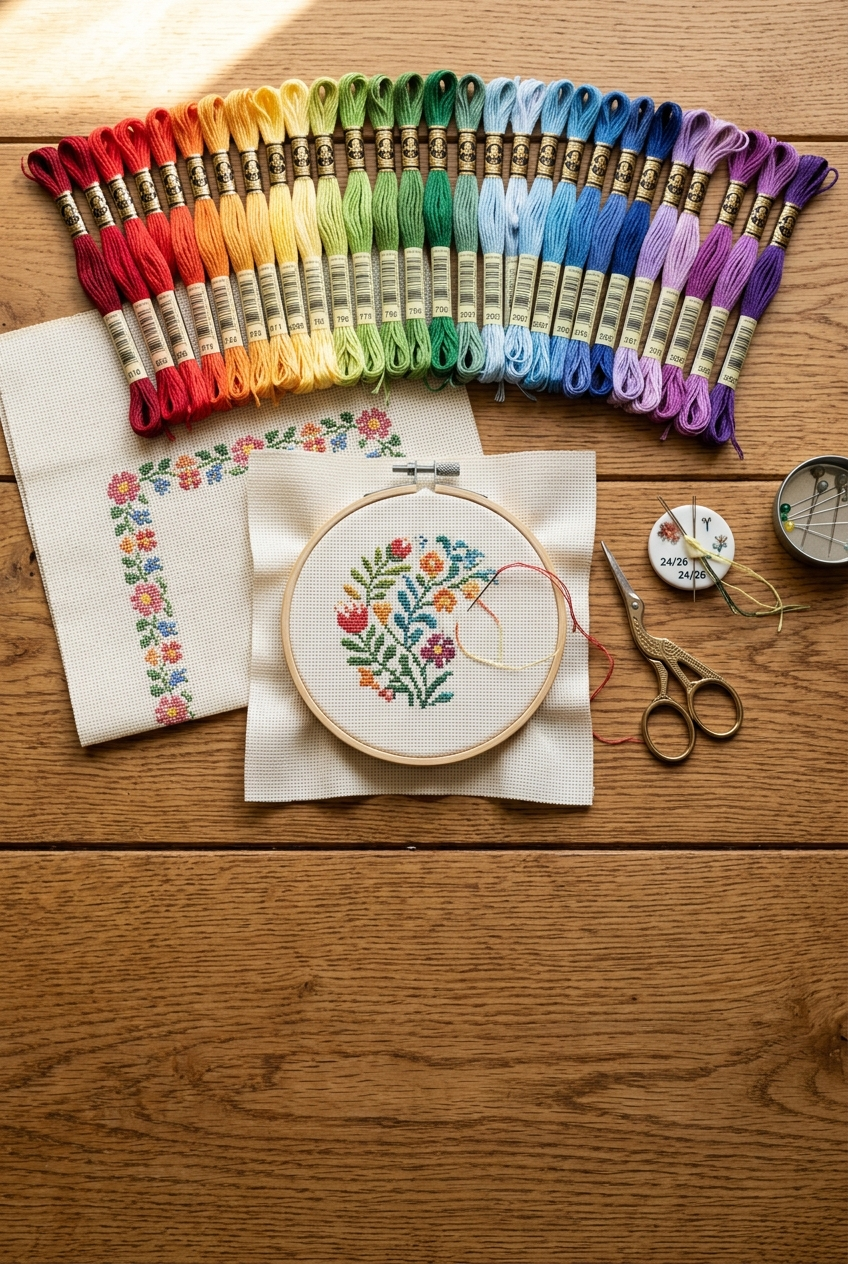
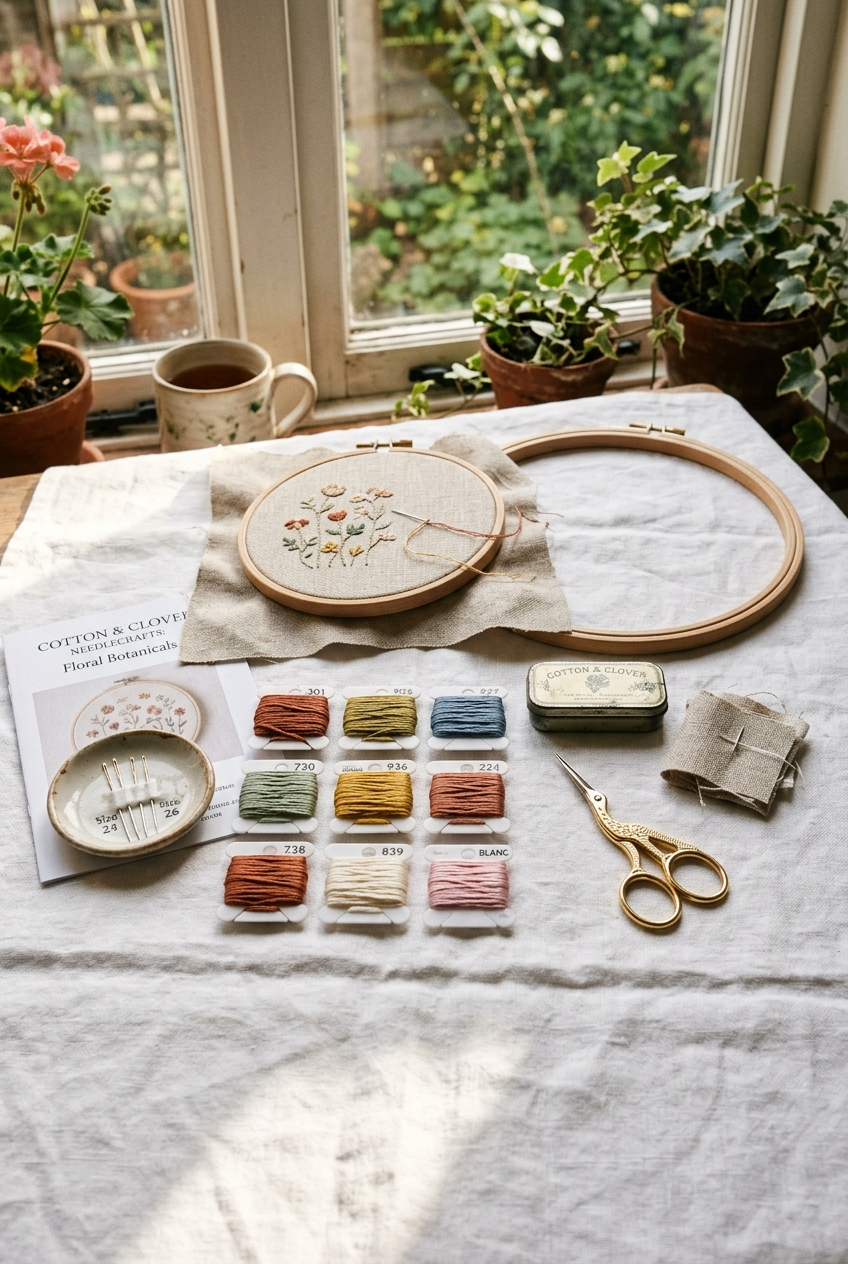
Cross stitch glossary supplies including DMC floss, Aida cloth, and wooden embroidery hoop on table
By Tracey Kramer • • 12 min read
If you've ever stumbled across a stitching group post full of acronyms like WIP, UFO, and SAL and felt like everyone was speaking a different language, you're not alone. This cross stitch glossary breaks down 50 essential terms every stitcher needs to know, from beginner basics to the community lingo that makes our craft feel like home. After 22 years of designing counted cross stitch patterns, I still remember the relief of finally understanding what 'frogging' meant — and I want you to have that same lightbulb moment right here, right now.
Why a Cross Stitch Glossary Matters
Cross stitch has its own vocabulary, and it can feel overwhelming when you're new. I remember my early days trying to decode chart symbols, figure out what "two over one" meant, and wondering why someone told me to "frog" my work. Understanding the language of cross stitch isn't just helpful — it's the difference between confidently starting a project and staring at your pattern in confusion.
Even experienced stitchers run into terms they haven't heard before. The cross stitch community is wonderfully creative with language, and new acronyms pop up regularly in online groups and on FlossTube. Having a reliable glossary to reference means you can spend less time searching forums and more time doing what you love: stitching.
I've organized this glossary into sections so you can jump to what you need. Whether you're looking up a technique, a tool, or a community acronym, everything is here in one place. Bookmark this page and come back whenever you need a quick refresher.
Basic Cross Stitch Terms Every Beginner Should Learn First
Aida cloth — The most popular fabric for counted cross stitch. Aida has a visible grid of squares that makes it easy to place each stitch precisely. It comes in different counts (the number of squares per inch). I design all of my patterns for 18-count Aida, which gives you beautiful detail without straining your eyes too much.
Count — Refers to the number of stitches (or fabric squares) per inch. An 18-count Aida has 18 squares per inch. Higher counts mean smaller stitches and finer detail. Lower counts like 14-count produce larger, chunkier stitches. Count directly affects the finished size of your project.
Cross stitch — The fundamental stitch: two diagonal stitches that form an X over one square of fabric. That X is the building block of everything we do. Every single one of my charted designs is built on this simple stitch, repeated thousands of times to create an image.
Charted design — A pattern displayed as a grid of symbols, where each symbol represents a specific floss color. Reading a chart is the core skill in counted cross stitch. Each square on the chart corresponds to one cross stitch on your fabric.
DMC floss — The most widely used brand of six-strand cotton embroidery floss. DMC assigns a number to each color, and cross stitch patterns reference these numbers so you know exactly which colors to buy. When I develop a new pattern, every color I select comes from the DMC six-strand line.
Six-strand floss — Embroidery floss is made up of six individual strands twisted together. You separate (or "strip") the number of strands you need before stitching. On 18-count Aida, I always recommend using two strands for cross stitches.
Stripping floss — The process of separating individual strands from a length of six-strand floss before you stitch. Stripping helps your stitches lie flat and look neat. Pull one strand at a time straight up and out of the cut length, then recombine the number you need.
Tapestry needle — A blunt-tipped needle with a large eye, designed to pass through the holes of Aida cloth without piercing the fabric. Sizes 24 and 26 are the most common for cross stitch. I keep both on hand and reach for a size 26 when I'm working on 18-count.
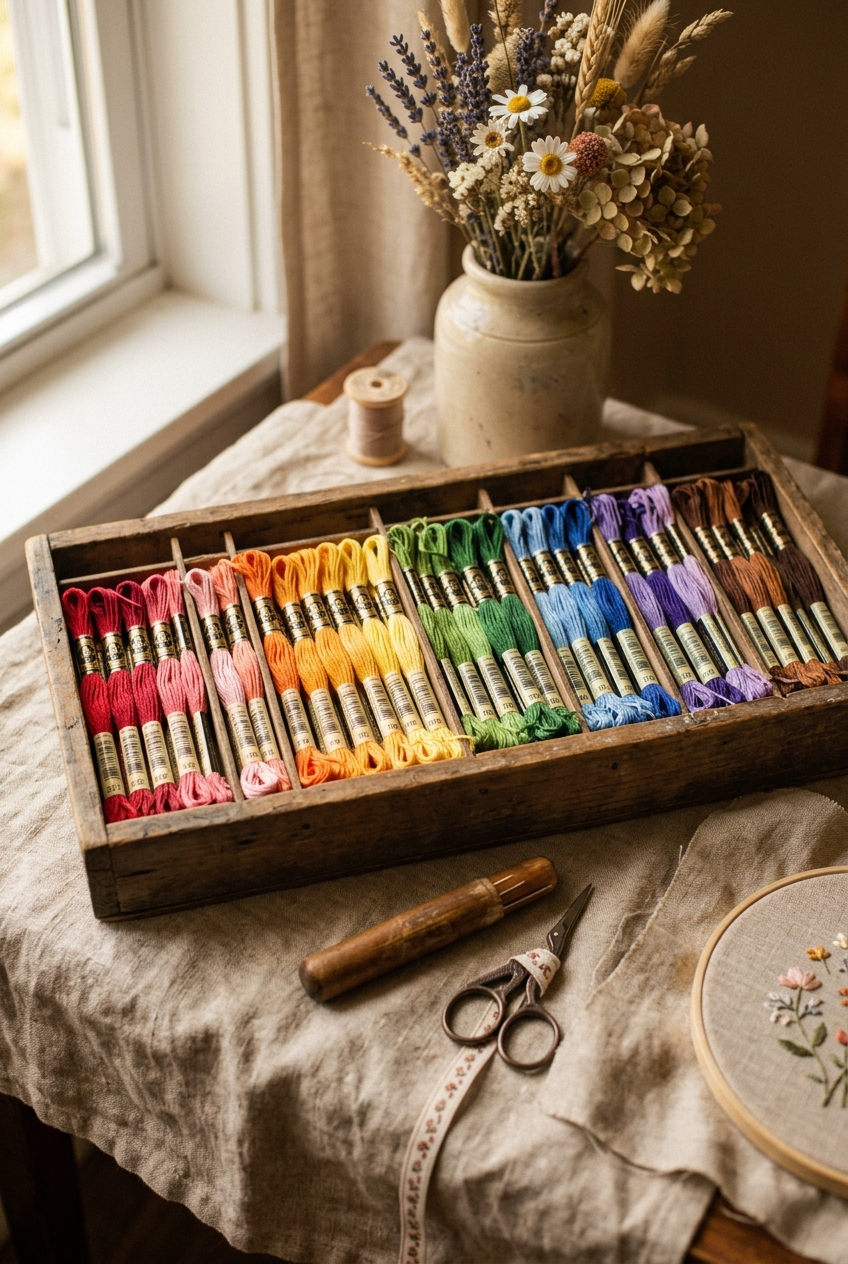
Tracey Recommends
DMC Embroidery Floss Pack
A solid floss assortment is the backbone of every cross stitch project. I use DMC six-strand floss for all my designs, and having a range of colors on hand means you're always ready for your next chart.
See on AmazonUnderstanding the language of cross stitch isn't just helpful — it's the difference between confidently starting a project and staring at your pattern in confusion.
Stitch Types and Techniques
Backstitch — A single-line stitch used to outline shapes and add fine detail to a finished cross stitch piece. Backstitch is usually worked after all cross stitches are complete. It makes images pop and gives definition to edges. Most of my patterns include a backstitch layer.
Half stitch — One diagonal stitch — just one leg of the X. Half stitches are used for shading, backgrounds, or creating a lighter visual effect. They take half the time but give you subtle tonal variation.
Quarter stitch — A stitch that covers one quarter of a fabric square. Quarter stitches are used in fractional stitching to create smoother curves and finer detail, particularly in more advanced patterns.
French knot — A small, raised knot created by wrapping floss around the needle and pulling it through the fabric. French knots add texture and are often used for eyes, flower centers, or small decorative dots within a cross stitch design.
Tent stitch — Sometimes confused with a half stitch, a tent stitch also covers one diagonal of a square. In cross stitch context, you may see this term when a pattern calls for a single diagonal to fill a small area.
Counted cross stitch — The method of stitching where you follow a charted design and count the squares on your fabric to place each stitch. This is what we do. Every Sunrays Creations pattern is a counted cross stitch pattern designed for this precise method.
Parking — An advanced technique where you bring your needle up at the next location where that color will be used, then "park" it there while you work with a different color. Parking reduces the number of times you start and stop threads, but it means having multiple needles active at once. It takes practice, and it's not for everyone.
Cross country — A stitching method where you complete all stitches of one color across a large area before switching colors. This is the opposite of parking. Many stitchers naturally default to cross country without knowing the name.
Railroading — A technique where you slide your needle between the two strands of floss before pulling a stitch tight, ensuring the strands lie flat and parallel. Railroading gives your stitches a smoother, more polished appearance.
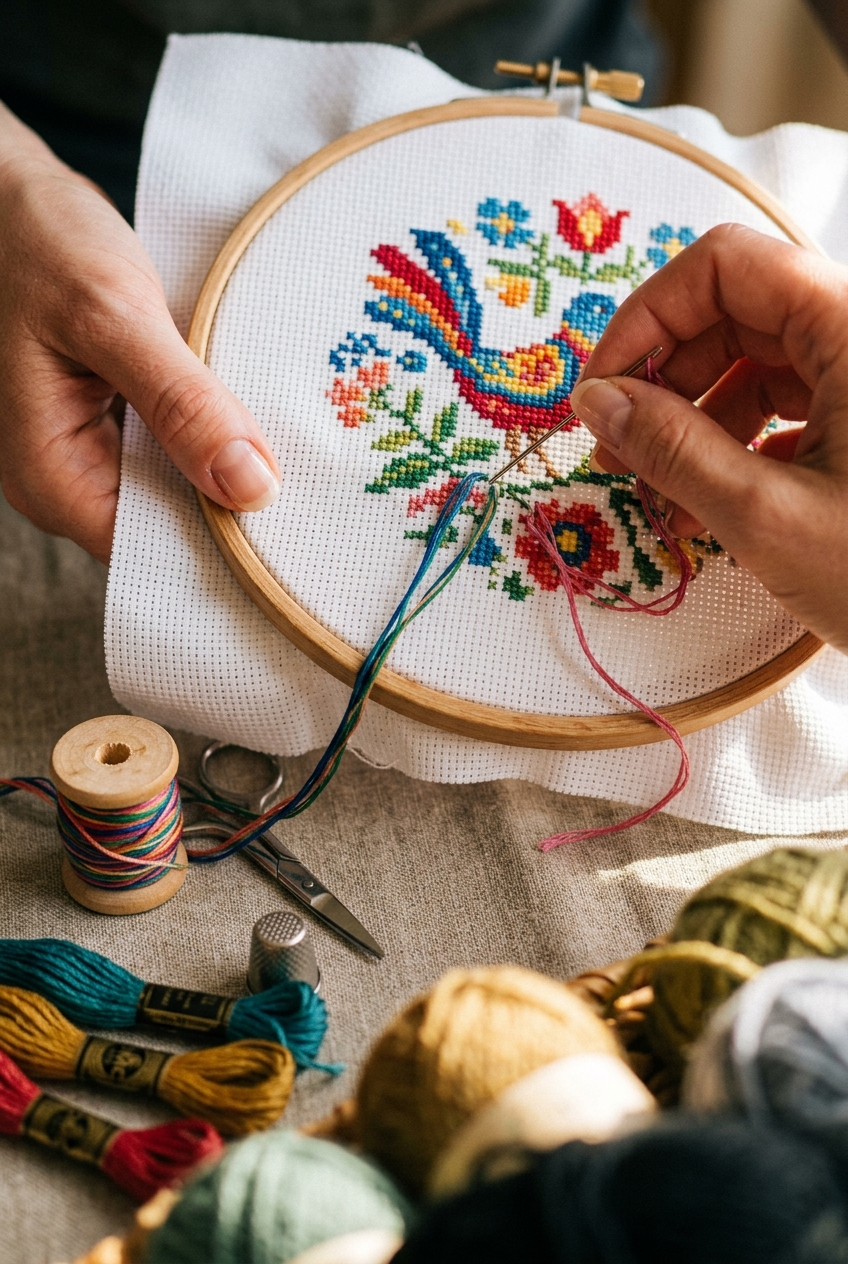
Hands working counted cross stitch on Aida cloth in a wooden hoop with colorful floss
Tools and Materials Terminology
Embroidery hoop — Two concentric rings (wood or plastic) that hold your fabric taut while you stitch. I use a wooden embroidery hoop (find on Amazon) for almost every project — typically a 5- or 6-inch size. Keeping your fabric at even tension makes your stitches more consistent.
Q-snap frame — A plastic frame made of PVC tubes and clamps that holds fabric taut. Some stitchers prefer Q-snaps over hoops, especially for larger pieces. I've used them, and they work well, though my personal go-to remains a wooden hoop.
Scroll frame — A frame with two horizontal rods that hold fabric rolled between them. Scroll frames are popular for large projects because you can expose one section at a time without creasing the fabric.
Needle minder — A small decorative magnet that attaches to your fabric and holds your needle in place when you set your work down. Needle minders have become a fun collectible in the stitching community. I have more than I care to admit.
Floss bobbin — A small cardboard or plastic card used to wind and organize individual skeins of embroidery floss. Bobbins keep your floss tangle-free and make it easy to label each color by number.
Thread conditioner — A product (like Thread Heaven or beeswax) applied to floss before stitching to reduce tangling and static. Thread conditioner can make a real difference if you're working with longer lengths of floss or in dry conditions.
Light pad — A thin, illuminated panel placed under your pattern or fabric to make symbols and grid lines easier to see. Light pads are especially helpful when working on dark fabric or reading dense charts.
Gridding — The process of marking your fabric with a temporary grid (usually every 10 squares) to match the grid lines on your chart. Gridding helps you count accurately and catch mistakes before they grow. I recommend it for any project larger than a small sampler.
|
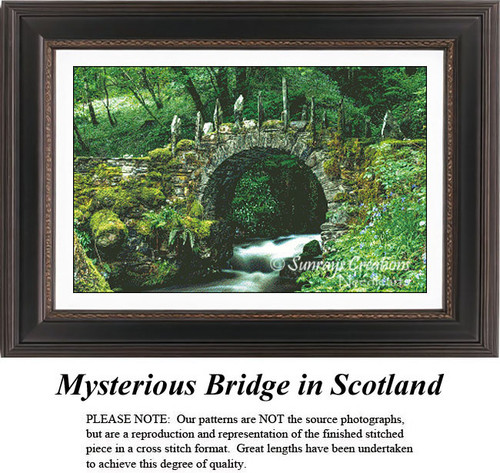
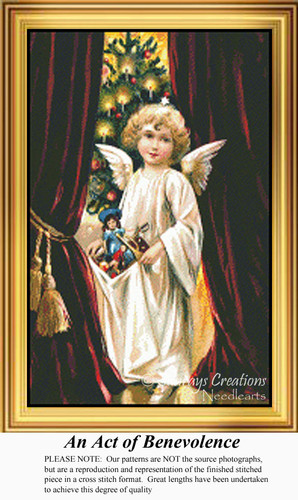
Patterns from the Sunrays Collection Tracey's Picks, designing cross stitch patterns since 2004 |
|||||
|
|||||
| Browse the full Sunrays collection → |
Community Acronyms and Lingo
This is where cross stitch vocabulary gets really fun. The stitching community has developed its own shorthand, and once you learn it, you'll feel right at home in any online group or FlossTube comment section.
WIP (Work In Progress) — Any project you're currently working on but haven't finished. If someone asks what does WIP mean in cross stitch, it's simply your active, in-progress piece. Most of us have more than one WIP going at a time, and there's zero shame in that.
UFO (UnFinished Object) — A project you started but set aside without completing. The difference between a WIP and a UFO is intention: a WIP is still getting attention, while a UFO has been shelved. We've all got a few UFOs tucked away.
FFO (Finally Finished Object) — The triumphant moment when a project goes from WIP to done. Posting your FFO online is one of the most satisfying parts of the hobby. After months or even years of stitching, there's nothing quite like holding up that finished piece.
BAP (Big Ass Project) — Exactly what it sounds like: a large, ambitious cross stitch project that takes a serious time commitment. BAPs can have hundreds of thousands of stitches and run dozens of colors. They're a labor of love. Some of my larger charted designs fall squarely into BAP territory.
ORT (Old Remaining Thread) — The small leftover bits of floss you trim after finishing a length. Many stitchers collect their ORTs in a jar throughout a project, creating a colorful keepsake. ORT jars have become a beloved tradition in the community.
SAL (Stitch-A-Long) — A group event where stitchers work on the same pattern or theme simultaneously, often sharing progress on social media or in forums. SALs build community and keep you motivated. They're one of my favorite things about our craft.
FlossTube — A corner of YouTube dedicated to cross stitch and embroidery content. FlossTubers share hauls, WIP updates, tutorials, and pattern reviews. If you haven't explored FlossTube yet, you're in for a treat — it's like having a stitching friend in your living room.
HAED (Heaven and Earth Designs) — A well-known cross stitch pattern company specializing in highly detailed, large-count designs. HAED patterns are famous for their complexity and are often BAPs by nature.
Confetti stitching — Sections of a pattern where many different colors appear one or two stitches at a time, scattered across the area like confetti. Confetti sections are slow going because you're constantly changing colors, but they produce rich, detailed results.
Frogging — Ripping out stitches to correct a mistake. The name comes from "rip it, rip it" — say it fast and you'll hear the frog. Frogging is part of stitching life. I've been there more times than I can count, and the best advice I can give is to catch mistakes early before they multiply.
Tinking — Removing stitches one at a time, carefully and deliberately. Tinking is the gentler cousin of frogging. The word is "knit" spelled backward and crossed over from the knitting world, but stitchers use it too.
Frog pond — A lighthearted term for the pile of stitches you've removed. When someone says their project "went to the frog pond," they mean a significant section had to be ripped out.
Get Stitching Tips & New Patterns from Tracey
Honest advice, new Sunrays designs, and occasional VIP-only offers. No fluff.
No spam. Unsubscribe any time.
Tracey Recommends
Cross Stitch Starter Supplies Kit
When you're building your stitching toolkit, having quality basics in one place makes everything easier. A good supplies set gives you hoops, needles, bobbins, and scissors so you can focus on learning the craft.
See on AmazonPattern, Fabric, and Finishing Terms
Pattern (chart) — The printed or digital document that shows you where and what to stitch. A counted cross stitch pattern uses a symbol grid, a color key, and usually a floss list with DMC numbers. I offer my patterns as instant download PDFs for digital stitchers and as printed paper patterns for those who prefer a hard-copy pattern in hand.
Color key (legend) — The reference section of a pattern that matches each symbol to a specific DMC floss number and color name. Always check your color key before you start stitching — it's your roadmap.
Full kit — A complete package that includes everything you need for a project: the pattern, fabric, sorted floss, a needle, and sometimes a hoop. At Sunrays Creations, I offer kit-in-a-bag options for stitchers who want the convenience of having all materials in one place.
Fabric count — The number of threads or squares per inch on your stitching fabric. For Aida cloth, count is straightforward: 14-count, 16-count, 18-count. Higher count equals smaller stitches. I design for 18-count Aida because it hits the sweet spot of detail and workability.
Selvedge — The finished edge of a piece of fabric that won't fray. When cutting Aida cloth, I recommend leaving at least 3 inches of extra fabric on all sides beyond the stitching area to give yourself room for finishing.
Waste knot — A temporary knot placed on the front of the fabric a short distance from where you'll begin stitching. As you work toward the knot, your stitches secure the tail on the back. Once you reach the knot, you snip it off. It's a clean way to anchor your first thread.
Loop start — A knotless method for starting a thread when using an even number of strands. You fold a single strand in half, thread the cut ends through the needle, and catch the loop on the back with your first stitch. It's tidy and fast.
Pin stitch — A tiny, nearly invisible stitch used to secure thread at the beginning or end without a knot. Pin stitches are especially useful for finishing neat backs.
Finishing — The process of preparing your completed stitchwork for display. For cross stitch, this almost always means washing, pressing, and framing as wall art. Proper finishing protects your work and showcases the detail you've put into every stitch.
Mounting — Stretching and securing your finished cross stitch over a backing board before placing it in a frame. Lacing and pinning are two common mounting methods. Good mounting keeps your piece smooth and wrinkle-free for years.
Coverage — How fully your stitches fill the fabric squares. On 18-count Aida with two strands of DMC floss, you should get excellent coverage — the fabric barely peeks through. If your stitches look thin, check your strand count.
Knowing the language makes you part of the community, and that's one of the best parts of cross stitch. Save this glossary, share it with a stitching friend who's just getting started, and come back whenever you need a quick refresher. When you're ready to put these terms to work, browse the full collection of counted cross stitch patterns at Sunrays Creations and find your next project.
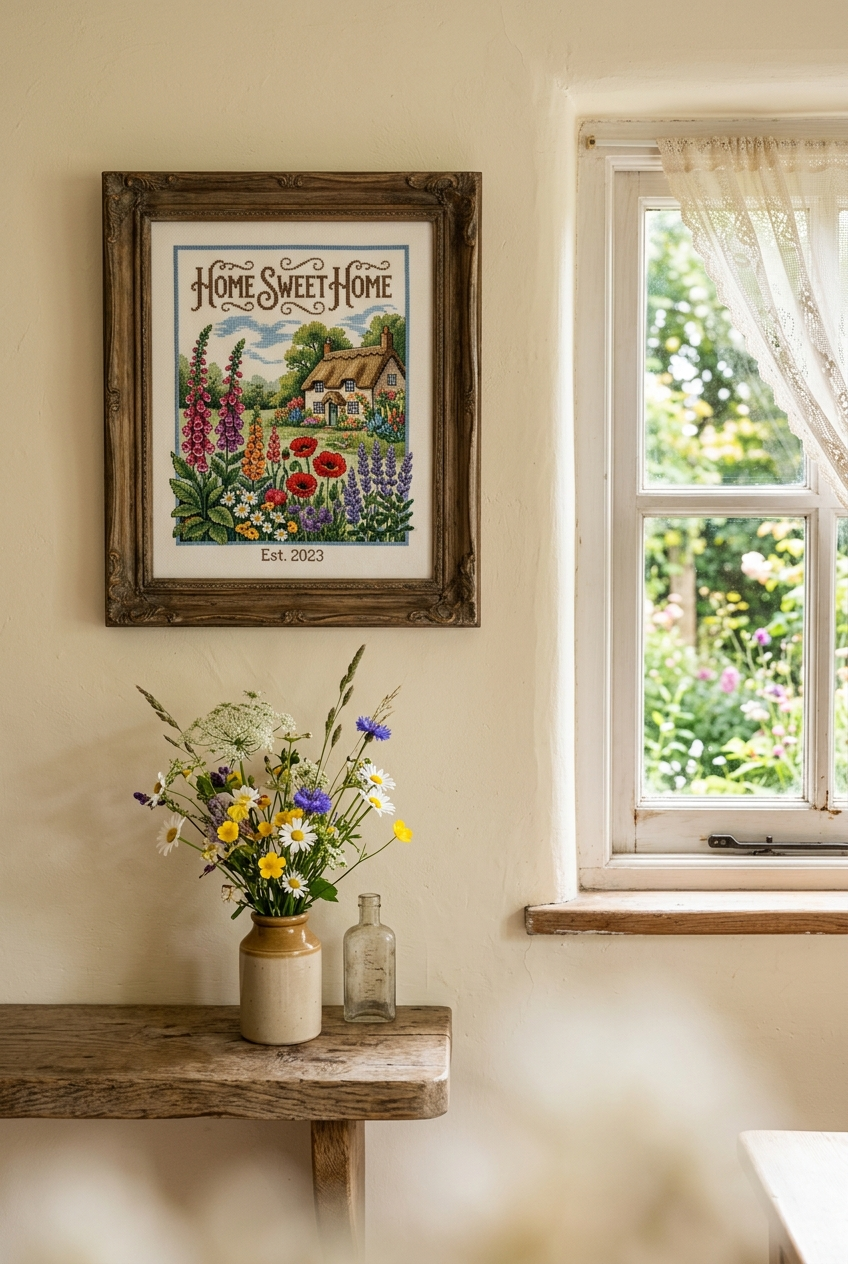
Finished framed cross stitch wall art displayed in a cozy cottage room with natural light
Keep Reading
How to Read a Cross Stitch Pattern: A Complete Guide for New Stitchers
Once you know the glossary terms, the next step is learning how to actually read a charted design. This guide walks you through symbols, color keys, and grid navigation.
Learn to Read ChartsWhat Is Frogging in Cross Stitch? (And How to Do It Without Losing Your Mind)
Frogging made the glossary, but it deserves its own deep dive. This article covers when to rip, how to rip safely, and how to keep your sanity intact.
Read the Frogging GuideCross Stitch for Beginners: Everything You Need to Start Your First Project Today
If you're brand new and this glossary is your first stop, head here next. It covers fabric, floss, tools, and your very first stitches from the ground up.
Start Your First ProjectFrequently Asked Questions
What does WIP mean in cross stitch?
WIP stands for Work In Progress. It's any cross stitch project you're actively stitching but haven't finished yet. Most stitchers have multiple WIPs going at once, and that's perfectly normal.
What is frogging in cross stitch?
Frogging means ripping out stitches to fix a mistake. The name comes from saying "rip it, rip it" quickly — it sounds like a frog. It's a universal part of stitching, and the best approach is to catch errors early before they spread.
What does UFO mean in cross stitch?
UFO stands for UnFinished Object — a project you started but set aside without completing. The difference between a UFO and a WIP is that a UFO has been shelved with no active work happening on it.
What is a SAL in cross stitch?
SAL stands for Stitch-A-Long. It's a group event where stitchers work on the same pattern or theme at the same time, sharing updates online. SALs build community and keep motivation high.
What does confetti stitching mean?
Confetti stitching refers to sections of a pattern where many different colors appear just one or two stitches at a time, scattered like confetti. These areas are slower to stitch because of frequent color changes, but they create rich, detailed results.
What is the parking method in cross stitch?
Parking is a technique where you bring your needle up at the next spot where a color will be used, then leave it parked there while you switch to a different color. It reduces starting and stopping threads but requires managing multiple active needles at once.
What does BAP mean in cross stitch?
BAP stands for Big Ass Project. It describes a large, ambitious cross stitch piece that can have hundreds of thousands of stitches, dozens of colors, and may take months or years to complete.
What are ORTs in cross stitch?
ORT stands for Old Remaining Thread — the small bits of floss you trim after finishing a length. Many stitchers collect their ORTs in a jar throughout a project as a colorful keepsake that represents all the work that went into the piece.
-- Tracey Kramer
Founder & Designer, Sunrays Creations Needlearts
Hand-charted designs since 2004 • Marysville, Ohio