
Cross Stitch Supplies for Beginners: What You Actually Need
Posted by Tracey M. Kramer on 24th May 2020
A Note from Tracey Kramer
I've been stitching for over 30 years and designing patterns since 2004. I get asked "what do I need to start?" constantly — and the honest answer is both simpler and more nuanced than most beginner guides admit. This is the real list.
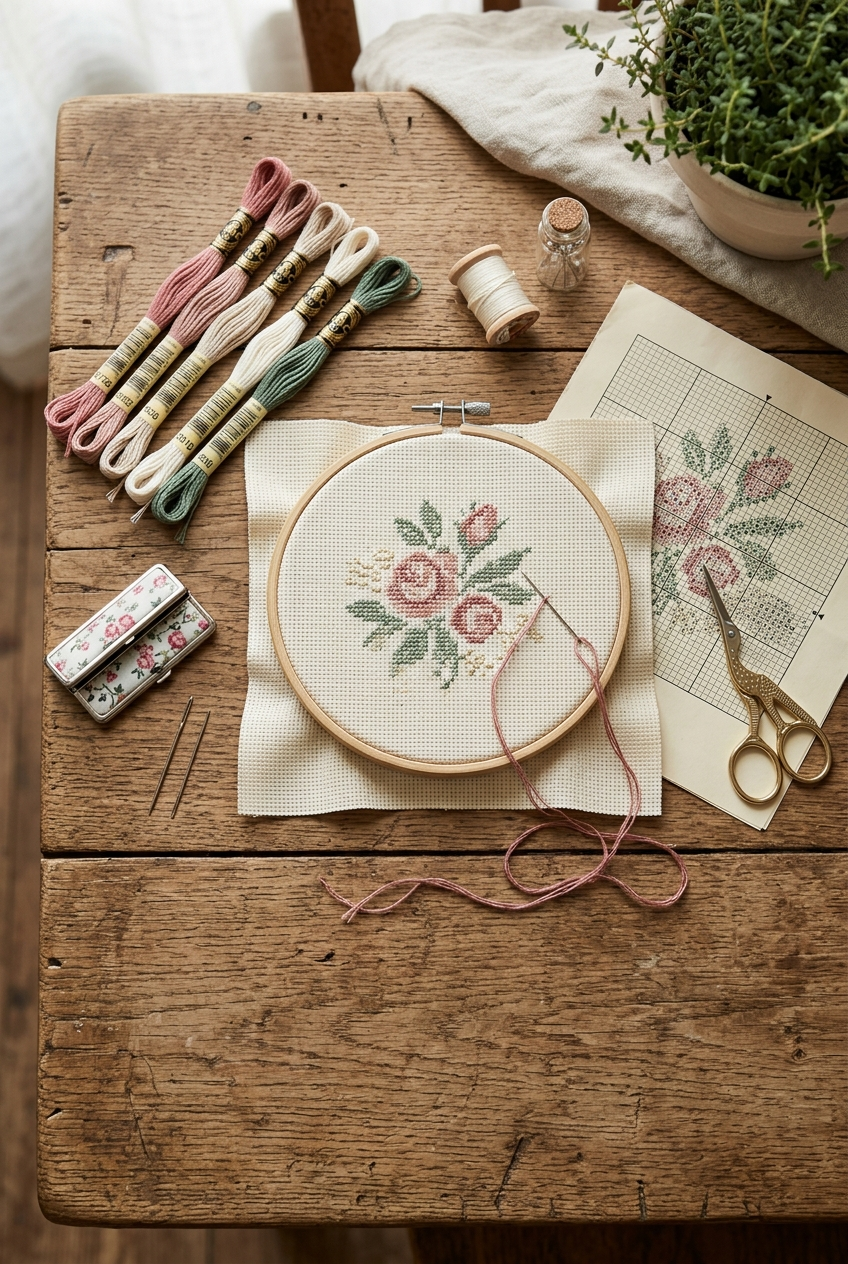
The supplies you really need — and a few extras worth having once you're hooked.
By Tracey Kramer • • 10 min read
Cross stitch is one of those crafts where the supply list looks short — and technically it is. You can sit down with a hoop, some Aida cloth, a needle, and a few skeins of floss, and you're stitching. That part is true.
But here's what nobody tells you: the difference between a frustrating first experience and one that hooks you for life usually comes down to a handful of specific choices — the right lighting, the right fabric count, the right kind of frame. Get those right and cross stitch feels effortless. Get them wrong and you'll wonder why everyone raves about this hobby.
I'm going to walk you through everything — the essentials first, then the upgrades that genuinely matter, then the tools I consider non-negotiable after 30+ years of stitching. Think of this as the supply list I'd hand to a friend who was just starting out.
The True Essentials: Start With These Four Things
If you stripped cross stitch down to its absolute minimum, you'd need four things: a pattern, fabric, thread, and a needle. Everything else is an enhancement. But within each of these four categories, there are better and worse choices — especially for beginners.
1. A Cross Stitch Pattern
Your pattern is your roadmap, and a good one makes all the difference. Look for a pattern with a large, clearly printed grid — one where the symbols are distinct enough to tell apart at a glance, not a tiny jumble where a filled square and a half-square look identical in poor light. Well-charted patterns include a clear color key with DMC thread numbers, a stitch count summary, and ideally some stitch instructions for any specialty stitches required. If you're a beginner, choose a pattern that calls for whole cross stitches only — no fractional stitches, no French knots.
Is it okay to start with a complex pattern as your very first project? You can, but a simpler design with fewer colors and a smaller stitch count will let you build the muscle memory for the stitch itself before you're also managing 40 colors, half stitches, and a 24-inch frame. Once that stitch is automatic, complexity becomes fun rather than overwhelming.
2. Aida Cloth
Aida is the most beginner-friendly cross stitch fabric available, and it's what I'd recommend for anyone starting out. It's a stiff woven fabric with a visible, regular grid of holes — the holes tell you exactly where to put your needle. No counting individual threads, no guesswork. 14-count Aida cloth (find on Amazon) is the most popular choice for beginners — each square of the grid is large enough to see clearly without magnification, but fine enough that finished pieces look elegant.
The count number tells you how many squares fit into one inch. Lower numbers (11-count, 14-count) have larger squares and are easier to stitch. Higher numbers (18-count, 28-count) produce finer detail but require steadier hands and better lighting. For most beginners, 14-count is the sweet spot.
Aida comes in white, cream, and a range of colors. Cream is the most forgiving — it photographs beautifully and hides any minor tension inconsistencies. White can look clinical depending on your color palette. Darker Aida fabrics require special techniques (more on that in a separate guide), but are spectacular with the right design.
3. DMC Embroidery Floss
DMC is the universal standard in cross stitch. Almost every pattern you'll ever find is charted with DMC color numbers, and the global uniformity is a godsend — a skein of DMC 321 (Christmas red) bought in Ohio is the exact same shade as one bought in France. That consistency matters when you're mid-project and need to reorder a color.
Each skein of DMC contains 6 strands of thread twisted together. For 14-count Aida, you'll typically use 2 strands for your crosses. Separate the strands as needed — don't pull all 6 through the needle. The floss is relatively inexpensive, but the number of colors in a large pattern can add up, so buy exactly what your pattern lists and check for colors you may already own.
4. Tapestry Needles
Cross stitch uses blunt-tipped tapestry needles — not sharp embroidery needles. The blunt tip slides through the weave of the Aida without splitting the fabric threads. For 14-count Aida with 2 strands of floss, a size 24 tapestry needle is standard. Some stitchers prefer size 26, which is slightly finer. A multi-pack of tapestry needles (Amazon) runs just a few dollars and lasts for years. Buy a few extra — needles have a way of disappearing.
Lighting: The Single Biggest Upgrade You Can Make
I've said this for years and I'll keep saying it: poor lighting is the number one reason new stitchers give up before they get good. If you're squinting at your fabric, misreading symbols, or losing your place on the grid, the problem isn't your technique — it's your light source.
Natural daylight is the gold standard for accurate color matching, but it's not always available, especially for evening stitchers (which is when most of us actually sit down to stitch). A good OTT-style daylight bulb or a craft lamp with a high CRI (Color Rendering Index) of 90 or above replicates natural light closely enough that your color perception stays accurate and your eye fatigue drops dramatically.
What you want: a lamp positioned to illuminate your fabric without creating glare on the chart. Many stitchers use a clip-on or freestanding daylight lamp aimed at the hoop from the upper left (for right-handed stitchers). The goal is even illumination without shadows.
What you don't want: overhead ceiling lights (creates shadows across your frame), table lamps with warm yellowish bulbs (distorts color), or phone flashlights (awkward and your arms give out fast).
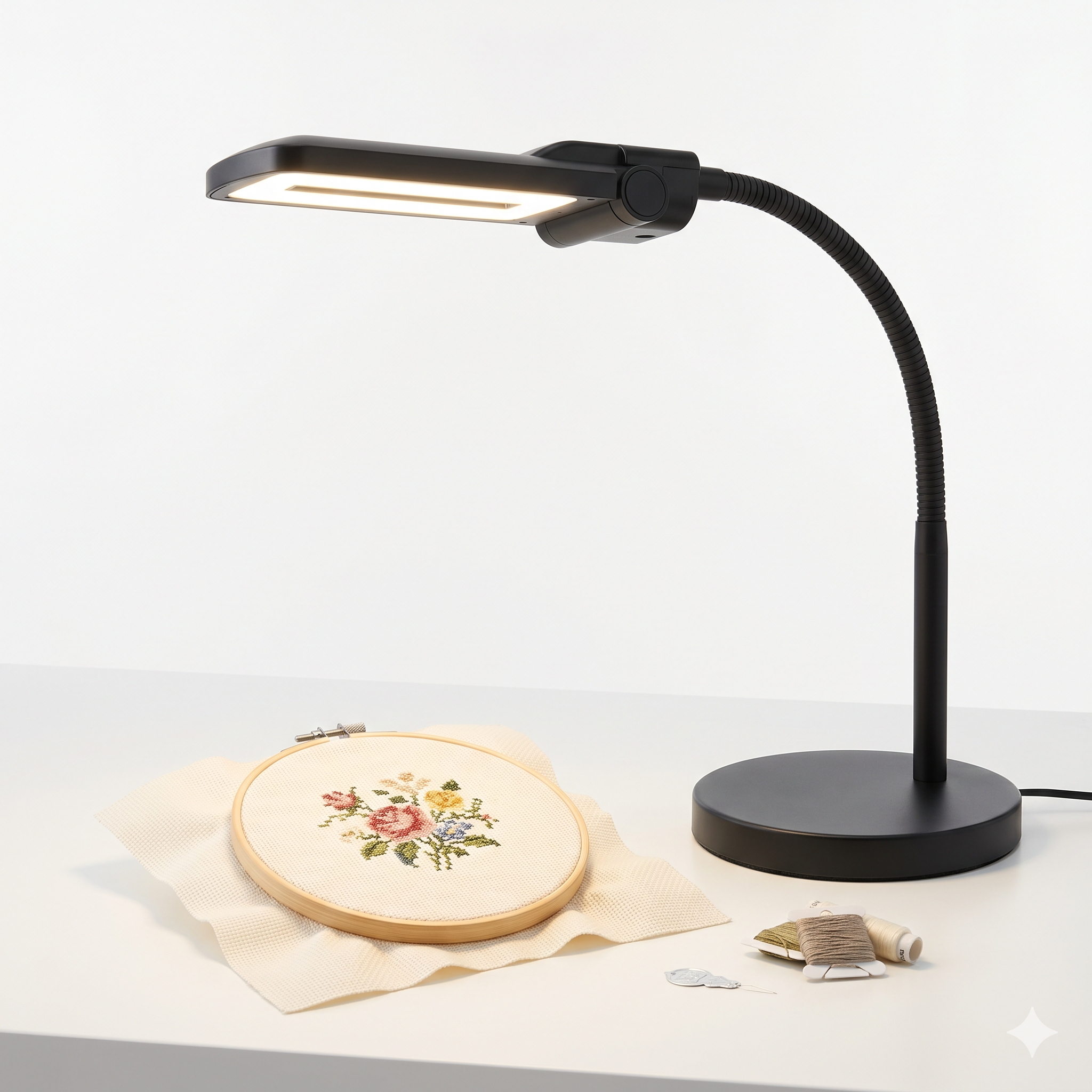
Tracey's First Recommendation
OTT Daylight Craft Lamp
After 30+ years of stitching, good lighting remains my single biggest quality-of-life upgrade recommendation. A proper OTT or daylight LED lamp eliminates eye strain, keeps colors true, and lets you stitch comfortably in the evening — which is when most of us actually stitch.
See on Amazon"Poor lighting is the number one reason new stitchers give up before they get good. If you're squinting, the problem isn't your technique — it's your light source."
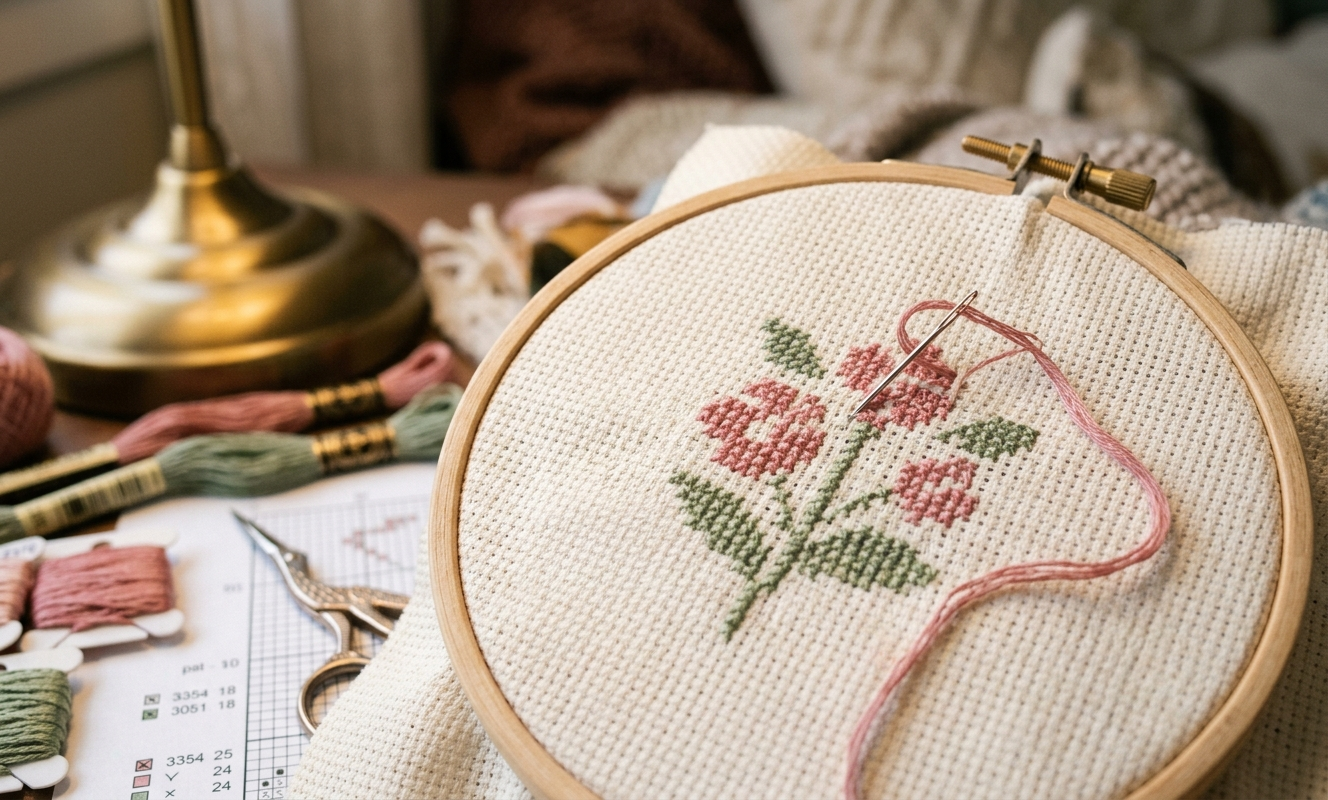
A well-organized setup makes long sessions more enjoyable — and keeps your tension consistent.
Frames and Hoops: Keeping Your Work Taut
You can technically stitch in-hand — holding the fabric loosely in your non-dominant hand without any frame. Some experienced stitchers prefer this, especially for small portable projects. But for most people, especially beginners, a frame or hoop makes a real difference in stitch consistency and tension.
The classic round embroidery hoop is inexpensive and works fine for smaller projects. Tighten the outer ring so the fabric sits taut but not distorted, and re-tighten periodically as it relaxes. For larger pieces, a Q-Snap frame or a scroll frame will hold more fabric without distorting the weave. Distorted Aida is a real problem — once the mesh gets pulled off-square, your stitches start to look uneven even when they're technically correct.
If you plan to stitch regularly, a lap frame or a stand-mounted frame frees both of your hands, which makes stitching faster and more comfortable. With both hands free you can push the needle through from below with one hand and pull it through from above with the other — the two-handed stitching technique, once mastered, is noticeably quicker than one-handed stitching.
Lap frames and seat frames are designed to be held between your legs or clamped to a chair, keeping the frame steady without a full floor stand. Floor stand frames are the ultimate setup — both hands free, no lap fatigue, adjustable height — but they're an investment you make once you know the hobby is sticking around.
Small Tools That Make a Bigger Difference Than You'd Expect
Embroidery Scissors
A small, sharp pair of embroidery scissors is essential. Regular scissors are too bulky to snip thread ends close to the fabric. A good pair of stork scissors or any small sharp-pointed embroidery scissors makes clean thread management possible — and clean thread management is what separates a tidy back-of-fabric from a chaotic nest of loose ends.
Highlighters and Line Finders
Marking your progress on the chart prevents costly miscounting mistakes. Many stitchers use a yellow highlighter to mark completed rows directly on a photocopy of the chart (never on the original). Water-erasable fabric marking pens — the blue disappearing ink variety — can also be used directly on light-colored Aida cloth to mark grid centers or section boundaries. A magnetic line finder or sticky note placed under your current row on the chart keeps your eye on the right line. Magnetic chart keepers with line finders (find on Amazon) are inexpensive and prevent the most common beginner mistake: losing your row on a dense chart.
A Magnifier
If you're working on 18-count or higher, or if fine print on your pattern chart is giving you trouble, a magnifier is worth considering. Clip-on magnifiers for frames, lighted floor magnifier stands, and even magnifying glasses with built-in lights all have their fans. The one I see recommended most by serious stitchers is a hands-free floor stand model with a daylight LED ring — it illuminates and magnifies simultaneously, which is the combination that makes the biggest difference for complex detail work.
A Needle Minder
A needle minder is a small decorative magnet that attaches to your fabric and holds your needle when it's not in use. Sounds minor, but the number of needles I've lost to sofa cushions over the years would make you weep. A needle minder is a $5 solution to a genuinely annoying problem.
Comfortable Seating
Cross stitch sessions run long, and bad posture or an uncomfortable chair will cut your session short through back and neck pain. A chair with good lumbar support, positioned so your elbows can rest comfortably while you stitch, makes evening sessions both more comfortable and more productive. It sounds like obvious advice but it's the kind of thing stitchers figure out the hard way.
Organizing Your Floss: More Important Than Beginners Expect
The moment a pattern calls for 30 or more colors, floss management becomes a project in itself. Every DMC skein you buy should be immediately wound onto a bobbin and labeled with its DMC number. A clear plastic storage case with multiple compartments keeps bobbins organized by number, which makes finding a specific color fast rather than a 10-minute scramble through a tangled mess of floss.
Sorted, labeled bobbins also help you track what you've used, what you need to reorder, and what colors you already own before you buy duplicates. After a few projects, you'll find yourself with a working stash — and a good stash organization system saves real money over time by preventing duplicate purchases.
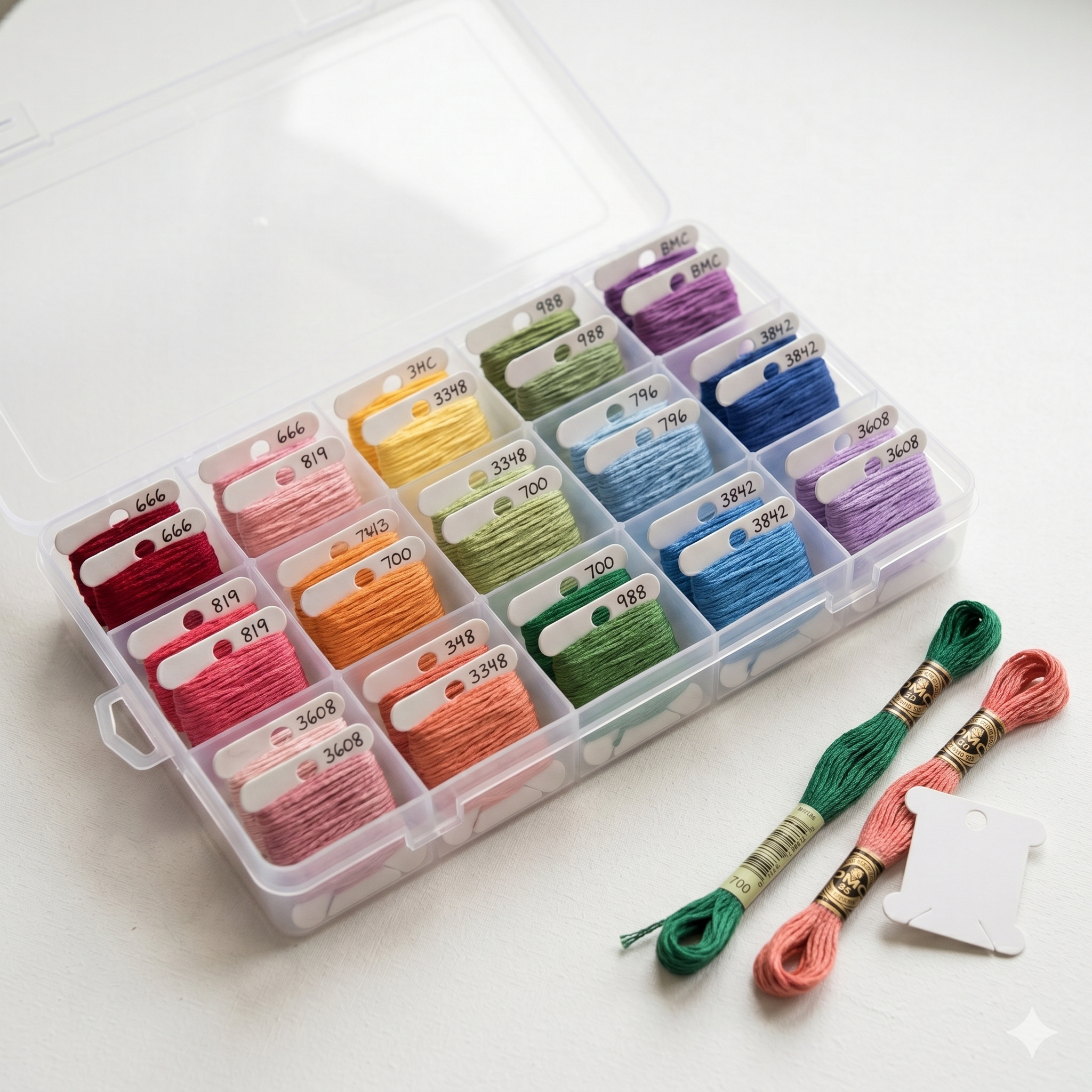
Keep Your Stash Under Control
DMC Floss Bobbin Organizer System
Wind your floss onto labeled cardboard bobbins and sort them in a clear storage case. Once you've done this, you'll never go back to the tangled-skein chaos. This is the organization system serious cross stitchers swear by — it pays for itself the first time you avoid buying a duplicate color.
See on AmazonGet Stitching Tips & New Patterns from Tracey
Honest advice, new Sunrays designs, and occasional VIP-only offers. No fluff.
No spam. Unsubscribe any time.
A Few Things to Keep in Mind as You Shop
Cross stitch supply stores, both local and online, can be overwhelming for a new stitcher. Here's a shortcut: before you buy anything beyond the bare essentials, stitch one small project on 14-count Aida with whatever lighting you already have. That first project will tell you a lot about what you actually need. Maybe you discover the lighting is fine and what you really need is a better frame. Maybe you discover the counting is the hard part and a line finder would save your sanity. Your first project is reconnaissance as much as it's stitching.
It's also worth buying quality over quantity on the few things that matter most: a good daylight lamp, a sharp pair of embroidery scissors, and quality DMC floss are worth the extra few dollars. The cheap substitutes for each of these create frustrating experiences that feel like problems with the hobby when they're actually problems with the tools.
Finally: don't let the stitch count of your first pattern intimidate you. 10,000 stitches sounds like a lot until you realize that a comfortable evening session produces 500 stitches in about an hour. A "big" project is just many evenings of the same pleasant rhythm. That's the thing about cross stitch — the size of the work never changes the nature of the stitch.
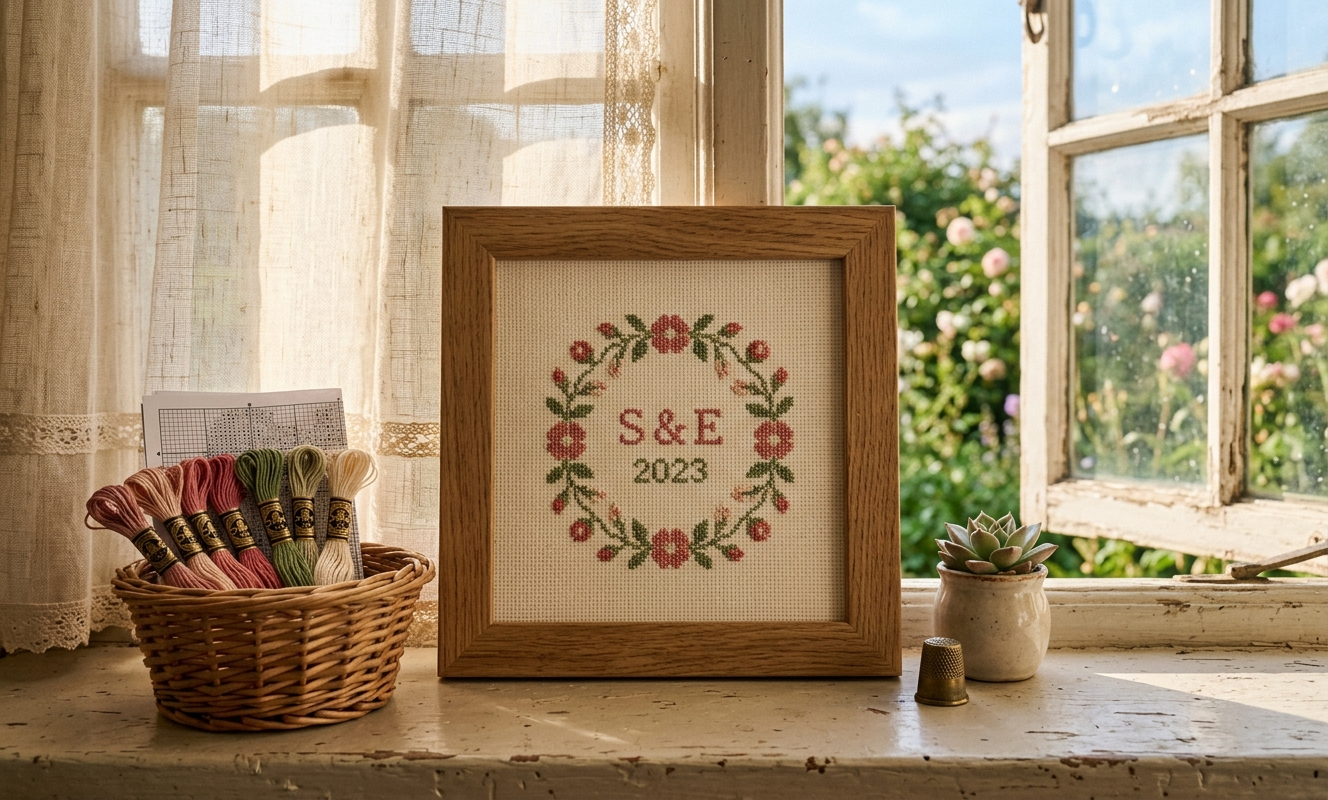
The goal — supplies that fade into the background and let the stitching speak for itself.
Looking for patterns to put all these supplies to work? Browse beginner-friendly Sunrays patterns or explore our Owner's Choice collection — the designs I'd personally hand to a new stitcher first.
Keep Reading
Tips for Stitching on Dark Aida Cloth
Once you've mastered the basics on cream Aida, dark fabric opens up a whole new world of dramatic, rich finished pieces. Tracey shares the lighting and technique tricks that make dark cloth stitching manageable.
READ THE GUIDEThe Types of Cross Stitch Patterns I Prefer (and Ones I Avoid)
Once you have your supplies, the next question is what to stitch. Tracey gets candid about the pattern qualities she seeks out — and the things that make her put a pattern back on the shelf.
READ THE ARTICLE7 Reasons to Buy Your Cross Stitch Patterns from Sunrays Creations
What makes a pattern shop worth your loyalty? Tracey breaks down exactly what you're getting when you buy from a small independent designer — and why it matters for the quality of your finished work.
READ THE ARTICLEFrequently Asked Questions
What count Aida cloth should a beginner start with?
14-count Aida is the ideal starting point. Each grid square is clearly visible without magnification, the holes are large enough to find easily with a tapestry needle, and finished pieces look clean and proportional. Move to 18-count once you're comfortable with the stitch and want finer detail in your finished work.
Do I need a hoop or frame, or can I stitch without one?
You can stitch in-hand, and some experienced stitchers prefer it. But for beginners, a hoop or frame makes consistent tension easier to achieve, which directly affects how clean and even your crosses look. A basic 6-inch round hoop costs under $5 and is a worthwhile investment from day one.
Is DMC floss really necessary, or can I use any embroidery thread?
DMC is the de facto standard because nearly every cross stitch pattern in the world is charted using DMC color numbers. Using off-brand thread means you'll need to match colors by eye, which is time-consuming and inexact. For your first few projects especially, sticking to DMC makes following the pattern straightforward and ensures your colors match the designer's intent.
What size needle do I need for 14-count Aida?
A size 24 tapestry needle is standard for 14-count Aida with 2 strands of DMC floss. Size 26 also works and is slightly finer. Avoid sharp embroidery needles — you want a blunt tip that slides through the Aida holes without piercing the fabric threads.
How important is lighting for cross stitch?
More important than most beginners realize. Poor lighting causes eye strain, makes pattern symbols harder to distinguish, and leads to miscounting mistakes. A daylight-balanced craft lamp (OTT light or equivalent, CRI 90+) is the single upgrade that most immediately improves the cross stitch experience for evening stitchers.
Can I start with a large, complex pattern as my first project?
You can, but a simpler design lets you focus on building the stitch itself before you add complexity. Once the cross stitch motion is muscle memory — typically after your first 1,000 or so stitches — larger and more complex patterns become accessible rather than overwhelming. Your first project is about learning the stitch; your second is where the real fun starts.
— Tracey Kramer
Founder & Designer, Sunrays Creations Needlearts
Hand-charted designs since 2004 • Marysville, Ohio