
Cross Stitch for Beginners: Everything You Need to Start Your First Project Today
Posted by Tracey Kramer on 25th Apr 2026
A Note from Tracey Kramer
After 22 years of designing cross stitch patterns from our Marysville studio, I've learned that the best guides come from real stitching — not theory. This is what I'd tell a friend.
Cross Stitch for Beginners: Everything You Need to Start Your First Project Today | Sunrays Creations
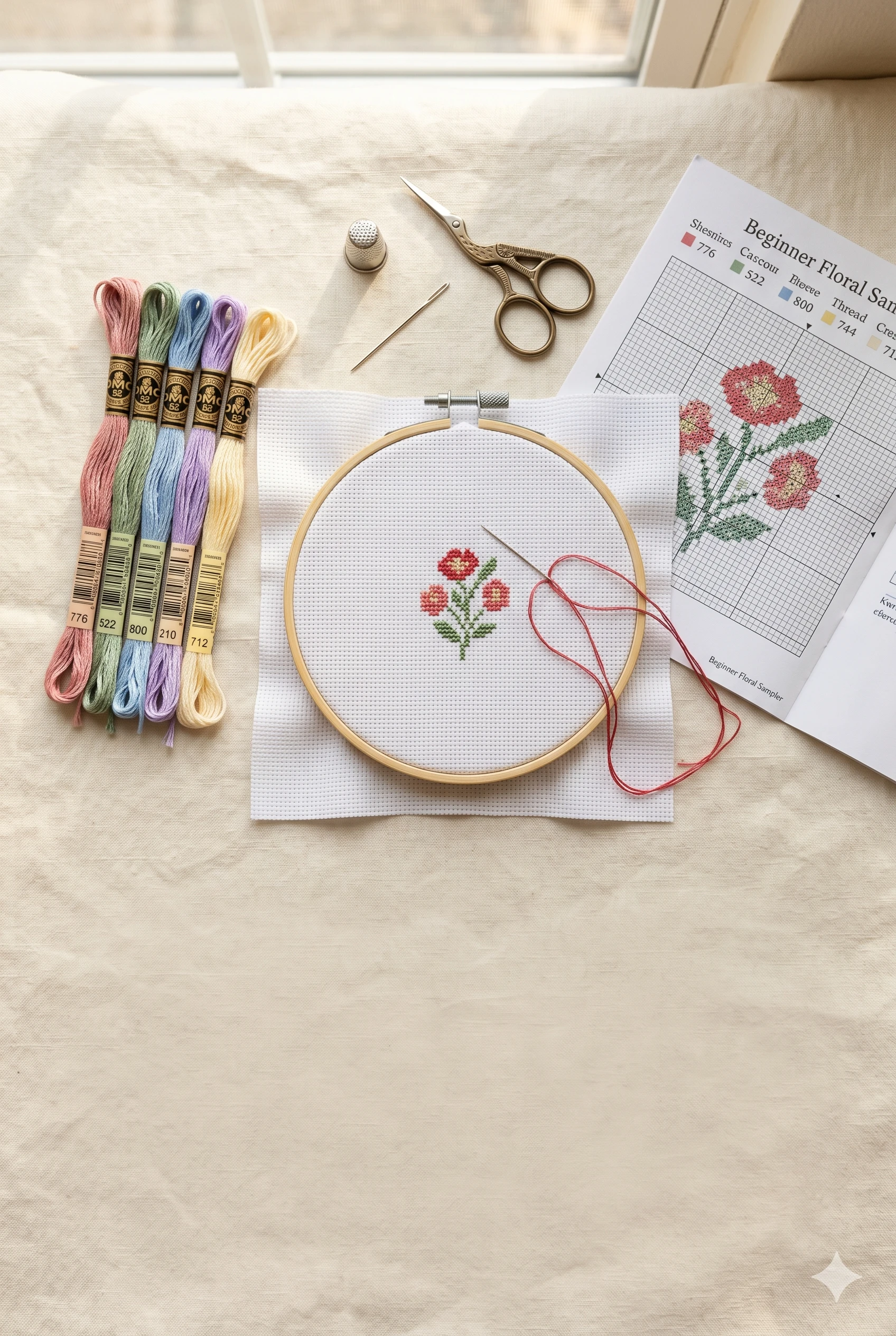
Cross stitch for beginners comes down to four things: 14 or 18-count Aida cloth, DMC six-strand floss, a sharp tapestry needle, and a pattern you actually love. That's it. After 22 years of designing patterns and helping new stitchers find their footing, I can tell you the craft is far less intimidating than it looks, and the rhythm of pulling thread through fabric becomes the calmest part of your day. If you've been circling this hobby for months wondering if you can actually do it, the answer is yes, and I'll walk you through every step.
What Counted Cross Stitch Actually Is
Counted cross stitch is exactly what it sounds like. You count squares on a gridded fabric, follow a charted pattern, and place small X-shaped stitches to build an image. The fabric is blank when you start. The pattern lives on paper (or your tablet), and your job is to translate those symbols onto the cloth one stitch at a time.
I want to clear up a common mix-up before we go further. Counted cross stitch is not the same as stamped cross stitch, where the design is pre-printed on the fabric. It's also not needlepoint, which uses a stiffer canvas and different stitches and finishes as pillows or chair seats. At Sunrays Creations, every pattern I design is for counted cross stitch on Aida cloth, finished as framed wall art. That's the lane I've been in for over two decades, and it's the lane I'll keep you in here.
The beauty of counted work is that once you learn to read a chart, you can stitch anything. A small floral sampler, a 12,000-stitch landscape, a sweet little Halloween cat. The skill is the same. Only the patience changes.
The Beginner Supply List (Keep It Simple)
New stitchers always ask me for a shopping list, and I always give the same short one. You don't need a craft store haul to start. You need five things.
Aida cloth, 18-count
I design every Sunrays pattern for 18-count Aida. It's a stiff, gridded cotton fabric where each square is clearly visible, which is exactly what a beginner's eyes need. Some teachers will steer you toward 14-count because the holes are larger, and that's fine for your very first practice piece. But I've watched too many beginners outgrow 14-count in a week and wish they'd started on 18. The finished look is crisper, the stitches sit tighter, and the framed piece looks like art instead of a craft project.
DMC six-strand embroidery floss
DMC is the standard. It's colorfast, consistent batch to batch, and every pattern in the world calls out DMC numbers. On 18-count Aida, you'll separate the six strands and stitch with two strands at a time. That detail matters. Three strands will look bulky, one strand will look thin and patchy.
A size 24 or 26 tapestry needle
Tapestry needles have a blunt tip and a long eye. Shop on Amazon>> The blunt tip slips between fabric threads instead of piercing them, which is exactly what you want on Aida. Size 24 works beautifully for 18-count.
A 5 or 6 inch embroidery hoop
I use a traditional wooden or plastic embroidery hoop, 5 to 6 inches across. Always have. The hoop holds your fabric taut so your stitches lie flat and even, and a smaller hoop fits comfortably in your hand for hours. You may hear other stitchers talk about Q-snaps as an alternative frame system, and they exist in the community, but my own tool is and has always been a simple round hoop. Start there.
A pattern you love
This is the secret ingredient. Pick a chart that makes you smile when you look at it. Motivation matters more than skill level when you're new. A small design you adore will get finished. A complicated one you only sort of like will become a UFO (UnFinished Object) in a drawer.
How to Actually Make Your First Stitch
Here's the part that intimidates beginners and shouldn't. A cross stitch is two diagonal stitches that cross at the center, forming an X. That's the entire foundational skill of the craft.
Find your starting point
Fold your Aida in quarters to find the center, then match it to the center arrows on your chart. Starting in the middle keeps your design balanced on the fabric so you don't run off an edge. I learned this the hard way on my very first piece, and I've recommended center-start ever since.
Anchor your thread without a knot
Knots create lumps that show through framing and snag on the back. Instead, leave a 1-inch tail on the back of your fabric and catch it under your first four or five stitches as you work. Clean, flat, professional.
Make the X
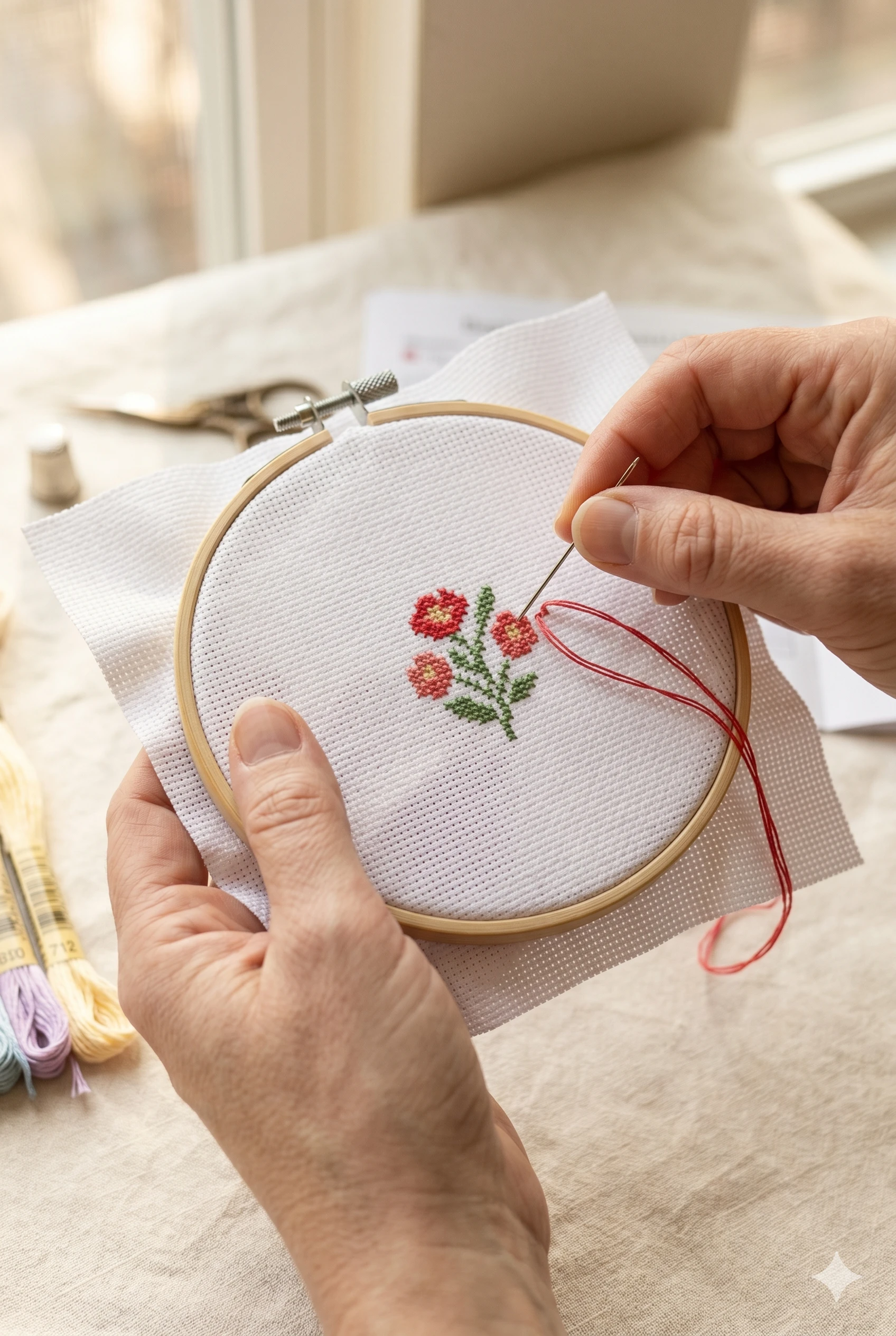
Bring your needle up through the bottom-left hole of a square, down through the top-right. That's your first half. Then up through the bottom-right, down through the top-left. That's your X. Always cross your stitches the same direction across the whole piece. It's the difference between fabric that catches the light evenly and fabric that looks restless.
Work in rows when you can
For a row of the same color, stitch all the bottom-left to top-right diagonals first, then come back across making the top half of each X. This is faster and gives a tidier back. The tidier your back, the tidier your front.
Reading Your First Pattern Without Panicking
A cross stitch chart is a grid where each square equals one stitch on your fabric. Every square has a symbol, and each symbol corresponds to a DMC color listed in the legend. That's the whole language.
The thing that throws beginners is volume. A chart can have 30 colors and look like an eye chart. The trick is to ignore that overwhelm and zoom in on a 10-square block. Stitch what's in front of you. The grid lines, usually marked every 10 squares, are your friends. They let you count in chunks instead of one square at a time.
I always tell new stitchers to highlight finished sections on a working copy of their chart. Print the PDF, grab a highlighter, and mark off rows as you complete them. >>Buy Highlighters on Amazon>> You'll never lose your place, and watching the highlighted area grow is genuinely satisfying.
If a single area has many colors packed together, the community calls that confetti, and it's the one part of cross stitch that earns its reputation for being fiddly. Beginners should pick patterns with larger color blocks first. Save the confetti pieces for project number three or four.
Mistakes Are Part of the Craft (Welcome to Frogging)
You will miscount. You will put a stitch in the wrong square. You will look down two hours later and realize an entire flower is one row off. Welcome. We call ripping stitches out frogging, because rip-it, rip-it sounds like a frog. Every stitcher I know frogs regularly, including me, after 22 years.
Use small, sharp embroidery scissors and snip carefully on the back of the fabric. Pull the cut threads out gently with tweezers if you have them. Don't yank. Aida is forgiving, but it's not invincible.
The mindset shift that helps most new stitchers: frogging isn't failure, it's editing. Every finished piece you've ever admired on FlossTube or Instagram has been frogged at some point. The stitchers who get good are the ones who stop being afraid to undo work.
Picking Your First Project (And Why It Should Be Small)
The single biggest mistake I see new stitchers make is choosing a BAP (Big Ass Project) as their first piece. A 200,000-stitch landscape is a beautiful goal, but it is not a beginner project. It's a confidence killer.
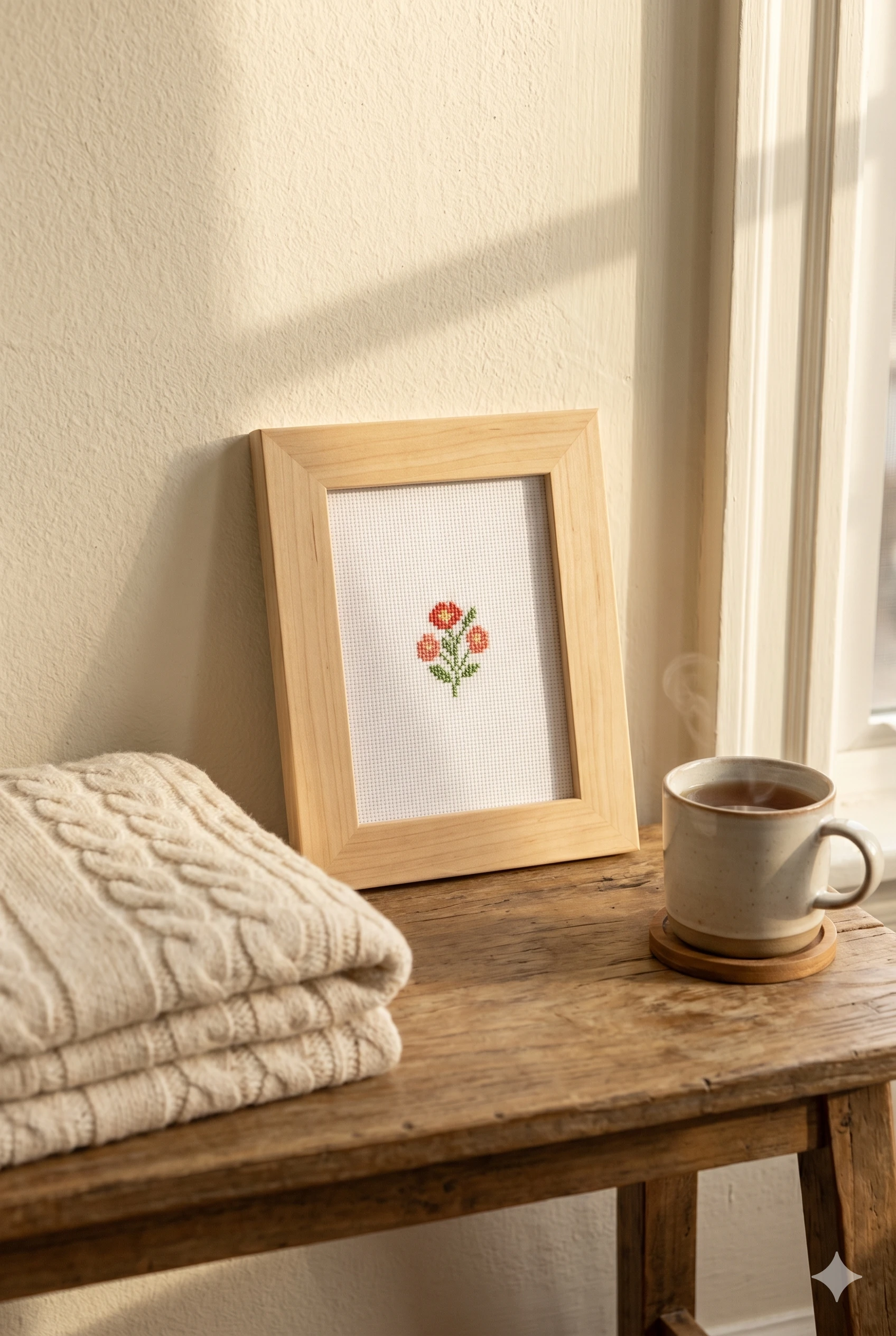
Your first piece should be something you can finish in two to four weeks of casual evening stitching. Small enough to feel achievable, detailed enough to teach you the basics. A seasonal motif, a single floral spray, a charming animal portrait. When you frame that finished piece (a FFO, Finally Finished Object), you'll have proof that you can do this, and that proof will carry you through every project after.
I design with this exact arc in mind. My beginner-friendly charts at Sunrays are sized to be finished, framed, and hung on a wall in a reasonable timeframe. Because the satisfaction of a completed piece on the wall is what turns a curious beginner into a lifelong stitcher.
Setting Up Your Stitching Space
You don't need a craft room. I've stitched on couches, in waiting rooms, on porches, in passenger seats. What you do need is decent light and a flat surface for your chart.
Daylight bulbs make an enormous difference. Standard warm bulbs distort floss colors, especially in the blue-green and gray-purple families. A simple daylight LED floor lamp pays for itself the first time you correctly distinguish DMC 415 from DMC 762.
Keep a small dish or magnetic tray nearby for your needle when you set the project down. Lost needles in couch cushions are a household hazard. Ask any stitcher.
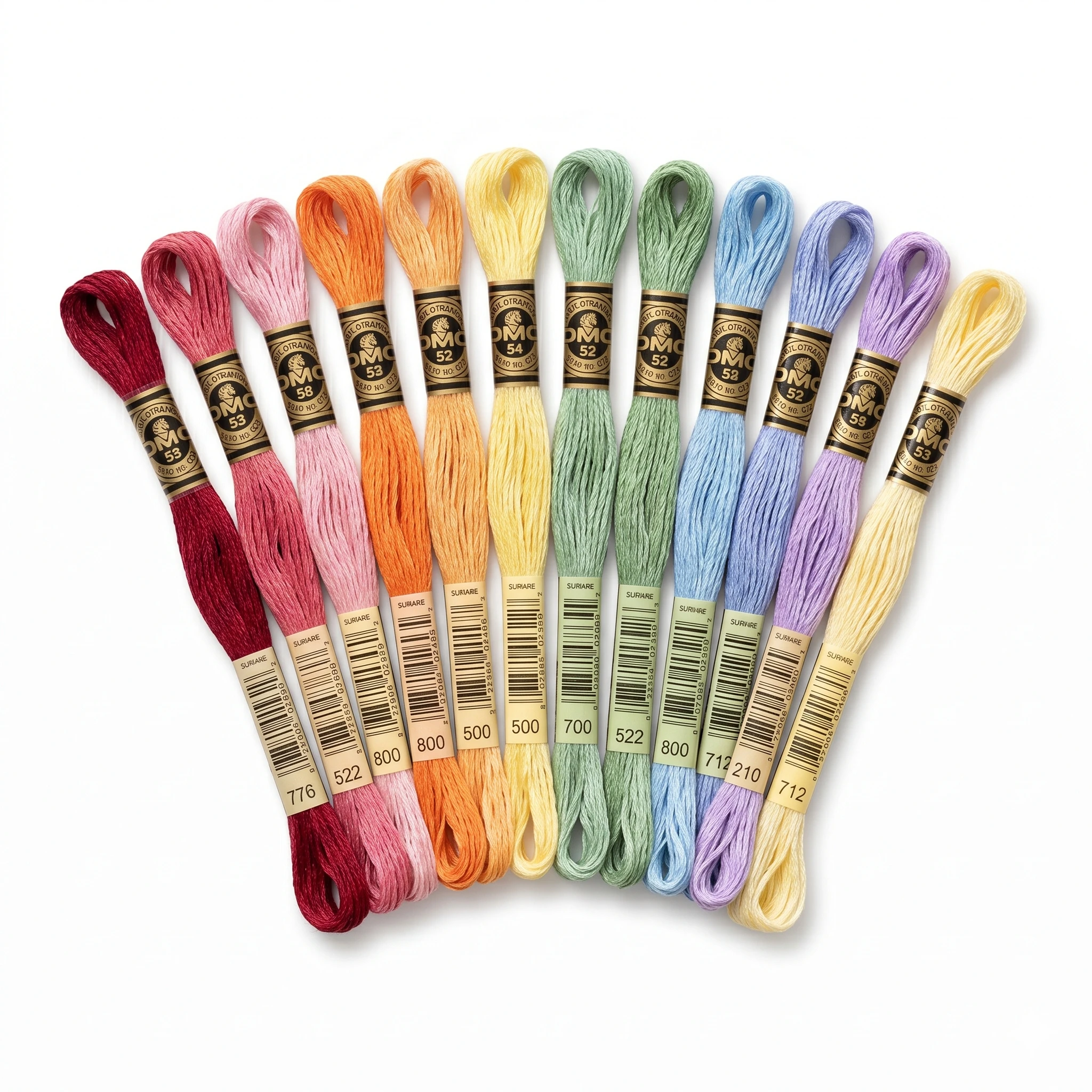
DMC 6-Strand Embroidery Floss Variety PackDMC is the floss I design every pattern around, and a starter assortment means you're not stopping mid-project to order one missing color. Two strands on 18-count Aida gives you that crisp, even coverage that frames beautifully. → Shop on Amazon |
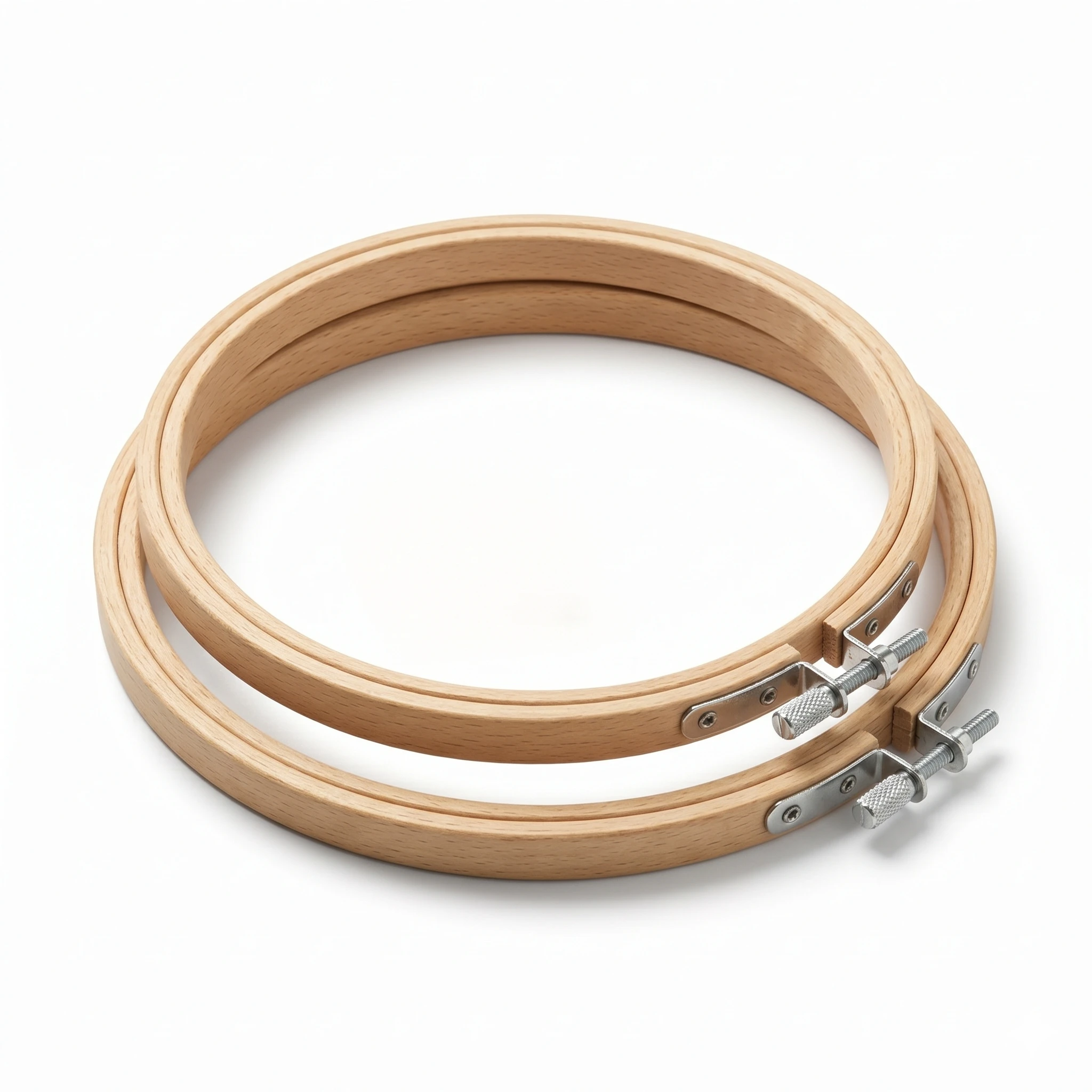
Wooden Embroidery Hoop Set, 5 and 6 InchA simple wooden hoop is the tool I've used since day one. The 5-6 inch sizes fit comfortably in your hand for long stitching sessions and hold the fabric taut enough that your X stitches lie flat and even. → Shop on Amazon |
Keep Reading
Cross Stitch Fabric Types | How to Choose For Your Cross Stitch ProjectOnce you've finished your first piece on 18-count Aida, this guide walks you through how the fabric world opens up from there. Read Article → |
Cross Stitch Hoops & Frames: Complete Guide | Sunrays CreationsThe right hoop or frame changes everything. The wrong one turns a relaxing evening into a wrestling match. Read Article → |
Getting the Best Price for DMC Floss is Worth its Weight in Gold!Floss is the heart of every project, and this guide covers strand counts, color matching, and storage so your thread stays workable for years. Read Article → |
Frequently Asked Questions
What is the easiest cross stitch fabric for a beginner?
I recommend 18-count Aida cloth. It's stiff, clearly gridded, and forgiving for new stitchers. Some teachers suggest 14-count because the holes are larger, but most beginners outgrow it quickly and the finished 18-count piece looks crisper when framed.
How many strands of floss do I use on 18-count Aida?
Two strands of DMC six-strand floss. Separate the strands gently from the full length, recombine two of them, and stitch with that. Three strands looks bulky on 18-count, one strand looks thin and patchy.
Do I need a hoop to cross stitch?
I always recommend one. A 5 or 6 inch wooden or plastic embroidery hoop holds your fabric taut so your stitches lie flat and even. Some stitchers use other frame systems like Q-snaps, but a traditional hoop is what I've used for 22 years and it's perfect for beginners.
What's the difference between counted cross stitch and stamped cross stitch?
Counted cross stitch starts with blank gridded fabric and you place stitches by following a chart. Stamped cross stitch has the design pre-printed on the fabric so you stitch over the marks. Sunrays Creations designs counted patterns only, which is the version of the craft I teach and design for.
How long does it take to finish a beginner cross stitch project?
A small beginner-sized pattern usually takes two to four weeks of casual evening stitching. Pick something small enough to actually finish, because a completed framed piece is what turns a curious beginner into a lifelong stitcher.
What does 'frogging' mean in cross stitch?
Frogging is the community term for ripping out stitches you've made in error. The name comes from rip-it, rip-it sounding like a frog. Every stitcher frogs regularly, including me. It's editing, not failure.
Can I learn cross stitch without taking a class?
Absolutely. The foundational stitch is simply two diagonals that cross to form an X, and you can learn it in an afternoon with a good pattern, 18-count Aida, DMC floss, and a tapestry needle. Most stitchers I know are entirely self-taught from books, charts, and FlossTube videos.
Join the Sunrays stitcher's circle
New patterns, seasonal promos, and Tracey's studio notes — delivered to your inbox.
About Tracey Kramer: Tracey is the lead designer and co-owner of Sunrays Creations, a counted cross stitch business she has run from Marysville, Ohio for over 22 years. Her patterns are stitched in homes around the world and finished as framed wall art. Visit sunrayscreations.com to explore her pattern library.