
Confetti Cross Stitch: How to Handle Scattered Single Stitches
Posted by Tracey M. Kramer on 31st Aug 2026
A Note from Tracey Kramer
I have been designing counted cross-stitch patterns since 2004, and in that time I have watched my customers stitch everything from wedding gifts to heirloom samplers. This is everything I know about this topic -- from real experience, not theory.
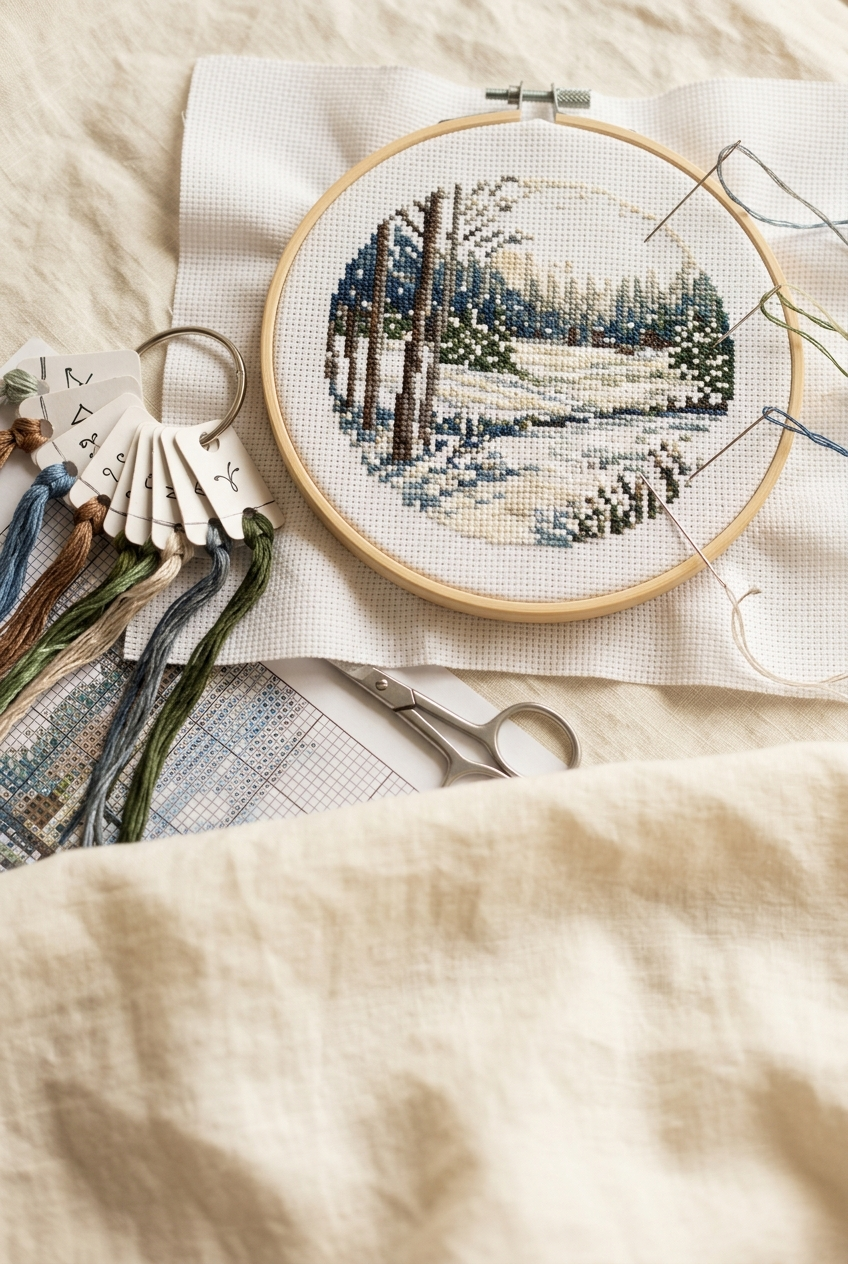
Confetti cross stitch on gridded 18-count Aida in a hoop with scattered single stitches
By Tracey Kramer • • 12 min read
You open a fine-art chart, look at one square inch, and count fourteen different symbols in it. That's confetti: scattered single stitches in many different colors, and the way you survive it is by working one color at a time within a small gridded block, keeping every live color threaded and reachable, and letting the parking method carry your place across the fabric. After 22 years of charting fine-art reproductions that run 87 to 135 colors, I can tell you the confetti isn't there to punish you. It's there because that's how a painting actually looks up close.
What Confetti Actually Is (And Why My Patterns Have So Much of It)
Confetti is the community's word for scattered single stitches in a lot of different colors, sprinkled across an area with no comfortable blocks to fill. Instead of stitching a tidy run of twelve stitches in DMC 3799, you're placing one stitch here, one stitch three squares over, one stitch diagonally down and to the left. Then you switch colors and do it again. It shows up most in full coverage cross stitch and fine-art reproduction, which is exactly the kind of design I chart.
Here's why it happens, and it's not sloppy charting. When you convert an oil painting into a counted cross stitch pattern, you're translating brushwork into a grid. A painter blends a shadow across a face with a wet brush. A chart can't blend, so it approximates that blend with neighboring colors placed stitch by stitch. The result reads beautifully from six feet away and looks like chaos from six inches. That's the trade. Smooth, believable skin tone and dappled light through leaves cost you confetti.
My recent releases give you a sense of the range. A Rest in the Fields runs 135 colors. Reading Woman is 126. Precious Lord, Hear Their Prayers sits at 97. Those numbers scare people, and I understand why, but the color count is not the same thing as the difficulty. A 135-color chart with generous blocks of sky is far easier than an 80-color portrait where every color is scattered. What matters is the density of the confetti, not the length of the legend.
I also want to name something honestly: confetti is not a beginner's first project. If you've stitched three sampler-style designs and you're feeling confident, a full-coverage fine-art piece is a real step up. It's doable. It just requires a different working method than the one that got you through your first pattern, and that method is what the rest of this article is about.
Grid First, Always, Before a Single Stitch Goes In
If I could only give you one piece of advice about confetti, it would be this: grid your fabric. Not sometimes. Every time you touch a confetti-heavy design. On a design with big color blocks, a miscount reveals itself quickly because the shape stops looking like the shape. In confetti, there is nothing to compare against. A single square off in row 40 can hide until row 90, and by then you're frogging half a day of work.
I grid in 10x10 squares to match the heavy lines on my charts. Water-soluble marking thread or a fine washable fabric pen both work. It takes maybe forty-five minutes on a large piece, and I have never once regretted the time. What gridding buys you in confetti country is a closed box. You are no longer stitching a giant fabric, you're stitching this one 10x10 cell, and when the cell is full and matches the chart cell, you close it and move on. Errors can't travel.
Gridding also completely changes how you find your place after you set the work down. Instead of counting from the last stitch you made, you find the grid line, count within a ten-square window, and you're back. On a chart where every stitch is a different symbol, that's the difference between stitching and squinting.
One practical note for 18-count Aida, which is my design standard: make your grid lines thin and light. Heavy marks on 18-count crowd the holes and are harder to wash out cleanly. A light touch is enough, because you're following the grid, not decorating with it.

Tracey Recommends
Prym Stitcher's Highlighter Tape, 3 pcs
On a dense chart, marking completed rows in pencil is a mess you'll regret. Highlighter tape lays a transparent color band over the row you're working, lifts cleanly, and repositions hundreds of times. I keep a roll in the project bag for every fine-art piece I stitch.
Check Current Price →Confetti reads beautifully from six feet away and looks like chaos from six inches. That's the trade, and smooth skin tone costs you scattered stitches.
Work One Cell at a Time, One Color at a Time
The instinct with confetti is to chase a color across the whole design because you already have it threaded. Resist it. Long carries on the back of full coverage work show through the front, especially on lighter fabric, and once the piece is stitched solid, those floats create bulk and shadow you cannot fix. My rule is simple: I do not carry a color more than about four or five stitches, and never across an unstitched gap.
So instead I work cell by cell. I pick a 10x10 square, I look at what's in it, and I stitch every occurrence of one color inside that cell. Then I move to the next color in the same cell. When the cell is complete, I check it against the chart, and only then do I move on. It's slow in the sense that a stitch takes a stitch's worth of time. It is fast in the sense that you almost never frog.
Within a cell, I'll usually stitch the darkest colors first. Darks form the structure of an image, so they give you landmarks in an otherwise featureless field. Once the darks are down, the mid-tones have something to sit against and the light values become obvious. On a portrait, the eye and hairline colors go first, and suddenly the face has a skeleton to hang on.
This is also where the parking method earns its reputation. It's the established technique for confetti, and I'm not going to re-teach it here because I've already written that guide. The short version for context: instead of ending a thread when you finish a color in your cell, you bring it up in the next square where that color appears and leave it waiting. Your threads become your bookmarks. On a 97-color chart that keeps twenty colors live and accessible without a single knot or restart.
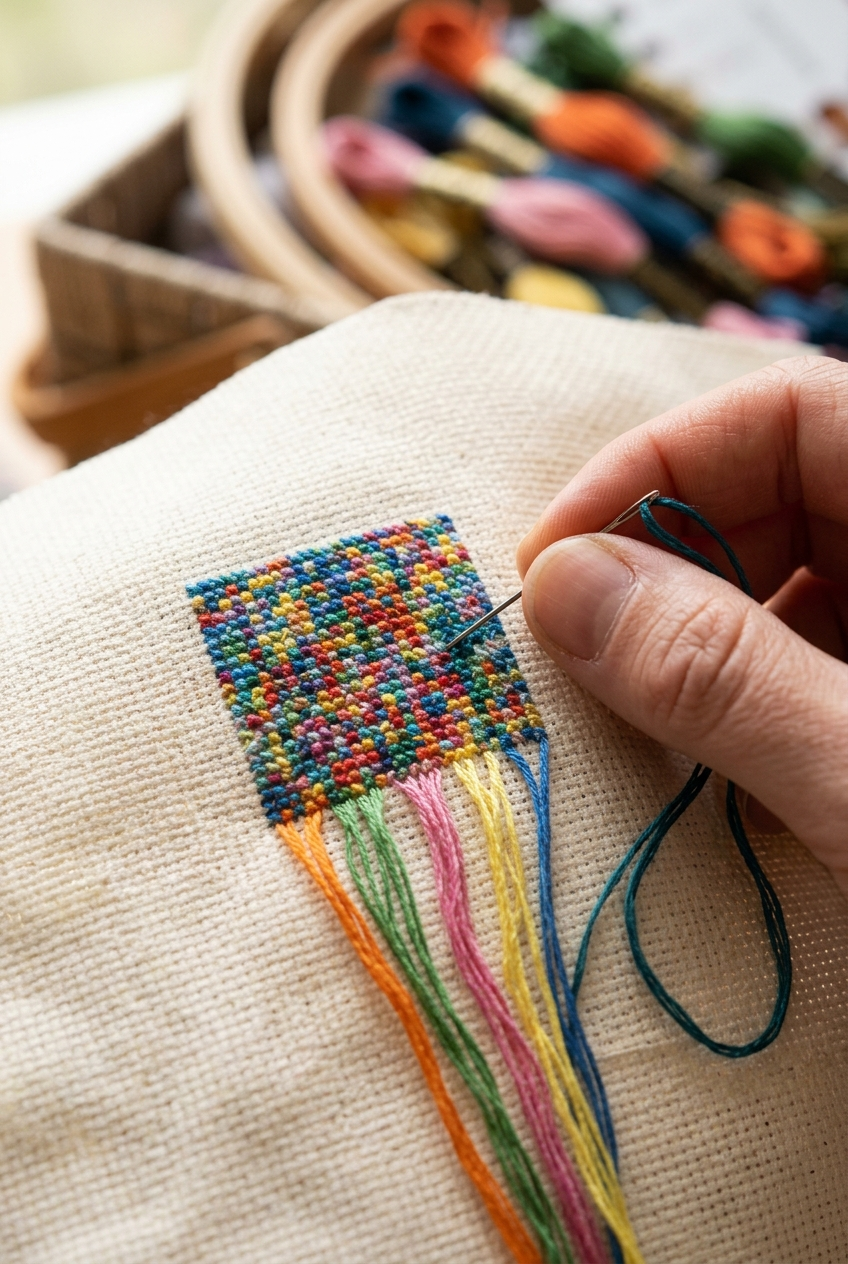
Close-up of one gridded cell filled with confetti stitches and parked threads on Aida
Your Confetti Toolkit: What Actually Earns Its Place
I'm skeptical of gadget lists, so understand that everything here solves a problem I've personally hit while stitching a hundred-color chart.
A magnetic chart holder (find on Amazon) is first, and it's not optional for me anymore. Confetti reading is line-by-line reading, and a magnetic strip that marks your current row means you never lose it. Paper chart on the metal board, magnet strip under the active row, second magnet marking the column you're in. That intersection is your place, and it stays your place when the dog barks and you look away.
Light comes second, and it matters more than any other purchase. On 18-count with two strands of DMC, single stitches in similar values are genuinely hard to tell apart under ordinary room lighting. Daylight-temperature light, positioned over your shoulder onto the work rather than into your eyes, will do more for your accuracy than any technique in this article.
For thread management, floss drops (find on Amazon) on a working ring have been my system for years. Not as stash storage, that's a separate conversation, but as the twenty to thirty colors that are live on the current project. Each drop holds a cut length labeled with the DMC number, they hang in symbol order, and I can find any color in two seconds. When you're switching colors eight times inside one 10x10 cell, two seconds versus thirty seconds is the whole difference between an enjoyable evening and an irritating one.
A needle minder (find on Amazon) keeps a parked needle from vanishing into the couch, and when you're running multiple threads at once you'll appreciate anything that keeps sharp objects accounted for. I keep mine on the hoop edge so it travels with the work.
On needles: size 28 tapestry needles (find on Amazon) are my pick for 18-count. A 26 works and many stitchers prefer it, but the finer shaft slips through those small holes with less resistance, and when you're placing thousands of individual stitches, less resistance adds up. Have several. When you're parking, you can either park a threaded needle in the fabric or wind the tail and use fewer needles, but having six or eight on hand makes the first option possible.
For the hoop itself, I use a 5 or 6 inch wooden or plastic embroidery hoop. Small hoop, small working window, which pairs naturally with the cell-by-cell approach. Some stitchers swear by Q-snaps for full coverage and that's a legitimate choice, but my hands know a hoop.
|
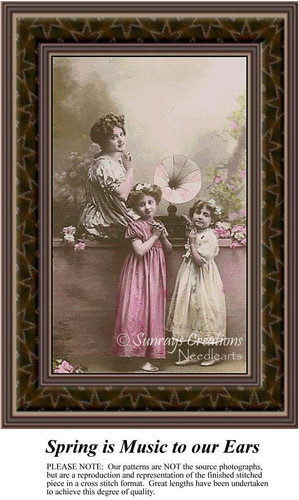
Patterns from the Sunrays Collection Tracey's Picks, designing cross stitch patterns since 2004 | |||||
| |||||
| Browse the full Sunrays collection → |


Keeping Your Sanity Over a Long Confetti Project
Full-coverage fine-art pieces are BAPs by definition. A 135-color chart at 18-count is not a two-week project, and pretending otherwise is how a WIP quietly becomes a UFO. The mental game matters as much as the technique.
The thing that saves me is a visible progress record. I photograph the piece at the end of every session, same angle, same light. Confetti progress feels invisible day to day because you're placing scattered stitches instead of filling shapes. The photos prove you're wrong about that. Scroll back three weeks and the difference is startling, and that evidence is what carries you through the middle third of a big project, which is always the hardest part.
I also work in cells rather than hours. "I'll stitch until I finish this cell" is a finishable goal. "I'll stitch for an hour" is a goal that ends wherever it ends, often mid-color, and you come back to a puzzle. Finishing a cell is a small, real completion, and a hundred small completions is how a big piece gets done.
Give yourself permission to walk away when your eyes are tired. Confetti mistakes happen at hour three, not hour one. If you find yourself re-counting the same square twice, that's your body telling you the session is over. I'd rather stop early than frog tomorrow.
And be gentle about frogging when it happens, because it will. Everyone rips stitches. On confetti, the fix is usually small if you caught it inside a cell, and enormous if you didn't. That's the whole argument for gridding, made one more time.
Get Stitching Tips & New Patterns from Tracey
Honest advice, new Sunrays designs, and occasional VIP-only offers. No fluff.
No spam. Unsubscribe any time.

Tracey Recommends
Daylight StitchSmart 2 Magnifier & Chartholder (Accessories Only)Adjustable Embroidery Frame Support with LED Magnifier Lamp, 360 Rotation, 95+ CRI Lighting, Flexible Arms (Doesn't' Include Stand)
Telling one single stitch from its neighbor on 18-count is an eyesight problem before it's a skill problem. This one puts daylight-balanced light and magnification over the work while holding the chart upright where you can read it. It solves two of my biggest confetti headaches in one piece of gear.
Check Current Price →Choosing Your First Confetti-Heavy Pattern
If you're ready to try one, choose deliberately. Landscapes and architectural scenes are the friendliest entry point, because even a color-dense winter street scene has sky, snow, and stonework that fill in as blocks. The confetti lives in the transitions rather than everywhere at once. Portraits are the hardest, because skin tone is nothing but confetti and the eye is brutally unforgiving of a misplaced stitch on a face.
Size matters too. A 200x300 stitch landscape with 90 colors will teach you the method in a month or two. A 500x700 piece will teach you the same method over two years, and you'll learn nothing extra for the extra time. Start smaller than your ambition and finish it, because an FFO builds more confidence than any tutorial.
Read the chart before you buy when you can. Look at the color count, sure, but look harder at the density of symbols in a typical square inch. If most 10x10 blocks contain three or four colors, that's manageable confetti. If they contain twelve, be honest about whether you want that particular relationship right now.
One last thought. Every fine-art reproduction I chart started as a painting that somebody labored over, and the confetti is where that labor lives. When you finish it and get it framed on the wall, nobody who looks at it will see individual stitches. They'll see light on snow, or the expression on a face, and they'll ask if it's a print. That's the payoff, and it's worth the scattered singles.
Confetti asks for patience, not talent, and the method in this article is the whole of what I know after 22 years of charting these designs. Grid it, work it cell by cell, keep your colors within arm's reach, and it becomes a rhythm instead of a fight. If you're ready to try one, come browse the fine-art and landscape patterns in the Sunrays Creations shop and pick the piece you want hanging on your wall.
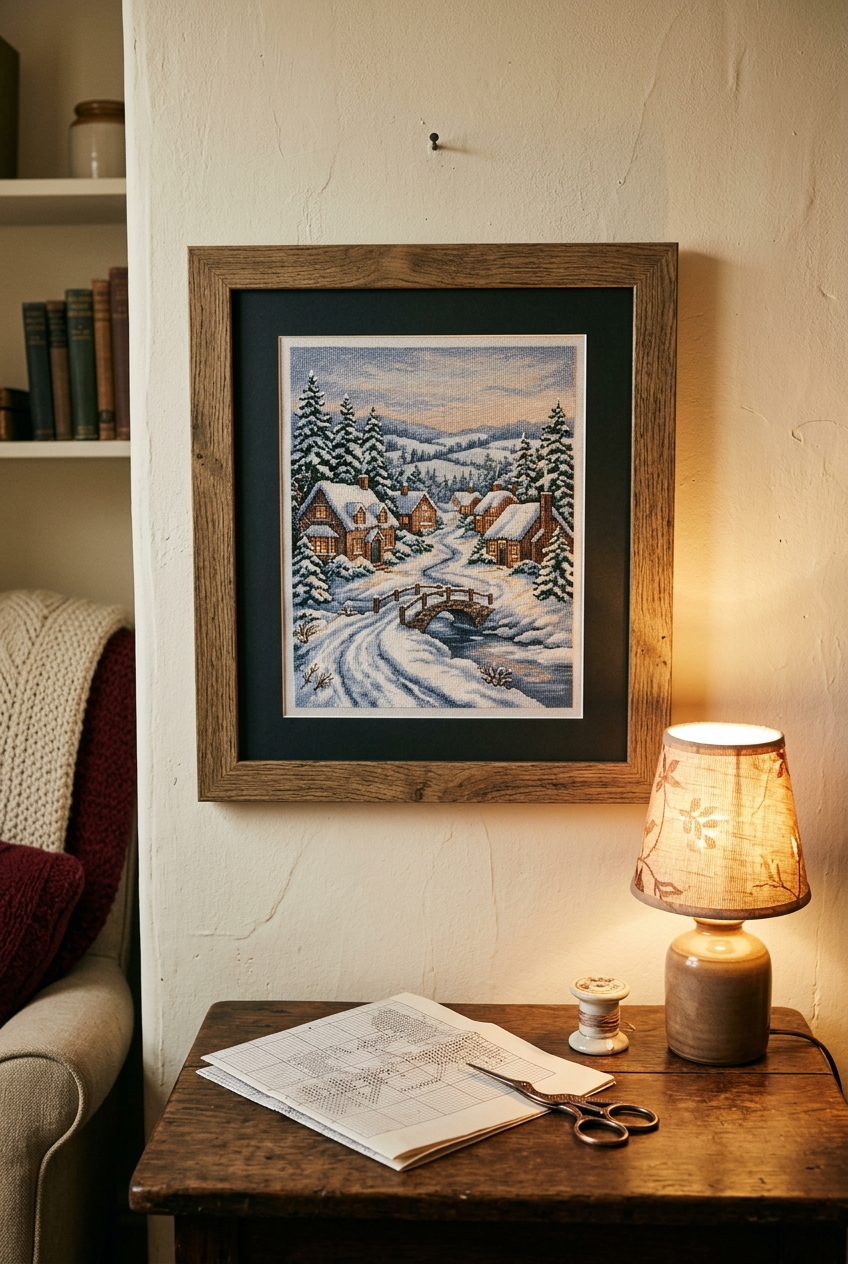
Finished fine-art cross stitch framed as wall art in a warm cottage room
Keep Reading
The Parking Method in Cross Stitch: Does It Work?
Parking is the established technique for confetti-heavy charts, and I walk through exactly how it works step by step in this guide. Read it before you start a full-coverage piece.
Read the GuideHow to Grid Your Cross Stitch Fabric (And Why It Changes Everything)
Gridding is the single best defense against confetti miscounts. Here's my full method for laying an accurate 10x10 grid before your first stitch.
Learn to GridCross Stitch Lighting: Why Good Light Is the Most Important Tool You Own
Distinguishing similar single stitches on 18-count is an eyesight problem first. This guide covers the lighting setup that makes confetti readable.
Fix Your LightingFrequently Asked Questions
What is confetti in cross stitch?
Confetti is the term for scattered single stitches in many different colors spread across an area, with no blocks of one color to fill. It happens most in full coverage and fine-art reproduction patterns, where a painting's blended brushwork gets translated into individual stitches on a grid.
How do you stitch confetti without losing your mind?
Grid your fabric in 10x10 squares first, then work one grid cell at a time, completing every stitch of one color within that cell before switching. Check the finished cell against the chart before you move on. Use the parking method to keep your active colors threaded and waiting instead of ending and restarting threads.
Should you carry floss across the back in confetti areas?
Only for very short distances. I don't carry a color more than about four or five stitches, and never across an unstitched gap. Long floats show through the front on full coverage work and create bulk you can't fix once the piece is stitched solid.
Does a high color count mean a pattern is hard?
Not by itself. What matters is how densely those colors are scattered, not how long the legend is. A 135-color chart with large areas of sky is easier than an 80-color portrait where every single stitch is a different shade.
What fabric count is best for confetti-heavy patterns?
I design for 18-count Aida with two strands of DMC six-strand floss. It gives the detail that fine-art reproductions need. Just be sure your lighting and magnification are up to the job, because telling similar single stitches apart on 18-count is genuinely demanding.
Which confetti pattern should a first-timer choose?
Start with a landscape or architectural scene rather than a portrait. Those designs keep the confetti in the transitions while giving you blocks of sky, snow, or stonework to fill. And choose something smaller than your ambition, because finishing one teaches you more than starting a giant piece.
How do you track progress on a project that feels endless?
Photograph the piece at the end of every session from the same angle, and set goals by completed grid cells rather than by hours. Confetti progress feels invisible day to day, and the photos are the proof that it isn't.
-- Tracey Kramer
Founder & Designer, Sunrays Creations Needlearts
Hand-charted designs since 2004 • Marysville, Ohio