
Cross Stitch Lighting: Why Good Light Is the Most Important Tool You Own
Posted by Tracey M. Kramer on 14th Jul 2026
A Note from Tracey Kramer
I have been designing counted cross-stitch patterns since 2004, and in that time I have watched my customers stitch everything from wedding gifts to heirloom samplers. This is everything I know about this topic -- from real experience, not theory.
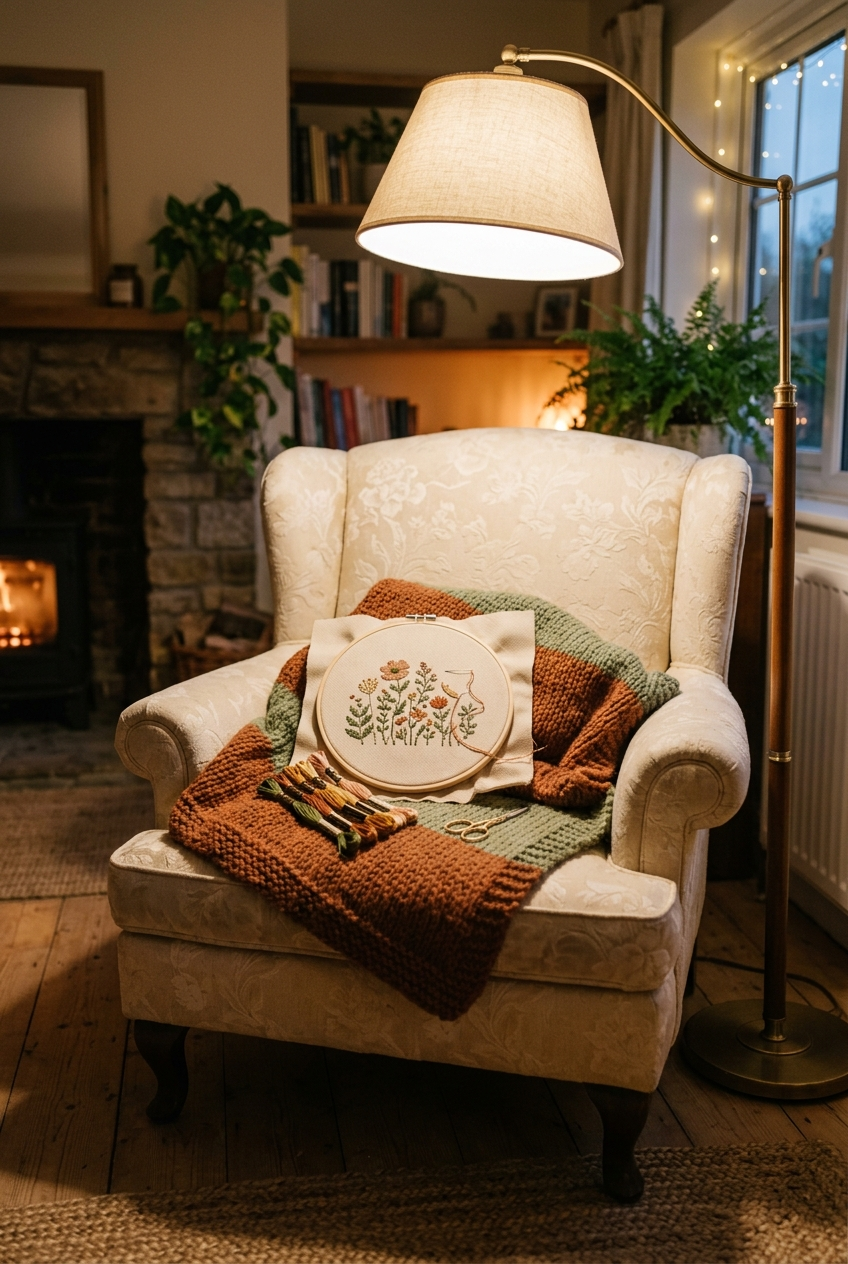
Daylight lamp cross stitch setup illuminating a wooden hoop project in a cozy chair, best lighting for cross stitch
By Tracey Kramer • • 12 min read
If you asked me to name the single most important tool on my stitching table, you might expect me to say a fancy hoop or a pricey pair of scissors. It's not. After 22 years of designing cross stitch, I'll tell you straight: the best lighting for cross stitch is the one investment that changes everything, from how accurately you count to how your eyes feel three hours in. Good light isn't a luxury add-on. It's the difference between a calm, joyful stitching session and a headache that sends you to bed early.
Why Lighting Is the Tool Worth Spending Real Money On
I've watched stitchers agonize over which hoop to buy, which floss brand to trust, and which scissors are sharp enough — and then stitch under a dim living room lamp that's doing them no favors. I understand the instinct. Lamps feel like furniture, not craft supplies, so they get pushed to the bottom of the shopping list. But here's what I've learned after two decades: you can stitch beautifully with a modest hoop and a needle from the bottom of your sewing tin. You cannot stitch beautifully, comfortably, or accurately in bad light.
Poor lighting is the quiet culprit behind so many problems stitchers blame on themselves. Miscounts. Missed symbols on the chart. Colors that look identical at night but turn out to be two totally different shades of green in the morning. And then there's the frogging — all that ripping out and re-stitching because you couldn't quite see where one block of color ended and the next began. Every one of those problems traces back to light.
When people ask me where to spend and where to save in this hobby, my answer never changes. Save on the extras. Buy the pattern you love. But when it comes to your lamp, buy quality once and be done. A good daylight lamp cross stitch (find on Amazon) setup pays for itself in comfort, accuracy, and — this is the part nobody talks about enough — the long-term health of your eyes.
This craft is meant to last you a lifetime. I want you still stitching in your 70s and 80s the way my family always has. Protecting your vision now is how you get there.
Cheap Lamps Flicker, Buzz, and Yellow Out — Here's What That Costs You
I've bought the bargain lamps. Early on, I figured light was light, so why pay more? I learned the hard way. The cheap ones have a way of failing you in three specific, maddening ways.
First, they flicker. Sometimes it's a flicker you can barely register consciously, but your eyes register it, and by the end of the evening you've got a dull ache behind them. That low-grade eye strain cross stitch (find on Amazon) stitchers complain about? A flickering bulb is often the source. Second, they buzz. That faint electrical hum might not bother you during the day, but during a quiet, mindful evening session it's like a mosquito that won't leave. Third — and this is the big one for our craft — they yellow out.
A warm, yellow-toned bulb makes your whole project look like it's soaked in weak tea. Whites go cream. Pale blues go gray. And the low-contrast, subtle color transitions that make a design gorgeous become nearly impossible to read. If you've ever pulled DMC 3752 and DMC 3753 and sworn they were the same skein, I promise you the lighting deserves at least half the blame.
Cheap lamps also tend to die young. You replace them every year or two, and suddenly the 'budget' choice has cost you more than the good lamp would have in the first place. I'd rather buy one well-made lamp and hand it down to my grandkids than keep feeding the landfill with flickery plastic ones.
There's a reason the community keeps coming back to daylight-balanced LED lamps. A true daylight bulb cross stitch (find on Amazon) light renders colors the way they'll actually look when your piece is framed and hanging on the wall in natural daylight. No guessing. No surprise mismatches. What you stitch at 9 p.m. looks exactly like what you meant to stitch.

Tracey Recommends
OttLite ClearSun LED Floor Lamp, Adjustable Height, White
This is the daylight floor lamp I pull right over my shoulder so my own hand never shadows the stitch I'm placing. The adjustable height means it works whether you stitch in a recliner or upright at a table. True daylight color, no flicker, no buzz — the workhorse of my setup.
Check Current Price →You can stitch beautifully with a modest hoop and a needle from the bottom of your sewing tin. You cannot stitch beautifully, comfortably, or accurately in bad light.
What a Quality Daylight Lamp Actually Does for Your Stitching
Let me tell you how deep I am on this. I own four OttLite lamps throughout my home. One at my main stitching chair, one in the room where I photograph and check my designs, and two more so that wherever I happen to settle in with a project, I've got true daylight color over my hands. That's not me being extravagant. That's 22 years of knowing exactly what saves my eyes and my accuracy.
A quality daylight lamp does three things a cheap one can't. It renders color truthfully, so the greens read as greens and your confetti stitches don't turn into a guessing game. It stays cool and steady with no flicker and no buzz, so a four-hour session feels like one hour. And it puts consistent, even light exactly where your fabric is, instead of casting your own hand's shadow across the very stitch you're trying to place.
That accuracy piece matters more than folks realize. Every miscount you avoid is frogging you never have to do. When I'm working a large, detailed piece — a BAP with lots of subtle shading — good light is the reason I can stitch confidently instead of second-guessing every symbol. If you want to go deeper on catching mistakes before they compound, my guide on why your stitches look uneven pairs perfectly with fixing your lighting.
I stitch on 18-count Aida for all my designs, and the higher the count, the more your light has to earn its keep. Those little holes are close together. Two strands of DMC floss filling neat, even blocks looks effortless in good light and impossible in bad light. When I set a new stitcher up, the lamp conversation comes right after the fabric conversation — before we even talk about hoops.
And when your eyes start to change — because they will, mine did — the right lamp is what keeps you in the hobby instead of setting it down in frustration. That's where magnification enters the picture.
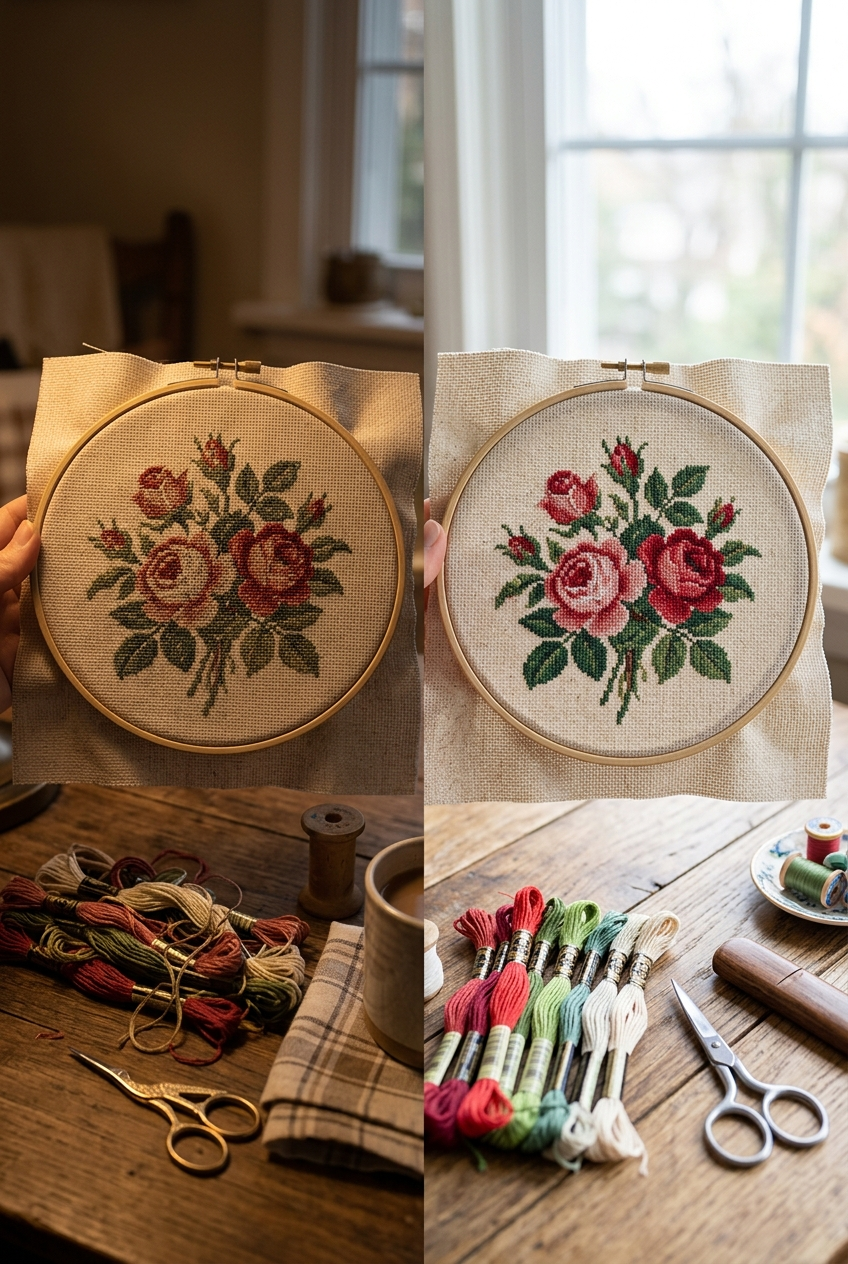
Cross stitch project compared under yellow bulb versus daylight bulb showing color accuracy and reduced eye strain
Magnification: When You Need It and How to Choose
Nobody warns you that your eyes will change, but they do, usually somewhere in your 40s. One day the 18-count Aida you've stitched for years suddenly needs to be held a little farther away. That's not a failure. That's just eyes doing what eyes do, and there's a beautiful, simple fix.
A cross stitch magnification lamp (find on Amazon) combines two tools into one: a true daylight light source and an optical-grade lens positioned right over your work. The magnifier does the close-up focusing so your eyes don't have to strain for it. For detailed designs, low-contrast shading, dark fabrics, or any project where the symbols are crowded, a magnifier lamp is genuinely life-changing.
A word on lens quality, because this is where cheap magnifiers ruin the experience. A poorly made lens distorts at the edges, so your stitches warp and swim when you move your head. That distortion causes its own headaches. An optical-grade lens stays crisp corner to corner, which is exactly what you want when you're placing tiny stitches for hours.
If you work on black or dark Aida, a magnifier lamp isn't optional — it's the tool that makes those projects possible at all. The combination of true daylight and magnification lets you see the holes in dark fabric that otherwise disappear into shadow.
You don't need magnification to start, and plenty of stitchers never use it. But when the day comes that you're squinting more than you're stitching, don't push through it. Frustration is what makes people quit this craft, and a magnifier lamp erases that frustration in an afternoon.
|
Patterns from the Sunrays Collection Tracey's Picks, designing cross stitch patterns since 2004 |
|||||
|
|||||
| Browse the full Sunrays collection → |


My Real-Life Lighting Setup (and My Daughter's)
I mentioned my four lamps, but here's the story that really made me want to write this. Both of my daughters are cross-stitchers now — they're in their 20s, and watching them pick up the same needle their grandmother handed me is one of my greatest joys. Recently one of them called complaining that she couldn't stitch comfortably in her apartment. The overhead light was harsh in one spot and useless in the corner where she liked to sit. Her whites looked gray. Her eyes hurt.
I didn't lecture her about lamps. I just bought her one and had it shipped. Within a week she texted me a photo of her WIP under proper daylight, and the difference in the colors alone told the whole story. That's the moment good lighting stops being a purchase and becomes a gift you give your future self — or your kid.
For a floor setup, I love an adjustable-height daylight floor lamp. You pull it right over your shoulder, aim it at your lap, and never fight your own shadow. For detailed work and older eyes, I reach for the floor lamp with the built-in magnifier. Between those two, most stitchers are covered for life.
A quick note on your whole stitching corner: light works best when the rest of your space works with it. If you're setting up a dedicated spot, my thoughts on crafting space ideas will help you position your lamp, your chair, and your supplies so everything flows.
Pair a good lamp with my usual toolkit — a 5 to 6 inch wooden or plastic embroidery hoop, DMC six-strand floss worked two strands over one on 18-count Aida — and you've got a setup that carries you through decades of projects. The lamp is the piece I'd never cut corners on, and after 22 years and four OttLites, I stand behind that completely.
Get Stitching Tips & New Patterns from Tracey
Honest advice, new Sunrays designs, and occasional VIP-only offers. No fluff.
No spam. Unsubscribe any time.

Tracey Recommends
OttLite EasyView LED Floor Lamp with Optical Grade Magnifier, White
When the symbols get crowded or my eyes get tired, this is the lamp I reach for. The optical-grade magnifier stays crisp corner to corner and pairs with true daylight light, which makes detailed shading and dark Aida genuinely doable. Ideal for low-contrast work and aging eyes.
Check Current Price →If you take one thing from me after 22 years at this table, let it be this: light is the tool you never regret buying well. Get your lamp right and everything else in this craft gets easier. Once your setup is comfortable and your colors read true, come browse the Sunrays Creations pattern collection and find a design worthy of all that beautiful daylight.
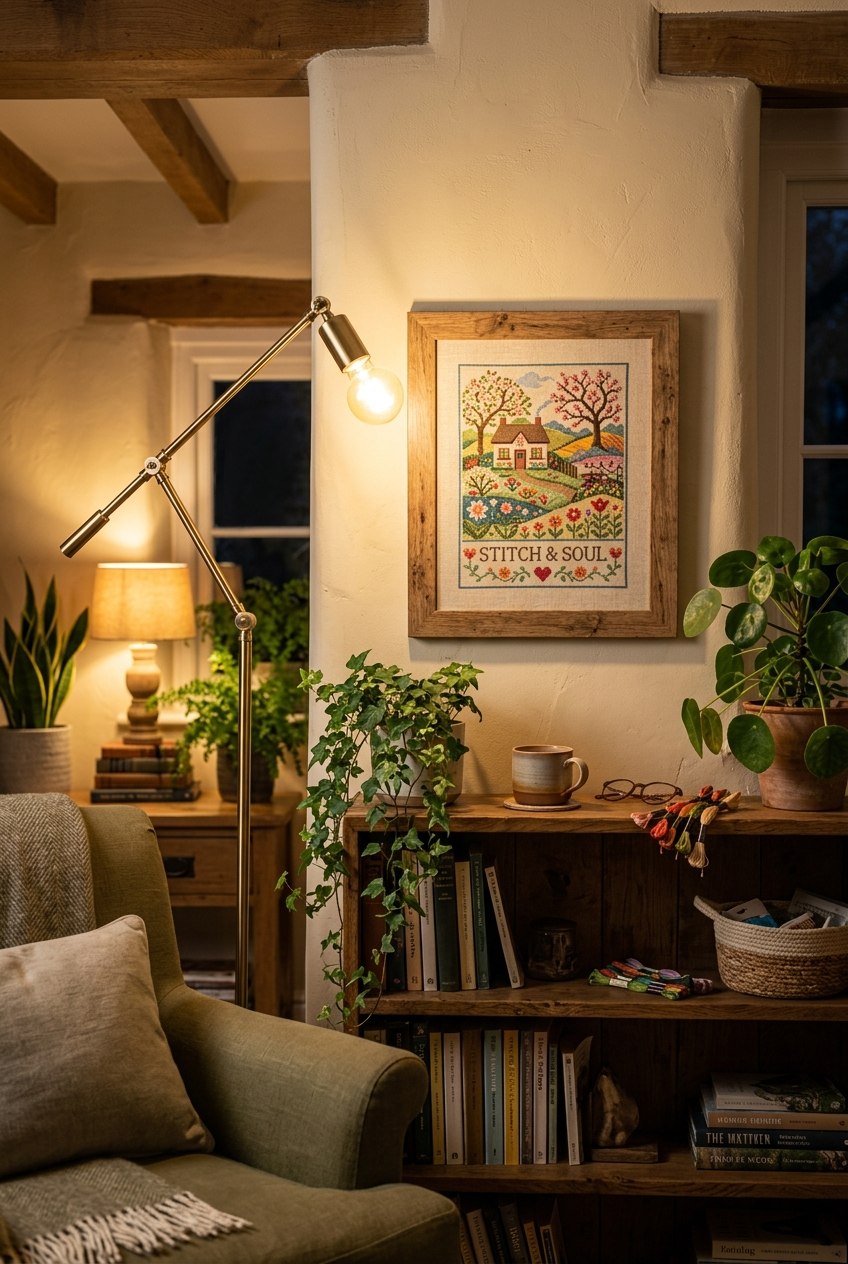
Framed cross stitch wall art displayed under a warm daylight lamp in a cozy cottagecore home stitching corner
Keep Reading
Why Your Cross Stitch Stitches Look Uneven (And How to Fix It)
Bad light causes half the uneven-stitch problems stitchers blame on technique. Read this alongside your lighting fix for cleaner, more even work.
Fix Your StitchesBlack Aida Cloth: How to Cross Stitch on Dark Fabric
Dark fabric and good lighting go hand in hand — here's how to make black Aida projects possible with the right light and magnification.
Read the GuideCross Stitch Crafting Space Ideas That Actually Work
Your lamp works best when your whole stitching corner supports it. Set up your space so light, chair, and supplies all flow together.
Set Up Your SpaceFrequently Asked Questions
What is the best lighting for cross stitch?
A daylight-balanced LED lamp is the best lighting for cross stitch. It renders colors truthfully, stays cool and flicker-free, and puts even light exactly where your fabric is. After 22 years I recommend buying one quality lamp once rather than replacing cheap ones every year or two.
Why do cheap lamps cause eye strain and headaches?
Cheap lamps tend to flicker, buzz, and give off a yellow tone. The flicker in particular causes low-grade eye strain that builds into a dull ache during long sessions. A quality daylight lamp eliminates the flicker and hum so a four-hour session feels comfortable.
Does a daylight bulb really make a difference for color accuracy?
Yes. A yellow-toned bulb makes whites go cream and pale colors go gray, which makes low-contrast shades hard to tell apart. A true daylight bulb renders colors the way they'll look when your piece is framed and hanging in natural daylight, so what you stitch at night matches what you meant to stitch.
When do I need a magnification lamp for cross stitch?
You need a cross stitch magnification lamp when you find yourself squinting, when symbols are crowded, or when working detailed shading or dark Aida. Eyes commonly change in your 40s, and a magnifier lamp with an optical-grade lens keeps you stitching comfortably instead of straining.
Is an expensive lamp worth it for cross stitch?
It's the one tool I say is worth spending real money on. A quality daylight lamp pays for itself in comfort, accuracy with fewer miscounts and less frogging, and long-term eye health. Cheap lamps die young and cost more over time, so buying quality once is the smarter choice.
What kind of lamp does Tracey use?
I own four OttLite lamps throughout my home, and I recently bought one for my daughter after she complained about poor light in her apartment. I use an adjustable-height daylight floor lamp for everyday stitching and a floor lamp with a built-in magnifier for detailed work and tired eyes.
-- Tracey Kramer
Founder & Designer, Sunrays Creations Needlearts
Hand-charted designs since 2004 • Marysville, Ohio