
Cross Stitch Hoop vs. Q-Snap vs. Scroll Frame — Which Should You Use?
Posted by Tracey Kramer on 17th May 2026
A Note from Tracey Kramer
After 22 years of designing cross stitch patterns from our Marysville studio, I've learned that the best guides come from real stitching — not theory. This is what I'd tell a friend.
Cross Stitch Hoop vs. Q-Snap vs. Scroll Frame — Which Should You Use? | Sunrays Creations
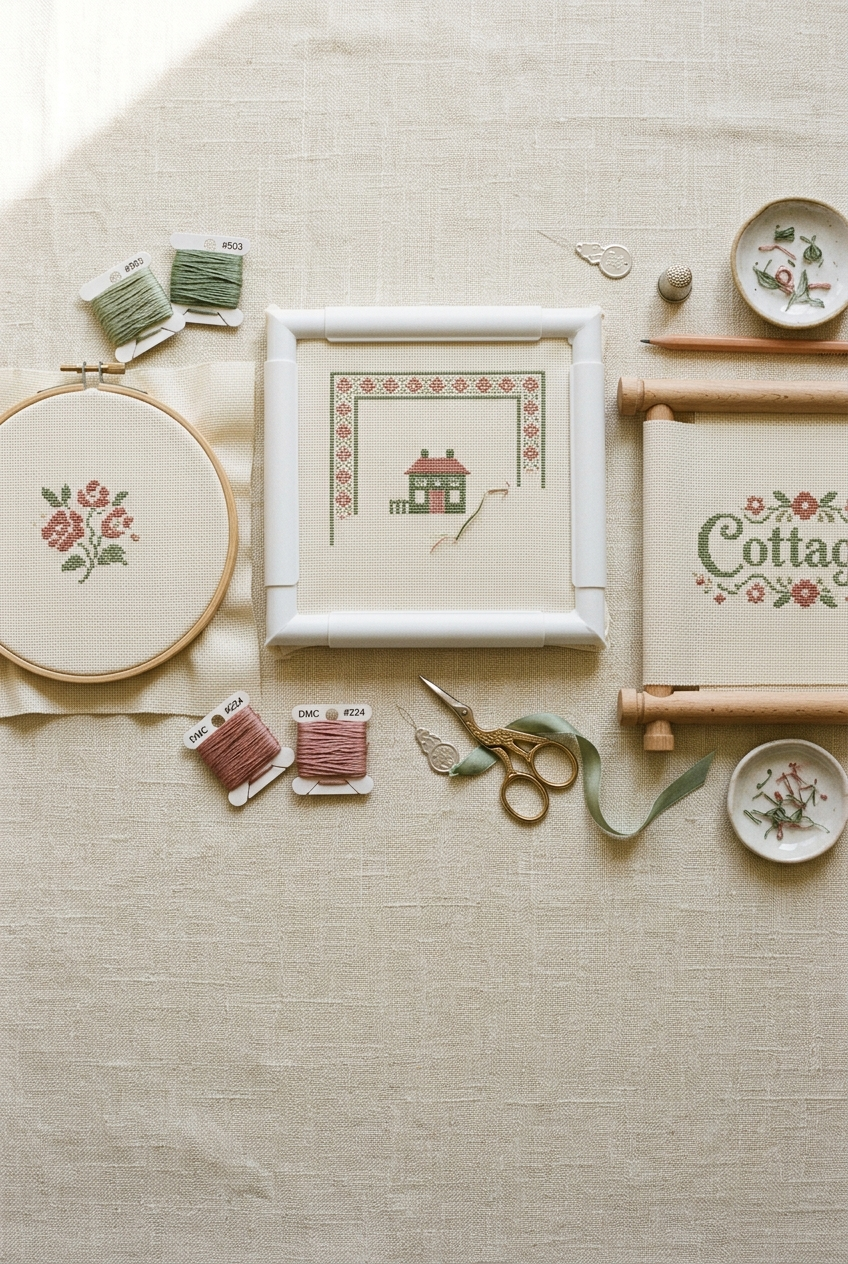
If you're trying to decide between a cross stitch hoop, a Q-snap, or a scroll frame, the short answer is this: a wooden 5–6 inch hoop is the easiest, most affordable starting point for nearly every counted cross stitch project, and it's what I've used for 22 years of designing at Sunrays Creations. The longer answer depends on your project size, your hands, and how you like to hold your work. I'll walk you through all three options the way I'd talk it through with a friend at my kitchen table, so you can pick the right frame for your next pattern without second-guessing yourself halfway through a Big Ass Project.
The Short Answer Before We Get Into the Weeds
After more than two decades designing counted cross stitch patterns, I've watched stitchers agonize over this question far longer than they need to. So let me cut to the chase before we get into the details.
Use a wooden or plastic embroidery hoop (find on Amazon) (5–6 inches) if you're a beginner, working a small-to-medium pattern, stitch in your lap or on the couch, and want the cheapest, most portable option. This is what I personally use and recommend at Sunrays Creations.
Consider a Q-snap if you've been stitching a while, your hands cramp on round hoops, or you're working a mid-sized chart and want a square plastic frame that grips the fabric without crushing your stitches. Q-snaps exist in the cross stitch community and plenty of stitchers love them. They're just not my personal tool.
Look at a scroll frame (find on Amazon) if you're tackling a BAP (Big Ass Project), a HAED chart, or anything large enough that you'd need to constantly reposition a hoop. Scroll frames hold your fabric taut across long stretches and let you roll the unstitched portion out of the way.
That's the cheat sheet. Now let me explain why each one shines in its lane, so you can make the call with confidence on your own project.
Cross Stitch Hoops — Why I've Stuck With Them for 22 Years
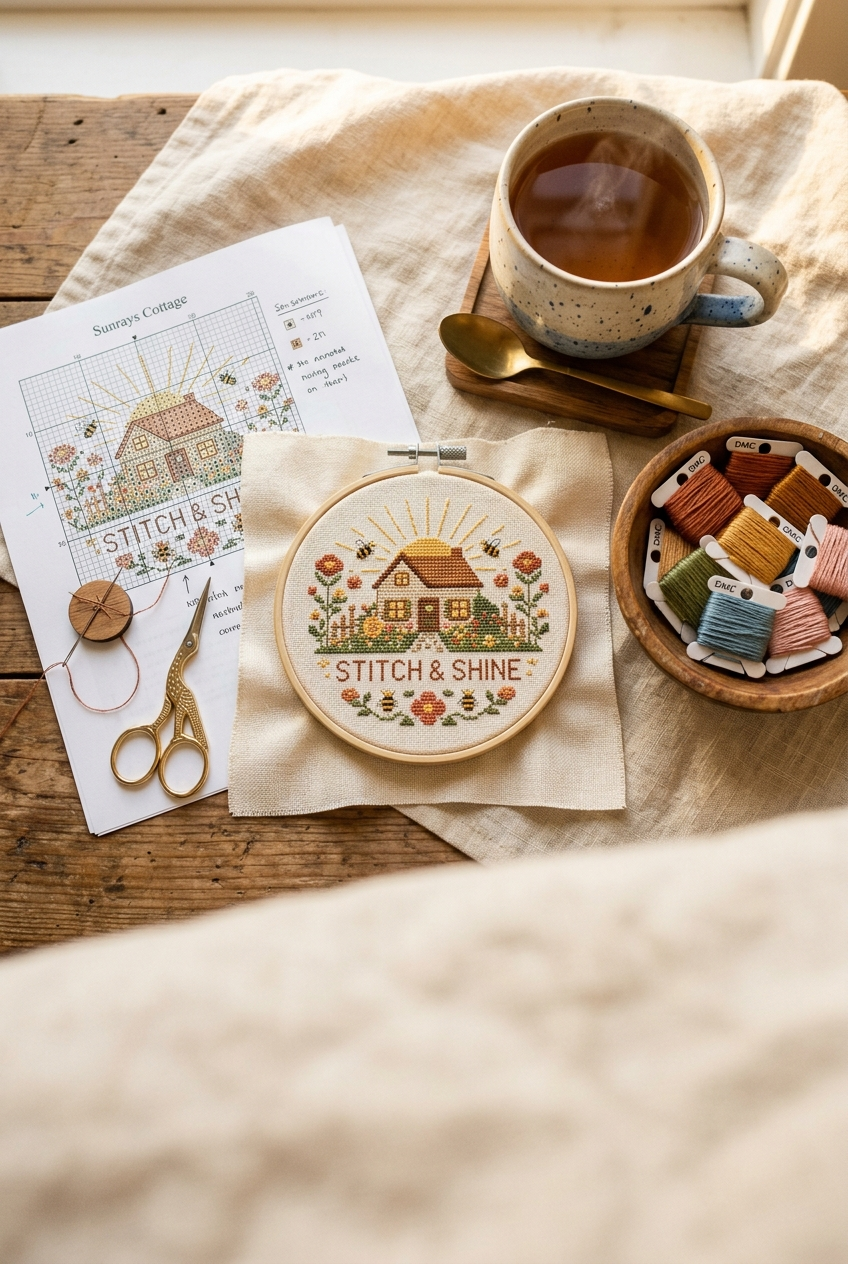
A traditional embroidery hoop is two concentric rings, usually wood or plastic, with a tension screw at the top. You lay your fabric over the inner ring, press the outer ring down on top, and tighten the screw until the Aida is drum-tight. Simple, cheap, effective.
I use a 5 or 6-inch wooden hoop on almost every project I design. When I'm test-stitching a new chart for the Sunrays catalog, that hoop is in my hand. Here's why it's earned its spot.
The case for hoops
- Cheap. You can buy a perfectly good wooden hoop for the cost of a coffee. If you're new to counted cross stitch, this matters.
- Portable. Round, light, fits in a project bag. I take mine to doctor's offices, the porch, anywhere.
- Easy tension. One screw, one twist, done. No assembly.
- Works with 18-count Aida. My design standard. A 5–6 inch hoop fits most pattern centers comfortably.
The honest drawbacks
Hoops do leave a temporary crease ring on the fabric if you leave the work hooped up for weeks at a time. The fix is simple: take the hoop off when you set the project down for the night, or at least at the end of a stitching session. A gentle wash before framing erases any lingering marks.
The other drawback is that for very large patterns, you'll be repositioning your hoop constantly and possibly stitching over completed areas. That can flatten your stitches. Once you cross that size threshold, it's time to think about scroll frames.
Q-Snaps — A Square Alternative Worth Knowing About
Q-snaps are PVC pipe frames shaped into squares or rectangles, with rounded plastic clamps that snap over each side of the frame to grip your fabric. They come in sizes like 6x6, 8x8, 11x11, and 11x17 inches.
I want to be straight with you: Q-snaps are not my tool. I use traditional wooden hoops. But Q-snaps have a real following in the cross stitch community, and plenty of stitchers I respect swear by them. So here's the fair rundown.
Why Q-snap fans love them
- Even tension across a square area. Round hoops put pressure in a circle. A square Q-snap gives you a larger usable stitching area within the same frame footprint.
- Less fabric crease. The plastic clamps grip rather than pinch, so the long-term crease line is gentler than a tightened hoop.
- Easier on the hands. Some stitchers with arthritis or grip fatigue find the wider Q-snap edge more comfortable to hold than a round hoop's rim.
- Modular. You can buy extra pipes and clamps to build different sizes from the same kit.
The trade-offs
Q-snaps cost more than hoops, they're bulkier in a cross stitch project bag (find on Amazon), and the clamps can pop off if you bump them. For a beginner working their first pattern, the cost-to-benefit math usually still favors a basic wooden hoop. Once you've stitched a few projects and know what you like, a Q-snap is a reasonable upgrade to try.
Scroll Frames — When Your Project Outgrows Everything Else
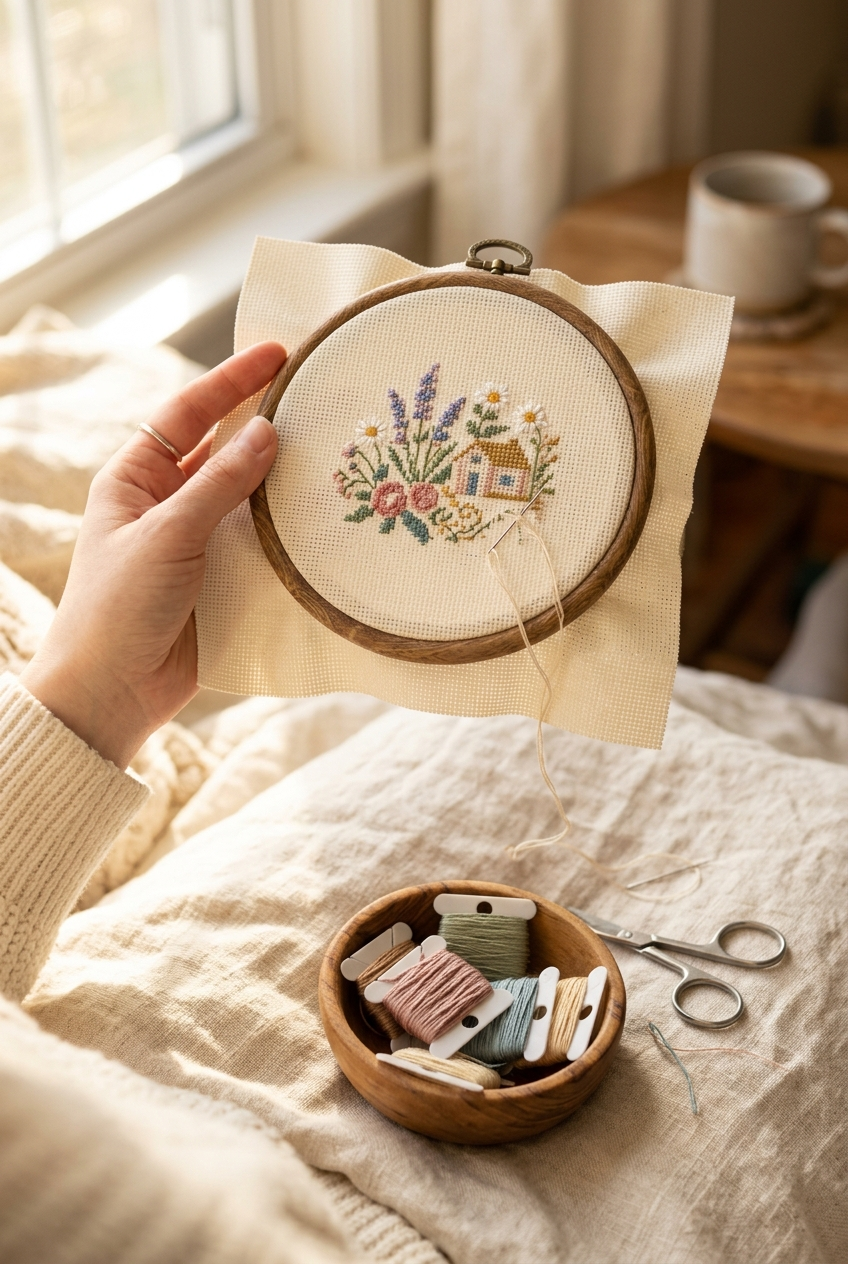
A scroll frame is a rectangular wooden frame with two horizontal rods (top and bottom) that you baste or clip your fabric onto. You scroll the rods to expose the section you're stitching, then scroll again as you move down the chart. The side bars hold the rods at a fixed width.
Scroll frames are the right answer for serious BAPs. If you've ever looked at a HAED chart with 200+ colors and felt your stomach drop, this is the frame that makes it manageable.
Where scroll frames shine
- Full fabric coverage. Your entire piece stays mounted from start to finish. No repositioning, no stitching over completed work.
- No crease line through your design. Because nothing is clamped over your stitched area, you won't have a hoop ring running through the middle of your finished piece.
- Pairs with a floor or lap stand. Two-handed stitching gets significantly faster, which matters on a BAP.
- Great for confetti-heavy designs. When you're parking threads and jumping between dozens of colors, having the whole piece visible at once is a real workflow advantage.
The cost and learning curve
Scroll frames are the priciest of the three options, and they're not portable in any meaningful sense. You'll also spend time basting your fabric to the rods the first time. For a small seasonal pattern, a scroll frame is overkill. For a 400x500 stitch landscape, it's exactly what you need.
How to Choose Based on Your Actual Project
Forget the gear debates online. The right frame depends on three honest questions about your stitching life.
How big is the pattern?
If your design fits inside a 6-inch circle once centered, grab a hoop. If it's roughly 8–12 inches square, a Q-snap or a larger hoop will both work. If it's larger than that, especially a charted design over 200 stitches wide, scroll frame territory.
Where do you stitch?
Couch, car, waiting rooms, airplane tray tables — that's hoop life. Dedicated craft room with a stand — scroll frame becomes practical. Somewhere in between — a Q-snap travels okay but won't fit in a small purse.
How do your hands feel after an hour?
If your grip gets tired or your thumb joint aches from holding a round hoop, a Q-snap's wider edge or a stand-mounted scroll frame can save your hands and keep you stitching longer. Listen to your body. I've watched too many stitchers push through pain and end up with a UFO they can't bear to pick back up.
One more thing worth saying: you don't have to commit to one frame forever. I have a hoop for small designs and a different setup for larger pieces. The frame is a tool, not an identity.
What I Always Tell New Stitchers at Sunrays
When someone messages me asking what to buy for their first counted cross stitch project, I tell them the same thing every time: a 5 or 6-inch wooden hoop, a piece of 18-count Aida (find on Amazon), two strands of DMC six-strand floss, and a good pattern they're excited about. That's it. That's the whole starter list.
Don't let gear research stall you out before you've made your first stitch. I've seen people spend weeks comparing scroll frames online and never actually start the project. The frame matters far less than picking up the needle and going.
Once you've finished your first FFO and you know what your hands like, what your eyes need, and what size projects pull you in, then upgrade. Buy the Q-snap. Invest in the scroll frame. Add the stand. By then you'll know which tool actually solves a problem for you, not a problem someone on FlossTube convinced you that you have.
That's the Sunrays way. Get stitching first. Refine your kit as you grow.
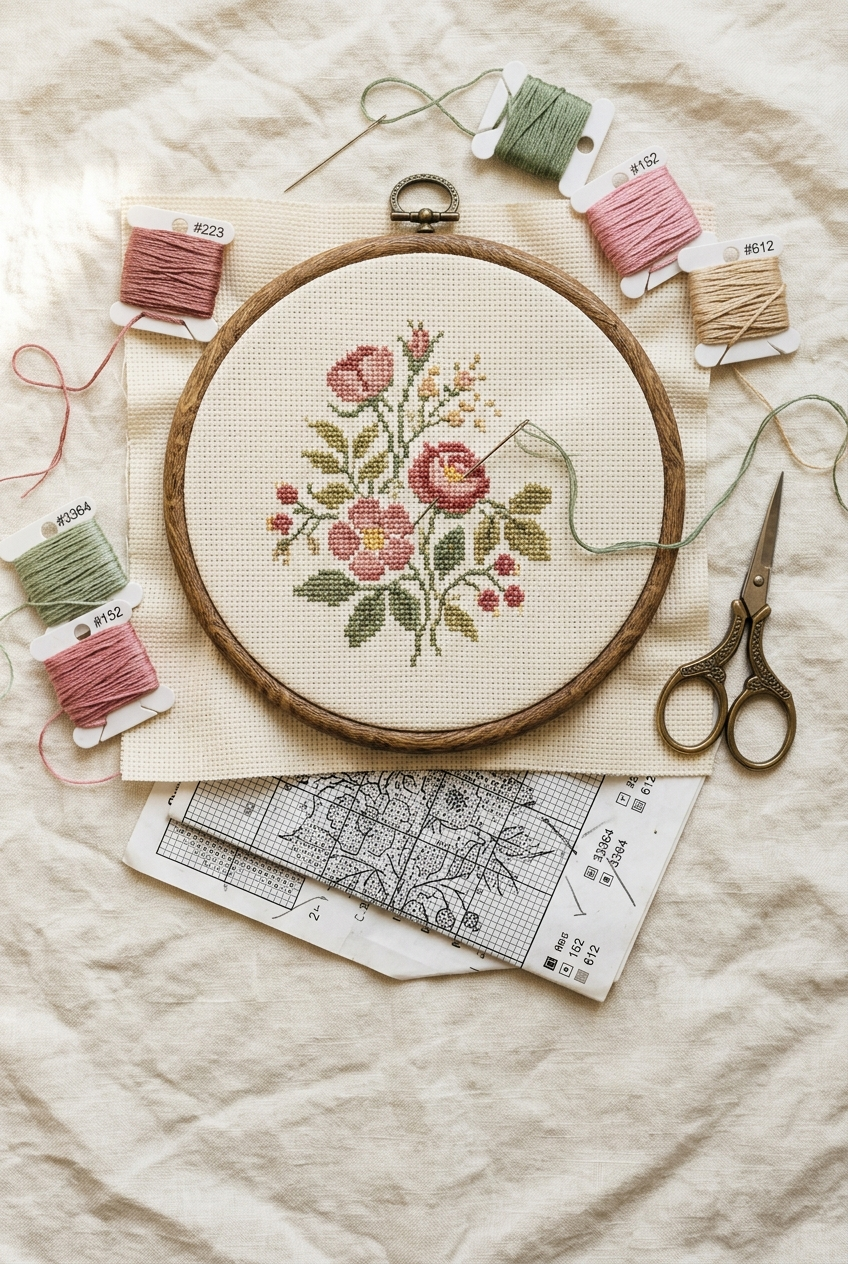
Wooden Cross Stitch HoopsA 5 or 6-inch wooden hoop is the tool I recommend to every new stitcher. Lightweight, easy to grip, gentle on fabric, and inexpensive enough that you can keep a couple on hand for different project sizes. It's the starter tool that never leaves the studio. → Shop on Amazon |
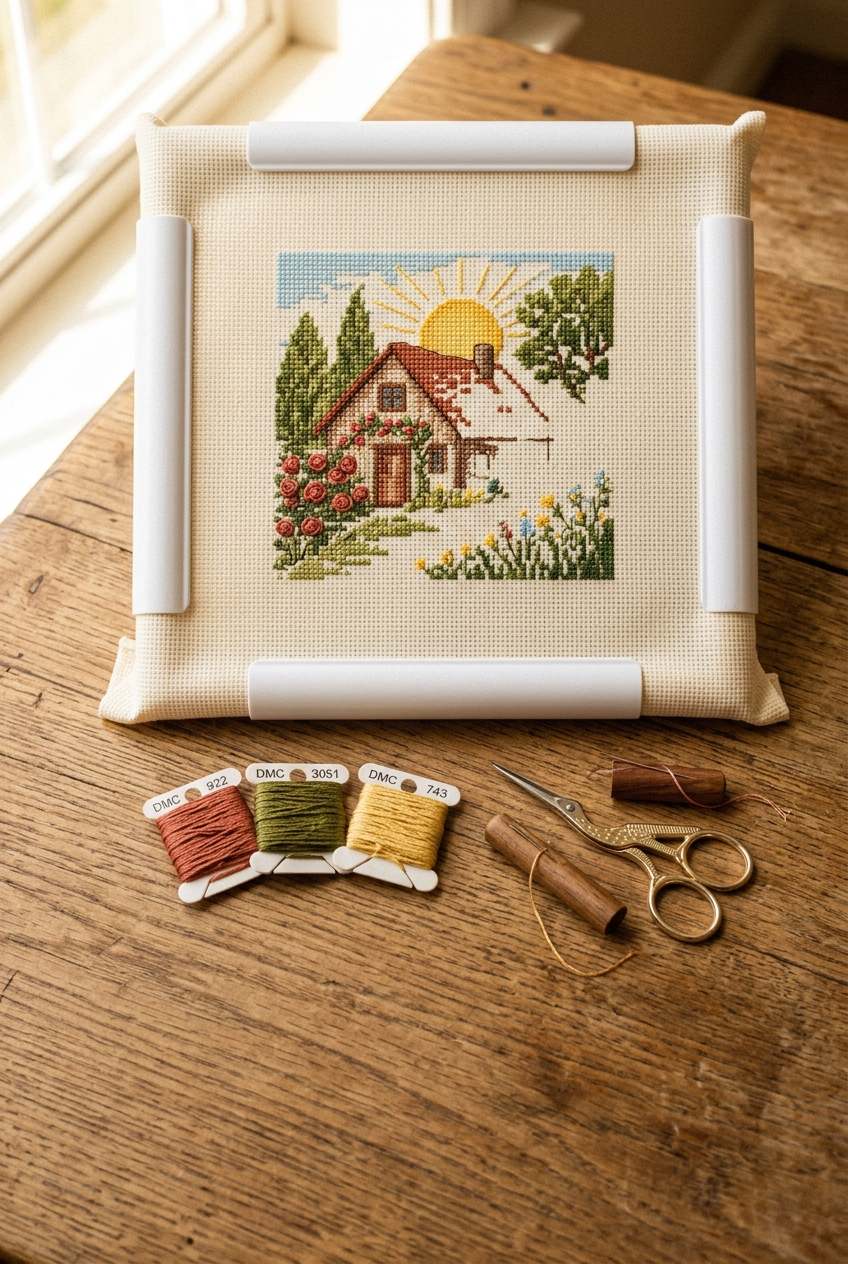
Q-Snap FramesOnce you've stitched a few projects, a Q-snap is a worthwhile upgrade to test. The PVC clamps grip evenly across all four sides, the tension stays consistent for hours, and they snap apart flat for storage. A different tool, not a replacement for your hoops — but a useful one to own. → Shop on Amazon |
From the Sunrays Pattern Library
- Chasing Butterflies, NS-01 → View Pattern
A perfect hoop-sized pattern if you're testing out a 5 or 6-inch wooden hoop for the first time. - Forever Corinthian, FS-02 → View Pattern
A mid-sized fantasy chart that fits comfortably on a Q-snap or larger hoop. - The Ruined Castle, RE-534 → View Pattern
A true BAP — this is the kind of large architectural design where a scroll frame really earns its keep.
Keep Reading
Cross Stitch Hoops & Frames: Complete Guide | Sunrays CreationsIf you want an even deeper dive into hoop and frame options beyond this comparison, this is the next read. Read Article → |
Choosing a Suitable Cross Stitch Frame and StandOnce you've picked your frame, pairing it with the right stand is the natural next step. Read Article → |
Cross Stitch for Beginners: Everything You Need to Start Your First Project TodayBrand new to counted cross stitch? Start here with the full beginner roadmap. Read Article → |
Frequently Asked Questions
Is a hoop or Q-snap better for cross stitch?
For beginners and small-to-medium patterns, a wooden 5–6 inch hoop is cheaper, more portable, and easier to use. Q-snaps shine for stitchers with hand fatigue or mid-sized projects who want a square frame with gentler fabric grip. Both are valid; the hoop just wins on cost and simplicity for most new stitchers.
What size hoop should I use for cross stitch?
A 5 or 6-inch hoop is my go-to for most counted cross stitch patterns on 18-count Aida. It centers most small-to-medium designs comfortably and fits naturally in your hand. Larger hoops exist but get unwieldy fast.
When should I use a scroll frame instead of a hoop?
Use a scroll frame when your pattern is too large to fit in a single hoop position, when you're working a BAP or HAED chart, or when you want to avoid stitching over completed areas. Scroll frames keep the entire piece taut without crushing finished stitches.
Do Q-snaps leave marks on Aida fabric?
Q-snaps leave a much gentler mark than tightened hoops because the plastic clamps grip rather than pinch. Any light impression usually washes out before framing. Always remove your work from any frame between stitching sessions to minimize marks.
Do I need a stand for a scroll frame?
A floor or lap stand isn't required but makes scroll frames dramatically more useful. Two-handed stitching is faster, and your hands don't tire from holding the frame. If you're investing in a scroll frame for a BAP, the stand is worth pairing with it.
What's the cheapest frame option for a beginner?
A basic wooden embroidery hoop in the 5–6 inch range is the cheapest and most beginner-friendly option. It costs about the same as a cup of coffee, works on 18-count Aida, and is what I personally use and recommend to every new stitcher at Sunrays.
Can I leave my cross stitch in a hoop between sessions?
I don't recommend it. Leaving fabric tightened in a hoop for days or weeks creates a crease ring that can be hard to fully remove. Pop the outer ring off when you set the project down for the night and your fabric stays fresher.
Join the Sunrays stitcher's circle
New patterns, seasonal promos, and Tracey's studio notes — delivered to your inbox.
About Tracey Kramer: Tracey is the lead designer and co-owner of Sunrays Creations, a counted cross stitch business she has run from Marysville, Ohio for over 22 years. Her patterns are stitched in homes around the world and finished as framed wall art. Visit sunrayscreations.com to explore her pattern library.