
Cross Stitch Scissors: Why Your Scissors Matter More Than You Think
Posted by Tracey M. Kramer on 27th Jul 2026
A Note from Tracey Kramer
I have been designing counted cross-stitch patterns since 2004, and in that time I have watched my customers stitch everything from wedding gifts to heirloom samplers. This is everything I know about this topic -- from real experience, not theory.
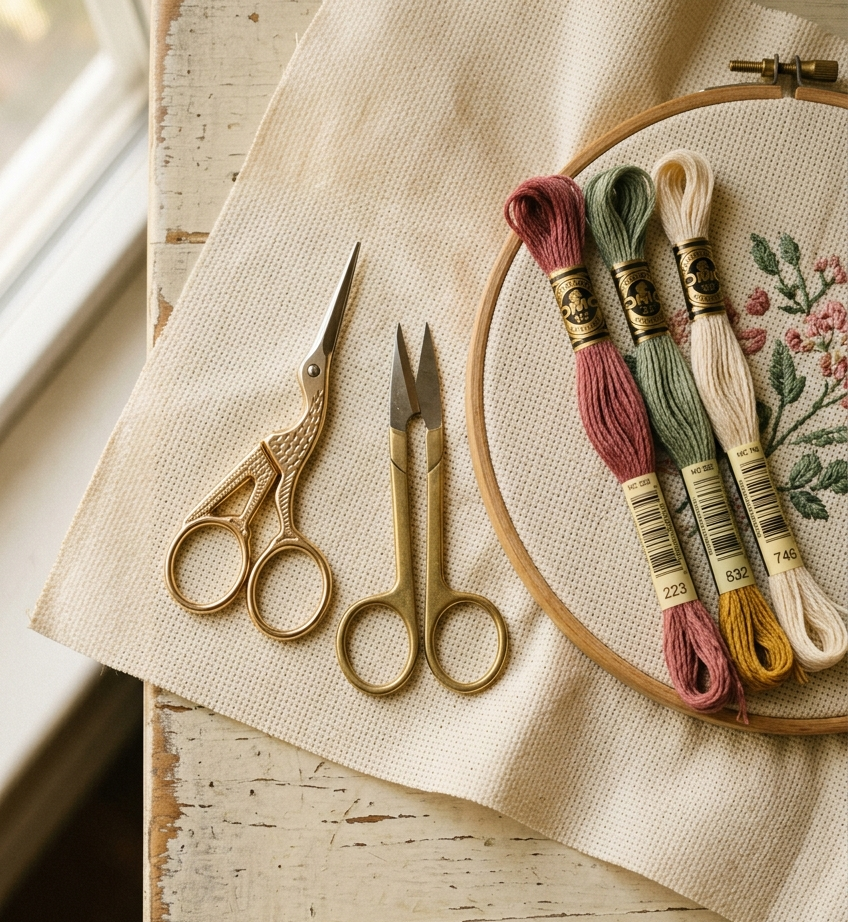
Small gold stork and straight cross stitch scissors on cream Aida cloth with floss and hoop
By Tracey Kramer • • 12 min read
If you've ever tried to snip a single floss tail and ended up with a frayed, fuzzy mess, your scissors are the problem. The best cross stitch scissors are small, sharp, and made to cut one or two strands cleanly at the very base of your fabric. After 22 years of designing and stitching, I can tell you the tool most beginners overlook is the one that touches your project the most.
Why Scissors Matter More Than You'd Guess
When people ask me what to buy first, they always list floss, fabric, and a needle. Scissors come up almost as an afterthought, like something you can grab from the kitchen drawer. I've been there, and I'll be honest with you: nothing wrecks a clean finish faster than the wrong scissors.
Cross stitch is a craft of tiny, repeated motions. You're trimming thread tails hundreds of times across a single project, and every one of those cuts either helps your work or fights it. Dull or oversized scissors crush and fray the floss instead of slicing it. A frayed tail won't tuck neatly under your existing stitches, and it shows through on the front once your piece is framed as wall art.
There's also the matter of getting close. On 18-count Aida, my design standard, the stitches sit tight together. You need a fine, pointed tip that can slide right up to the fabric and clip a tail flush without nicking a neighboring stitch. Big craft shears simply can't do that. They're built for cutting a length of fabric, not for the surgical work of trimming a two-strand tail at its root.
I always recommend thinking of your scissors as a precision instrument, because that's exactly what they are. Once you feel the difference between a clean snip and a chewed one, you won't go back.
What Makes a Good Pair of Cross Stitch Scissors
Not every small pair of scissors is right for this work. Over the years I've handled dozens, and the good ones share the same handful of traits. Once you know what to look for, shopping gets a lot easier.
Sharp, fine-pointed blades. This is non-negotiable. The tips should come to a genuine point so you can guide them into tight spaces. When the blades meet, they should cut cleanly all the way to the very tip, not just in the middle. A pair that leaves the last millimeter uncut will leave you frustrated every time you trim a tail.
Small overall size. A blade length of around one to one-and-a-half inches is ideal for thread work. Anything bigger becomes clumsy in your hand and makes it harder to see what you're cutting. Small embroidery scissors (find on Amazon) give you control, and control is the whole game.
Comfortable handles. You'll be picking these up constantly during a long session, so the finger holes should fit your hand without pinching. Some stitchers love a classic loop handle; others prefer a slightly padded grip. There's no wrong answer here as long as it feels natural.
Quality steel that holds an edge. Cheap stamped-metal scissors dull fast and start snagging within a few months. A well-made pair of embroidery scissors, kept for thread only, will stay sharp for years. That leads me to my single most important rule.

Tracey Recommends
BIHRTC Vintage European Style Scissors Stainless Steel for Cross Stitch Cutting Embroidery Sewing Handcraft Craft Art Work DIY Tool(Silver)
This is the everyday workhorse pair I reach for most. The fine tips cut cleanly all the way to the point, so trimming floss tails flush against 18-count Aida is effortless. Keep them for thread only and they'll stay sharp for years.
Check Current Price →Once you feel the difference between a clean snip and a chewed one, you won't go back. Your scissors touch your project more than any other tool you own.
The One Rule: Never Cut Paper With Your Thread Scissors
If you take nothing else from this article, take this: your good cross stitch scissors are for floss and fabric only. Paper dulls a blade faster than almost anything, and once those fine tips lose their edge, they'll never snip thread cleanly again.
I keep a cheap pair of office scissors right next to my stitching spot for cutting pattern printouts, tape, and packaging. My embroidery scissors live in a separate case and touch nothing but floss. This single habit has kept my favorite pair sharp for well over a decade.
It helps to make the rule visible. Tie a bright ribbon on your thread scissors, or store them somewhere your family knows is off-limits. I promise the moment someone borrows them to open a box, you'll hear the difference the next time you sit down to stitch. Protect the good pair, and it will protect your finished work.
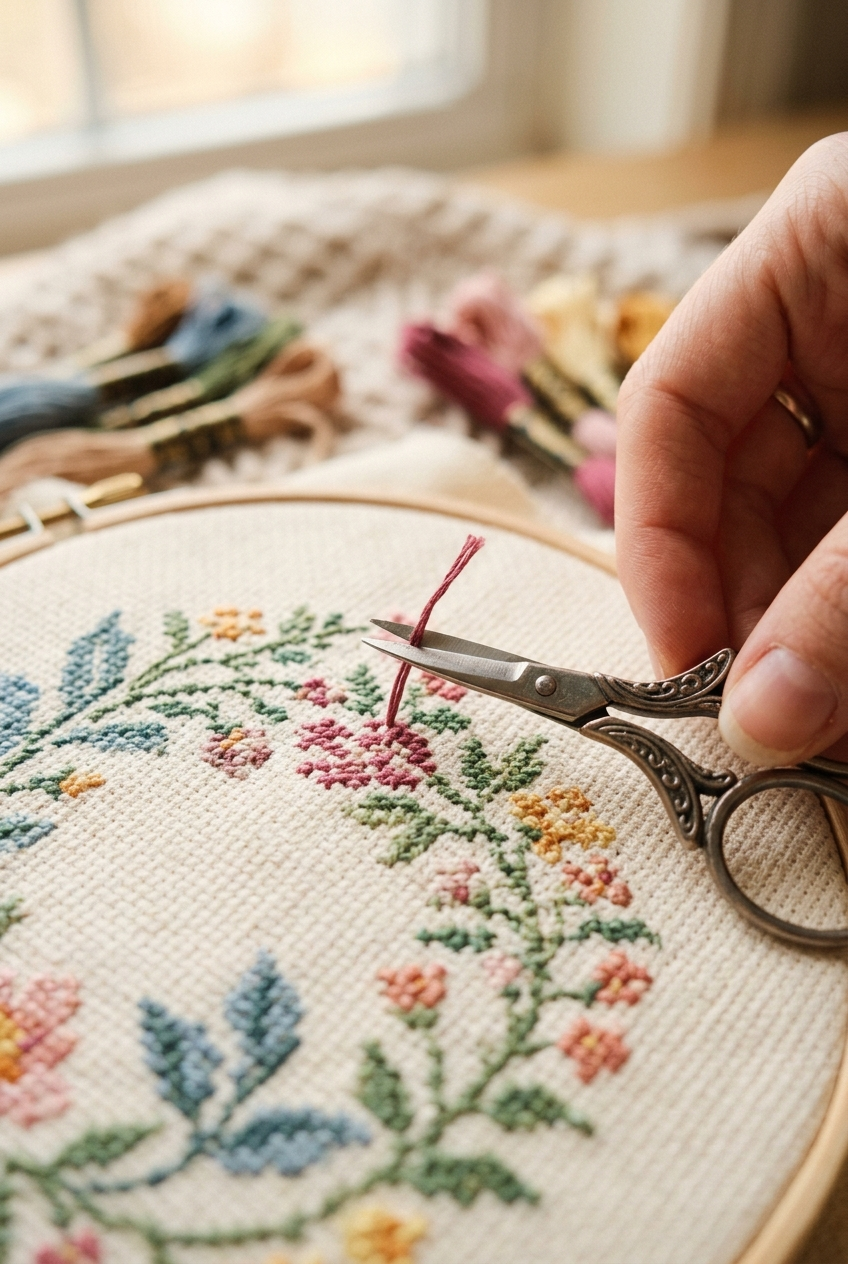
Fine-pointed scissors trimming a floss tail close against a stitched floral cross stitch piece
Stork Scissors and the Types Worth Knowing
Let's talk about the different styles you'll run into, because the choices can feel overwhelming when you're new.
Stork scissors. Those pretty gold scissors shaped like a bird are more than decoration. The classic stork scissors design has long, slender blades that come to a very fine point, which happens to be perfect for detailed thread work. The stork's beak is the cutting edge, and the curve of the body gives you a comfortable grip. They earned their reputation honestly. If you want something both functional and lovely to keep in your project bag, a good pair of stork embroidery scissors (find on Amazon) is a joy to use.
Straight embroidery scissors. The workhorse of the craft. Straight fine-point blades handle nearly every trimming task and are the pair I reach for most. If you buy only one, buy a solid straight pair.
Curved-tip scissors (find on Amazon). These have blades that bend slightly upward at the tip. They shine when you need to trim a tail flush against the fabric surface without the risk of poking through, and they're wonderful for detailed close work on the back of your piece.
Snips and thread cutters. Spring-action snips (find on Amazon) work by squeezing rather than looping your fingers through holes. Some stitchers with hand fatigue love them. They're handy, but I still keep a pointed pair nearby for precision cuts a snip can't manage.
You don't need all of these. A good straight pair plus one stork or curved pair covers everything I do, and I've been designing for over two decades.
|
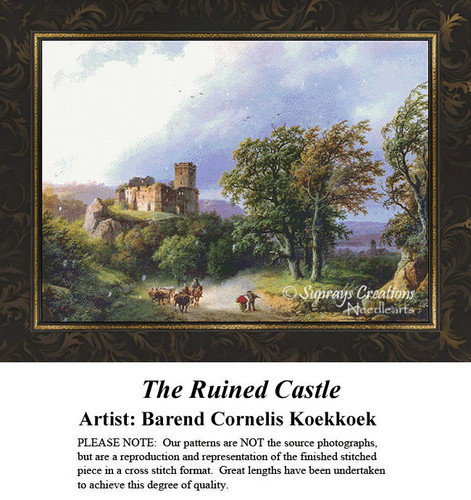
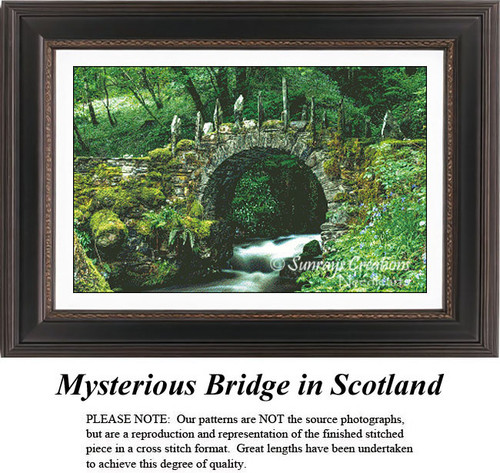
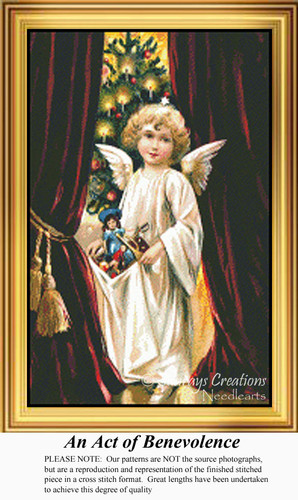
Patterns from the Sunrays Collection Tracey's Picks, designing cross stitch patterns since 2004 |
|||||
|
|||||
| Browse the full Sunrays collection → |
Caring for Your Scissors So They Last
A quality pair of scissors is an investment, and a little care keeps them cutting like new. This isn't complicated, but it makes a real difference over years of use.
Keep them dry and clean. Moisture is the enemy of good steel, so wipe the blades with a soft cloth if your hands are damp and never leave them sitting in a humid spot. A drop of light oil at the pivot point once or twice a year keeps the action smooth. If you notice any stiffness when you open and close them, that's your cue.
Store them protected. A leather sheath or a small padded case keeps the tips from getting bent or dinged, which matters enormously since the point is where all the precision lives. I've seen beautiful scissors ruined by rattling around loose in a tin with needles and thimbles.
When the day finally comes that they lose their edge, don't toss them. Fine embroidery scissors can be professionally sharpened, and a good sharpening service will bring them right back. Given how attached we get to a favorite pair, that's worth knowing.
Good scissors are part of a good workspace, and they work best alongside the other tools that make stitching easier on your eyes and hands. When everything is set up thoughtfully, your sessions feel calmer and your finished pieces come out cleaner.
Get Stitching Tips & New Patterns from Tracey
Honest advice, new Sunrays designs, and occasional VIP-only offers. No fluff.
No spam. Unsubscribe any time.

Tracey Recommends
anezus Self Healing Cutting Mat for Rotary Cutting, 35" x 23.3", Green
Both lovely and genuinely functional, stork scissors have slender pointed blades made for detailed thread work. They're a joy to keep in your project bag and make a wonderful gift for any stitcher on your list.
Check Current Price →Pairing Scissors With the Rest of Your Setup
Scissors don't work in isolation. They're one piece of a small kit that, together, determines how much you enjoy your time in the chair. On 18-count Aida I stitch with two strands of DMC six-strand floss, a 5-to-6-inch wooden or plastic embroidery hoop, and a fine-point pair of scissors always within reach.
Lighting deserves a mention here too, because you can't trim what you can't see. A frayed tail hides in shadow until you flip your framed piece into the light. Good light and sharp scissors go hand in hand, and both are tools I'd never skip.
If you're just building your first kit, I'd rather see you spend a little more on one excellent pair of scissors than buy three cheap pairs you'll replace within the year. Start with a solid straight pair, add a stork or curved pair when you're ready, and keep that separate junk pair for paper. That's the whole system, and it's served me through countless projects and every pattern I've designed.
The tools are simple once you strip away the noise. A sharp pair of scissors, decent light, good floss, and a design you love. Everything else is refinement.
Your scissors touch your project more than any other tool, so treat them like the precision instrument they are and your finished pieces will thank you. Once your kit is sorted, the fun part is choosing what to stitch next. Come browse the Sunrays Creations pattern collection and find a design worth every clean, careful snip.
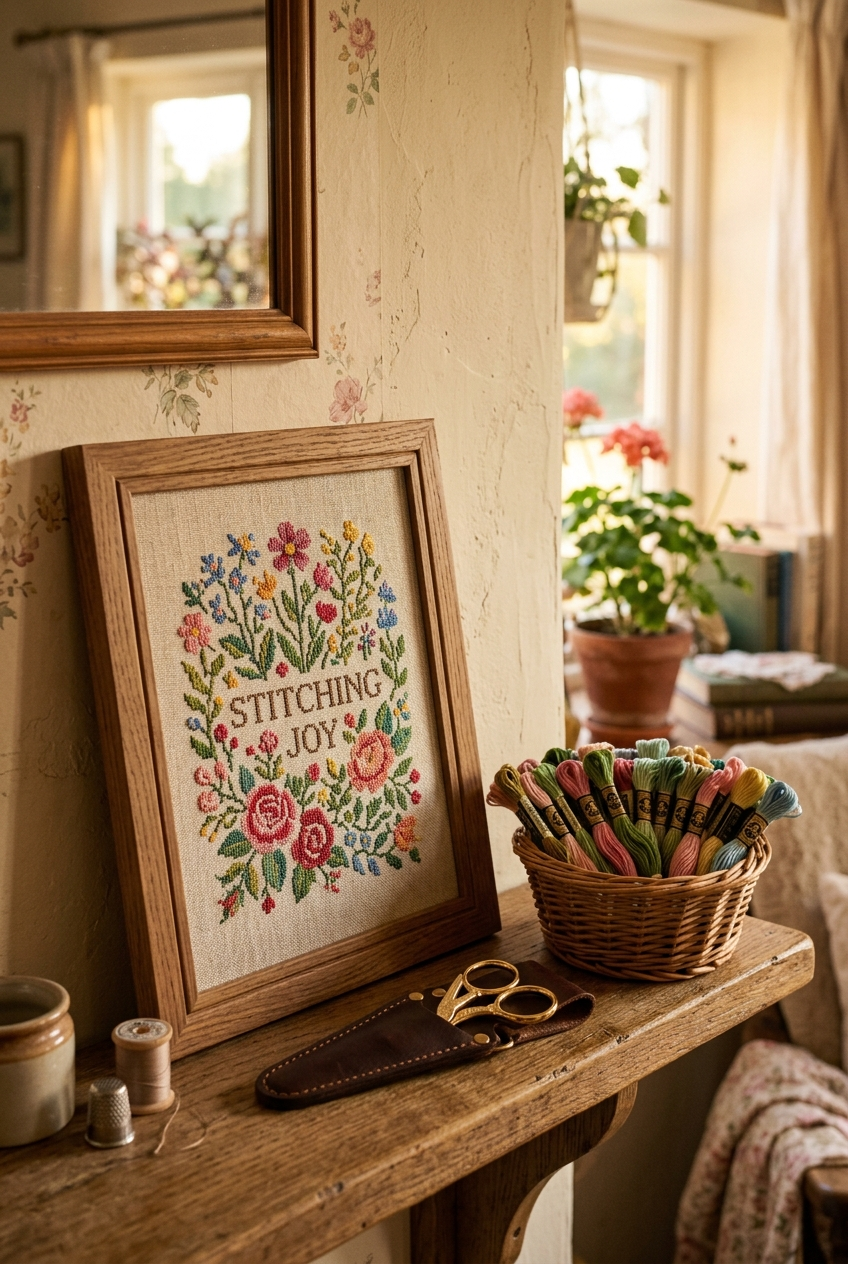
Framed floral cross stitch wall art beside gold stork scissors and a basket of DMC floss
Keep Reading
Cross Stitch Supplies for Beginners: What You Actually Need
Scissors are just one piece of the kit. This guide walks you through everything you truly need to start your first project without wasting money.
See the Full ListCross Stitch Lighting: Why Good Light Is the Most Important Tool You Own
You can't trim what you can't see. Pair your sharp scissors with proper light and your finished pieces come out cleaner every time.
Read the GuideCross Stitch Hoop vs. Q-Snap vs. Scroll Frame — Which Should You Use?
Scissors work best alongside the right hoop or frame. Here's how I choose what holds my fabric while I stitch.
Compare Your OptionsFrequently Asked Questions
What are the best scissors for cross stitch?
The best cross stitch scissors are small, with sharp, fine-pointed blades around one to one-and-a-half inches long. They should cut cleanly all the way to the tip so you can trim floss tails flush against the fabric. A solid straight embroidery pair is the one to buy first.
Why can't I just use regular household scissors?
Regular scissors are too big and too dull for thread work. They crush and fray the floss instead of slicing it cleanly, and they can't get close enough to trim a tail flush on 18-count Aida. That frayed tail won't tuck neatly and can show through once your piece is framed.
Are stork scissors actually good or just decorative?
They're genuinely good. The classic stork scissors design has long, slender blades with a very fine point, which is perfect for detailed thread work. The curved body gives a comfortable grip, and they earned their reputation honestly.
Why should I never cut paper with my cross stitch scissors?
Paper dulls a fine blade faster than almost anything, and once the pointed tips lose their edge they won't snip thread cleanly again. Keep a cheap separate pair for paper and tape, and reserve your good scissors for floss and fabric only.
How do I keep my embroidery scissors sharp?
Keep them dry and clean, wipe the blades if your hands are damp, and add a drop of light oil at the pivot once or twice a year. Store them in a sheath or padded case to protect the tips, and never cut paper with them. When they finally dull, they can be professionally sharpened.
Do I need more than one pair of scissors for cross stitch?
You don't need many. A good straight pair plus one stork or curved pair covers everything, and a separate cheap pair handles paper. Start with one excellent straight pair rather than several cheap ones you'll replace within the year.
-- Tracey Kramer
Founder & Designer, Sunrays Creations Needlearts
Hand-charted designs since 2004 • Marysville, Ohio