
How Long Does Cross Stitch Take? A Realistic Guide to Project Timelines
Posted by Tracey M. Kramer on 23rd Jun 2026
A Note from Tracey Kramer
I have been designing counted cross-stitch patterns since 2004, and in that time I have watched my customers stitch everything from wedding gifts to heirloom samplers. This is everything I know about this topic -- from real experience, not theory.
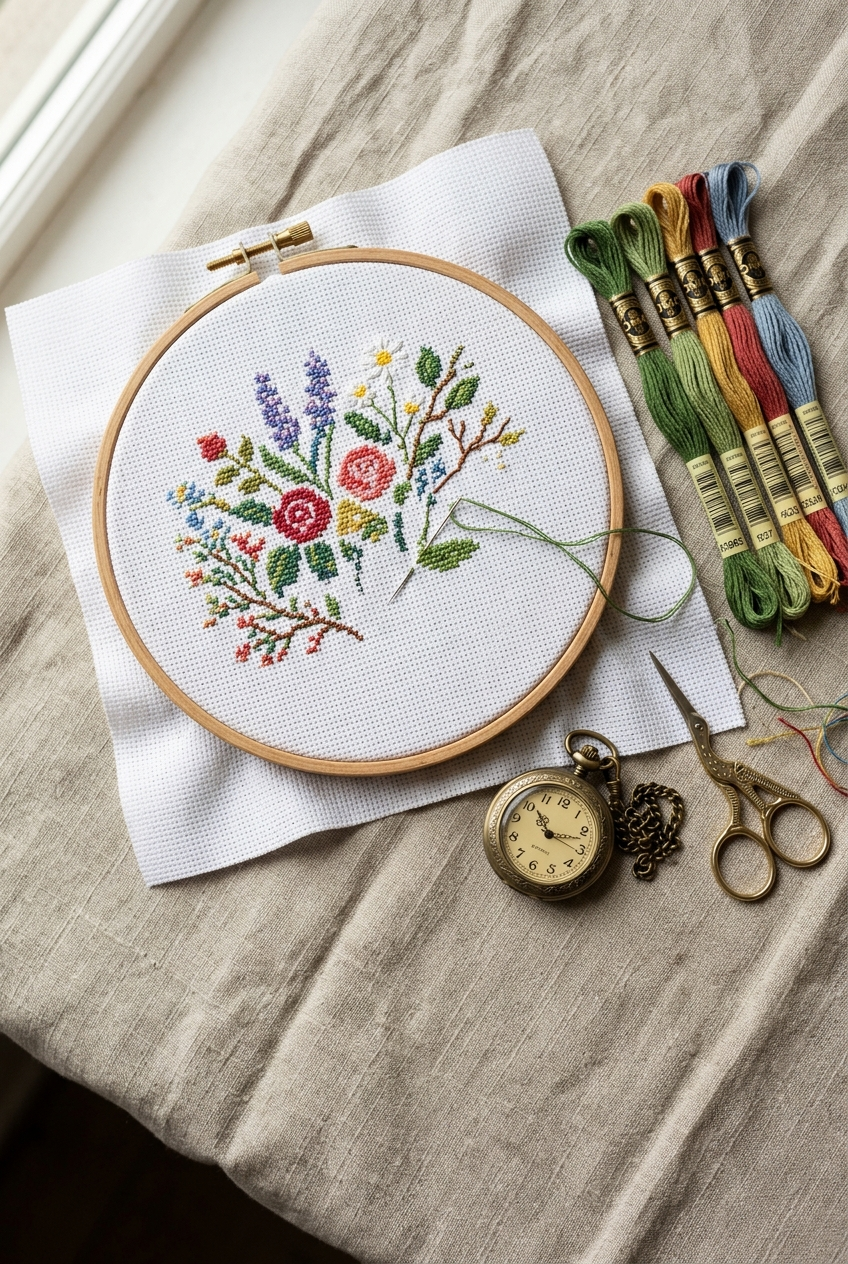
In-progress cross stitch in a wooden hoop with floss and a clock nearby
By Tracey Kramer • • 12 min read
How long does cross stitch take? It's the first question almost every new stitcher asks, and the honest answer is: it depends. A small bookmark-sized design might take a weekend, while a large fine art reproduction can stretch across months or even years. I've spent 22 years designing counted cross stitch patterns and stitching them myself, so I can give you a realistic cross stitch time estimate based on real projects, real habits, and real life getting in the way.
Why There's No Single Answer to "How Long Does Cross Stitch Take?"
I wish I could hand you a neat formula, but cross stitch project timelines depend on a tangle of variables that shift from stitcher to stitcher and project to project. Two people can start the same charted design on the same day and finish weeks apart. That's not failure; that's normal.
The biggest factors that affect how many hours to cross stitch a piece are the size of the design (measured in stitch count), the number of thread colors, the fabric count you're working on, your personal stitching speed, and how much uninterrupted time you can carve out per session. Secondary factors include whether the pattern has lots of confetti stitches, backstitch outlines, or specialty stitches like French knots.
Let me walk through each of these so you can build your own realistic estimate before you commit to a project.
Stitch Count: The Single Biggest Time Factor
The stitch count of a design is the total number of individual cross stitches required to complete it. A small pattern might call for 2,000 stitches. A large fine art reproduction can demand 80,000 or more. When someone asks me for a cross stitch time estimate, stitch count is the first thing I look at.
Here's a rough framework I share with customers. Most intermediate stitchers working on 18-count Aida cloth with two strands of DMC floss complete somewhere between 100 and 200 stitches per hour. Beginners tend to land closer to 60-120 stitches per hour while they're building muscle memory. Experienced stitchers who have their rhythm down can push past 200.
That range means a 5,000-stitch pattern could take anywhere from 25 hours (fast, experienced stitcher) to 80+ hours (a careful beginner who's checking the chart frequently). The math isn't complicated, but the spread is wide. That's why I always encourage people to track a few sessions and calculate their own pace before planning a deadline around a project.
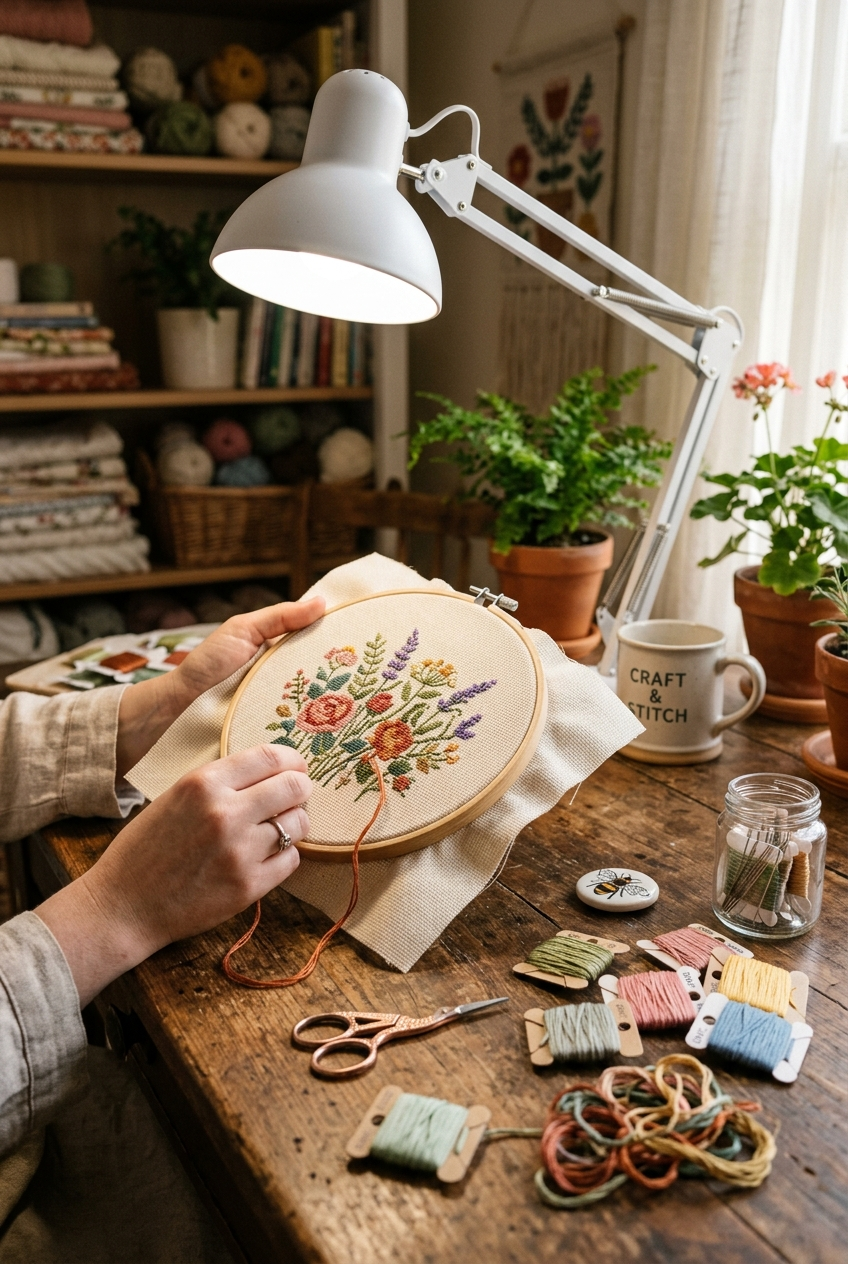
Tracey Recommends
Daylight LED Craft Lamp for Cross Stitch
Good lighting is the fastest way to speed up your stitching and protect your eyes. I always recommend a daylight LED lamp positioned directly over your work. It makes a noticeable difference, especially on dark fabric or confetti-heavy designs.
See on AmazonThe finished piece hanging on my wall doesn't carry a timestamp. It carries the quiet satisfaction of something made entirely by my hands, one stitch at a time.
How Fabric Count Changes Your Timeline
All of my patterns at Sunrays Creations are designed for 18-count Aida cloth, and I recommend that count for a reason. The holes are visible enough that you're not straining your eyes, yet the finished piece has beautiful detail. But fabric count absolutely affects your speed.
On a lower count like 14-count Aida, each stitch is physically larger, so you cover ground faster. On higher counts like 22 or 28, each stitch shrinks and the needle movements become more precise. Moving from 14-count to 18-count typically adds about 15-25% more time because the stitches are smaller. If someone tells me they're planning to stitch one of my designs on a higher count than 18, I always mention that the time commitment goes up accordingly.
Fabric choice also plays into eye fatigue. Dark fabric like black Aida cloth slows most stitchers down because the holes are harder to see. Good lighting and a comfortable embroidery hoop make a noticeable difference there. I keep a 5-inch wooden hoop in my hand for almost every project, and that consistent setup helps me maintain my pace.
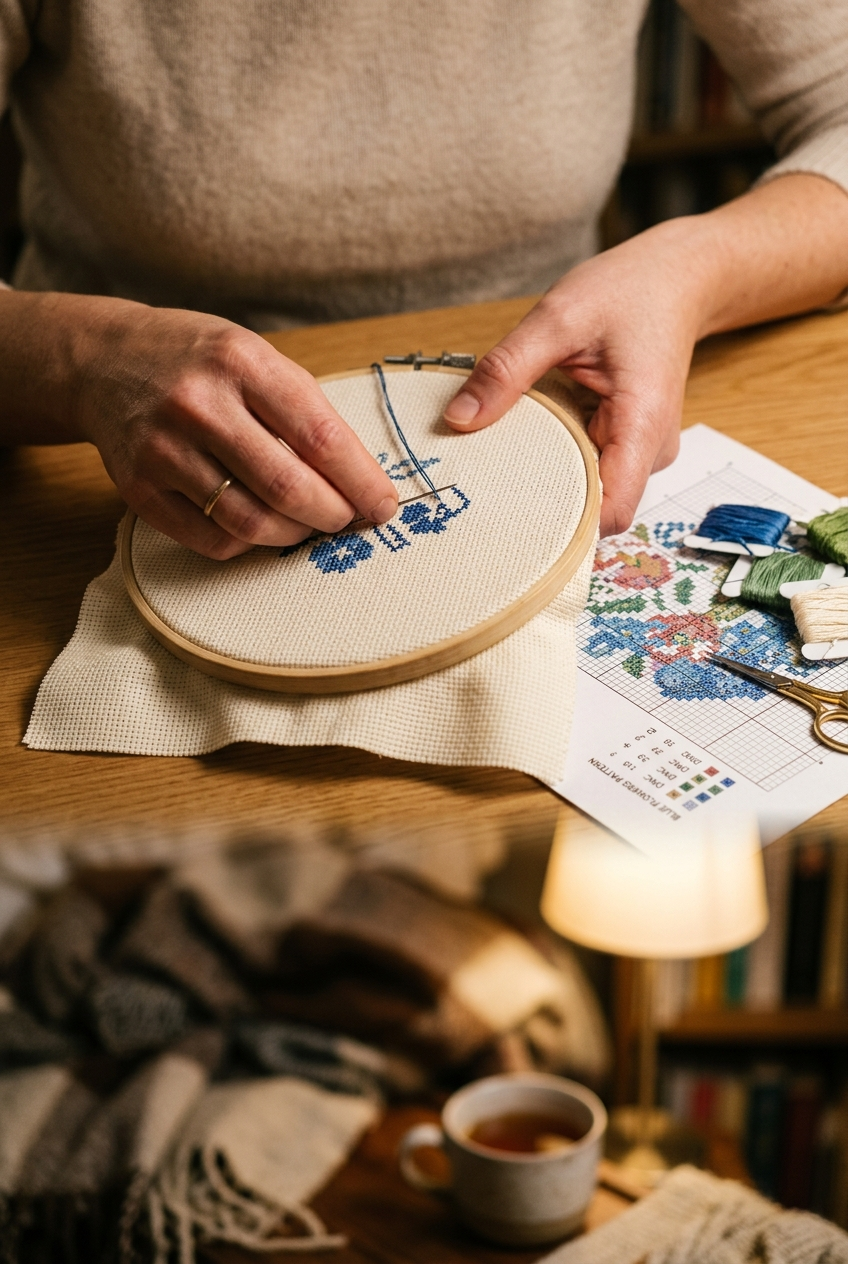
Hands stitching counted cross stitch on Aida cloth with a pattern chart nearby
Color Count, Confetti, and the Hidden Time Sinks
A design with 10 colors stitches faster than one with 60 colors, even if both have the same total stitch count. Why? Thread changes. Every time you finish a section, cut your floss, thread a new color, and find your next starting point on the chart, you're burning time that doesn't produce stitches.
Confetti is the cross stitch term for scattered individual stitches of the same color spread across a large area. Confetti-heavy designs are gorgeous when finished, but they require constant chart-checking and frequent color swaps. Some stitchers use the parking method to manage confetti, where you leave each color threaded and "parked" at its next stitch location. Parking saves time on re-threading but adds complexity and more needles in your fabric at once.
Backstitch outlines and French knots also add hours. Backstitch usually goes faster stitch-for-stitch than cross stitches, but a design with heavy outlining can tack on 10-20% more time after the main stitching is done. I account for this in my pattern descriptions whenever a design has significant backstitch sections.
If you're a beginner looking for a quicker finish, start with a design that has a moderate color palette and larger blocks of the same color. You'll spend more time actually stitching and less time flipping between symbols on the chart.
|
Patterns from the Sunrays Collection Tracey's Picks, designing cross stitch patterns since 2004 |
|||||
|
|||||
| Browse the full Sunrays collection → |
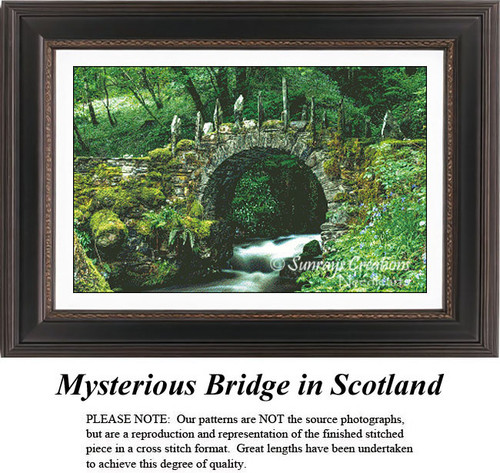
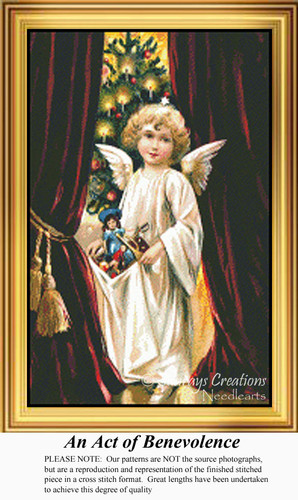
Realistic Time Estimates by Project Size
I get asked for specific numbers all the time, so here are the ballpark ranges I've seen across thousands of customer projects and my own work. These assume 18-count Aida, two strands of DMC floss, and an intermediate stitching speed of roughly 150 stitches per hour.
Small designs (under 5,000 stitches): Think simple florals, small motifs, or beginner-friendly charts. Expect 20-40 hours of stitching time. At one hour per evening, that's roughly three to six weeks.
Medium designs (5,000-20,000 stitches): This is where many popular counted cross stitch patterns land. A medium design might take 40-130 hours. If you stitch five hours a week, that's two to six months.
Large designs (20,000-50,000 stitches): These are serious commitments. You're looking at 130-350 hours, which can stretch from six months to over a year depending on your schedule.
Extra-large or BAP designs (50,000+ stitches): A Big Ass Project lives up to its name. Some of my most detailed fine art reproductions fall into this range. These can take one to three years or longer. The stitchers who finish them are patient, dedicated, and usually tracking their progress carefully to stay motivated.
These are working-time estimates only. They don't include the time you spend organizing supplies, prepping fabric, reading your cross stitch chart, or frogging a mistake at 11 PM. Real calendar time is always longer than pure stitch time.
Get Stitching Tips & New Patterns from Tracey
Honest advice, new Sunrays designs, and occasional VIP-only offers. No fluff.
No spam. Unsubscribe any time.
Tracey Recommends
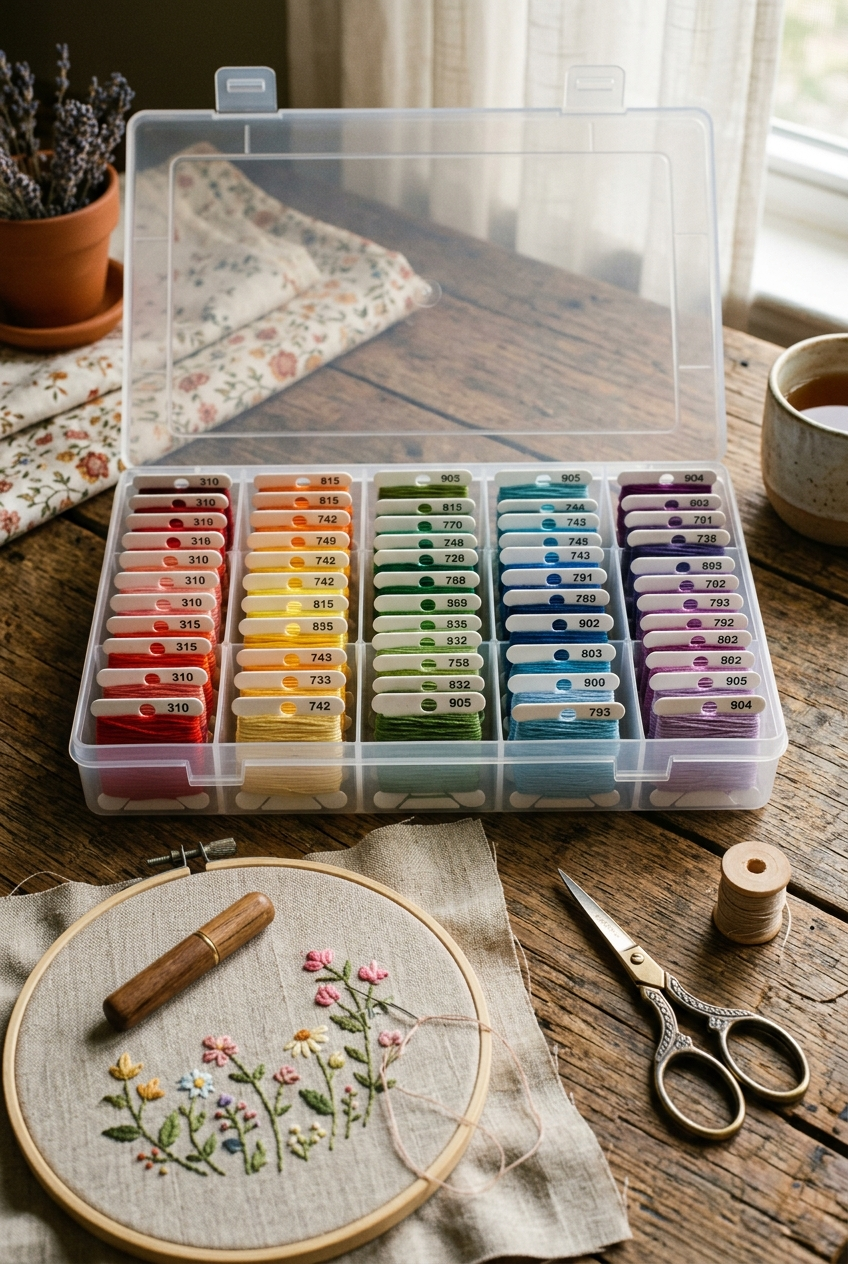
DMC Floss Organizer and Bobbin Set
Keeping your floss sorted and labeled saves real time on every project. I tell every beginner to wind their skeins onto bobbins before they start stitching. You'll thank yourself fifty thread changes later.
See on AmazonHow to Estimate Your Own Stitching Speed
The best way to get an accurate cross stitch time estimate is to measure yourself. Here's what I recommend: sit down with a project, set a timer for one hour, and count how many stitches you complete. Do this over three separate sessions, then average the results. You'll have a reliable stitches-per-hour number you can use to plan any future project.
Once you know your pace, multiply the total stitch count of a pattern by your time per stitch. If you stitch 140 stitches per hour and a design has 15,000 stitches, that's roughly 107 hours of stitching. Divide by how many hours per week you stitch, and you've got a calendar estimate.
I always tell people to add a 15-20% buffer for thread changes, breaks, and the inevitable frogging session. If you've ever had to rip out three rows because you miscounted, you know exactly what I mean. Frogging is part of the process, but it does eat into your timeline.
Tracking your progress also keeps you motivated on longer projects. Whether you use a spreadsheet, a stitching app, or simply mark completed sections on a photocopy of your chart, seeing how far you've come is one of the best ways to push through the middle-of-the-project slump. That WIP sitting in your hoop deserves to become an FFO.
Tips to Stitch Faster (Without Sacrificing Quality)
Speed comes naturally with practice, but there are a few things that help right away. First, good lighting. A daylight LED lamp (find on Amazon) positioned over your work reduces eye strain and helps you find holes on the fabric faster. I've said it a hundred times: your eyes are your most valuable stitching tool.
Second, organize your floss before you start. Wind your DMC skeins (find on Amazon) onto bobbins, label them, and keep them sorted in a floss organizer (find on Amazon). Hunting through a tangled pile of thread is one of the biggest time wasters I see. A few minutes of prep saves hours over the life of a project.
Third, use the right hoop. I stitch with a wooden embroidery hoop (find on Amazon) because it keeps the fabric taut and my tension consistent. When fabric is loose or bunched, every stitch takes a little longer because you're fighting the material. A 5-inch or 6-inch hoop is the sweet spot for most counted cross stitch patterns.
Fourth, stitch in rows when possible rather than completing one stitch at a time. The "Danish method" of stitching all the bottom half-stitches in a row first, then coming back to complete the top half, is significantly faster than the "English method" of completing each X individually. This is especially true for sections with large blocks of a single color.
Finally, minimize distractions during your stitch time. This doesn't mean you can't watch TV or listen to a podcast. Most stitchers do. But if you're constantly putting the project down and picking it back up, you lose time re-orienting yourself on the chart each time. Even 30 focused minutes produces more stitches than an hour of scattered effort.
When the Timeline Doesn't Matter
I want to end with something I feel strongly about. Cross stitch is not a race. The question of how long does cross stitch take matters when you're planning a gift with a deadline or deciding whether a pattern fits your life right now. Those are practical concerns, and I respect them.
But outside of deadlines, the timeline is just a number. Some of the most rewarding projects I've ever completed took me well over a year. There were weeks I didn't touch them and weeks I stitched every night. The finished piece hanging on my wall doesn't carry a timestamp. It carries the quiet satisfaction of something made entirely by my hands, one stitch at a time.
If you have a UFO sitting in a drawer because it's taking "too long," I'd encourage you to pull it out and stitch ten minutes today. Progress is progress. And if you're just starting out and intimidated by the hours, begin with a smaller design, enjoy the process, and let your speed build naturally. After 22 years, I still find a deep calm every time I pick up my hoop and needle. The time it takes is part of the gift.
Cross stitch timelines are personal. Whether your next project takes a month or a year, every stitch is time well spent. If you're ready to choose a design that fits your schedule and skill level, I'd love for you to browse the full collection of counted cross stitch patterns at Sunrays Creations. From quick starter designs to ambitious fine art reproductions, there's a project waiting for you.
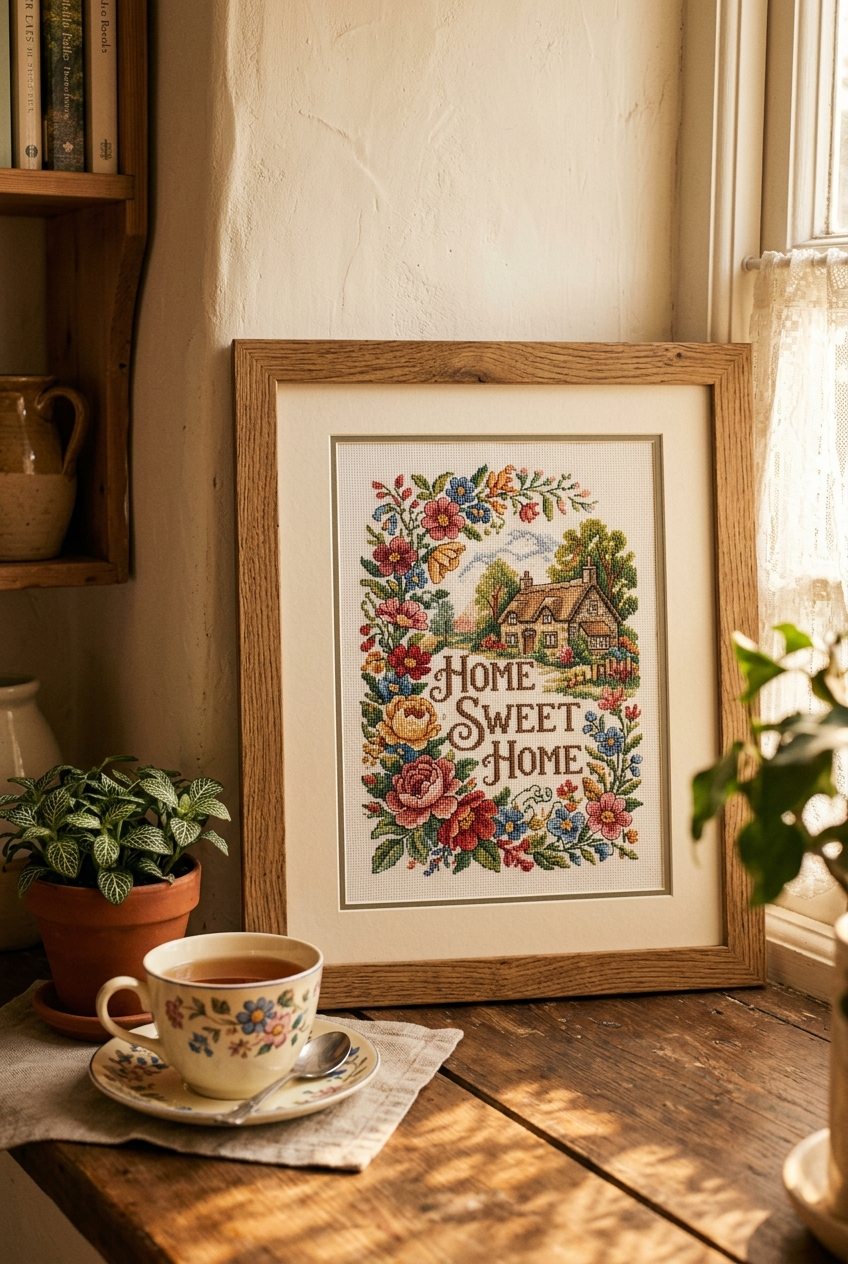
Framed finished cross stitch wall art displayed in a cozy sunlit room
Keep Reading
How to Read a Cross Stitch Pattern: A Complete Guide for New Stitchers
Understanding your chart is essential before you can estimate how long a project will take. This guide walks you through every symbol and marking on a counted cross stitch pattern.
Read the GuideHow to Track Your Cross Stitch Progress (9 Real Methods)
Once you know your stitching speed, tracking progress keeps you motivated across long projects. These nine methods help you see how far you've come.
See All 9 MethodsLarge Cross Stitch Projects: Tips for Tackling Big Patterns
Planning a BAP that could take a year or more? This article covers the strategies that keep large project timelines manageable and enjoyable.
Get the TipsFrequently Asked Questions
How long does a small cross stitch pattern take to finish?
A small design under 5,000 stitches typically takes 20-40 hours of stitching time on 18-count Aida. If you stitch about an hour each evening, expect roughly three to six weeks to finish. Add a buffer for thread changes and any frogging.
How many stitches per hour can a beginner expect?
Most beginners complete about 60-120 cross stitches per hour while they build confidence reading the chart and handling the floss. With practice, that number climbs. I recommend timing yourself over three sessions and averaging the results for an accurate personal estimate.
Does fabric count affect how long cross stitch takes?
Yes. Higher fabric counts mean smaller stitches and more precise needle placement, which slows you down. Moving from 14-count to 18-count Aida typically adds 15-25% more time. Dark fabrics like black Aida can slow you further because the holes are harder to see.
What makes some cross stitch patterns take longer than others with the same stitch count?
Color count and confetti stitches are the biggest hidden time factors. More colors mean more thread changes. Confetti sections with scattered single stitches require constant chart-checking and frequent color swaps, which eats into stitching time significantly.
How long does a large or BAP cross stitch project take?
Large designs with 20,000-50,000 stitches typically take six months to over a year. Extra-large BAP designs with 50,000+ stitches can span one to three years or longer, depending on how many hours you stitch each week. Progress tracking helps keep motivation strong over those longer timelines.
What is the fastest way to cross stitch without losing quality?
Good lighting, organized floss, a properly tensioned hoop, and stitching in rows using the Danish method all speed things up without sacrificing stitch quality. Minimizing distractions during your stitch sessions also helps because you spend less time re-orienting on the chart.
How do I calculate a cross stitch time estimate for a specific pattern?
First, find your stitches-per-hour rate by timing yourself over a few sessions. Then multiply the pattern's total stitch count by your time per stitch. Add 15-20% for thread changes, breaks, and frogging. Divide by your weekly stitching hours for a calendar estimate.
Does the parking method in cross stitch save time?
Parking can save time on re-threading in confetti-heavy areas because you leave each color threaded at its next stitch location. However, it adds complexity with multiple needles in the fabric at once. Whether it's faster overall depends on your comfort level and the design's layout.
-- Tracey Kramer
Founder & Designer, Sunrays Creations Needlearts
Hand-charted designs since 2004 • Marysville, Ohio