
How to Start Cross Stitching as an Adult: It's Not Just for Grandmas Anymore
Posted by Tracey M. Kramer on 19th Oct 2026
A Note from Tracey Kramer
I have been designing counted cross-stitch patterns since 2004, and in that time I have watched my customers stitch everything from wedding gifts to heirloom samplers. This is everything I know about this topic -- from real experience, not theory.
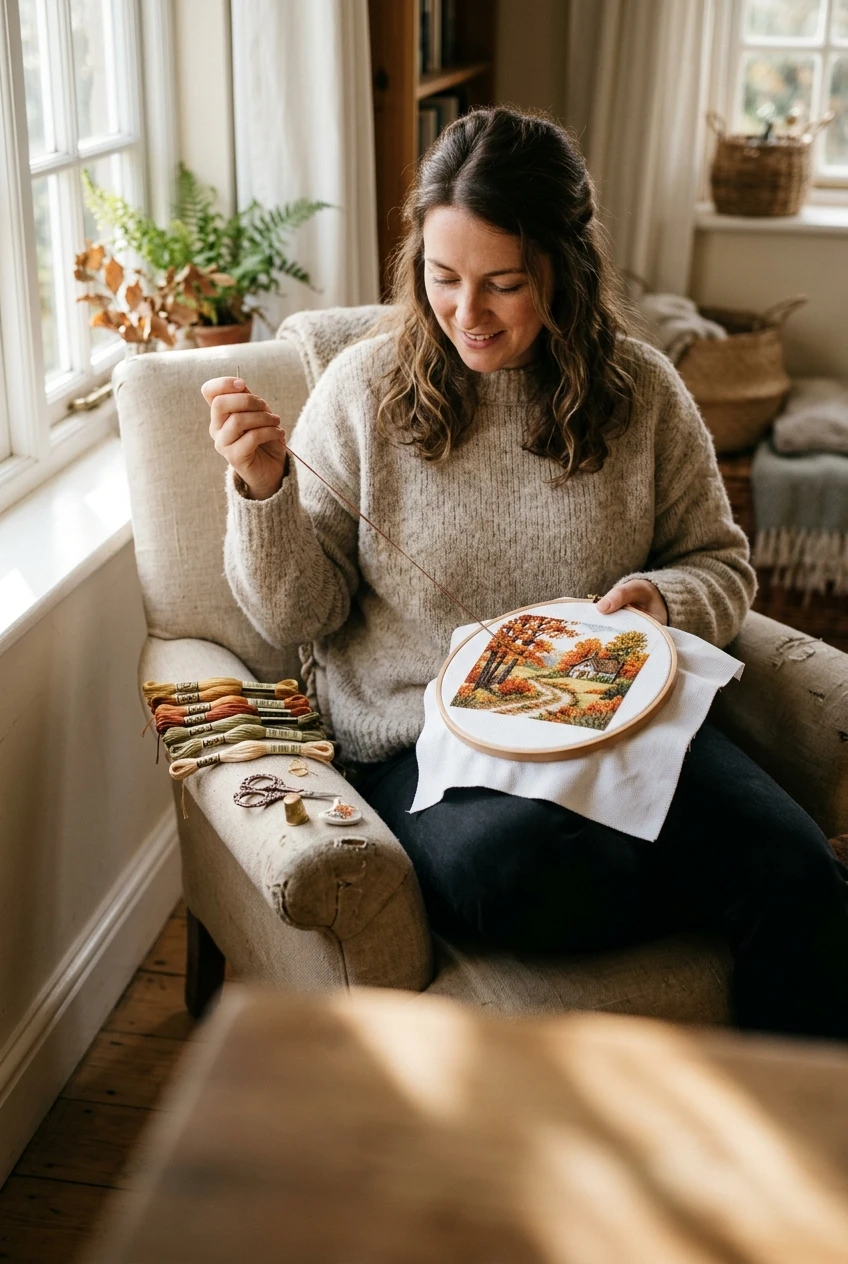
Adult beginner cross stitching an autumn design on 18-count Aida in a wooden hoop
By Tracey Kramer • • 12 min read
If you've been scrolling cross stitch finishes online and quietly thinking "I want to do that, but isn't it a grandma craft?" — let me put that to rest. Cross stitch for adults is one of the fastest-growing hobbies right now, and starting is simpler than you think: you need a chart, 18-count Aida cloth, DMC floss, a hoop, and a tapestry needle. After 22 years of designing patterns, I've watched this craft go from church-basement reputation to something people in their twenties and thirties are picking up as a screen-free way to make something real with their hands.
The "Grandma Craft" Label Is Decades Out of Date
Let's deal with the stereotype first, because it's the thing standing between a lot of people and a hobby they'd genuinely love. Yes, your grandmother may have cross stitched. Mine did. That's not a knock on the craft — that's a craft with staying power. Painting is older. So is baking bread. Nobody calls those old-fashioned.
What changed is the design side. The sampler aesthetic of the 1980s with its geese and hearts and country blue palette was one era of cross stitch, not the definition of it. The charts coming out now include fine art reproductions, landscape photography translated to thread, dense portrait work, pop culture pieces, moody botanicals, and abstract color studies. When people ask me "is cross stitch old-fashioned," my honest answer is that the technique is old and the designs are not. Those are two different things.
I see the shift in our own order data at Sunrays Creations. Twenty-two years in, the customers reaching for a $45 fine art chart are frequently not the customers who bought stamped kits at a craft store in 1987. They're people in their thirties and forties who want a long, absorbing project that produces a piece of framed wall art they'd actually hang in a living room.
Why the modern revival caught fire
Part of it is burnout. People are tired of hobbies that live entirely on a screen. Cross stitch is slow in the best possible way — you sit down, you count, you stitch, and an hour disappears without a single notification. Part of it is FlossTube, where stitchers film their progress and talk through their WIPs like old friends. Watching someone pull thread through fabric for forty minutes turns out to be exactly what a lot of tired adults needed.
And part of it is honest economics. A chart and a handful of floss is an inexpensive entry into a hobby that can occupy you for months. Compare that to almost anything else and the math works out in your favor.
What You Actually Need to Start (The Short, Honest List)
I always recommend keeping your first supply run small. Beginners overbuy, get overwhelmed, and the whole box ends up in a closet. Here's what matters.
Fabric: 18-count Aida, and here's why
Every pattern I design is charted for 18-count Aida cloth (find on Amazon). Aida is woven into a clean grid of little squares, and each square is one stitch. You're not guessing where the needle goes — the fabric tells you. The "18-count" number means 18 squares per inch, which gives you crisp detail without the holes being so tiny you're squinting through them.
You'll see 14-count recommended for beginners in a lot of places. It's a slightly larger grid, which some people find easier at first, but it also makes your finished piece noticeably bigger and the stitches coarser. I'd rather you start on 18-count with good light than start on 14 and then have to re-learn tension and coverage later. Counted cross stitch means the chart and the fabric work together — stick to the count the designer specified and everything lines up.
Floss: DMC six-strand, two strands at a time
DMC is the standard, and for good reason. The color range is enormous, the numbering is consistent worldwide, and every chart you'll ever buy lists DMC numbers. Each skein is six strands twisted together. For 18-count you separate out two strands and stitch with those. Two strands gives you full coverage without the stitches looking fat and crowded.
Separate the strands one at a time, even though it feels fussy. Pulling two out together is how you get knots. Buy a DMC embroidery floss starter set (find on Amazon) if you want a working palette on day one, or just buy the specific colors your first chart calls for — that's cheaper and there's no waste.
Hoop, needle, scissors
I use a 5 or 6 inch wooden embroidery hoop (find on Amazon). It keeps the fabric at even tension, it's light in the hand, and it's cheap enough that you can have one per project. Some stitchers prefer Q-snaps, and they're a fine alternative if you try them and like them — but the hoop is what lives in my chair.
You want a tapestry needle (find on Amazon), size 24 or 26 for 18-count. Blunt tip, big eye. It slides between the fabric threads instead of piercing them. And a small pair of sharp embroidery scissors. Not kitchen shears, not the scissors in the junk drawer. Clean snips keep your thread ends tidy.

Tracey Recommends
Bradove Classic Embroidery Learning Kit for Adults and Kids | Hand Embroidery Kit for Beginners with Patterns, Beginner Embroidery Kit for Adults, Stitches Practice, Learn to Embroider
If you would rather not make six separate decisions before your first stitch, a learning kit puts the essentials in one box with patterns to practise on. It is a gentle way to find out whether you love the rhythm of needlework before you start building a proper stash.
Check Current Price →The technique is old and the designs are not. Those are two completely different things, and only one of them has anything to do with your grandmother.
Your First Hour: How to Actually Make a Stitch
Cut your fabric with at least three inches of margin on every side — you'll need that for framing later, and running short is a mistake you can't undo. Find the center by folding the fabric in half, then in half again. The corner of that fold is your middle. Most charts start from the center and work outward.
Mount the fabric in your hoop so it's taut as a drum but not stretched out of shape. Separate two strands of floss, thread your needle, and leave a tail. Don't knot it. Knots create lumps that show when you frame the piece and they work loose over time. Hold the tail against the back of the fabric and catch it under your first few stitches instead.
A cross stitch is two diagonal stitches forming an X. Come up at the bottom-left hole, down at the top-right, up at the bottom-right, down at the top-left. That's one full cross stitch, one square on your chart, one square on your fabric. That's the whole technique. Everything else in this craft is a variation on that.
Make all your top stitches lean the same way
This is the single tip that separates work that looks homemade from work that looks finished. Whichever direction your top diagonal leans — I go bottom-left to top-right on the bottom leg, so my tops all lean one direction — keep it consistent across the entire project. Light hits the thread the same way and the whole piece reads smooth. Mixed directions give you a flickery, uneven surface that no amount of good stitching will rescue.
Keep your tension even and gentle. Pull too tight and the fabric puckers and the hole gapes. Leave it too loose and the stitch sags. You're aiming for the thread to simply lie in the square. Your hands will figure this out in about an hour — don't overthink it on stitch number four.
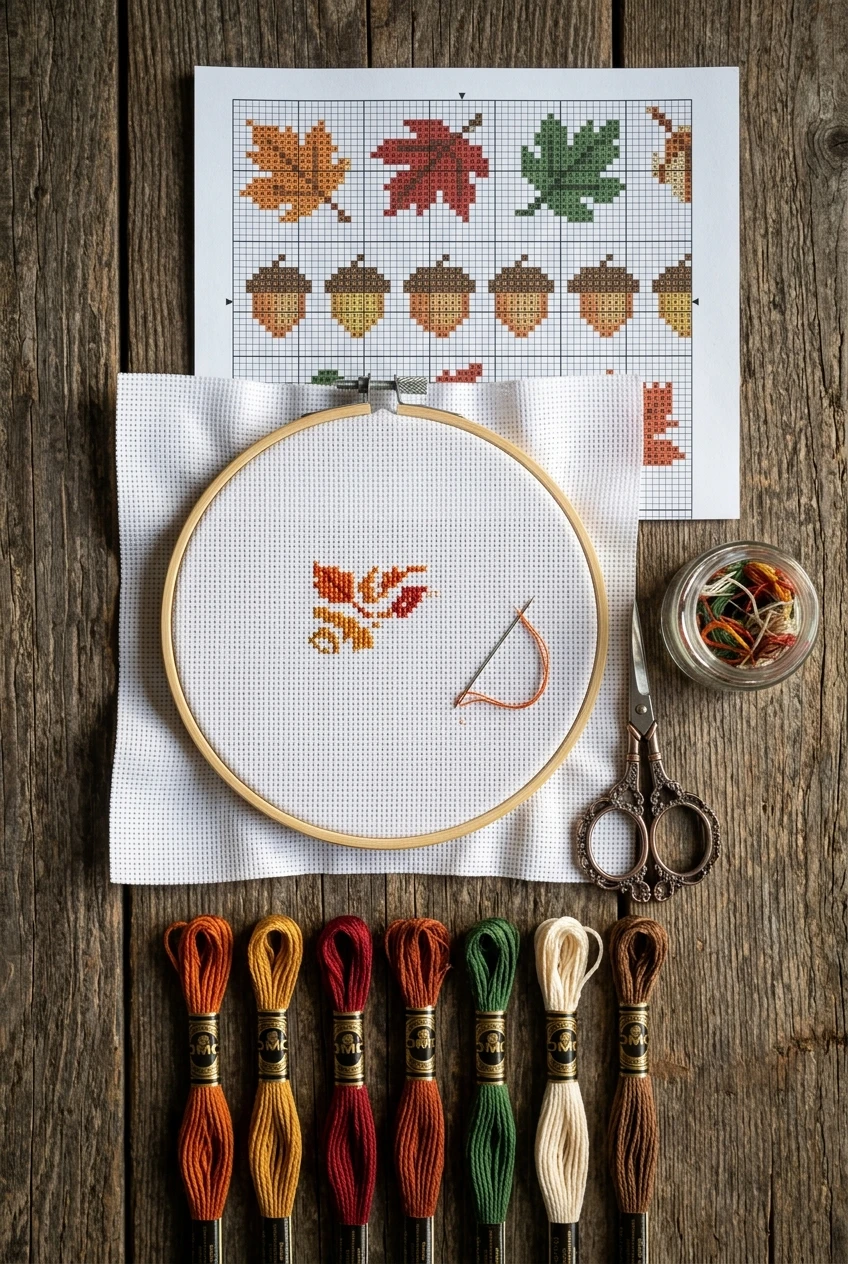
Flat lay of cross stitch chart, Aida fabric, DMC floss, needle and scissors on wood
Reading a Chart Without Panicking
A cross stitch chart is a grid. Each square carries a symbol, each symbol maps to a DMC floss number in the key, and the grid is divided into blocks of ten with heavier lines so you can count your position. That's it. It looks like an alien blueprint for about fifteen minutes and then it clicks and you never see it as confusing again.
Work one color at a time in a small area rather than hopping all over the chart. Finish the dark greens in this section, then move to the lighter greens, then go back. Jumping around is how you lose your place and end up frogging half an evening's work.
Gridding is worth the twenty minutes
Before you stitch anything, draw a 10x10 grid on your blank fabric with a water-soluble marker or run lines of contrasting thread. It matches the heavy lines on your chart, and suddenly counting is nearly impossible to get wrong. I resisted gridding for years and I was wrong about it. Ten-count blocks mean a miscount costs you ten stitches, not two hundred.
If you buy digital patterns, you can also load the PDF into a pattern-tracking app on a tablet and tap off stitches as you complete them. Plenty of stitchers never go back to paper after trying it. Printed patterns still have their place — I like being able to pencil on a chart and spread it on the table.
What confetti means and why it matters for your first pick
Confetti is stitcher slang for scattered single stitches of a color sprinkled across an area — one stitch here, one stitch three squares over. Fine art reproductions and photo-based designs are full of it, and it's slow going. For your very first project, pick a chart with larger blocks of solid color and a modest color count. You'll build speed and confidence, and the detailed pieces will still be waiting for you.
|
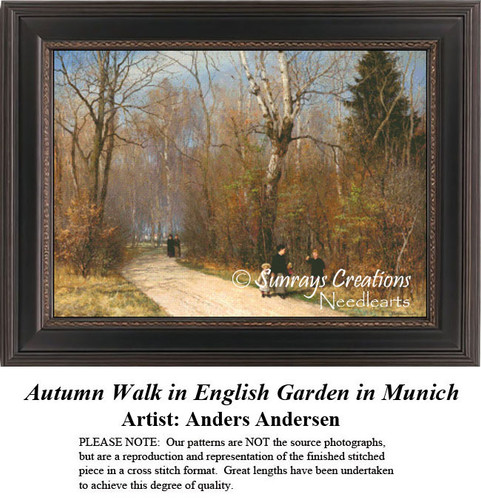
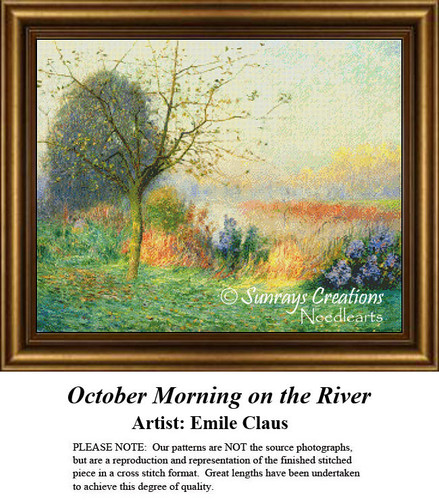
Patterns from the Sunrays Collection Tracey's Picks, designing cross stitch patterns since 2004 |
| Browse the full Sunrays collection → |

Picking a First Project You'll Actually Finish
The number one reason adults quit cross stitch in week three is that they started on something enormous. Somebody falls in love with a 400x500 stitch landscape, orders it, opens the chart, and the scale of it closes their throat. That's a BAP — a Big Ass Project — and they absolutely have their place, but not as project number one.
Start with something under 100 stitches wide. Twelve to twenty colors, not sixty. A piece you can finish in a few weeks of evenings so you get the hit of a real FFO — a Finally Finished Object — before your attention wanders. Momentum is the whole game here. One finished piece on your wall will carry you into the next three.
A complete kit solves a lot of first-timer friction. You get the chart, the right count of Aida, the floss pre-sorted, and a needle, all in one bag. Nothing is missing, nothing is the wrong color, and you don't have to make eight small decisions before you make your first stitch. We sell full kits at Sunrays for exactly that reason.
Set up your space before you set up your fabric
Good light is not optional, and this is the thing new stitchers underestimate most. Overhead room lighting is not enough to see 18-count holes clearly, especially in the evening when most of us actually stitch. A daylight floor lamp aimed over your shoulder will do more for your accuracy and your eyes than any other purchase. If you're stitching on dark fabric, put something light-colored across your lap so the holes show.
Sit somewhere with back support, keep your work up near chest height rather than hunched down in your lap, and get up every half hour. I've been there — three hours straight on a deadline piece and a neck that reminded me about it for two days. This craft is supposed to feel good.
Get Stitching Tips & New Patterns from Tracey
Honest advice, new Sunrays designs, and occasional VIP-only offers. No fluff.
No spam. Unsubscribe any time.

Tracey Recommends
The New Cross Stitcher's Bible: The Definitive Manual of Essential Cross Stitch and Counted Thread Techniques
Sooner or later you hit something a blog post does not cover - a stitch you have not met, or a finishing question at eleven at night. This is the book that answers it. It is a proper reference manual rather than a project book, so it stays useful long after your first finish.
Check Current Price →What Nobody Tells Beginners (But Should)
You will make mistakes and you will have to rip stitches out. We call it frogging, because you "rip-it, rip-it." Every single stitcher does it, at every skill level. It is not a sign you're bad at this. Use your needle to tease the stitches loose rather than cutting, go slowly, and don't reuse the thread you pulled out — it's worn and fuzzy and it will look different in the fabric.
Your project will get dirty. Oils from your hands, dust, the general reality of carrying something around for three months. Wash your hands before each session, store your work in a bag rather than draped over the couch, and plan to gently hand wash the finished piece before framing. It comes out looking new.
You will accumulate ORTs — Old Remaining Threads, the little snipped ends. Stitchers collect them in a jar as a visible record of how much work went in. It's a small, satisfying ritual and I recommend it.
Projects take longer than you think, and that's the point
A mid-sized detailed chart can run 60 to 100 hours. That's not a failure of speed, that's the hobby. If you need a project done this weekend, cross stitch is the wrong craft. If you want something to pick up on Tuesday nights for the next four months, something that gets a little more beautiful every time you sit down with it, you've found exactly the right one.
And the finish is permanent. Everything I design is meant to end up as framed wall art — a real piece you hang, that outlasts you, that somebody inherits. That's a different category of satisfaction than most hobbies offer. My patterns aren't charted for pillows or towels. They're charted for walls.
Find your people
Join a SAL — a Stitch-A-Long — where a group works the same chart on a schedule and posts progress. Watch a few FlossTube channels. Post your WIP photos. The cross stitch community skews generous, patient with beginners, and genuinely excited when someone new shows up. That part surprised me most when I started, and twenty-two years later it's still true.
If you've been circling this craft for a while, waiting for permission, consider this it. Pick one chart that makes you want to sit down with it, get your fabric and floss sorted, and make your first X tonight. Come browse the Sunrays Creations pattern library and find the piece you'd be proud to hang on your own wall.
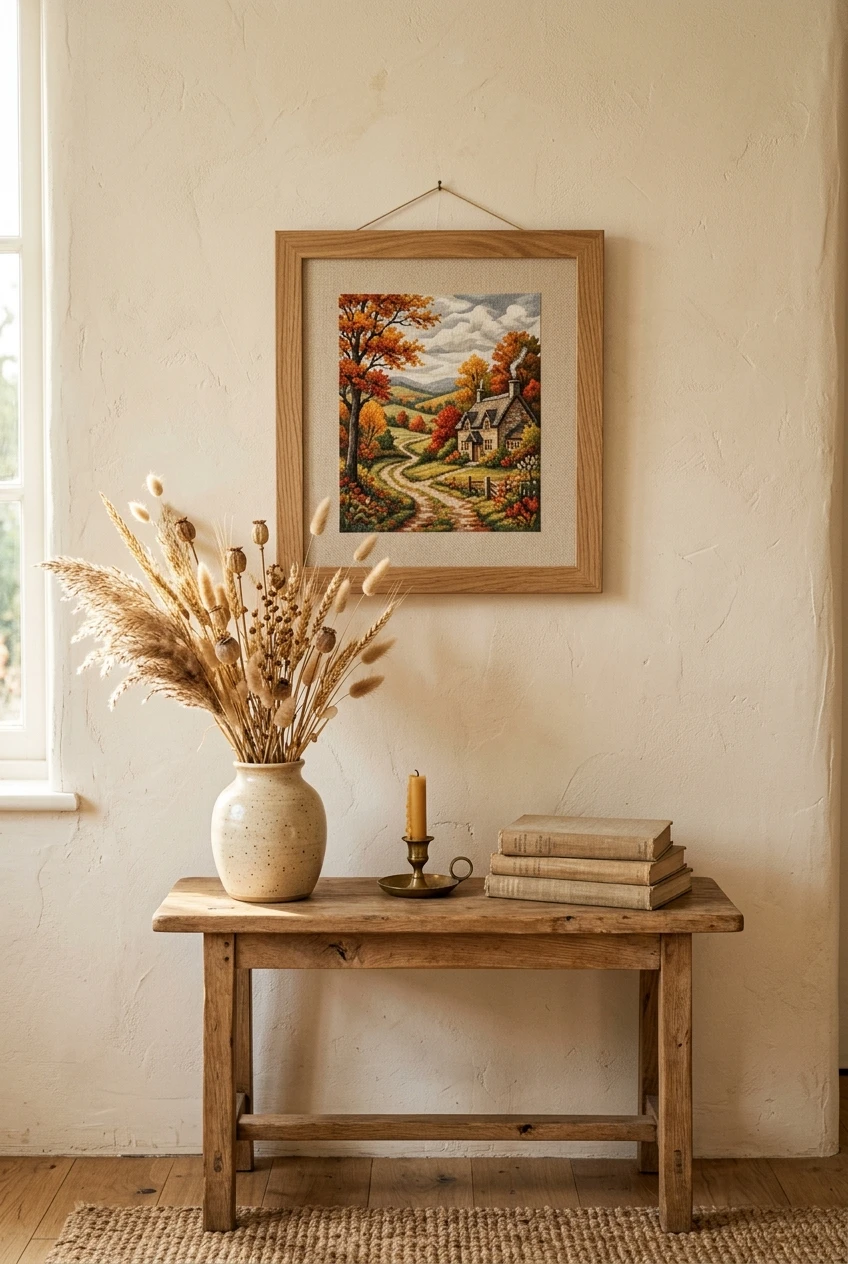
Finished framed cross stitch autumn landscape hanging as wall art in a cozy home
Keep Reading
Cross Stitch for Beginners: Everything You Need to Start Your First Project Today
A full walkthrough of your first project from supply list to final stitch. Start here if you want the longer version of everything in this article.
Read the GuideHow to Read a Cross Stitch Pattern: A Complete Guide for New Stitchers
Symbols, keys, grid lines, and page overlaps explained plainly. This is the piece that makes charts click for most new stitchers.
Learn to Read ChartsIs Cross Stitch Still Popular? It's Not Dying—It's Booming
If you're still wondering whether this craft is having a moment, the numbers say yes. A closer look at the modern revival.
See the ProofFrequently Asked Questions
Is cross stitch hard to learn as an adult?
No. A cross stitch is two diagonal stitches forming an X, and that's the entire technique. The learning curve is in reading a chart and keeping even tension, and both come within your first hour or two of stitching.
What fabric count should a beginner use?
I design everything for 18-count Aida cloth and that's what I recommend starting on. The grid of squares tells you exactly where each stitch goes, and 18-count gives you crisp detail without stitches looking coarse. Pair it with good light and you'll be fine.
How many strands of floss do I use?
Two strands of DMC six-strand floss on 18-count Aida. Separate them out one strand at a time rather than pulling two together, or you'll end up with knots. Two strands gives full coverage without the stitches looking crowded.
Should I use a hoop or a Q-snap?
I use a 5 or 6 inch wooden embroidery hoop and have for 22 years. It holds even tension, it's light, and it's inexpensive enough to keep one per project. Q-snaps are a fine alternative if you try them and prefer them.
How long does a cross stitch project take?
A mid-sized detailed chart can run 60 to 100 hours spread over months. That's normal, not slow. For your first project, pick something under 100 stitches wide with 12 to 20 colors so you actually finish it.
What does frogging mean in cross stitch?
Frogging is ripping out stitches you got wrong, named for the rip-it, rip-it sound. Every stitcher does it at every skill level. Tease the stitches loose with your needle rather than cutting, and don't reuse the thread you pulled out.
Is a kit better than buying a pattern separately?
For a first project, a full kit removes a lot of friction. You get the chart, the correct count of Aida, pre-sorted floss, and a needle in one bag so nothing is missing or mismatched. Once you know what you like, buying charts and floss separately gives you more freedom.
-- Tracey Kramer
Founder & Designer, Sunrays Creations Needlearts
Hand-charted designs since 2004 • Marysville, Ohio