
Is Cross Stitch Hard? Honest Answer for Beginners
Posted by Tracey M. Kramer on 26th May 2020
A Note from Tracey Kramer
I've been watching beginners fall in love with cross stitch — and occasionally give up on it too soon — for over 22 years. Almost every struggle I've seen was a setup problem, not a skill problem. Let me fix that for you before you start.
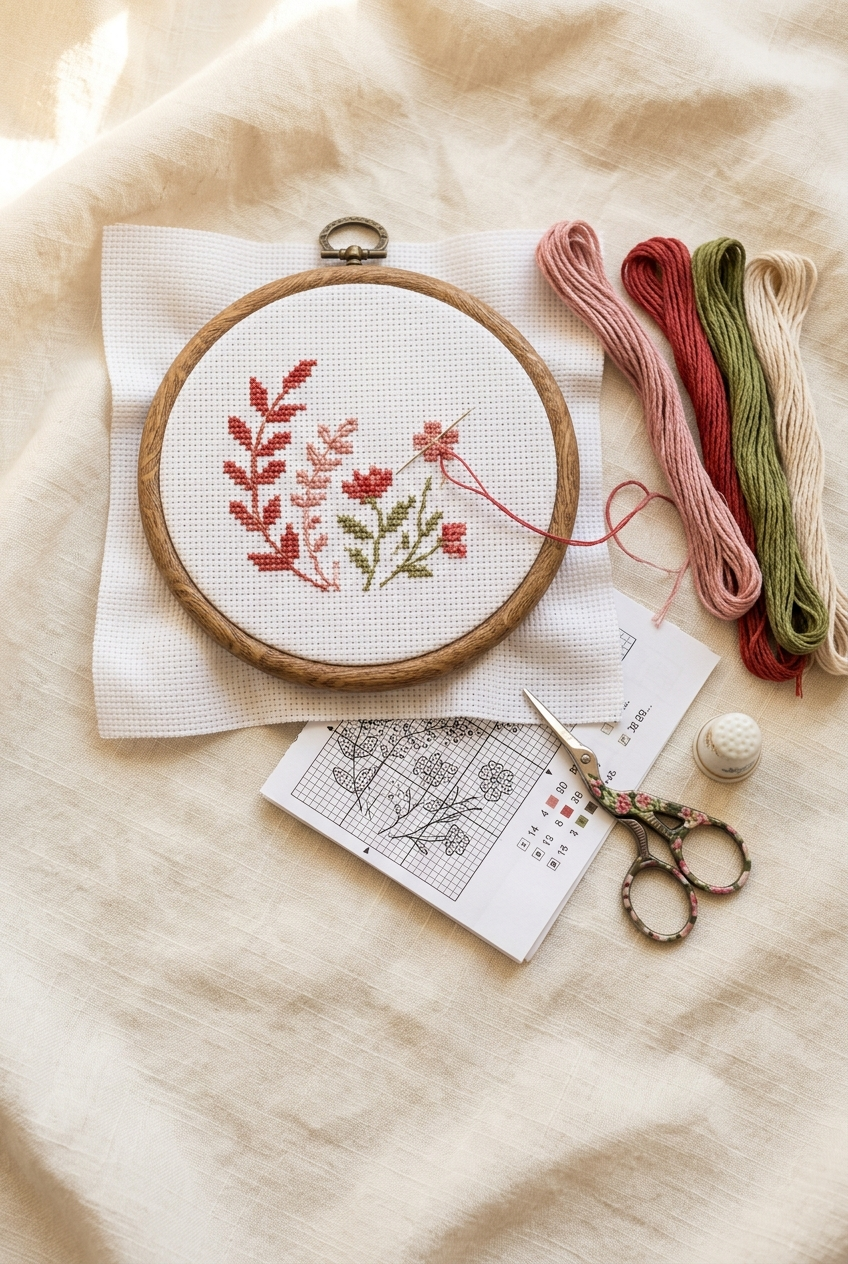
Beginner cross stitch floral project in wooden hoop on cream background with DMC floss
By Tracey Kramer • • 12 min read
If you just typed 'is cross stitch hard' into a search bar at eleven o'clock at night, I want you to know something: I'm glad you asked. That question tells me you're curious, a little nervous, and one step away from picking up a needle for the first time. My job right now is to give you a straight answer so you can stop wondering and start stitching. Here it is: no. Cross stitch is not hard. The basic stitch is literally an X — two diagonal stitches that cross each other on a fabric grid. That is the entire stitch. If you can hold a needle and count to two, you already have every bit of skill this craft requires.
I am not being encouraging in a vague, cheerleader way. I am telling you the mechanical truth. What I have learned after 30-plus years of stitching and over two decades of designing patterns is that most people who find cross stitch hard were set up to struggle before they ever made their first stitch. Wrong fabric, pattern too ambitious, light too dim, thread tangled from the start. None of those are skill failures. They are setup problems. And every single one has a simple, specific fix. That is exactly what this article is going to give you.
I have heard from hundreds of stitchers over the years — people who email me after finding my shop, newcomers who tried cross stitch once and quit, friends who assumed they just weren't patient enough. In almost every single story, the stitch itself was not the problem. The conditions were. So whether you have tried cross stitch before and found it frustrating, or you have never tried it and you are nervous about whether you can actually do it — stay with me. By the time you finish reading this, you will know exactly what went wrong last time, or exactly what to do right this time. Either way, you are closer to your first finished piece than you think.
The Honest Answer: No, Cross Stitch Is Not Hard
Let me be direct with you, because I think you deserve a real answer, not a hedged one. Cross stitch is built on a single motion: you bring the needle up through one hole in your fabric, push it down through a hole diagonally opposite, and you have a half stitch. You repeat that in the other direction and you have a full cross stitch. That is it. That is the whole foundation of an art form that has been practiced for centuries, stitched into samplers that hang in museums, and worked into heirloom pieces that families pass down through generations. Two diagonal stitches. An X. That is all you need to know to begin.
The reason cross stitch has a reputation for being hard is almost never the stitch itself. It is everything around the stitch. It is the woman who started on 28-count evenweave because it looked pretty at the craft store and couldn't see the holes. It is the person who downloaded a 15,000-stitch pattern for a detailed portrait because they wanted a challenge and ended up with a half-finished project stuffed in a drawer. It is the beginner who tried to stitch by lamplight on a dark evening and miscounted so many times they assumed they just weren't cut out for it. I have heard all of these stories, and in every one of them, the setup was the problem — not the person.
So if you have tried cross stitch before and found it frustrating, I am not going to tell you that you just needed more patience or that you should have tried harder. I am going to tell you that you were probably given the wrong starting conditions. And if you have never tried it at all and you are standing at the edge wondering if you can actually do this — I want to say it as plainly as I know how: you can. God gave you the hands for this. The only thing standing between you and your first finished piece is a little information about where to start. Let me give you that right now.
The Five Things That Make Cross Stitch Feel Hard — and the Fix for Each
The first friction point is fabric count, and it is probably the biggest one. Fabric count refers to the number of stitches per inch — and this number matters enormously for a beginner. When you walk into a craft store or browse online, you will see gorgeous evenweave and linen fabrics in fine counts — 28-count, 32-count, even higher. They look beautiful and they produce refined, elegant work. But for a first project, they are genuinely brutal. The holes are tiny. The grid is hard to track. You will be squinting at the fabric after every single stitch, second-guessing whether you went through the right hole, and developing a headache before you finish the first row. Start on 14-count Aida. The holes are clearly visible, the grid lines are obvious, and the needle moves through cleanly every time. Once the mechanics of forming the stitch are muscle memory — and that happens faster than you think — you can graduate to finer fabrics. But 14-count Aida is where you learn, and there is absolutely no shame in stitching on it for years. I still pull it out for projects that call for it.
The second friction point is pattern ambition, and I see this trip up beginners constantly. A first project with 40 colors, fractional stitches, and 10,000 total stitches is not a beginner project. It is a multi-month commitment that requires skills you have not built yet. Your first project should be something you can finish in a weekend — or at most, two weeks of casual evening stitching. Small and finished beats large and abandoned every single time, and I say that from experience watching people give up on the craft entirely because they chose something far beyond where they were. A small floral motif, a simple word or name, a little animal with clean color blocks — these are the projects that create stitchers. They give you a win, and that win is what makes you want to pick up the needle again. My rule for every beginner: your first project should be something you frame and hang on the wall in the first week. Not because it has to be impressive, but because finishing matters more than anything else at the start.
The third friction point is color management. When you are still figuring out how to form the stitch, hold the hoop, manage your thread tension, and count your grid position all at the same time, adding ten different floss colors to track is cognitive overload. Start with five colors or fewer. The goal of your first project is to build the stitch mechanics into your hands until they feel natural — that is the skill you are developing right now. Color management comes later, and you will develop it naturally as you go. A two-color design on white Aida is genuinely beautiful, and it will teach you everything you need to know about the actual stitch itself.
The fourth friction point is lighting, and this one is so simple I almost feel embarrassed that it trips so many people up — but it does, constantly. Miscounting on dark fabric in a dim room is not a skill failure. It is a physics problem. You cannot see what you cannot see, and no amount of patience will fix inadequate light. I stitch under an OttLite and have for years — a daylight craft lamp is genuinely one of the most valuable tools in my workroom. Natural light from a window is wonderful too, if you can position yourself near one in the morning or afternoon. Whatever you do, do not try to learn cross stitch in poor light. You will miscount, you will get frustrated, and you will blame yourself when the lighting was the actual culprit the entire time.
The fifth friction point is not knowing how to start and end a thread cleanly — and this one is completely preventable with just a few minutes of preparation. There are two techniques that solve this permanently: the loop start and the waste knot. The loop start works when you are using an even number of thread strands. You thread a single length of floss doubled through the needle, bring it up through the fabric, and catch the loop on the back with your first stitch. Clean, secure, no knot required. The waste knot is a temporary anchor knot placed on the front of your fabric a few inches away from where you will stitch; as you work back toward it, your stitches anchor the tail on the back and you simply cut the knot away. Learn one of these before your first project and you will never have a tangled, messy start again. These take about five minutes to learn and they will make your work look and feel professional from day one.
Tracey Recommends for Beginners
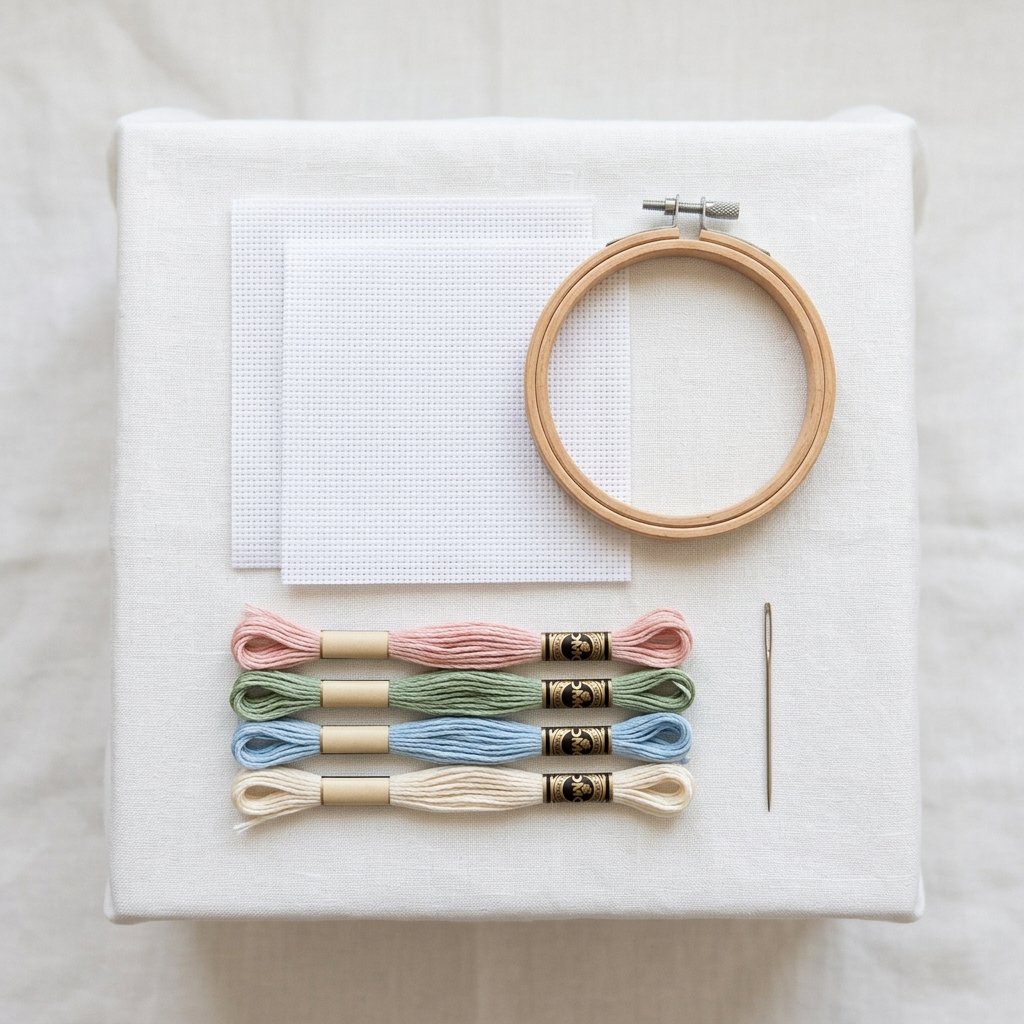
Beginner Cross Stitch Kit
This is the lowest-friction way to start cross stitching. A good beginner kit comes with everything in the box: pre-cut Aida cloth, sorted floss in the colors you need, a tapestry needle, and a printed pattern. No guessing about fabric count. No calculating thread quantities. No running to three different stores. You open the box and you start stitching. I recommend kits for every beginner because the setup is already done for you — and setup friction is the single biggest reason people don't start. Order one today and you could be stitching tonight.
See on AmazonSmall and finished beats large and abandoned every single time. Your first project should give you a win — not a lesson in perseverance.
Choosing Your First Project: What Sets You Up to Win
I have specific criteria for a good first project, and I am going to give them to you straight: stitch count under 3,000, color count five or fewer, format something that finishes completely and looks good framed or displayed in a hoop on the wall. That last point matters more than people realize. When your first project is something you are proud to show — even something small and simple — it creates a feedback loop that brings you back to the craft. You make it, you finish it, you hang it up, and you feel that quiet satisfaction of having made something by hand. That feeling is what turns a curious beginner into a committed stitcher. That is what keeps the needle moving.
If you are starting from zero, a beginner cross stitch kit is genuinely the best entry point available. Here is why: a kit has already solved every setup problem I described above. The Aida cloth is pre-cut and pre-counted. The DMC floss is pre-sorted into exactly the colors you need. The needle is included. The pattern is printed and ready. You do not have to wonder what 14-count means or how much thread to buy or whether you have the right needle size. You open the box and you start stitching. I recommend kits for every single beginner — not because they are easier in terms of the stitching itself, but because they eliminate every friction point between you and your first stitch. You can order one today and be stitching tonight. That matters. The biggest barrier to starting is setup friction, and a kit eliminates it entirely.
Once you have finished your first kit and you are ready to buy fabric and floss separately, that is when understanding fabric count and thread quantities becomes practical knowledge rather than overwhelming theory. You will also want tapestry needles for cross stitch (find on Amazon) — a size 24 is right for 14-count Aida — and a 6-inch wooden embroidery hoop (find on Amazon) to keep your fabric taut while you work. These are not expensive items. They are just the right tools for the job, and having the right tools makes an enormous difference in how the whole experience feels.
If you want to explore patterns beyond a kit, look for designs that use primarily whole cross stitches — no fractional stitches, minimal backstitch, no French knots to start. Full, solid-color stitches are far easier to manage than blended colors, where you combine two different thread shades in the same needle. Blended colors create beautiful, painterly effects, but they slow you down considerably and require more attention to thread management. Save them for your third or fourth project. A cross stitch pattern book for beginners (find on Amazon) can also be a wonderful resource for finding appropriate first projects with clear instructions built in. For your first project, simple and clean is the goal — and simple and clean is genuinely beautiful.
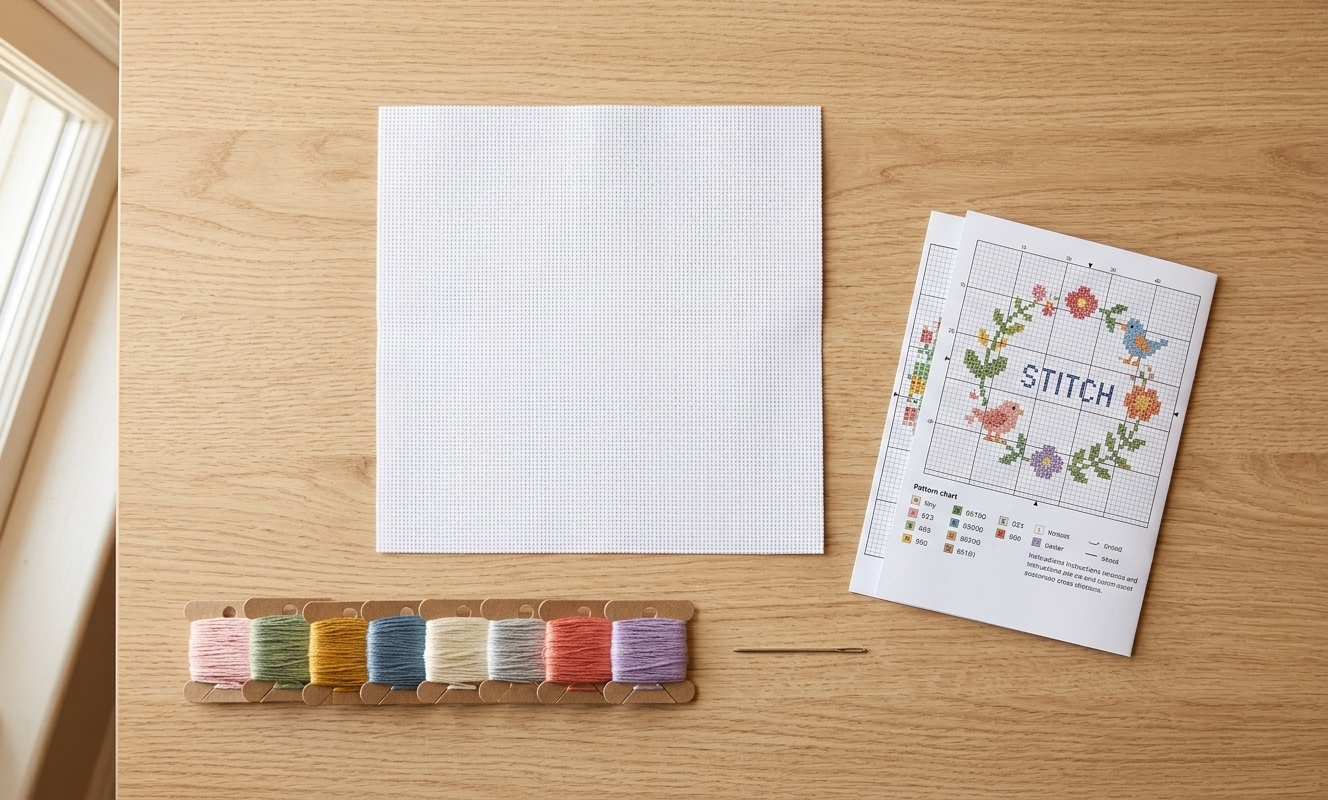
Beginner cross stitch kit flat lay with Aida cloth DMC floss bobbins needle and pattern chart
The First Month: What to Expect
Let me tell you what the first month of learning cross stitch actually looks like, because nobody tells beginners this and I think it would help a lot of people stick with it. Week one is slow and deliberate. You are counting every stitch. You are double-checking your position on the pattern. You are probably holding your breath a little when you push the needle through the fabric. All of that is completely normal. You are building a new physical skill, and new physical skills feel awkward and effortful at first. That is not a sign you are bad at this. That is just what learning feels like. Give yourself permission to be slow in week one. It does not last.
By week two, something shifts. You are noticeably faster. The counting starts to feel more automatic. You are not re-checking your place on the pattern after every single stitch — you are getting into a rhythm. By weeks three and four, the mechanics fade into the background almost entirely. You stop thinking about how to form the stitch and you start just stitching. You follow the pattern, you watch the design emerge from the fabric, and you realize with some surprise that you are actually enjoying yourself. This is the moment I love, and I have watched it happen in stitcher after stitcher over 22 years of designing patterns and talking with beginners. It is the point where cross stitch stops being a task and becomes a craft — and then, if you let it, something closer to a sanctuary.
One more thing I want to tell you about the first month: you are going to frog some stitches. Frogging — the process of unpicking stitches to correct a mistake — is a normal, ongoing part of cross stitching at every level. I still frog stitches after 30 years of doing this. It is not failure. It is not a sign that you are doing it wrong. It is just part of making something by hand. If you want to understand the full process and the tools that make it less painful, I have written about it in detail in my article What Is Frogging in Cross Stitch? How to Do It — it will save you some real frustration. But for now, just know this: the goal of your first project is not perfection. The goal is finishing. That first finished piece — however imperfect, however small — is the moment you become a cross stitcher. Hold onto that.
|
Patterns from the Sunrays Collection Tracey's Picks, designing cross stitch patterns since 2004 |
|||||
|
|||||
| Browse the full Sunrays collection → |


Ready to Start? Here Is Your Next Step
You now know that cross stitch is not hard. You know the five setup problems that make it feel hard — and the fix for every single one of them. You know what your first project should look like: under 3,000 stitches, five colors or fewer, whole stitches on 14-count Aida, something that finishes completely and gives you a win in the first week or two. And you know that the first week will be slow, the second week will be faster, and by weeks three and four you will be stitching in a rhythm you didn't know you had in you. The only thing left is to actually start. Everything you have been wondering about — whether you can do this, whether it is too hard, whether you are the kind of person who can make something by hand — the answer to all of it is on the other side of starting.
If you want a complete walkthrough of everything you need to know before your first stitch — fabric, floss, needles, hoops, how to read a pattern — I have written that full guide and it covers every question a beginner brings to the table. You can find my supplies list at What Do You Need to Cross Stitch?, which gives you a clear, no-fluff breakdown of what you actually need, what is optional, and what you can skip entirely when you are just starting out. A DMC starter floss pack (find on Amazon) is also on my recommended list for anyone building their thread collection from scratch — it is one of the most practical first purchases a new stitcher can make, and it will serve you well beyond your first project.
At Sunrays Creations, I design original counted cross stitch patterns — animals, botanicals, Victorian portraits, holiday pieces — and I hand-chart every single one of them myself. My collection includes designs that are genuinely beginner-friendly alongside complex statement pieces for experienced stitchers who want a real challenge. Whatever your starting point, there is something here for you. Cross stitch has been one of the greatest consistent joys of my life, and I genuinely believe it can be that for you too. Come browse the Sunrays Creations pattern shop and find the design that makes you want to pick up a needle today. That is all it takes to begin.
Get Stitching Tips & New Patterns from Tracey
Honest advice, new Sunrays designs, and occasional VIP-only offers. No fluff.
No spam. Unsubscribe any time.
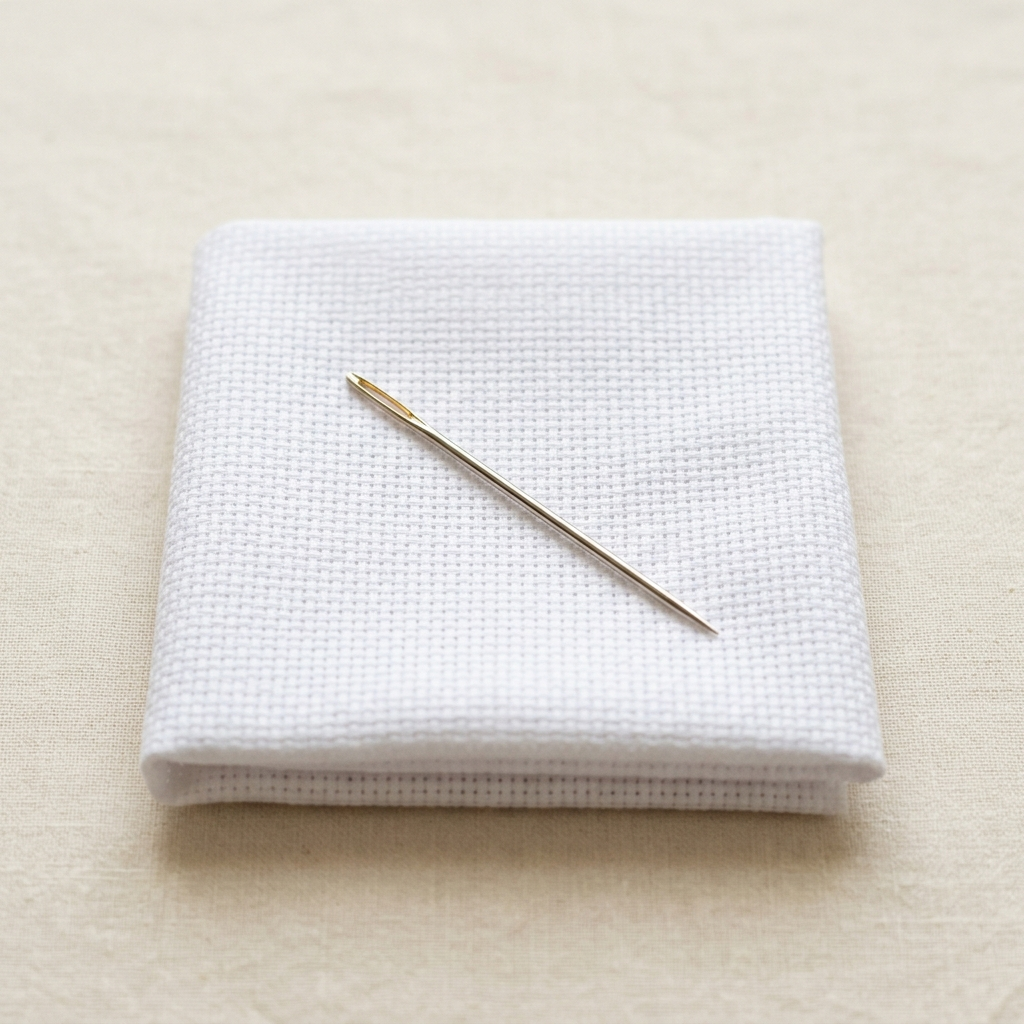
Tracey's Fabric Pick for Beginners
14-Count Aida Cloth
If you are going beyond a kit and buying your fabric separately, 14-count Aida is the right choice, full stop. The count refers to stitches per inch — 14 is large enough that you can see the holes clearly, count the grid accurately, and move the needle through the fabric cleanly without resistance or squinting. Higher counts are beautiful, but they are not where you learn. I stitched on 14-count Aida when I was learning and I still use it regularly. Once the stitch feels automatic and you want more detail, you can move up. But this is where every good stitcher starts.
See on AmazonCross stitch has been one of the greatest consistent joys of my life, and I genuinely believe it can be that for you too — not someday, but starting this week. You have the honest answer, you have the setup checklist, and you have the permission slip you came here looking for. Come browse the Sunrays Creations pattern shop and find the design that makes you want to pick up a needle. That is all it takes to begin.
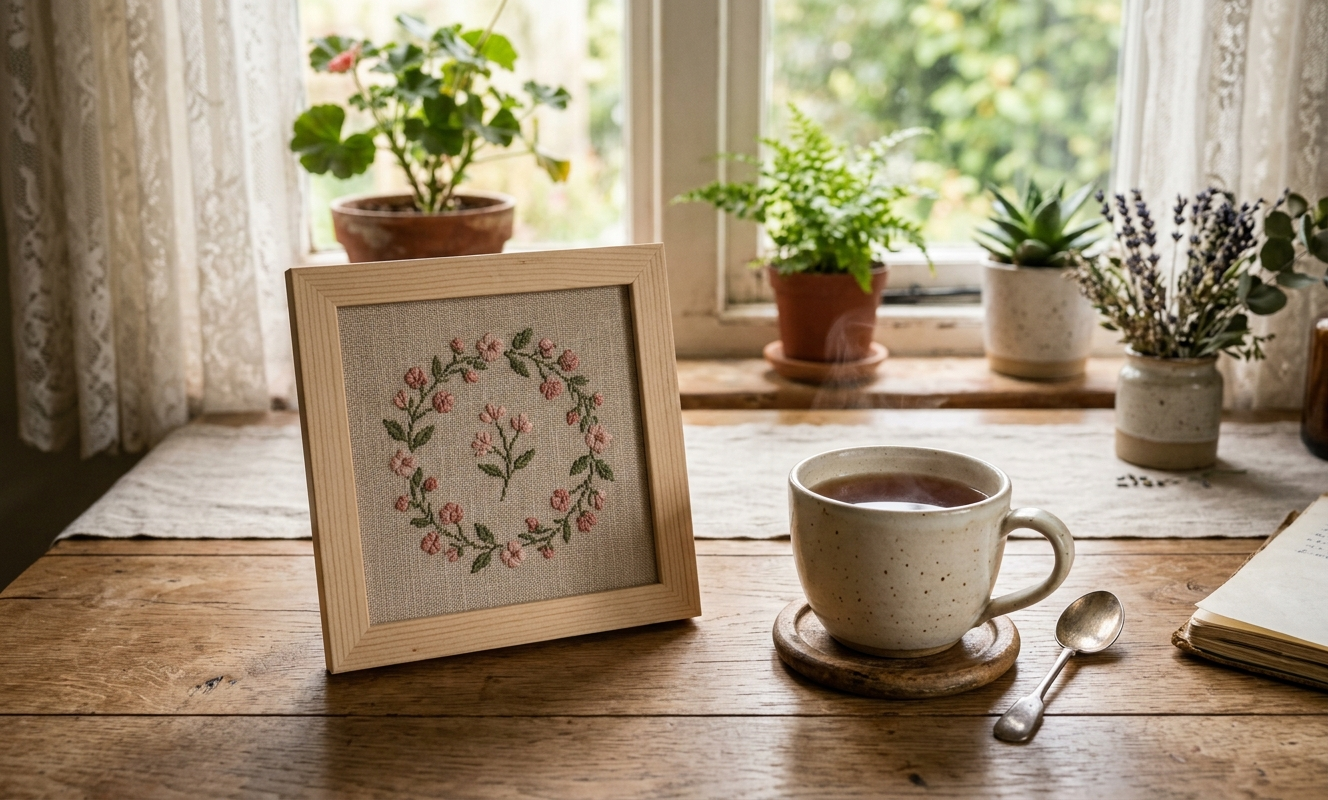
Finished beginner cross stitch floral piece in dark frame beside cup of tea on wooden desk
Keep Reading
The Complete Beginner's Guide to Cross Stitch
Everything you need to know before your first stitch — fabric, floss, needles, hoops, and how to read a pattern. This is the guide you read right after this article.
READ THE GUIDEWhat Do You Need to Cross Stitch?
A clear, no-fluff supplies list. What you actually need, what is optional, and what you can skip entirely when you are just starting out.
READ THE GUIDE3 of the Most Frequently Asked Questions About Cross Stitch Today
Once you have decided to start, the questions keep coming. This article answers the next round — the ones every new stitcher asks in the first few weeks.
READ THE ARTICLEFrequently Asked Questions
Is cross stitch hard for absolute beginners?
No — the basic stitch is just two diagonal stitches forming an X. As covered above, most beginner struggles come from setup problems like wrong fabric count or an overly ambitious first pattern, not from the stitch itself.
What fabric should a beginner use for cross stitch?
14-count Aida cloth is the right starting point. The holes are clearly visible and easy to count — the full explanation is in the five friction points section above.
How long does it take to learn cross stitch?
Most beginners find the stitch mechanics becoming comfortable within two weeks of regular stitching. The full first-month timeline is described in detail in the section above.
What should my first cross stitch project be?
Something under 3,000 stitches with five colors or fewer, using whole stitches on 14-count Aida — a beginner kit is ideal. The full criteria are covered in the project-selection section above.
What is frogging in cross stitch and should beginners worry about it?
Frogging is unpicking stitches to correct mistakes, and it is completely normal at every skill level. It is not failure — see the first-month section above and the linked frogging guide for full details.
Do I need special lighting to cross stitch?
Good lighting is non-negotiable — poor light causes miscounts that have nothing to do with your skill. A daylight craft lamp or natural window light works well, as explained in the five friction points section above.
-- Tracey Kramer
Founder & Designer, Sunrays Creations Needlearts
Hand-charted designs since 2004 • Marysville, Ohio