
Mastering Ergonomic Embroidery: Why Upgrading Your Cross Stitch Stand Matters
Posted by Tracey M. Kramer on 1st Aug 2026
A Note from Tracey Kramer
I have been designing counted cross-stitch patterns since 2004, and in that time I have watched my customers stitch everything from wedding gifts to heirloom samplers. This is everything I know about this topic -- from real experience, not theory.
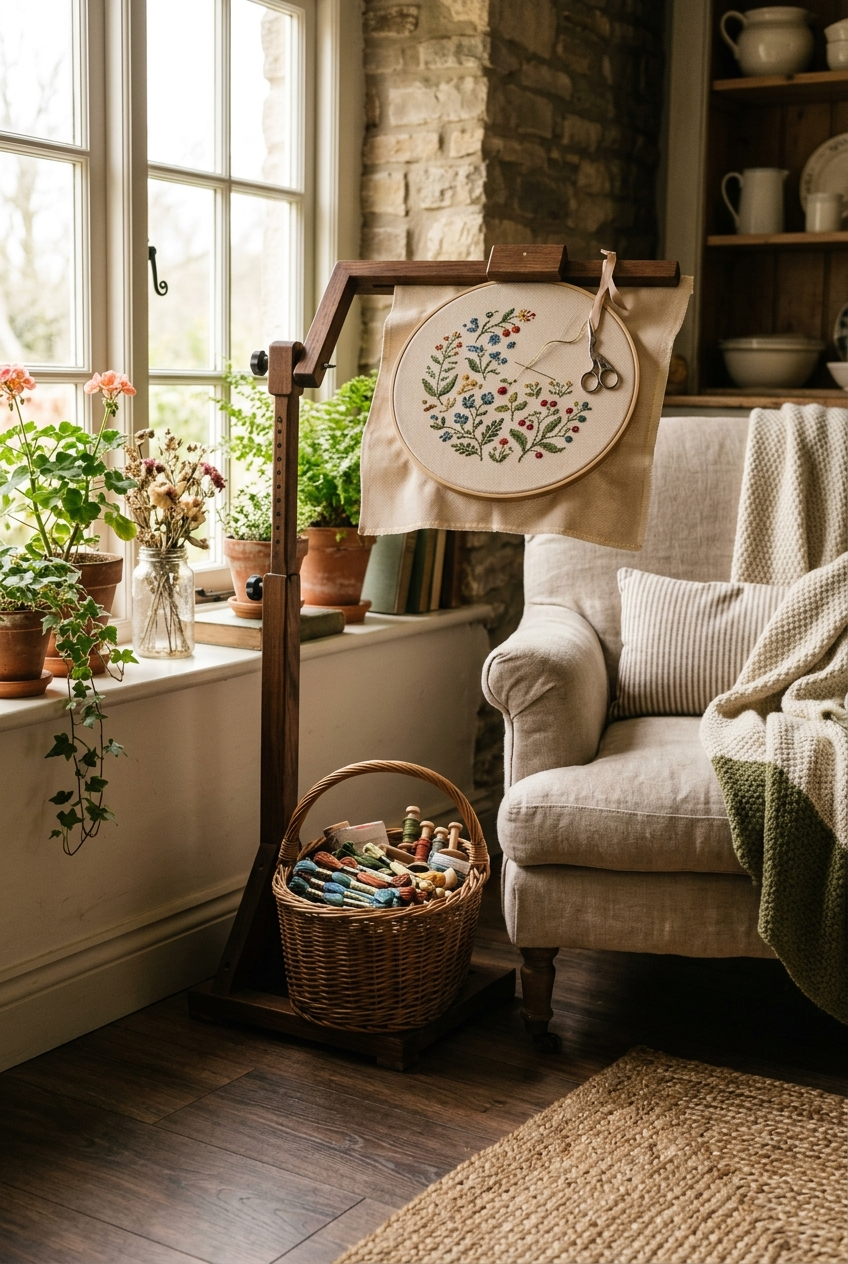
Ergonomic cross stitch floor stand holding a work in progress beside a cozy armchair by a window
By Tracey Kramer • • 12 min read
If your neck aches and your shoulders creep up toward your ears after an hour of stitching, the problem probably isn't you. The best ergonomic cross stitch floor stands hold your work at a comfortable height so both hands stay free, your posture stays neutral, and you can stitch for hours without paying for it the next morning. After 22 years at this, I can tell you that upgrading your stand is one of the quietest, most life-changing things you'll ever do for your hands.
Why Ergonomics Matter More Than You Think
I've been there. Hunched over a hoop clamped between my knee and the coffee table, squinting down at 18-count Aida, thread in one hand while the other tries to do everything at once. It works for a while. Then the wrist twinges start, the neck stiffens, and a hobby that's supposed to calm you down becomes a source of low-grade pain you learn to ignore. That's the trap, and I fell into it for years before I understood what was really happening.
Cross stitch is a repetitive activity. You're making the same small motions over and over, sometimes for hundreds of hours on a single piece. When your body is holding a position it wasn't built to hold, those repetitions add up. Neck strain, tension headaches, aching shoulders, and that burning spot between the shoulder blades are all signs that your setup is fighting you instead of supporting you.
The word ergonomic gets thrown around a lot, but it really just means the tools bend to fit you rather than forcing you to bend to fit them. A good stand brings the work up to you, at eye level, at a comfortable angle, so your spine stays stacked and your shoulders stay down. Both hands come free, which changes how you stitch entirely. Suddenly two-handed stitching is possible, and that's faster and gentler on your wrists.
I always tell newer stitchers that comfort isn't a luxury add-on. It's the thing that lets you finish the big projects, the heirloom pieces, the fine-art charts you fall in love with. If stitching hurts, you'll stitch less. If it feels good, you'll keep coming back. It's really that simple.
What Actually Makes a Cross Stitch Stand Ergonomic
Not every stand deserves the label. A wobbly, fixed-height frame that dumps your project into your lap isn't ergonomic no matter what the box says. Here's what I look for after two decades of testing my own setups and hearing from the Sunrays community about theirs.
Height adjustability comes first. Your work should reach you whether you're sitting in a low armchair, a dining chair, or an upright recliner. A stand that only lives at one height will only be comfortable for one body in one seat. Look for a wide range of adjustment so the frame meets your eyes, not your chin.
Angle and tilt come next. Being able to swivel and tilt the work means you can find the exact plane where your neck stays neutral and the light falls evenly across your fabric. Flat-lap positions force you to bend forward and look down, which is the whole problem we're trying to solve.
Stability is non-negotiable. A stand that tips when you tug your thread is worse than no stand at all. A weighted or wide base keeps everything planted so you can stitch with real tension without chasing your frame across the floor.
Hands-free operation is the payoff. When the stand holds the frame securely, both of your hands are free to work the needle from above and below. That two-handed rhythm is smoother, faster, and much kinder to your wrists over a long session.

Tracey Recommends
Somivrusa Workstand with Side Clamp for Lowery Stand, Cross Stitch Stand 360Adjustable Embroidery Stand Heavy Duty Needlepoint Stand Fits Scroll Rods up to 20" & Q-Snap Frames
A sturdy floor stand that lifts your work to eye level and frees both hands is the single biggest upgrade for long sessions. Look for wide height adjustment and a solid, weighted base so it stays planted while you stitch.
Check Current Price →A good stand doesn't just give you comfort. It gives you the freedom to disappear into the work.
Floor Stand vs. Lap Stand vs. Table Clamp
People ask me all the time which style is best, and the honest answer is that it depends on where and how you stitch. Each type solves a slightly different problem.
A floor stand (find on Amazon) is the gold standard for long sessions and larger projects. It stands independently beside your chair, adjusts freely in height and angle, and leaves your lap completely open. If you settle into the same comfortable chair to stitch most evenings, a floor stand is worth every penny. This is what I reach for on a BAP where I'll be sitting for hours.
A lap stand (find on Amazon) rests across your knees or sits on the seat beside you. It's lighter, more portable, and easier to store, which makes it great for smaller spaces or for stitchers who move between rooms. It won't give you the full height range of a floor model, but it frees both hands and takes the weight off your grip, which is a real upgrade from hoop-in-hand stitching.
A table clamp attaches to the edge of a desk or side table. It's affordable and space-saving, though it ties you to a surface and the height depends on your table. I think of clamps as a solid entry point rather than a forever solution.
If you're still deciding between holding methods, my guide on the hoop vs. Q-snap vs. scroll frame question pairs beautifully with choosing a stand, since the frame and the stand work as a team.
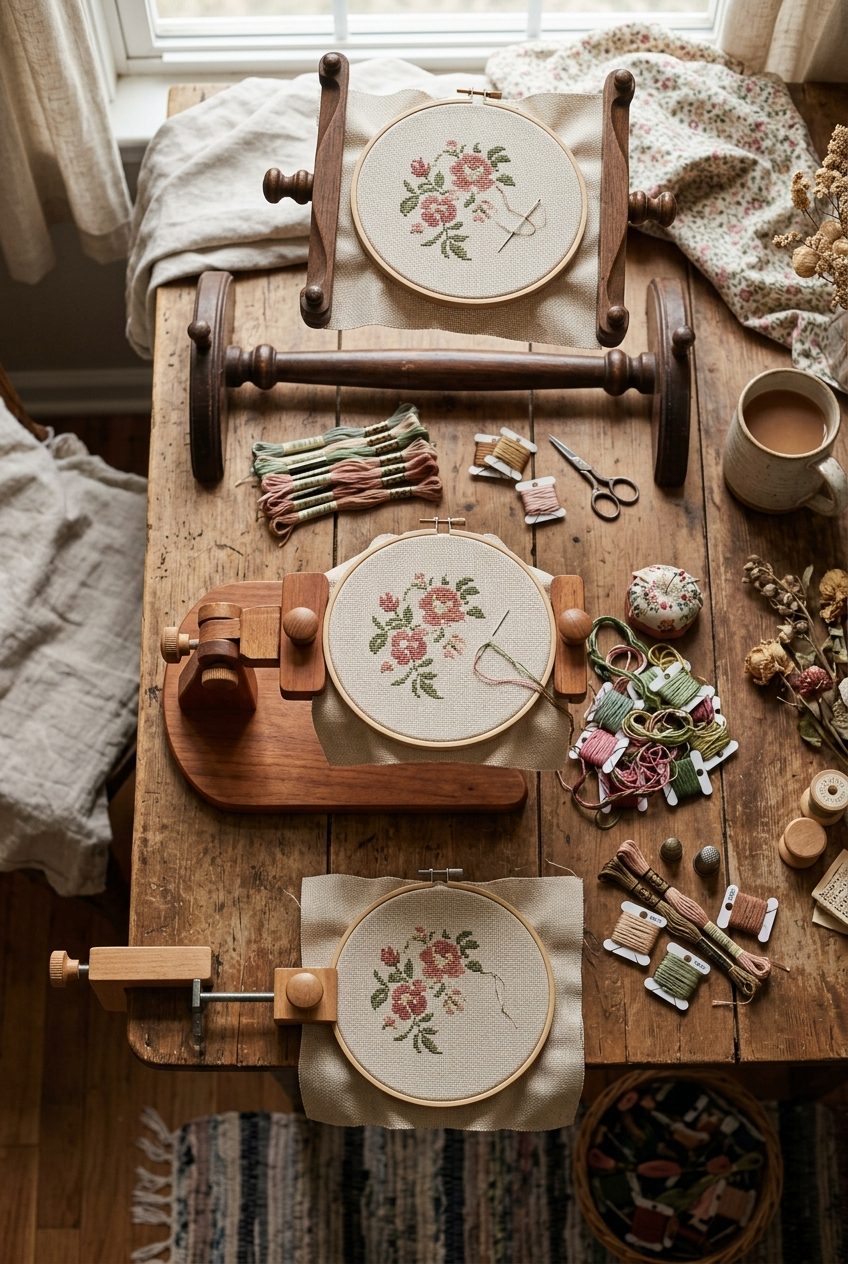
Floor stand, lap stand, and table clamp cross stitch setups displayed together in a warm craft room
Setting Up Your Stand for a Pain-Free Session
Buying the stand is only half of it. How you set it up decides whether your body actually thanks you. I learned this the hard way, so let me save you the trial and error.
Start with your chair. You want your feet flat on the floor and your back supported, not perched on the edge of a slippery couch. Once you're seated the way you'll actually stitch, bring the frame up to eye level or just below. Your gaze should drop slightly, not fold your neck forward. If you find yourself hunching down toward the work, the stand is too low.
Set the tilt so the fabric faces you at a gentle angle. You shouldn't have to lean in to see your stitches, and you shouldn't have to hold your arms up high to reach them. Elbows relaxed at your sides, wrists neutral, shoulders down. That's the position you're building around.
Lighting matters just as much as posture here. Even with a perfect stand, poor light makes you crane forward to see the holes in your Aida, and that undoes all your ergonomic work. A good daylight lamp (find on Amazon) positioned over your shoulder keeps you upright. I go deep on this in my article on why good light is the most important tool you own, and I stand by every word of it.
Finally, take breaks. Even the best setup benefits from a stretch every 30 to 45 minutes. Roll your shoulders, flex your fingers, look at something far away to rest your eyes. Your stand does the heavy lifting, but your body still needs those small resets.
|
Patterns from the Sunrays Collection Tracey's Picks, designing cross stitch patterns since 2004 | |||||
| |||||
| Browse the full Sunrays collection → |



Making the Upgrade Worth It for the Long Haul
A quality stand is an investment, and I don't use that word lightly. But think about how many hours you spend with your work. If you're stitching most evenings, that stand is in service more than most furniture in your house. Spread across years of comfortable, pain-free sessions, the cost per hour is almost nothing.
I always recommend buying a stand that fits the frames you already use. Check that it accommodates your scroll rods (find on Amazon) or your hoop size before you commit. A stand that won't grip your working frame is just an expensive coat rack. Two strands of DMC on 18-count Aida is my design standard, and I want my stand to hold that work rock-steady so my tension stays even from the first stitch to the last.
There's a real difference in how your finished pieces look, too. When you're relaxed and your hands are free, your tension evens out and your stitches sit uniform across the whole design. Strained, cramped stitching shows up in the fabric. If you've ever wondered why your stitches look uneven, your setup might be part of the answer.
Twenty-two years in, I can look back at pieces I struggled through and pieces I floated through, and the difference almost always traces back to how comfortable I was while stitching. The heirloom pieces I'm proudest of came out of long, easy sessions where nothing hurt and I lost track of time. That's what a good stand gives you: not just comfort, but the freedom to disappear into the work.
Whether you go with a full floor model or start with a simpler lap stand, upgrading how you hold your work will change how you feel about the craft. It certainly changed things for me, and it's one of the first upgrades I suggest to anyone planning to tackle the bigger, more ambitious charts.
Get Stitching Tips & New Patterns from Tracey
Honest advice, new Sunrays designs, and occasional VIP-only offers. No fluff.
No spam. Unsubscribe any time.

Tracey Recommends
CARESKY Shiatsu Foot Massager Machine with Heat : Deep Kneading Foot Massage with Vibration & Compression for Plantar Fasciitis & Neuropathy Pain Relief, Deep Tissue Foot Massager
If a full floor stand is more than your space allows, a lap stand still takes the weight off your grip and frees both hands. It's light, portable, and perfect for stitchers who move between rooms.
Check Current Price →Upgrading your stand is one of those quiet changes that makes every future project more enjoyable, and I hope this helps you find the setup your hands deserve. When you're ready to put that comfortable new setup to work, come browse the Sunrays Creations pattern collection and pick a design worth settling in with for the long haul.
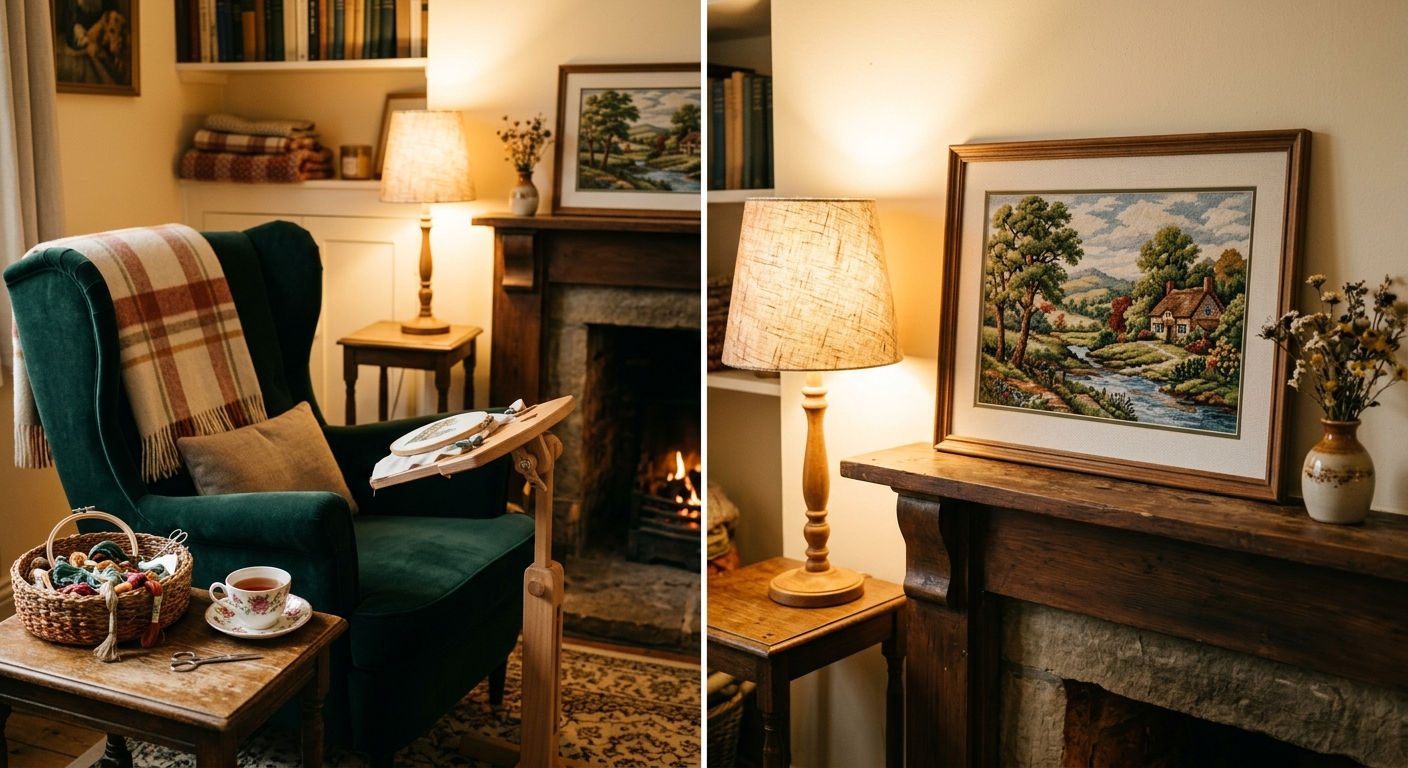
Finished framed cross stitch wall art beside a cozy chair and ergonomic stand in warm lamplight
Keep Reading
Cross Stitch Hoop vs. Q-Snap vs. Scroll Frame — Which Should You Use?
Your stand and your frame work as a team, so choosing the right holding method is the natural next decision after picking a stand.
Compare Your OptionsCross Stitch Lighting: Why Good Light Is the Most Important Tool You Own
Even a perfect ergonomic setup falls apart under bad light, since poor lighting makes you lean forward and undo all your good posture.
Read the GuideWhy Your Cross Stitch Stitches Look Uneven (And How to Fix It)
Comfort affects tension, and tension shows up in your fabric, so uneven stitches often trace right back to a strained setup.
Fix Your TensionFrequently Asked Questions
What makes a cross stitch stand ergonomic?
An ergonomic stand adjusts in height and tilt so your work comes up to eye level, keeping your spine stacked and your shoulders down. It should have a stable, weighted base and hold the frame securely so both hands stay free. That combination lets you stitch for hours without neck or wrist strain.
Is a floor stand or a lap stand better for cross stitch?
A floor stand is the gold standard for long sessions and larger projects because it adjusts freely in height and angle and leaves your lap open. A lap stand is lighter and more portable, making it great for smaller spaces or stitchers who move between rooms. Both free your hands, which is a real upgrade from holding a hoop.
Why do my neck and shoulders hurt after cross stitching?
Cross stitch is repetitive, so holding your work too low forces you to hunch forward, which strains your neck, shoulders, and the spot between your shoulder blades. Those small motions add up over hundreds of hours. Bringing your work up to eye level on a stand keeps your posture neutral and stops the strain.
How high should I set my cross stitch stand?
Set it so your gaze drops slightly to the work rather than folding your neck forward. Your elbows should stay relaxed at your sides with neutral wrists and shoulders down. If you find yourself hunching down toward the fabric, the stand is set too low.
Does a stand really improve how my stitches look?
Yes. When you're relaxed and your hands are free, your tension evens out and your stitches sit uniform across the design. Strained, cramped stitching shows up in the fabric, so a comfortable setup often traces directly to more even results.
How often should I take breaks while stitching?
Even with the best setup, a stretch every 30 to 45 minutes helps. Roll your shoulders, flex your fingers, and look at something far away to rest your eyes. Your stand does the heavy lifting, but your body still needs those small resets.
-- Tracey Kramer
Founder & Designer, Sunrays Creations Needlearts
Hand-charted designs since 2004 • Marysville, Ohio