
The Best Cross Stitch Books for Beginners and Beyond
Posted by Tracey M. Kramer on 7th Nov 2026
A Note from Tracey Kramer
I have been designing counted cross-stitch patterns since 2004, and in that time I have watched my customers stitch everything from wedding gifts to heirloom samplers. This is everything I know about this topic -- from real experience, not theory.
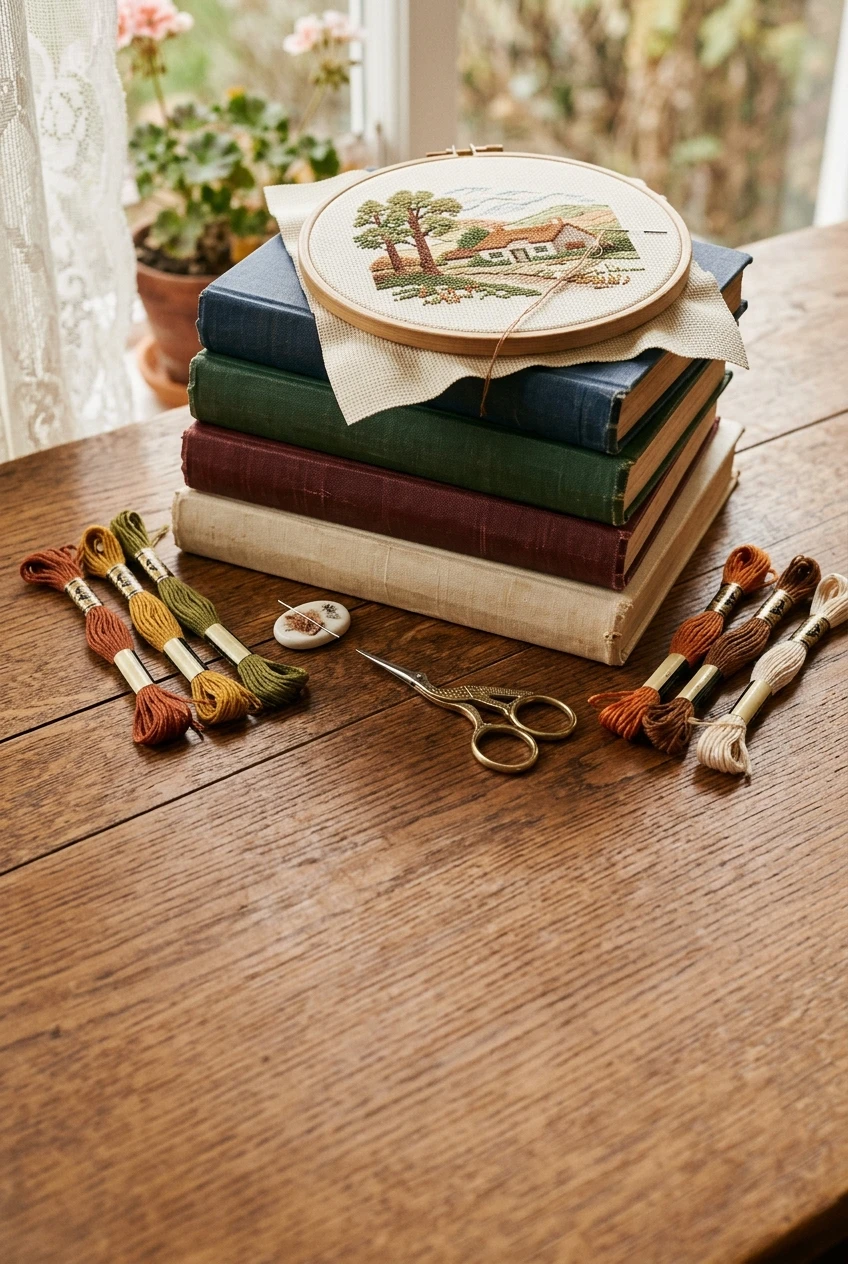
Best cross stitch books for beginners stacked beside wooden hoop, Aida cloth and DMC floss
By Tracey Kramer • • 12 min read
If you're hoping to learn cross stitch from a book, the honest answer may surprise you: there is really only one book I'd call definitive, and after that the field thins out fast. That book is The New Cross Stitcher's Bible by Jane Greenoff, a reference manual that covers counted cross stitch technique from the first stitch to finishing. Everything else is either a pattern collection dressed up as instruction or a short beginner primer, and knowing the difference saves you money and shelf space.
Why Good Cross Stitch Books Are Harder to Find Than You'd Think
Walk into any bookstore craft aisle and you'll see a dozen titles with cross stitch on the cover. Most of them are pattern collections. There's nothing wrong with a pattern collection, but it isn't a teaching book, and a beginner who buys one expecting to learn technique ends up frustrated within an hour. The charts are there. The explanation of how to actually hold the fabric, start a thread, and keep your tension even is usually crammed into four pages at the front with tiny illustrations.
The second category is the modern trend book. Those are the ones built around a single style, snarky samplers or pastel florals or whatever the aesthetic of the moment happens to be. They're fun. They sell well. But the technique content is thin because the publisher is selling a look, not an education.
That leaves a very small third category: genuine reference manuals written by people who have taught counted thread work for decades. There are only a handful of books in that category, and one of them stands clearly above the rest.
I'd rather tell you that plainly than pad out a list of ten titles so the article looks impressive. You don't need ten books. You need one good reference and a steady supply of patterns you actually want to stitch.
The One Book I Point People To: The New Cross Stitcher's Bible
Jane Greenoff's The New Cross Stitcher's Bible is subtitled The Definitive Manual of Essential Cross Stitch and Counted Thread Techniques, and the subtitle isn't marketing puff. It's organized as a manual, which means you can read it cover to cover as a beginner or flip straight to the section you need three years later when you hit a technique you've never tried.
What makes a reference book worth buying is whether it answers the question you have at 9pm on a Tuesday when you're stuck. Greenoff's book handles the full counted thread landscape: cross stitch itself, fractional stitches, backstitch outlining, specialty stitches, fabric counts and how they change finished size, thread handling, and finishing. The diagrams are clear, and the counted-thread focus means it speaks the same language as the charts you're stitching from.
Who should buy it
A complete beginner can absolutely start here, though it will feel like a lot at once. The better use case is the stitcher who has finished two or three small projects and realized they don't actually understand why their stitches lean, or why their count keeps drifting, or what a half stitch is for. That's the moment a reference manual earns its price.
It's also the right book for someone who wants to grow into bigger, more complicated designs. Once you move past small motifs into landscapes and fine art reproductions, you run into confetti, long stretches of single color, and finishing decisions that a four-page beginner leaflet never mentions. A manual that covers the whole craft keeps you from having to guess.
What it won't do for you
No book replaces stitching. You can read about even tension for an hour and still produce lumpy stitches until your hands figure out the rhythm. Use the book as a reference while you work, not as homework to complete before you're allowed to start. Open it when you hit a wall, read that one section, then go back to your fabric.

Tracey Recommends
The New Cross Stitcher's Bible: The Definitive Manual of Essential Cross Stitch and Counted Thread Techniques
Jane Greenoff's manual is the one genuinely definitive cross stitch reference I point people to. It covers counted thread technique from your first stitch through fractional stitches, backstitch, fabric counts, and finishing. Buy it once and you won't need to replace it.
Check Current Price →You don't need ten cross stitch books. You need one good reference and a steady supply of patterns you actually want to stitch.
A Smaller Starting Point for Absolute Beginners
If a full manual feels like too much, the other title worth mentioning is Cross Stitching Guide for Beginners: Cross Stitch Mastering in 7 Days by Faye Fetters. I'll describe it honestly: it's positioned as a short, structured beginner introduction organized around getting you stitching quickly rather than teaching you every counted thread technique in existence.
That has real value for the right person. Some people are overwhelmed by thick reference books and need a short runway, something that gets them holding a needle in the first sitting. If you've been meaning to try cross stitch for two years and keep stalling because it looks complicated, a compact beginner guide can break the stall.
Just go in with the right expectation. A seven-day beginner guide is a doorway, not a library. You'll likely outgrow it inside your first few projects, and that's fine. The goal of a beginner book isn't to be your forever reference. It's to get you past the intimidation so you stop reading about cross stitch and start doing it.
If I had to choose between the two for someone buying exactly one book, I'd still send them to the Bible. It costs more and takes longer to absorb, but you won't replace it.
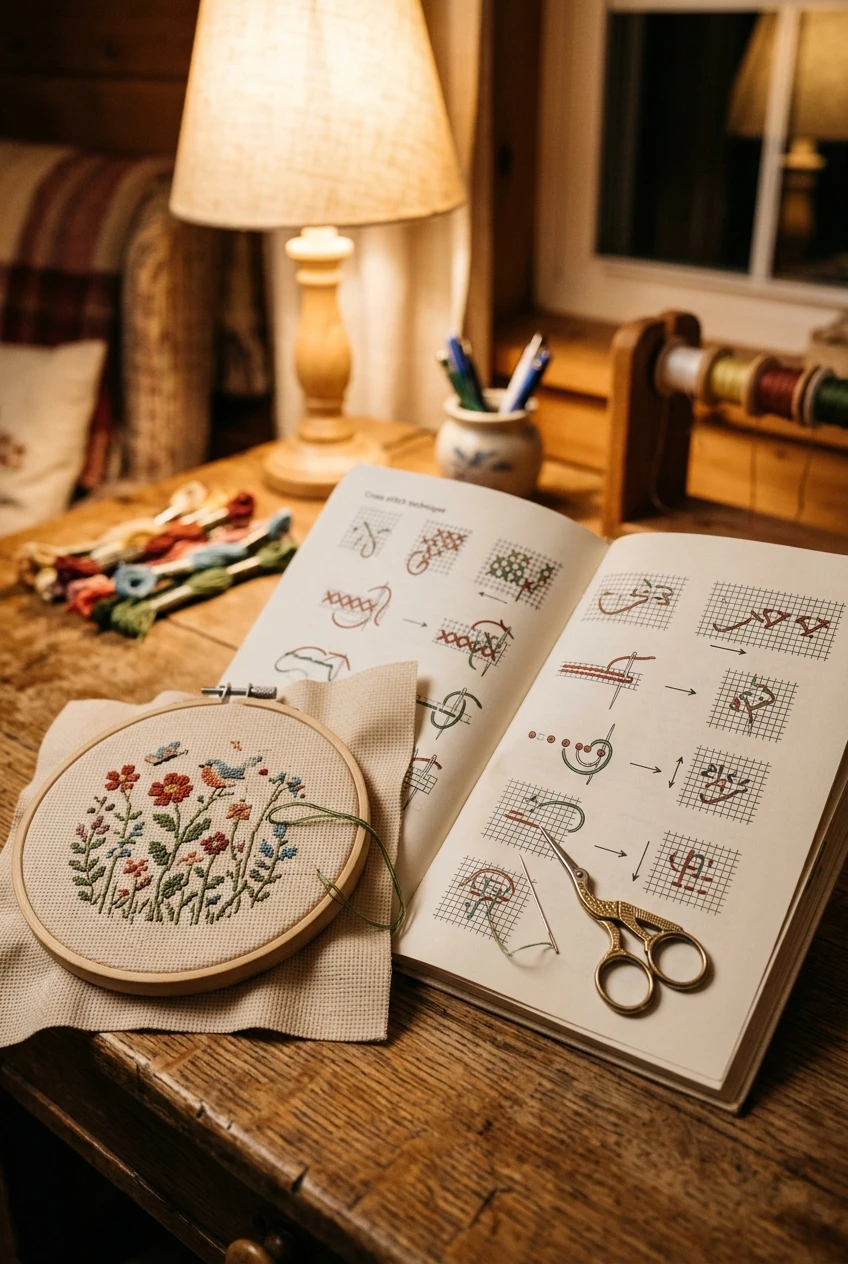
Open cross stitch technique book with diagrams beside hooped Aida project and small scissors
What a Book Can't Give You (And Where to Get It Free)
Here's something publishers don't love to admit: printed craft books go out of date on supplies. Floss colors get discontinued. Tools change. The hoop recommendations in a book from 2008 don't account for what's available now. Books are excellent on technique and weaker on current gear and current troubleshooting.
That gap is exactly why I write the tutorial articles on our blog. Readers email and comment to tell us how much they love these articles and how much they've learned from them, and that's the whole point of having them out there free. A few hundred words on a specific problem, with current photos and current product knowledge, often solves things faster than hunting through an index.
The three gaps worth filling first
Reading a chart is the first one. Symbols, color keys, center markers, and arrows trip up almost everyone at the start, and it's the single fastest skill to learn once someone walks you through a real chart. Second is supplies, specifically knowing what you genuinely need versus what the craft store wants to sell you. Third is vocabulary. Our community talks in shorthand, and if you don't know what frogging, WIP, UFO, BAP, or confetti mean, half of FlossTube sounds like code.
Pair a good reference book with free, current tutorials and you've covered nearly everything. The book handles the fundamentals that never change. The articles handle the specifics that do.
|
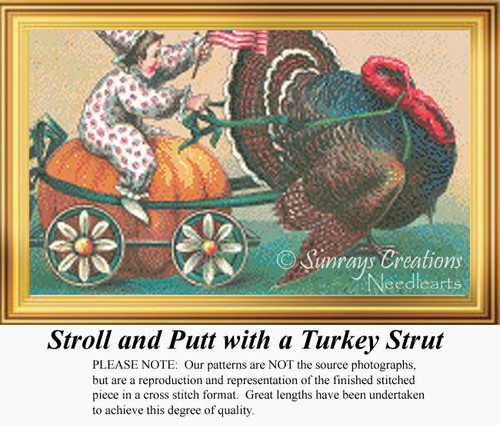
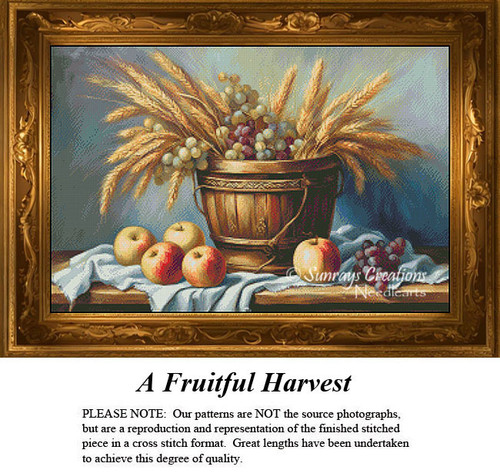
Patterns from the Sunrays Collection Tracey's Picks, designing cross stitch patterns since 2004 | |||||
| |||||
| Browse the full Sunrays collection → |
The Supplies Any Book Will Tell You to Buy
Every decent cross stitch book opens with a supply list, and the lists are remarkably consistent because the craft genuinely doesn't need much. Here's what that list looks like in practice, with my own standards baked in.
Fabric
I design every Sunrays pattern for 18-count Aida cloth (find on Amazon). The stiff weave with clearly separated holes means you can see exactly where the needle goes, which matters enormously when you're learning to count. At 18 count you also get real detail in a finished size that frames nicely on a wall. Books will show you a range of counts and fabric types, and that's useful background, but for my charts, Aida is the standard.
Floss
DMC six-strand embroidery floss (find on Amazon), two strands on 18 count. That's the formula, and nearly every book published in the last thirty years uses DMC numbers in its color keys for the same reason I do: it's consistent, widely available, and the color range is enormous. Separate your strands before you stitch rather than pulling two straight off the skein. Your coverage will be smoother.
Hoop and needle
A 5 to 6 inch wooden embroidery hoop (find on Amazon) is a simple, inexpensive place to start. It keeps the fabric drum-tight, it's light in the hand, and it costs almost nothing. Q-snaps have their fans and work well for larger projects. Add a pack of size 24 or 26 tapestry needles, blunt-tipped so they slide between the threads instead of splitting them.
Scissors and light
A small pair of sharp embroidery scissors (find on Amazon) earns its keep immediately, especially when you're frogging and need to snip one stitch without cutting the fabric underneath. And honestly, good light does more for your accuracy than any book or gadget. A daylight lamp over your shoulder will cut your miscounts noticeably, and it's the upgrade most stitchers wish they'd made sooner.
Get Stitching Tips & New Patterns from Tracey
Honest advice, new Sunrays designs, and occasional VIP-only offers. No fluff.
No spam. Unsubscribe any time.

Tracey Recommends
Cross Stitching Guide for Beginners: Cross Stitch Mastering in 7 Days
A short, structured beginner introduction built to get you stitching quickly rather than teach every technique at once. If a thick reference manual feels like too much, this is a gentler doorway in. Expect to outgrow it, and consider that a good sign.
Check Current Price →After the Books: Picking Patterns You'll Actually Finish
Technique knowledge is only half the equation. The other half is stitching something you genuinely want to look at for the forty or eighty hours it takes to finish. This is where a lot of beginners go wrong. They buy a beginner book, stitch the sampler alphabet inside it, feel nothing, and quietly quit.
Stitch the thing you love, even if it's slightly above your current skill. A pattern you're excited about carries you through the boring background sections. A pattern you chose because it was easy gets abandoned in a drawer and becomes a UFO.
Match the project to your patience, not your skill
Skill in cross stitch builds fast. There are really only a handful of motions to learn, and after a week of evenings your hands know them. What takes longer to build is patience with large blocks of color and the discipline to count carefully. So when you're choosing, think less about whether you can do the stitches and more about whether you'll enjoy sitting with that image for a long stretch.
Landscapes and fine art reproductions are what Sunrays is known for, and they teach you more than a sampler ever will. Shading, color blending, confetti management, knowing when to grid. Every one of those skills shows up in a book's index, but you only truly learn them with a needle in your hand and a chart you care about on the stand next to you.
Digital, printed, or kit
We sell our designs three ways for a reason. A digital pattern downloads instantly and works beautifully with chart apps on a tablet, which many stitchers now prefer over paper. A printed pattern arrives in the mail for people who like to mark off their progress with a highlighter. A full kit sends the chart plus the fabric and floss together, which takes the guesswork out of your first order entirely. Books will tell you what to buy. A kit just hands it to you.
Whichever route you take, finish it as framed wall art. That's what these designs are built for, and there's nothing quite like hanging the first one.
The honest version of this article is short: buy one good reference, use the free tutorials for the rest, and spend the money you saved on a pattern you can't stop looking at. That last part matters more than any book on the shelf. Come browse the Sunrays Creations collection and pick the design you want to live with while you learn.

Framed finished cross stitch landscape above table with reference book, tea and floss basket
Keep Reading
How to Read a Cross Stitch Pattern: A Complete Guide for New Stitchers
The skill every beginner book rushes through in four pages. This walks you through symbols, color keys, and center markers on a real chart.
Read the GuideCross Stitch for Beginners: Everything You Need to Start Your First Project Today
If you'd rather skip the book and just start, this is the free version of a beginner guide with current supply recommendations.
Start HereThe Complete Cross Stitch Glossary: 50 Terms Every Stitcher Needs to Know
Frogging, WIP, BAP, confetti, ORT. Learn the shorthand so FlossTube and stitching groups stop sounding like code.
See the GlossaryFrequently Asked Questions
What is the best cross stitch book for beginners?
The New Cross Stitcher's Bible by Jane Greenoff is the one book I'd call definitive, and a beginner can absolutely start there. If a full reference manual feels like too much at once, Cross Stitching Guide for Beginners by Faye Fetters is a shorter, more structured introduction designed to get you stitching quickly.
Are cross stitch pattern books the same as instruction books?
No, and this trips up a lot of new stitchers. Most craft-aisle cross stitch books are pattern collections with only a few pages of technique crammed in the front. A true reference manual teaches technique in depth, and those are much rarer.
Do I really need a cross stitch book at all?
You don't need one to start, but one good reference saves a lot of guessing later. Books are strong on fundamentals that never change and weaker on current supplies, which is why I pair a reference manual with free tutorial articles that stay up to date.
What supplies do cross stitch books tell you to buy?
The lists are remarkably consistent: Aida fabric, DMC six-strand floss, a hoop, blunt tapestry needles, and small sharp scissors. Sunrays patterns are designed for 18-count Aida with two strands of DMC, and a 5 to 6 inch wooden hoop is an inexpensive place to start.
Can a book teach me even stitch tension?
It can explain it, but no book replaces practice. Your hands figure out the rhythm after a few projects. Use the book as a reference you open when you hit a wall, not as homework to finish before you start stitching.
Should I buy a book or just start with a kit?
A kit removes the guesswork entirely by sending the chart, fabric, and floss together, which is the fastest way to actually begin. A reference book is the better second purchase, once you've finished a project or two and want to understand why things happen the way they do.
-- Tracey Kramer
Founder & Designer, Sunrays Creations Needlearts
Hand-charted designs since 2004 • Marysville, Ohio