
Cross Stitch Patterns I Love (and the Ones I Always Avoid)
Posted by Tracey Kramer on 20th Jan 2022
A Note from Tracey Kramer
After 22 years of designing patterns in our Marysville studio, I've developed some strong opinions about what makes a cross stitch pattern worth your time — and what makes it a headache. This is the honest version.
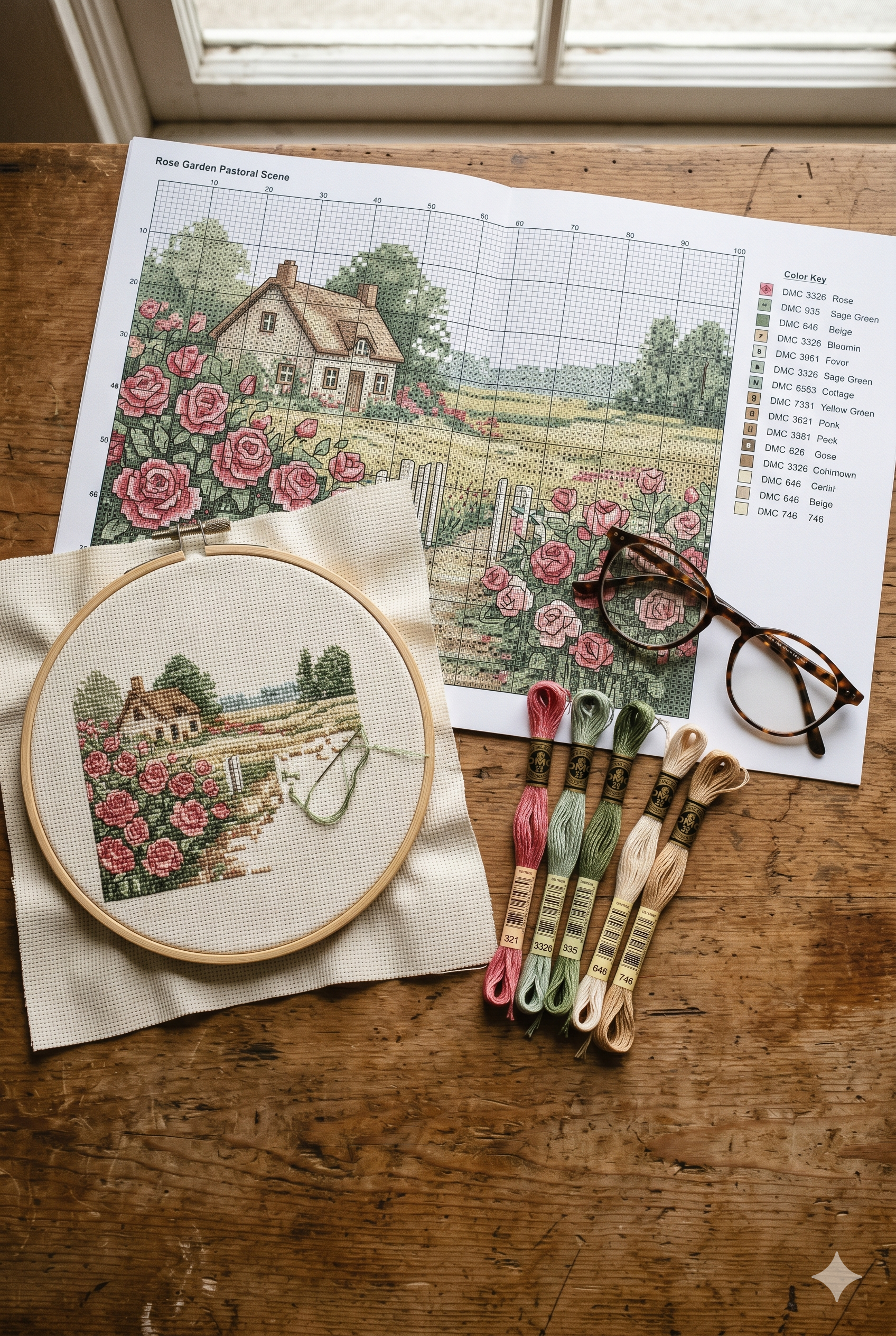
My stitching desk — where every pattern decision gets made the hard way.
These are some of the things I'm personally drawn to when it comes to cross stitch patterns. Your taste may be completely different — and that's exactly how it should be. Everyone has their own stitching personality, and there's no right or wrong answer here.
But after more than two decades of stitching and designing, I've learned what works for me, what frustrates me, and what makes me reach for a project the moment I sit down at my frame. I'm sharing all of it.
The Patterns I Reach For
As a long-time stitcher and designer, I'm drawn to patterns that have a specific set of qualities. These aren't arbitrary — they come from years of picking up a needle and discovering what keeps me engaged all the way to the last stitch.
- ✓ Easy-to-read written instructions — Clear, well-organized instructions matter more than most people realize. A pattern that's a pleasure to follow makes the whole project feel like less work.
- ✓ Large grid sizes — I want to see the symbols clearly without squinting. A large grid means I can stitch comfortably under lamp light (find on Amazon) without losing my place.
- ✓ Colorful patterns with combinations that sing — I'm talking about palettes that feel intentional, not just "here are 40 colors." The color relationships in a pattern tell you as much about the designer as anything else.
- ✓ Mature subject matter — I've never been drawn to the cutesy or cartoonish. My eye goes to landscapes, fine art reproductions, portraits, florals, pastoral scenes — subjects that feel like they belong in a frame on the wall.
- ✓ Realistic-looking patterns — When a finished piece could be mistaken for a painting or photograph, that's the goal. That level of detail and artistry is what I aim for in every Sunrays design.
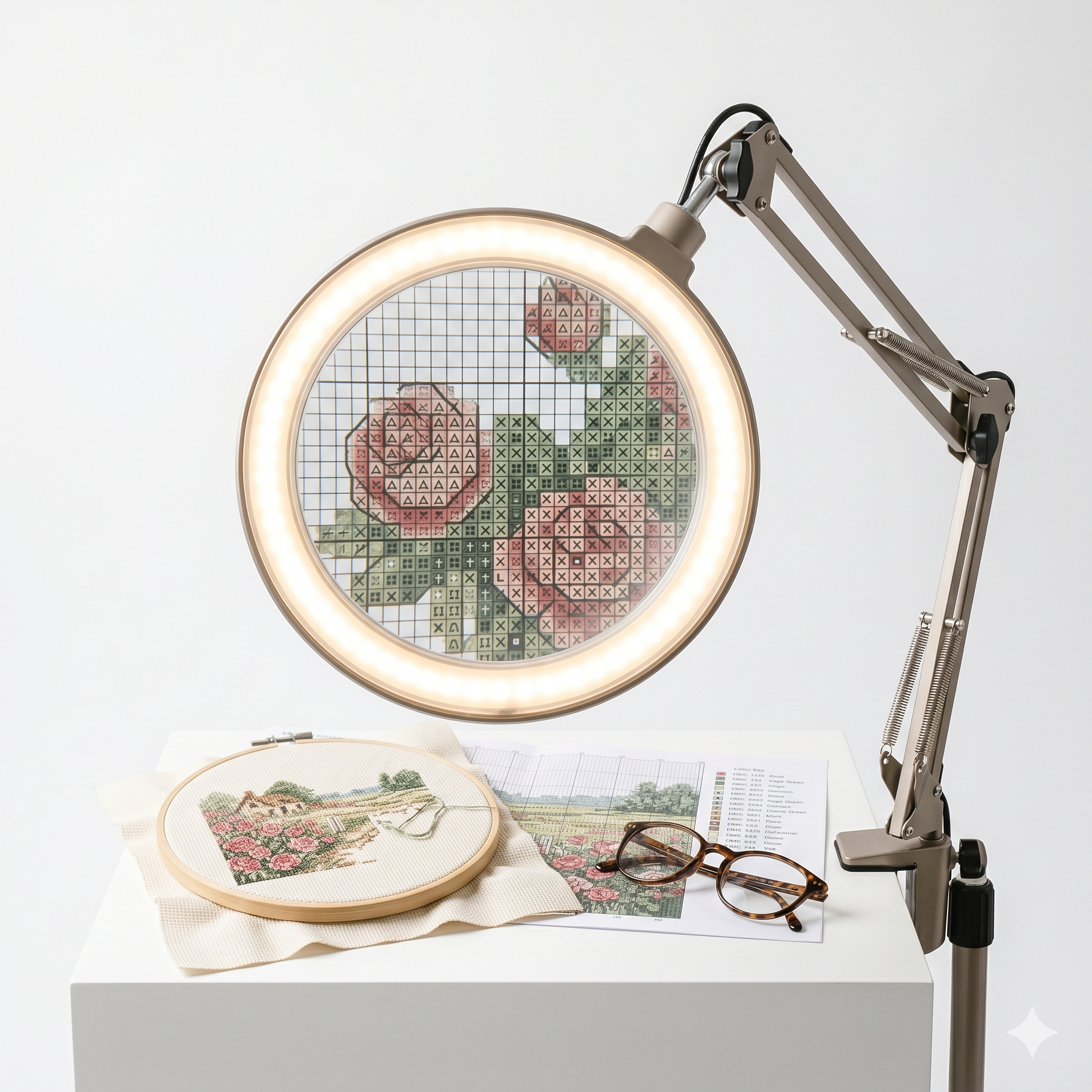
Tracey Uses & Recommends
Lighted Magnifier for Stitching
Large grid patterns are much easier on your eyes with the right lighting. A hands-free magnifier with a built-in daylight LED is one of the best investments a serious stitcher can make — especially for detailed symbol-heavy charts.
See on Amazon"I enjoy stitching beautiful landscape scenery, flowers, pastoral scenes, and beautiful people. Those are the subjects that feel worth the hundreds of hours a large piece takes."
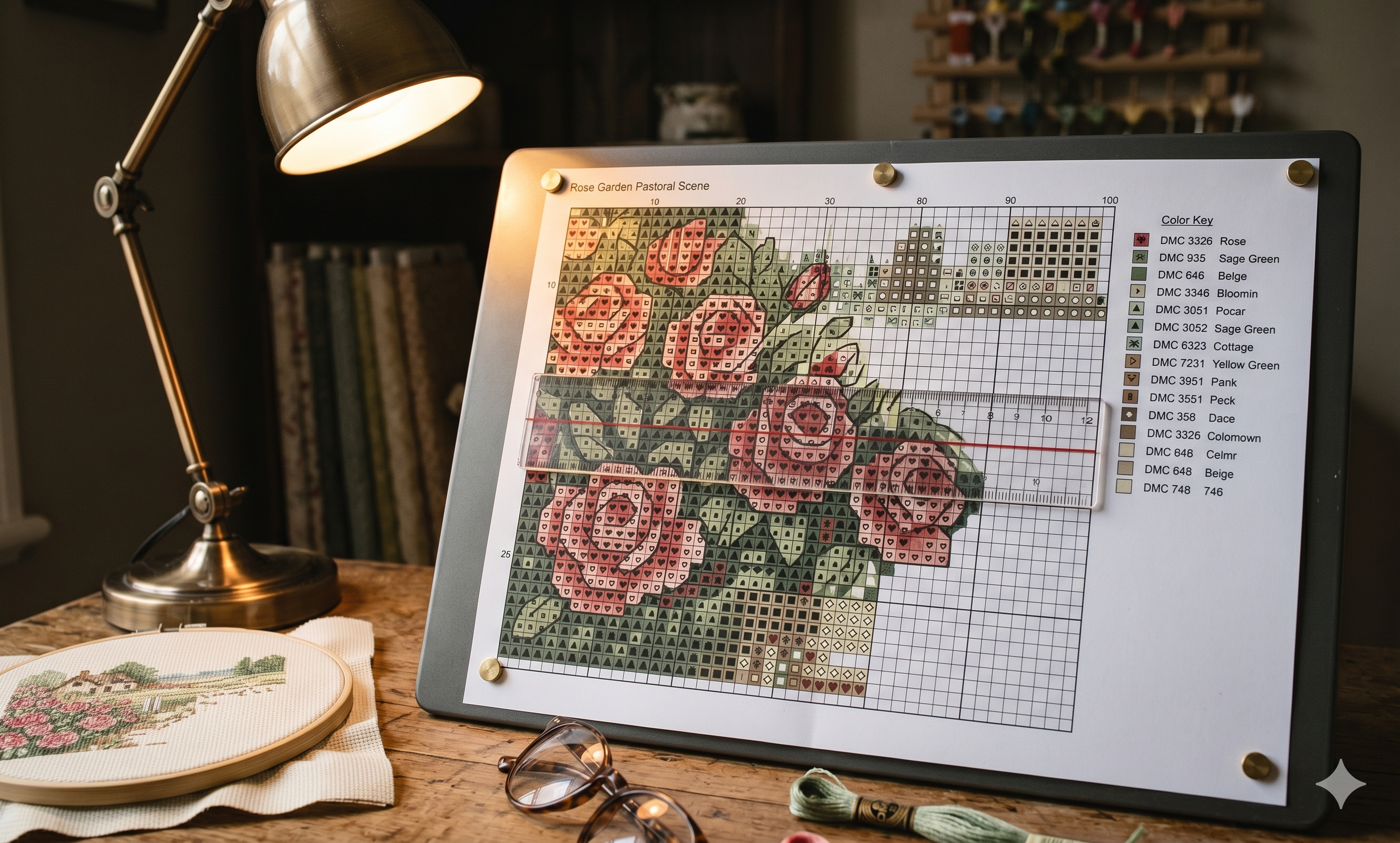
A large, readable grid makes a long project manageable — this is non-negotiable for me.
The Patterns I Avoid
Here's the honest list — the things that make me put a pattern back on the shelf before I ever thread a needle.
- ✗ Patterns requiring lots of French knots — I'll say it plainly: I have never fully mastered the French knot. When I do manage them, they're fine, but a pattern that requires hundreds of them? That's a project I'm not picking up.
- ✗ Hard-to-read patterns — Poor print quality, badly translated instructions, symbols that are too similar to each other — any of these will kill your momentum. Life's too short for patterns that fight you.
- ✗ Small grid patterns — Tiny symbols mean eyestrain, miscounts, and frustration. I design with large, clear grids for exactly this reason. A good lighted magnifier (find on Amazon) can help, but it doesn't fix a poorly designed grid.
- ✗ Subversive patterns — Patterns using profanity or vulgar imagery aren't something I stitch or design. That's a personal choice and I'm at peace with it.
- ✗ Blended color patterns — Blended colors require you to combine two threads on the needle and match them perfectly before each stitch. It doubles the prep time and slows the rhythm of stitching. I avoid them almost entirely. A well-organized floss organizer system (find on Amazon) helps manage complex color palettes, but blending is still a time sink I'd rather skip.
On blended colors specifically — here's a tip that took me years to learn. If you're drawn to a blended color pattern because of its depth and richness, look for a version of the same subject with more individual colors. You'll get the same visual effect without the hassle of blending on the needle.
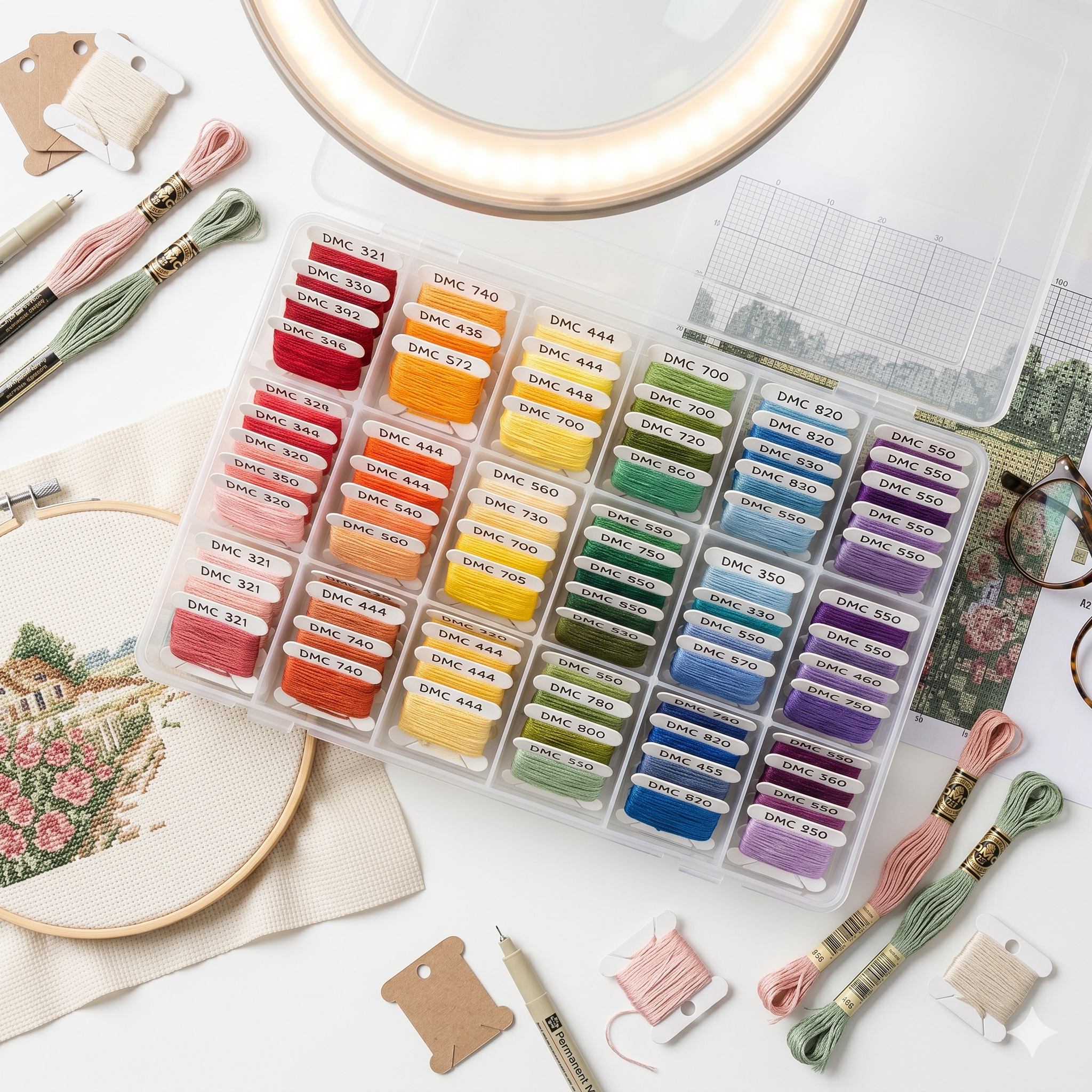
Keep Your Floss Organized
DMC Floss Bobbin Organizer System
Whether you're working with 30 colors or 300, a good bobbin-and-box system keeps your floss sorted, labeled, and tangle-free — especially important for the colorful multi-color patterns I gravitate toward.
See on AmazonGet New Patterns & Stitching Tips from Tracey
New designs, honest stitching advice, and occasional VIP-only offers. No fluff, just stitching.
No spam. Unsubscribe any time.
Why This Shapes Every Sunrays Pattern
I didn't arrive at these preferences randomly. Every Sunrays pattern reflects the same standards I apply when I choose what to stitch myself — realistic subjects, mature themes, large readable grids, and color combinations that look intentional rather than accidental.
When I chart a new design, I'm asking myself: would I want to stitch this for 200 hours? Would I be proud to frame it? Is the grid clear enough to stitch by lamplight in the evening? Those are my benchmarks, and they've been my benchmarks since 2004.
If you've ever looked at a Sunrays pattern and thought "this just feels different" — now you know why. It's not accidental. It's a very deliberate point of view about what cross stitch can be.
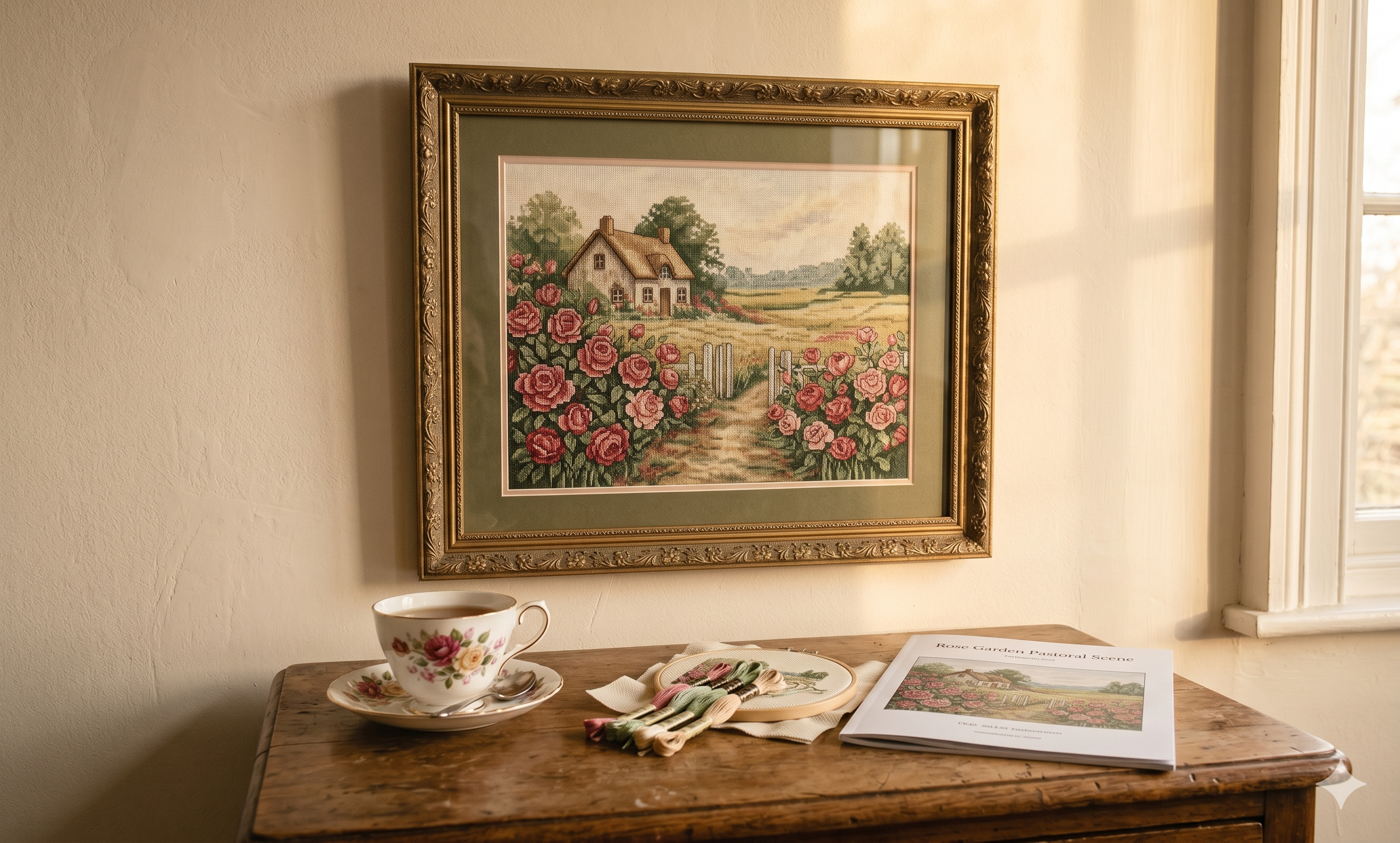
This is the goal — a finished piece that could pass for a painting.
If you'd like to browse patterns built on these exact principles, start with our newest arrivals or explore Owner's Choice — the patterns I'd personally stitch first.
Keep Reading
How to Read a Cross Stitch Pattern: A Complete Guide
Before you can choose the right pattern, you have to be able to read one. Tracey walks through every symbol, grid line, and color key from scratch — the guide she wishes she'd had 22 years ago.
READ THE GUIDECross Stitch Fabric Guide: Aida vs. Linen vs. Evenweave
The fabric you stitch on is just as important as the pattern you choose. Tracey breaks down the differences — and which one she personally reaches for on large realistic designs.
READ THE GUIDE10 Must-Have Cross Stitch Accessories That Will Change Your Life
From magnifiers to floss organizers to the right lighting — the tools around your hoop matter just as much as what's inside it. Here are the 10 accessories serious stitchers swear by.
READ THE ARTICLE
— Tracey Kramer
Founder & Designer, Sunrays Creations Needlearts
Hand-charted designs since 2004 • Marysville, Ohio