
Cross Stitch Thread Guide: Everything You Need to Know About Embroidery Floss
Posted by Tracey Kramer on 1st Jun 2026
A Note from Tracey Kramer
After 22 years of designing cross stitch patterns from our Marysville studio, I've learned that the best guides come from real stitching — not theory. This is what I'd tell a friend.
Cross Stitch Thread Guide: Everything You Need to Know About Embroidery Floss | Sunrays Creations
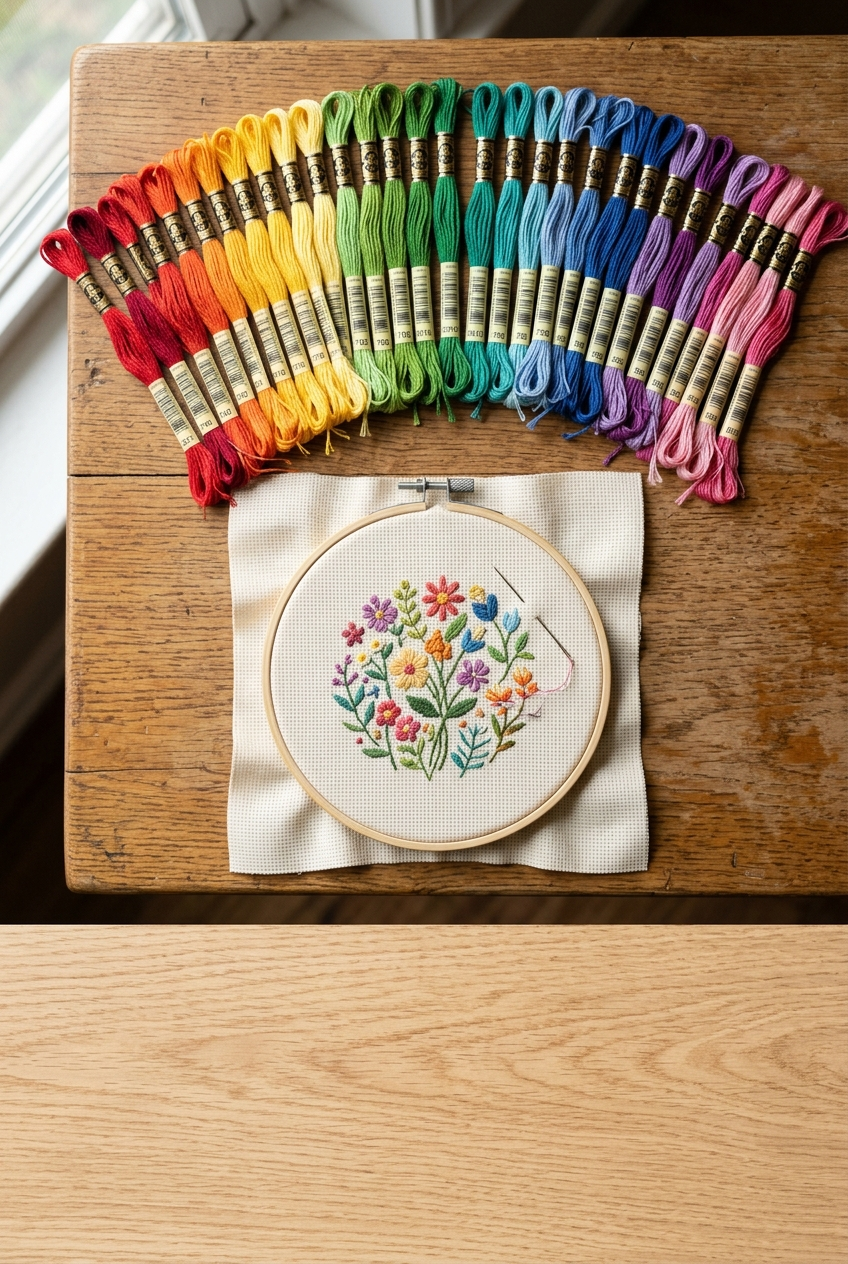
If you've ever stood in front of a wall of embroidery floss wondering what makes one skein different from another, you're not alone. A good cross stitch thread guide comes down to three things: the brand you trust, how many strands you pull for your fabric count, and how you keep all those little colors organized so you can actually find them when you need them. After 22 years of designing patterns and stitching my own samples, I've learned that floss choice is quietly one of the biggest factors in whether a finished piece looks crisp or muddy on the frame.
What Embroidery Floss Actually Is (And Why It Matters for Cross Stitch)
Embroidery floss is the six-strand cotton thread that makes counted cross stitch possible. Each skein is a length of mercerized cotton spun into six loosely twisted strands, and the whole point of that construction is that you can separate the strands and use the exact number your fabric needs. That flexibility is what makes one type of thread work for everything from delicate fine-art reproductions to chunky beginner samplers.
When I'm charting a new design, I'm always thinking about how the floss will sit on the fabric. Too many strands and the stitches bulge and overlap. Too few and the Aida grid shows through like a checkerboard. The sweet spot is what gives a finished piece that smooth, painted look people stop and stare at.
Why cotton floss became the standard
Cotton holds dye beautifully, washes well, and ages without becoming brittle. I have framed pieces in my own house from the early 2000s that still look as saturated as the day I finished them. That longevity is one reason I always recommend stitching on quality materials. If you're spending months on a project, the thread should outlast you.
A quick note for newcomers: counted cross stitch uses a blank fabric and a printed chart, and you count squares to place your stitches. That's different from stamped cross stitch, where the design is pre-printed on the fabric, and very different from needlepoint, which uses a stiff canvas and different stitch structures. Sunrays is counted cross stitch, full stop, and this guide is written for that craft.
DMC vs Anchor: The Two Brands Most Stitchers Compare
If you've spent any time on FlossTube or in cross stitch groups, you've heard the DMC vs Anchor cross stitch debate. Both are excellent. Both have been around for over a century. Both will give you a beautiful finished piece. But they're not identical, and the differences matter when you're following a charted pattern.
DMC: the global standard
DMC is the brand I design with, and it's the brand most modern patterns reference. DMC offers around 500 solid colors, plus variegated, satin, light effects, and color variations lines. The color numbers (like 310 for black or 321 for true red) are universal language among stitchers. When a pattern calls for DMC 815, every stitcher in the world knows exactly which shade that is.
The other reason I lean DMC is availability. You can find DMC embroidery floss at almost any craft store, online, and in most kit suppliers. If you run out of a color mid-project, you're not hunting for weeks.
Anchor: the European favorite
Anchor is a Coats brand, originally British, and it's especially popular in the UK, Australia, and parts of Europe. The thread itself is excellent quality, with some stitchers swearing it's a touch softer or has slightly better sheen. Anchor uses its own numbering system, so an Anchor 403 is not the same color name as DMC 310, even though both are black.
Conversion charts exist online for translating between DMC and Anchor, but they're approximations, not exact matches. If a pattern is charted in DMC and you swap in Anchor based on a chart, you might end up with a slightly different mood in the finished piece. For my designs, I always recommend stitching in the brand the pattern was charted for.
What about other brands?
Sullivans, Cosmo (Lecien), Madeira, and Presencia all make beautiful floss. Sullivans is often used as a DMC equivalent in budget kits and converts almost one-to-one. Cosmo has a devoted following for its soft hand and gorgeous color range. Brand comparisons are honestly a personal preference once you get past DMC and Anchor. Stitch a small piece in each and see what your hands like.
How Many Strands Should You Use?
This is one of the most common questions I get, and the answer depends entirely on your fabric count. The fabric tells the floss what to do, not the other way around.
The general rule by fabric count
- 11-count Aida: 3 strands
- 14-count Aida: 2 strands (sometimes 3 for fuller coverage)
- 16-count Aida: 2 strands
- 18-count Aida: 2 strands
- 22-count or higher: 1 strand
All my Sunrays patterns are designed for 18-count Aida, and I use two strands of DMC for every full cross stitch. That ratio gives the coverage I want without the thread fighting itself through the holes. If you ever feel like you're wrestling your needle, you've probably got too many strands.
Backstitch and outlines
For backstitch on 18-count, I drop down to one strand. Backstitch is meant to be a fine line that defines edges and details. Two strands turns it into a chunky outline and competes with the full stitches instead of supporting them. One strand, slow and steady, gives that crisp definition.
Test it on a corner
If you're ever unsure, stitch a small test patch in the corner of your fabric. Five or six stitches with two strands, then five with three, and look at them side by side. Your eye will tell you immediately which one looks right. This is the single best habit I can recommend for any stitcher who's switching fabric counts or brands.
Preparing Your Floss Before You Stitch
Pulling floss off the skein is a small ritual that makes a huge difference. Done right, your thread glides. Done wrong, you spend the next two hours fighting tangles and frogging knots.
Cutting the right length
I cut my floss to about 18 inches, no longer. That's roughly the distance from my fingertips to my elbow. Anything longer and the thread starts to fray and twist from being pulled through the fabric too many times. A shorter length means cleaner stitches and less ORT (old remaining thread) waste at the end.
Separating strands the right way
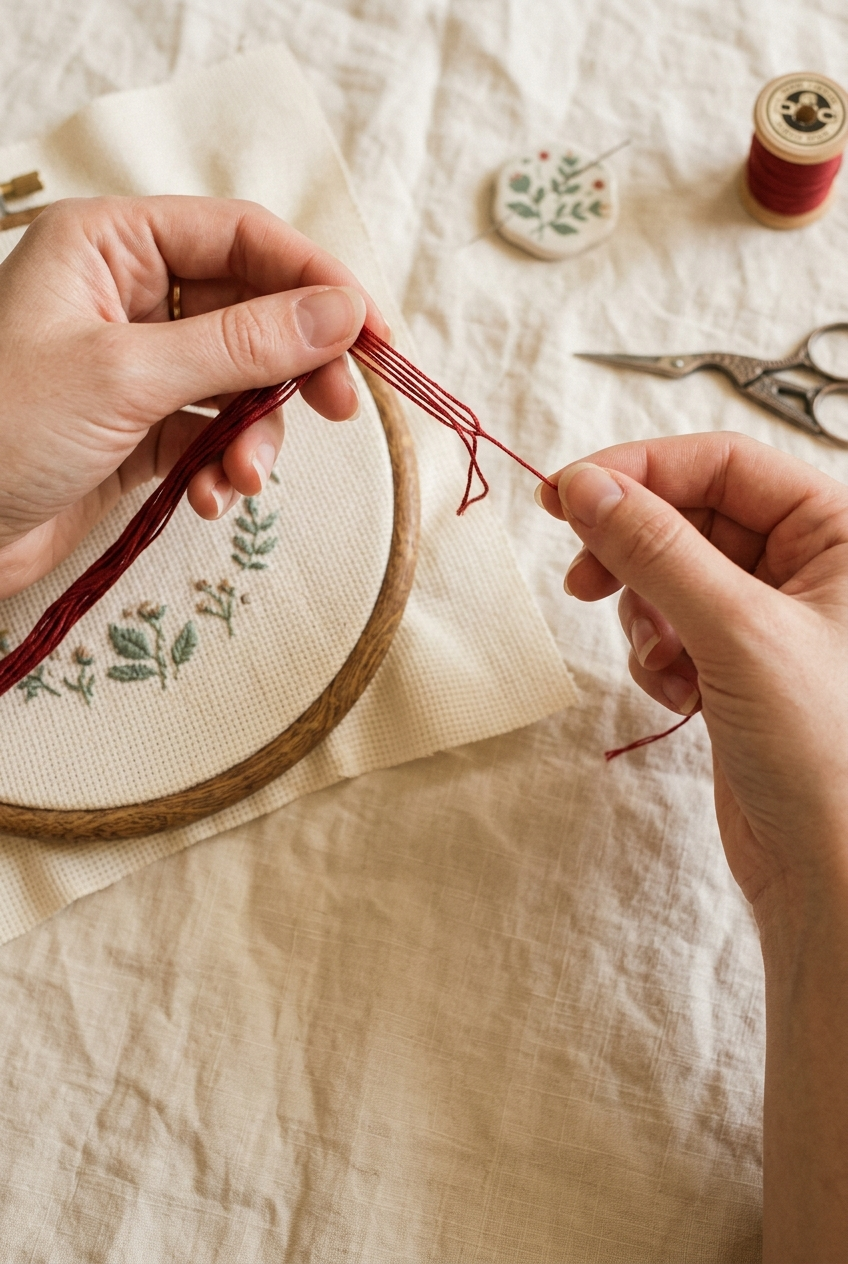
Here's the part most beginners miss. After you cut your 18-inch length, separate ALL six strands one at a time, then put back together the two (or three) you need. Don't try to pull two strands out together while leaving four behind. That creates knots inside the bundle that show up later as twisted, lumpy stitches.
Pull each strand slowly from the top, letting the rest of the bundle hang. Then lay your chosen strands back together side by side. They'll lie flat and stitch smoothly.
Railroading for smooth coverage
Railroading is the technique of laying your two strands flat and parallel as they cross the fabric, rather than letting them twist around each other. You can do this by gently splitting the strands with your needle as you pull the thread through. The result is a smooth, full stitch that catches the light evenly. Once you see the difference, you won't go back.
Storing and Organizing Your Floss Stash
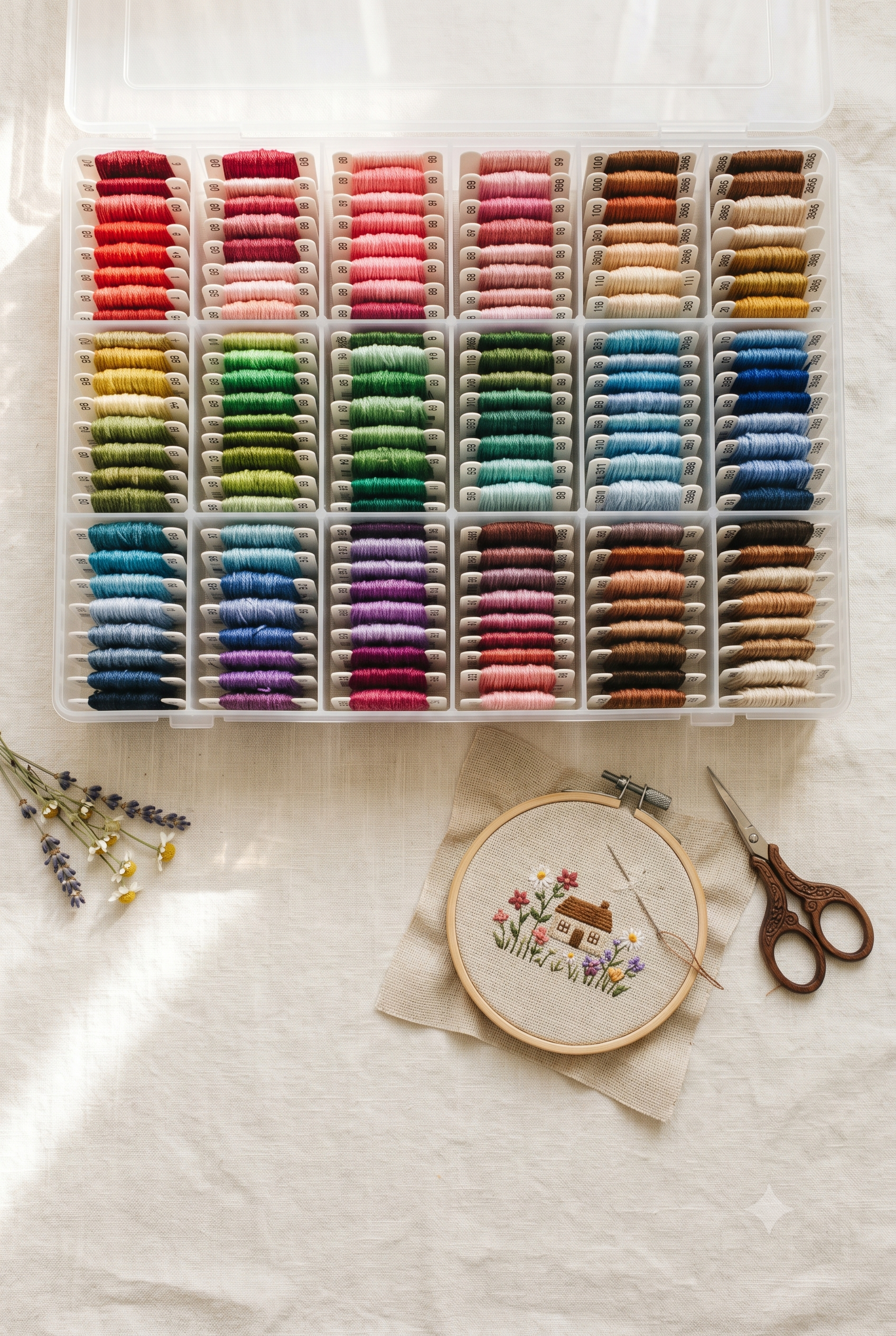
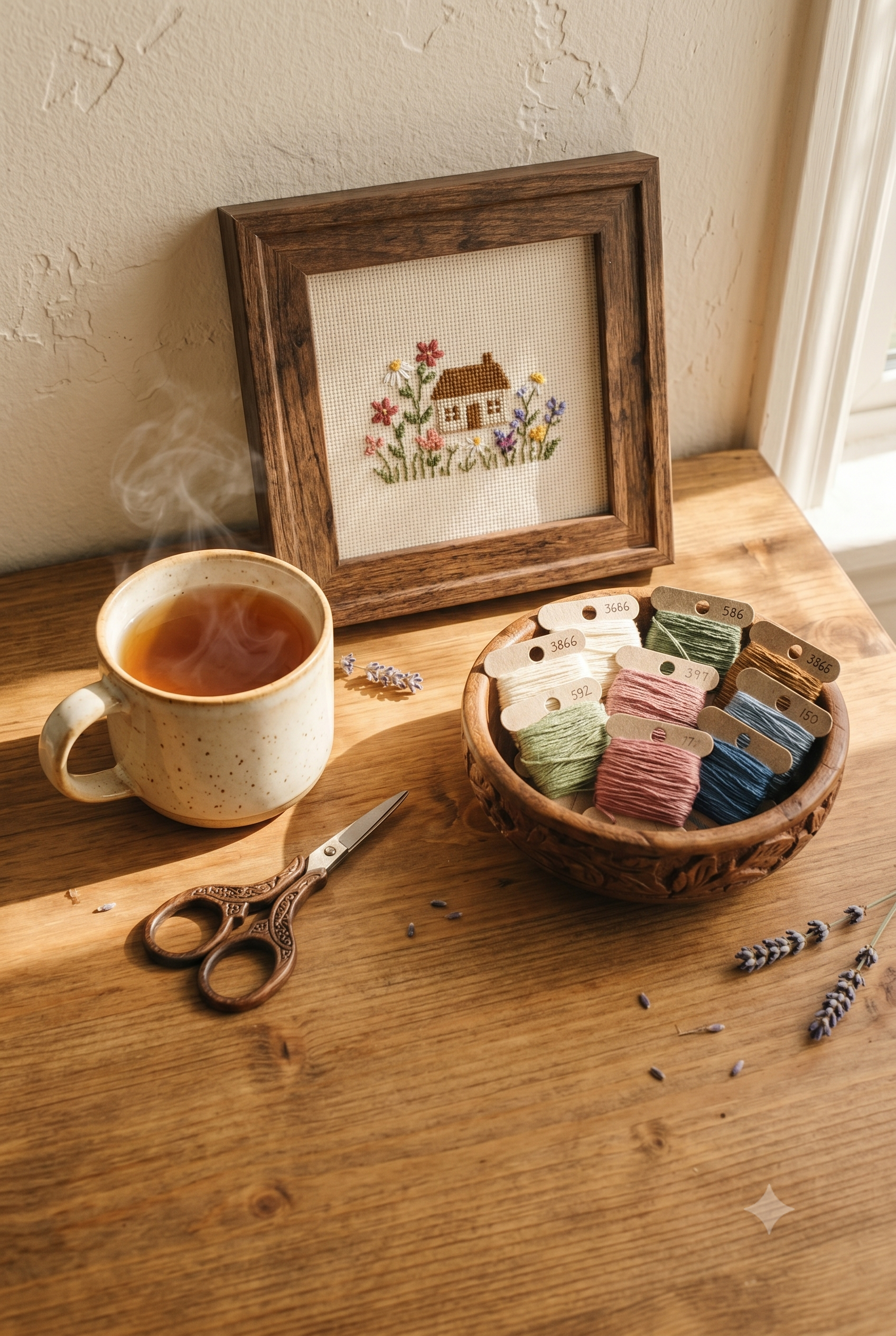
Floss multiplies. There's no other way to say it. You buy three colors for a small project, finish it, and suddenly you have a drawer full of partial skeins and bobbins. After 22 years, I've tried every storage system out there, and the one that's stuck is bobbins in numerical order inside divided floss storage boxes.
The bobbin system
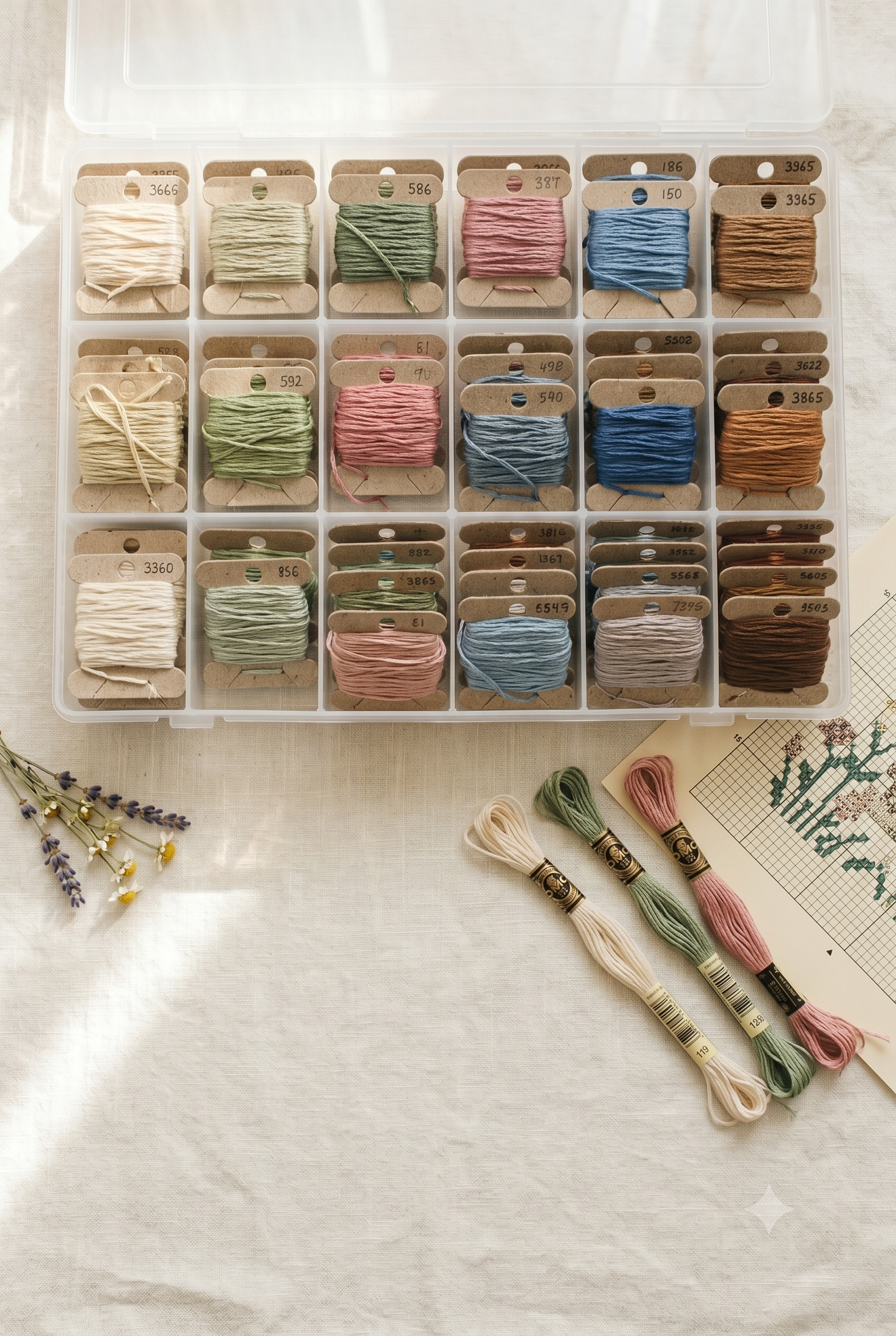
Wind each color onto a labeled cardboard floss bobbin with the DMC (or Anchor) number written on it. Store them in numerical order in floss boxes. When a pattern calls for DMC 422, you walk to the box, find 422, and pull it out in five seconds.
The downside is the initial winding. Setting up a stash of 100+ colors takes a weekend. But once it's done, it's done forever, and every project after that is easier to start.
Leftover floss from kits
If you stitch kits, you'll end up with short pieces and partial skeins that don't fit standard bobbins. I keep these in a separate small box sorted by color family. They're perfect for tiny ornaments, small gifts, or filling in confetti stitches on a larger project where you only need a few inches.
Watching for discontinued colors
DMC does occasionally discontinue colors, which can be alarming if you're mid-project. Most discontinued shades have a recommended replacement, and the cross stitch community is generous about sharing extras. If a pattern you love calls for a discontinued color, don't panic. Substitutes exist.
Specialty Threads: When and Why to Branch Out
Once you've stitched a few projects in standard cotton floss, you might get curious about the specialty threads sitting on the store shelf next to it. Some are worth exploring, and some are best left for very specific designs.
Variegated and overdyed floss
Variegated DMC has color shifts dyed into the strand itself, so a single length goes from light to dark as you stitch. It can be gorgeous for skies, water, or flower petals when the pattern is designed for it. I use variegated sparingly in my designs because it can fight a charted color plan if you swap it in randomly.
Metallics and light effects
Metallic floss adds sparkle for snowflakes, stars, jewelry on portraits, or holiday accents. It's also notoriously difficult to stitch with because it frays and twists. I use shorter lengths (12 inches max) and go slowly. A thread conditioner helps a lot.
Satin floss
Satin floss has a high-sheen finish that mimics silk. Beautiful for highlights, slippery to work with. Use it as an accent, not a whole project, unless you have patience and a very firm hoop tension.
For the kind of fine-art reproduction patterns I design, standard DMC cotton does 95% of the work. Specialty threads are seasoning, not the main dish.
Top Picks: cross stitch thread guideMy go-to recommendations for cross stitch thread guide. Browse current options on Amazon — these are the tools I reach for in my own stitching. → Shop on Amazon |
Top Picks: cross stitch cross stitch thread guideReliable choices for cross stitch cross stitch thread guide. Worth keeping in your stitching kit — see what's currently available. → Shop on Amazon |
|
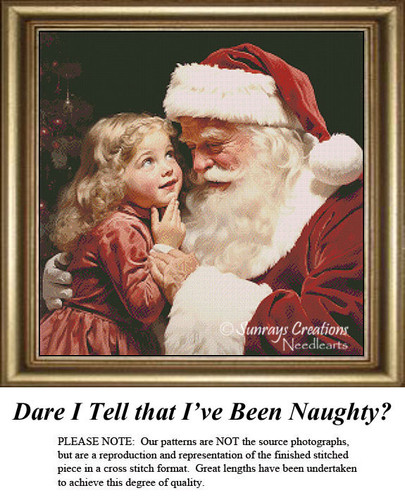
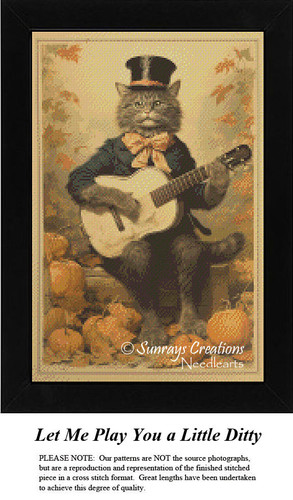
Patterns from the Sunrays Collection Tracey's Picks, designing cross stitch patterns since 2004 |
|||||
|
|||||
| Browse the full Sunrays collection → |

Keep Reading
Cross Stitch Fabric Guide: Aida vs. Linen vs. Evenweave — Which Is Right for You?Your floss choice and fabric choice work together, so once you've sorted strands, this guide walks you through picking the right cloth. Read Article → |
DMC Discontinued Floss Colors: List & Replacements | Sunrays CreationsIf a pattern calls for a color you can't find, this guide gives you the discontinued list and recommended replacements. Read Article → |
Cross Stitching for Beginners – How Many Strands of Floss to Use?For a deeper look at strand counts across fabric sizes, this companion article breaks it down stitch by stitch. Read Article → |
Frequently Asked Questions
How many strands of floss do I use for cross stitch on 14-count Aida?
Two strands of six-strand cotton floss is the standard for 14-count Aida. Some stitchers prefer three strands for fuller coverage, especially with lighter colors that need to pop against the fabric. Always test in a corner before committing to a full project.
What's the difference between DMC and Anchor floss?
Both are high-quality six-strand cotton floss, but they use different numbering systems and have slightly different color ranges. DMC is the global standard most patterns are charted in, while Anchor is especially popular in the UK and Europe. Conversion charts exist but are approximate, so stitch in the brand your pattern was designed for when possible.
How long should I cut my embroidery floss?
About 18 inches, or roughly fingertips to elbow. Longer lengths fray and twist from being pulled through the fabric repeatedly, while shorter lengths waste your time rethreading. Cutting consistently at 18 inches keeps your stitches smooth and even.
Do I need to separate the strands before stitching?
Yes, always. Separate all six strands one at a time from your cut length, then put back together just the number you need. This prevents internal knots and gives you flatter, smoother stitches. Skipping this step is one of the most common reasons beginners get twisted, lumpy coverage.
Is DMC floss worth the price compared to cheaper brands?
For a project you'll spend weeks or months on, yes. DMC's color consistency, durability, and global availability make it worth the few extra cents per skein. Cheaper unbranded floss can vary lot to lot and may not hold dye as well over time.
Can I mix floss brands in the same project?
You can, but I don't recommend it for a charted pattern. Different brands have slightly different sheens and color depths, which will show side by side in the finished piece. If you must substitute, use a published conversion chart and test a small area first.
What is railroading and why does it matter?
Railroading is the technique of laying your two strands flat and parallel as they cross the fabric instead of letting them twist together. It gives a smoother, fuller stitch that catches light evenly. Once you start railroading, your finished pieces look noticeably more polished.
Join the Sunrays stitcher's circle
New patterns, seasonal promos, and Tracey's studio notes — delivered to your inbox.
About Tracey Kramer: Tracey is the lead designer and co-owner of Sunrays Creations, a counted cross stitch business she has run from Marysville, Ohio for over 22 years. Her patterns are stitched in homes around the world and finished as framed wall art. Visit sunrayscreations.com to explore her pattern library.