
Craft Supply Organization Ideas That Actually Work
Posted by Tracey M. Kramer on 17th Apr 2016
A Note from Tracey Kramer
I have craft supplies in every room of my house — and I mean every room. This article is what I actually did about it, and why I think the storage you buy today matters more than you realize.
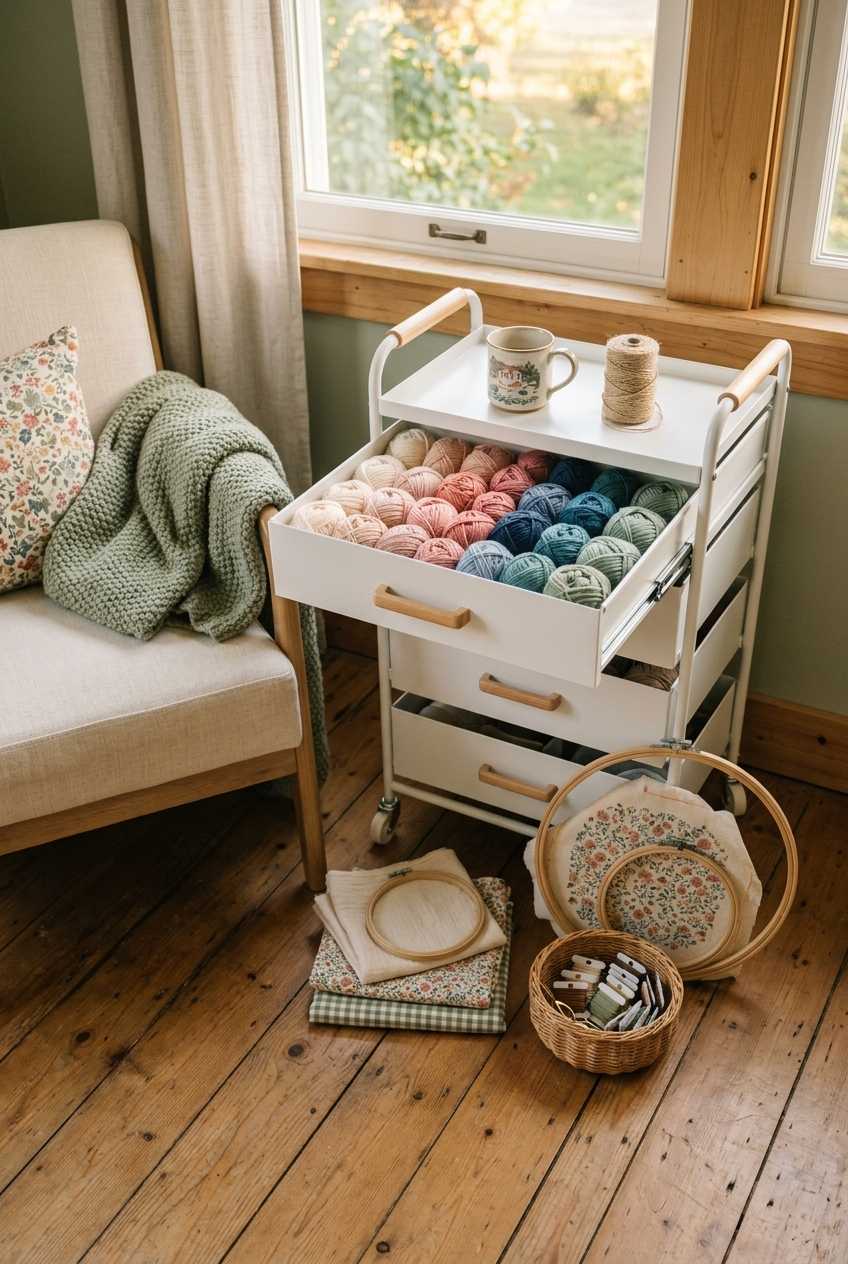
White rolling storage cart with colorful yarn organized by color beside a cozy bedroom chair
By Tracey Kramer • • 12 min read
Let me paint you a picture. There is a basket of yarn beside my bedroom chair. There are cross stitch hoops on the nightstand. In the closet, behind my sweaters, there are two project bags I have been meaning to finish for longer than I am willing to admit out loud. In the living room, there is a decorative bin that is approximately forty percent decorative and sixty percent stuffed with floss I have not sorted since last spring. And the dining room table — well, let's just say we eat in the kitchen most nights. Sound familiar? If you are a multi-hobby crafter, I suspect it does.
I wrote about this a while back — the fact that my needlework had quietly colonized every room in the house. At the time it felt a little embarrassing to admit, but the response I got from readers made it very clear that I was not alone. Crafters accumulate. It is almost a defining characteristic. We start with one hobby, and then we discover another, and before long we have yarn for knitting, fabric for quilting, floss for cross stitch, and paint for something we tried once and will definitely get back to. The supplies multiply. The space does not. And eventually you find yourself stepping over a bag of size 28 tapestry needles just to get to the bathroom.
But here is the thing I have come to understand: the chaos is not a character flaw. It is creative abundance. The problem is not that you have too much — it is that the stuff does not have a home. And the solution is not to get rid of your projects or scale back your hobby life. The solution is storage. Real, intentional, buy-it-once storage that works today and grows with you tomorrow. That is what I want to talk about, because I think most crafters undersell themselves on this and end up buying the wrong things for the wrong reasons.
When Your Crafts Take Over Every Room
I have been stitching for over thirty years. In that time I have also picked up needlepoint, done more than a little knitting, gone through a lengthy quilting phase, and experimented with embroidery, crochet, and a brief but memorable encounter with punch needle. Every single one of those hobbies came with supplies. And supplies, if you do not have a system for them, end up wherever you happened to set them down last — which, in my house, is apparently everywhere.
For a long time I told myself it was fine. I knew where everything was. I had a system — it just lived in my head rather than in actual organized storage. But there came a point where I could not find the right color floss when I needed it, where I was buying duplicate skeins of yarn because I had forgotten I already had that colorway, and where company coming over meant a rapid and undignified sweeping of craft supplies into the nearest bag. That is not a system. That is managed chaos, and it is exhausting.
What I finally had to admit is that the clutter was actually slowing me down creatively. When I sit down to stitch, I want to stitch — not spend twenty minutes excavating through a basket trying to find the right needle size. When I start a new project, I want to feel excited, not overwhelmed by the pile of unfinished things that have no home. Organization is not about being a certain type of person. It is about removing the friction between you and the thing you love to do.
So I went to Target. Nothing fancy, nothing Pinterest-perfect. I bought two rolling storage carts — one two-drawer system for the bedroom and one three-drawer system for the closet — and I started there. And honestly? It changed everything. Not because I suddenly had a beautiful craft room. I did not. But because my supplies finally had a designated place, and that small shift made a bigger difference than I expected.
The Dream: A Dedicated Craft Room of Your Own
If you have been crafting for any length of time, you have probably imagined it. The craft room. Four walls that belong entirely to your hobby life — shelves lined with organized supplies, a real work surface, good lighting, and enough room to spread out a project without disturbing anyone's dinner. For some crafters this is already a reality. For most of us, it is still a goal on the list, somewhere between 'paint the kitchen' and 'actually use the bread maker.'
Getting to a dedicated craft room takes time, space, and budget — usually some combination of all three. Maybe you are in a house where every room is already spoken for. Maybe you have kids at home and the extra bedroom is not extra yet. Maybe you are renting and you do not have the freedom to claim a room and build it out the way you want to. Whatever the reason, the craft room has to wait. And that is completely okay. The mistake is letting that waiting feel like permission to stay disorganized in the meantime. If you are thinking seriously about planning that space when the time comes, I wrote about exactly that — the difference between a dedicated craft room and a craft closet setup, and how to figure out which one actually fits your life — over at Craft Room vs. Craft Closet: Which One Do You Need?. It is worth a read if you are in the planning stage.
The point I want to make here is this: the craft room is coming. Plan for it now, even while you are living without it. The storage decisions you make today — what you buy, how you organize it, how modular and moveable it is — will determine how easy or hard that eventual transition is. You can either buy storage that works for right now and replace it all later, or you can buy storage that works for right now AND slides seamlessly into your future craft room when the time comes. I know which one I recommend.
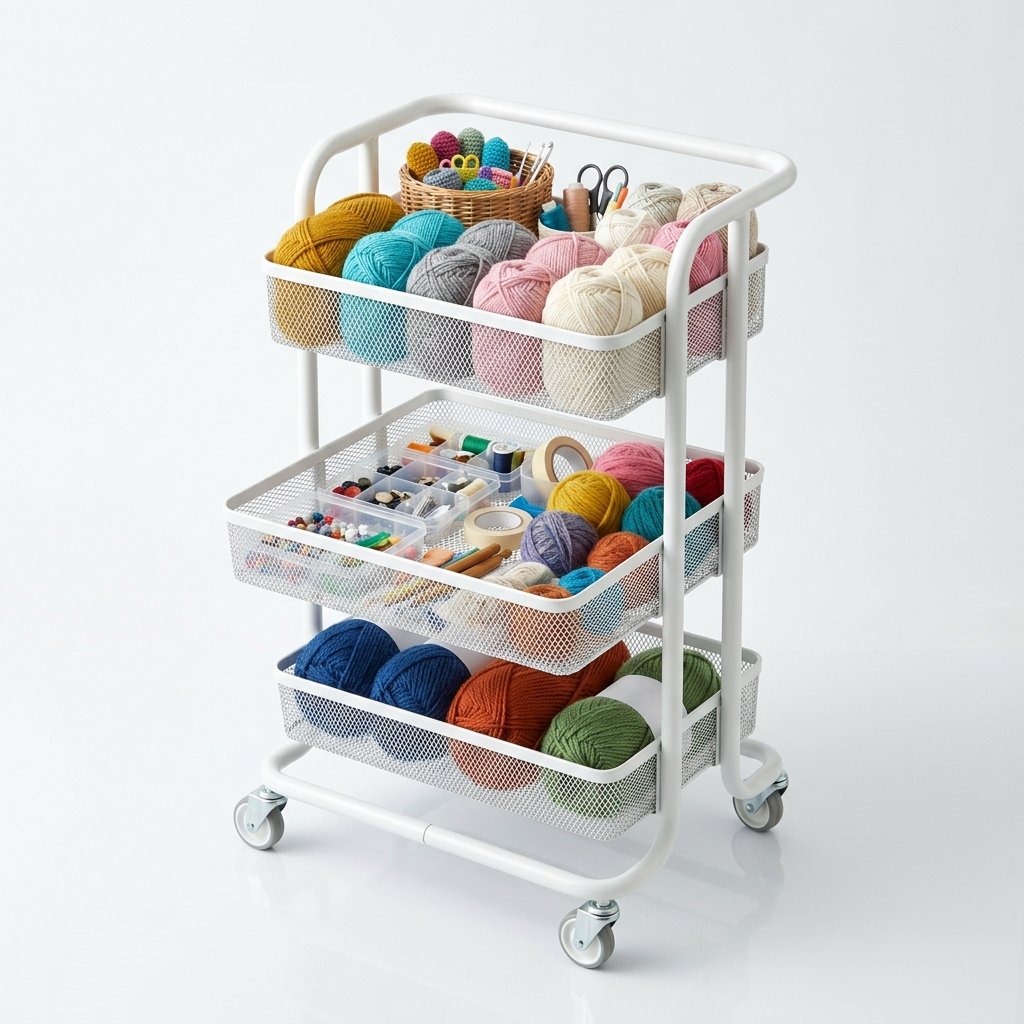
Tracey Recommends
3-Tier Rolling Storage Cart with Drawers
This is exactly what I bought — and it is still in daily use. Deep drawers hold full yarn skeins and cross stitch supplies without squashing them, and the wheels mean you can roll it to wherever you are crafting and right back again. An affordable entry point that works in any room of the house, and rolls straight into your craft room when that day comes.
See on AmazonThe storage you buy today becomes the foundation of your future craft room. Buy once, buy modular, buy with intention — and let your organized space grow with you.
Buy Smart: Storage That Works Now AND Later
Here is the organizing philosophy I wish someone had handed me fifteen years ago: do not buy cheap storage you are going to replace. I know it is tempting. You walk into a dollar store or browse a discount site and you think, 'This is good enough for now, I will get real storage when I have a craft room.' And then you end up with a collection of mismatched bins that do not stack, do not roll, and do not fit together in any logical way. When the craft room finally materializes, you throw it all out and start over. You have spent the money twice.
The smarter move is to buy modular, stackable, rollable storage from the beginning. Spend a little more upfront and buy pieces that are designed to work together — carts that can be repositioned around a room, drawer units that stack cleanly on top of each other, systems that expand as your stash grows. These are not just organization tools for your current scattered situation. They are the foundation pieces of your future craft room. When you eventually have that dedicated space, you roll the cart in, stack the drawers against the wall, and suddenly it looks intentional and built-out — because you planned it that way.
This is exactly what I did, even if I did not have the language for it at the time. The rolling carts I bought from Target are still working for me. They are not gathering dust in a garage because I upgraded — they are still in daily use, and they will move with me into a proper craft space when that day comes. I also invested in a nicer storage unit for the living room, one that works with my existing furniture and décor. It cost more, but I use it every single day and I have never once regretted it. Buy once. Buy well. Buy modular.
One more thing: think about portability. This is particularly true for those of us who craft in multiple rooms — which, as we have established, is most of us. A rolling cart that lives beside your bedroom chair can roll to the dining table when you want more light, then roll back when you are done. That flexibility is worth a lot. You are not locked into one location, and the storage moves with your creative mood rather than fighting it.
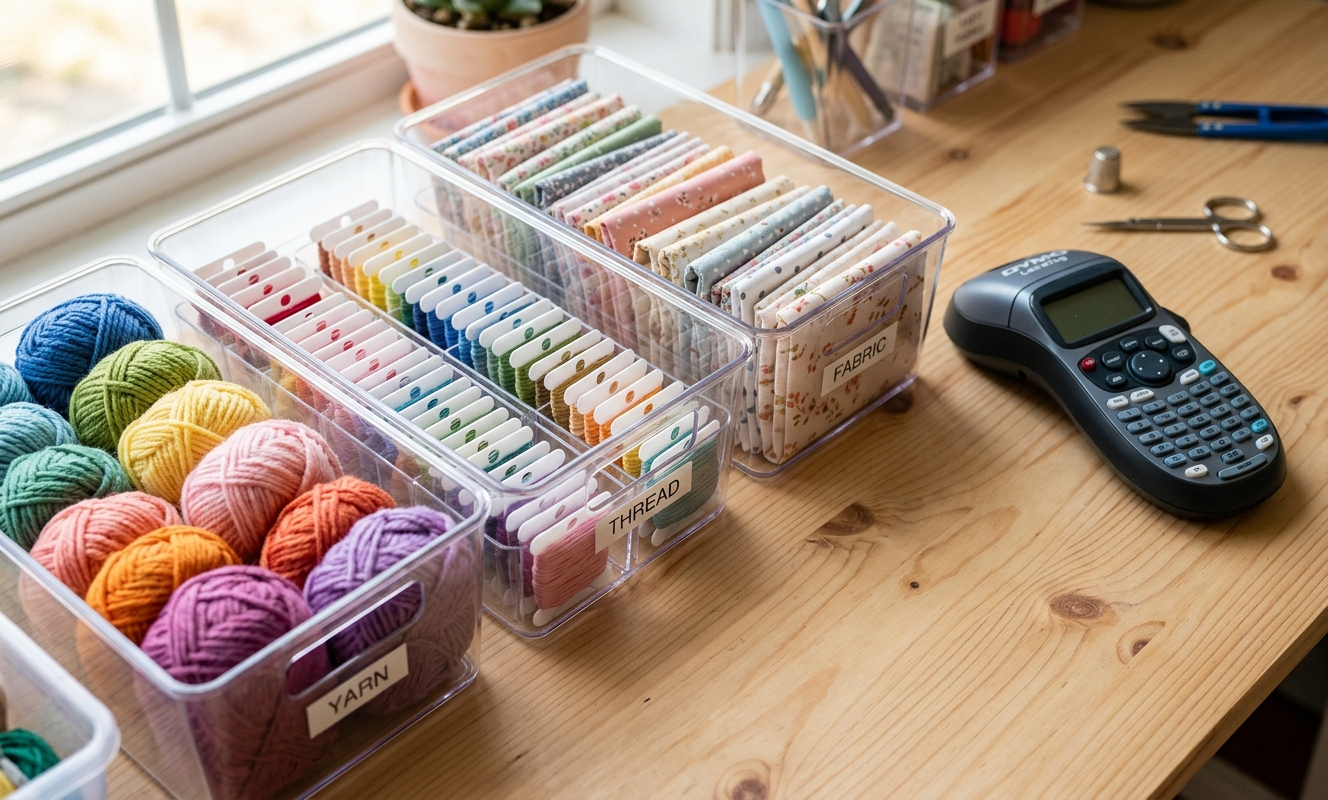
Craft supplies sorted into clear labeled bins on a wooden table with yarn floss and fabric swatches
The Best Storage Solutions for Multi-Hobby Crafters
Let me get specific, because general advice only gets you so far. The storage system that has worked best for me — and that I genuinely recommend to any multi-hobby crafter — starts with a rolling three-drawer cart. The key feature to look for is drawer depth. Shallow drawers are frustrating for crafters because yarn skeins, fabric folds, and even bundled cross stitch floss bobbins need real vertical space. Deep drawers let you store things properly without squashing or tangling. And wheels — non-negotiable. The whole point is that this cart goes where you go.
In my two-drawer bedroom cart, I separate by color. Light-colored yarn and floss in the top drawer, darker colors in the bottom. It sounds simple, and it is — but that simplicity is the point. When I sit down to stitch and I need a specific thread color, I know which drawer to open. I am not digging through a tangled pile. I am not squinting at labels in bad lighting. I open a drawer, scan by color, and find what I need in under a minute. For someone who has spent decades doing the alternative, that feels like a miracle.
The three-drawer system in my closet is organized differently — by project rather than by color. Each drawer holds everything related to one specific project: the pattern, the floss, the fabric or canvas, any specialty stitching accessories I have pulled for that piece. When I am ready to work on that project, I pull the drawer open and everything I need is right there. No hunting. No assembling. Just stitching. This approach works especially well if you juggle multiple WIPs — which, again, most crafters do.
Beyond rolling carts, I am a strong believer in clear stackable storage bins (find on Amazon) for anything bulky or awkward — rolled fabric, large yarn skeins, finished needlework that needs to be stored flat. Clear means you can see what is inside without pulling everything out. Stackable means you can build vertical without taking up more floor space. For fabric specifically, I have also started using fabric storage cube bins (find on Amazon) on low shelves — they are collapsible when empty, which is nice, and they look tidy lined up in a row.
And then there is the question of small parts — loose needles, stitch markers, measuring tape, scissors, needle threaders, pins. These need a craft supply organizer box (find on Amazon) with divided sections, not a junk drawer and not a general pencil cup. I use a divided organizer with adjustable compartments so I can configure it for whatever I happen to be working on that season. When I shift from heavy cross stitch mode into a knitting project, I rearrange the compartments to fit the new tools. It takes five minutes and it makes a real difference in how functional the space feels.
|
Patterns from the Sunrays Collection Tracey's Picks, designing cross stitch patterns since 2004 |
|||||
|
|||||
| Browse the full Sunrays collection → |


Start Organized, Stay Organized
Here is the mistake most crafters make when they finally commit to getting organized: they buy the storage first and figure out the system later. I understand the impulse — the cart arrives, you are excited, you start throwing things in drawers because at least they are off the floor. But if you do not have a system before you fill the drawers, you will have a neat-looking version of the same chaos you started with. Take an hour before you fill anything. Decide your categories. Organize by craft type first — cross stitch in one area, yarn crafts in another, sewing and fabric in a third. Then, within each craft type, organize by color or by project, whichever makes more sense for how your brain works.
Label everything before you fill it. I cannot stress this enough. A label maker for organization (find on Amazon) is one of those small investments that pays off every single day. Handwritten labels fade, peel, and smear. A proper label maker produces clean, readable, consistent labels that stick. Label every drawer. Label every bin. Label the shelf where the bin lives. It sounds like overkill until the day you are looking for your tapestry needles at ten o'clock at night and you find them in thirty seconds because the drawer says exactly what is in it.
The last thing I want to say is this: resist the urge to overfill. Storage that is packed to capacity is not organized storage — it is just contained chaos. Leave room in every drawer for things to be visible and accessible. When a drawer gets full, that is your signal to evaluate what is in it, not to jam more in. Maybe some of those supplies need to move to a different container. Maybe some projects need to be honestly assessed — finished, donated, or released. I know that last part is hard. But an organized craft life is a sustainable craft life, and it gives you the space — physical and mental — to keep doing the thing you love. You are not just tidying a room. You are building the foundation of the creative space you have always wanted, one good decision at a time.
Get Stitching Tips & New Patterns from Tracey
Honest advice, new Sunrays designs, and occasional VIP-only offers. No fluff.
No spam. Unsubscribe any time.
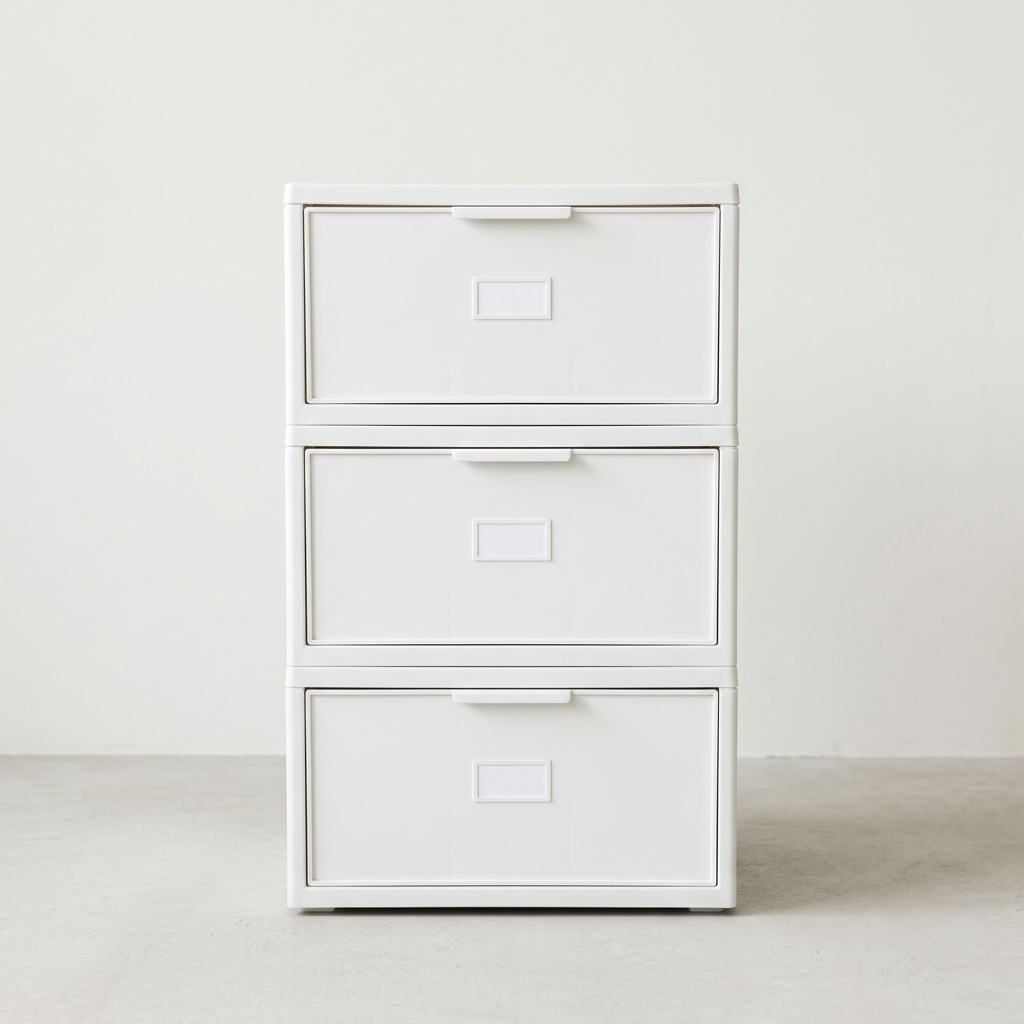
The Craft-Room-Ready Upgrade
Modular Stackable Drawer Units
Start with two drawers and add more as your stash grows — that is the beauty of modular. These sit flat against a wall, they look clean and intentional, and when your craft room finally happens they move right in with you. This is storage that does not become clutter later. It becomes infrastructure.
See on AmazonOrganization is not a destination — it is an ongoing practice, and the good news is that every small improvement adds up. If all you do this week is buy one rolling cart and sort your yarn by color, that is a real win. And when you are ready for your next creative project — whether that is a new cross stitch, a knitting cast-on, or just a good browse through what you already own — come visit me at Sunrays Creations. I design original counted cross stitch patterns that are worth finding a drawer for.
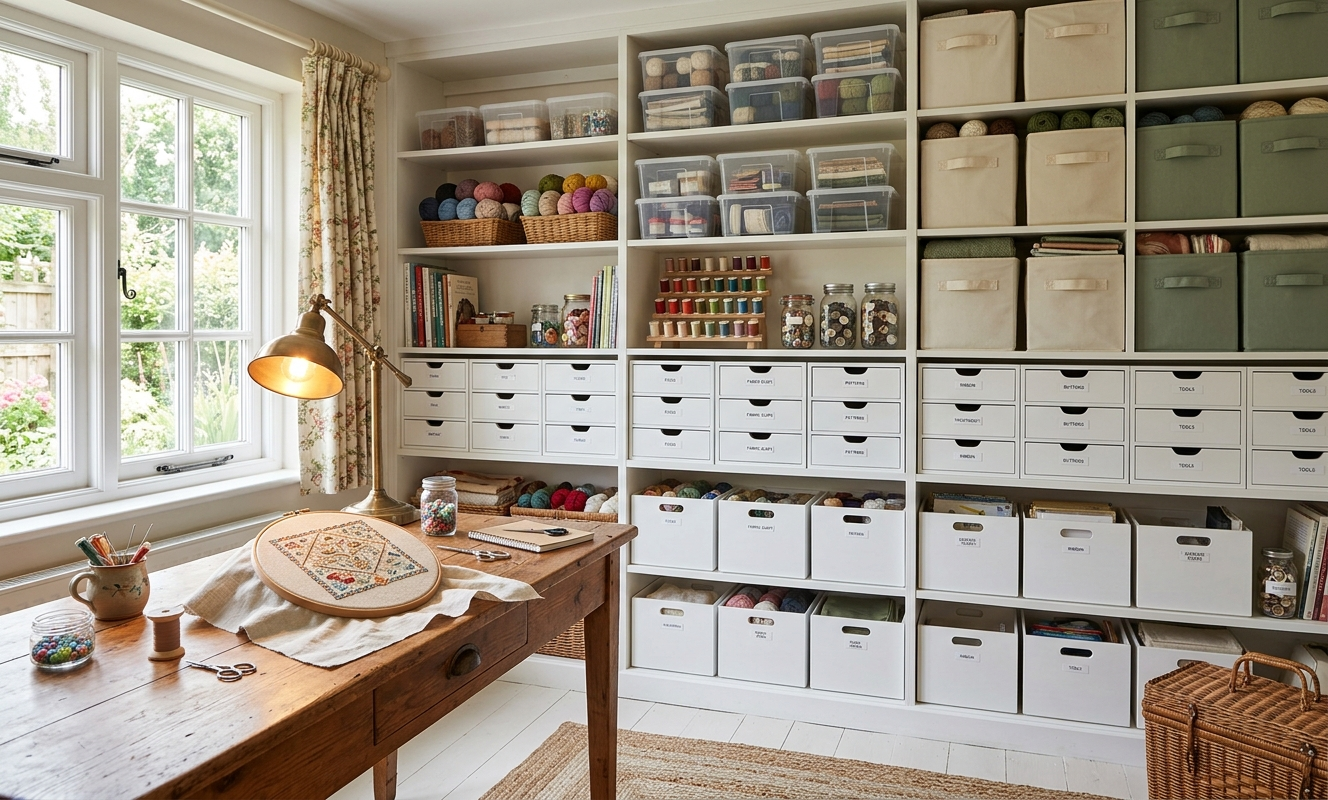
Dreamy organized craft room with modular white drawer units shelving and cross stitch project on desk
Keep Reading
Craft Room vs. Craft Closet: Which One Do You Need?
When you are ready to claim a dedicated space for your crafts, this guide helps you figure out whether a full craft room or a well-built craft closet is the right move for your home and your hobby life.
READ THE GUIDEIt's in the Blood: My Love for Cross Stitch and How It All Began
If you have ever wondered how one person ends up with seven hobbies and supplies in every room of the house, this is the story. Tracey's journey into stitching — and everything else that came along with it.
READ THE ARTICLECross Stitch, Needlepoint, Diamond Painting & Crochet: What's the Difference?
If you do more than one needle craft — and most of us do — this breakdown explains exactly how they differ, what supplies each one needs, and how to decide which one is calling your name right now.
READ THE GUIDEFrequently Asked Questions
What is the best way to organize craft supplies in a small space?
Rolling carts with deep drawers are ideal for small spaces — they tuck beside a chair or into a closet corner and move wherever you need them. See the storage solutions section above for specifics.
Should I organize craft supplies by color or by project?
Both work — it depends on how you craft. Tracey uses color-sorting in her bedroom cart and project-sorting in her closet drawers. The body section on storage solutions explains both approaches.
What is modular storage and why does it matter for crafters?
Modular storage means pieces that stack, connect, or expand — so you start small and add more as your stash grows. It is covered in detail in the 'Buy Smart' section above.
How do I keep my craft storage organized once I set it up?
Label every drawer before you fill it, resist overfilling, and do a quick evaluation when a container gets full. The 'Start Organized, Stay Organized' section walks through all of this.
Is it worth buying better storage before I have a dedicated craft room?
Yes — modular and rollable storage works in any room today and moves seamlessly into a craft room later. The 'Buy Smart' section makes the case for buying once rather than replacing everything twice.
What kind of storage works for multiple craft hobbies at once?
Start by organizing by craft type first, then by color or project within each category. Rolling carts, stackable drawers, and clear bins all work well for multi-hobby crafters — detailed in the storage solutions section.
-- Tracey Kramer
Founder & Designer, Sunrays Creations Needlearts
Hand-charted designs since 2004 • Marysville, Ohio