
How Many Strands of Floss for Cross Stitch?
Posted by Tracey M. Kramer on 24th Jan 2018
A Note from Tracey Kramer
This is one of those questions that seems simple until you're sitting there with a tangled mess of floss wondering what went wrong. I've taught enough beginners to know that strand count — and the separation technique behind it — is where most people hit their first real wall.
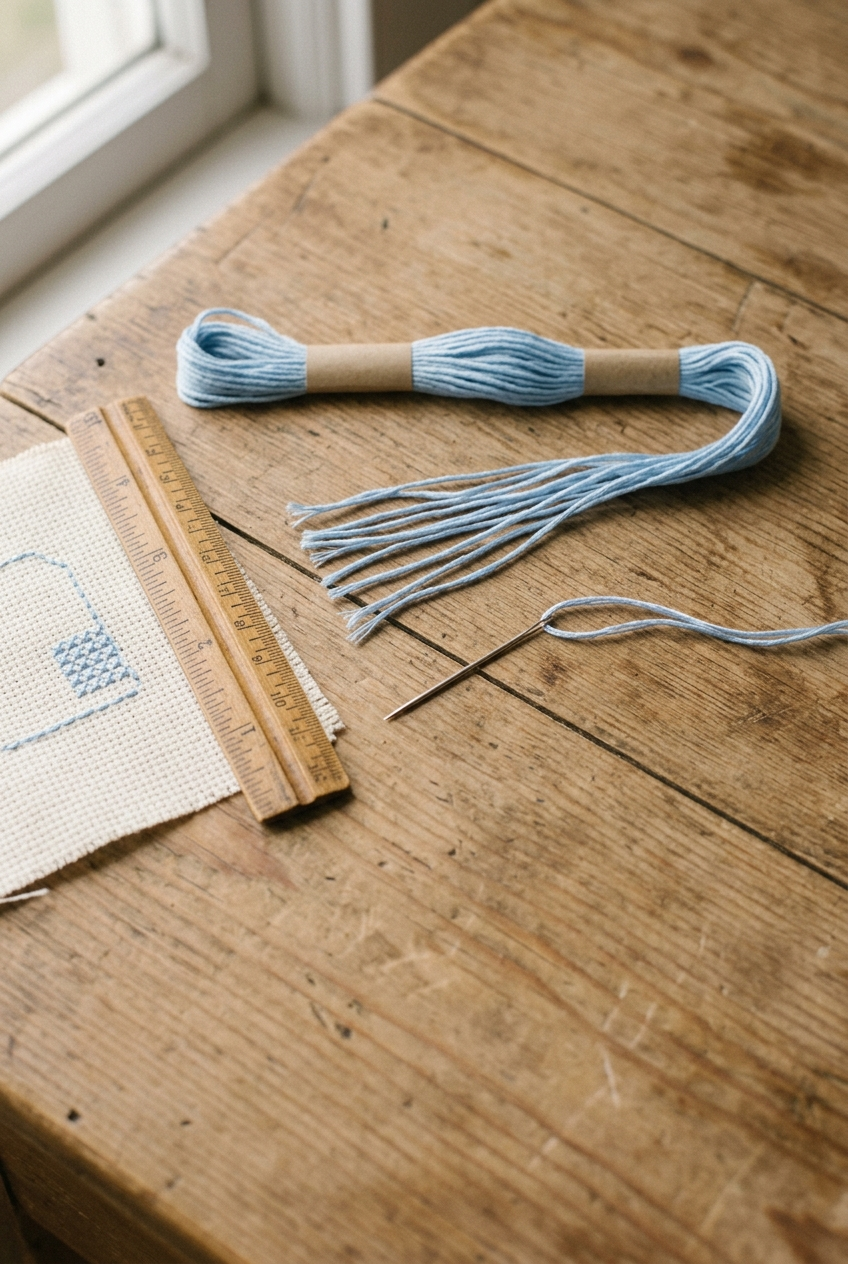
DMC embroidery floss skein with separated strands, threaded needle, ruler, and 14-count Aida cloth on wooden table
By Tracey Kramer • • 12 min read
If you've ever pulled two strands of floss out of a skein and ended up with a twisted, knotted disaster before you even threaded your needle, you are not alone. It happens to almost every beginner, and it has nothing to do with your patience level or your dexterity. It has everything to do with technique — specifically, the separation technique that most pattern instructions skip right over. They'll tell you to use two strands. They will not always tell you how to get those two strands without losing your mind.
The good news is that once you understand how floss is structured — and once you learn the one right way to separate it — the whole process gets easy and stays easy. And the strand count question itself, while it feels mysterious at first, actually follows a simple logic tied directly to the fabric you're stitching on. Fabric count determines strand count. It really is that straightforward, and I'm going to lay it all out for you in a way you can bookmark and come back to every time you start a new project.
I've been stitching for over thirty years, and I still refer back to the same basic rules I learned early on. They don't change. What changes is your confidence in applying them — and that confidence starts here.
The Baseline: Understanding Your DMC Skein
Every DMC embroidery floss skein you buy is made up of six individual strands twisted together. This is called 6-ply. When you look at a skein, it looks like one thread — but it isn't. It's six separate strands, twisted and bundled together, and the whole point is that you can pull them apart and use however many the project calls for. That flexibility is part of what makes DMC floss the industry standard. It's consistent, colorfast, and built to be separated and recombined in whatever combination you need.
Most cross stitch patterns default to two strands of floss on 14-count Aida cloth (find on Amazon). That's the most common starting point for beginners, and the two-strand default has been around for decades because it gives good coverage on standard Aida without looking overly thick or losing the definition of individual stitches. When your pattern says '2 strands,' that's what it means — pull two strands out of the six-strand bundle and use those two together through your needle.
Now here's the first practical thing I want every beginner to hear: cut your floss at 18 inches. Not 24, not 30, not 'a comfortable arm's length.' Eighteen inches. I know it feels short. I know the instinct is to cut a longer piece so you don't have to stop and rethread as often. But longer floss frays as you pull it through the fabric, tangles on itself, and wears thin before you've finished a section. The 18-inch rule exists because it's the length that works. Cut it, separate it, thread it, stitch it. It takes maybe thirty seconds to rethread, and your finished piece will look cleaner for it.
After you cut your 18-inch piece from the skein, you'll separate out the strands you need, thread your needle, and tuck the leftover strands back. Don't waste them. If you separated two strands from a six-strand piece, you have four strands left. Wind those back loosely and keep them with that color for your next length. Nothing goes to waste if you manage it a little.
The Separation Technique: The Hidden Pain Point Nobody Explains
Here is the moment where most beginners go wrong, and it is not their fault because nobody explains it clearly. When you need two strands of floss, the instinct is to grab two strands and pull them out together. Do not do this. Pulling two strands out at the same time causes the remaining strands to twist around each other, and before you know it you have a spiral of tangled floss that tightens as you try to separate it. I've seen grown adults nearly cry over this. The floss is not defective. The technique is the problem.
The correct method is to separate one strand at a time. Hold the cut piece of floss loosely in your non-dominant hand. With your dominant hand, pinch a single strand at the very top and pull it straight up — slowly and steadily. The rest of the strands will bunch up and scrunch together as you pull, and that is completely normal. Just keep pulling that one strand upward until it's fully free. Then lay it aside. Now pull your second single strand the same way. Once both strands are out individually, hold them together and thread them through your needle as a pair.
Why does this work when the other way doesn't? Because pulling one strand at a time prevents the twist-and-lock that happens when two strands are pulled simultaneously through the tension of the remaining four. The physics of it are simple: one strand sliding against five others has a clear path. Two strands pulling against four creates resistance in multiple directions at once, and that's what generates the knot. Pull one strand at a time, let the rest fall, and then recombine. That's the whole secret.
If you find that your floss is still twisting and tangling as you stitch — not during separation, but while you're actually stitching — try this: every few stitches, drop your needle and let it dangle below the fabric. The thread will unwind itself. It sounds too simple to work, but it works every single time. Thread has a memory for twist, and dangling the needle lets gravity undo what your stitching motion has added. Make it a habit and your floss will stay smooth from start to finish.
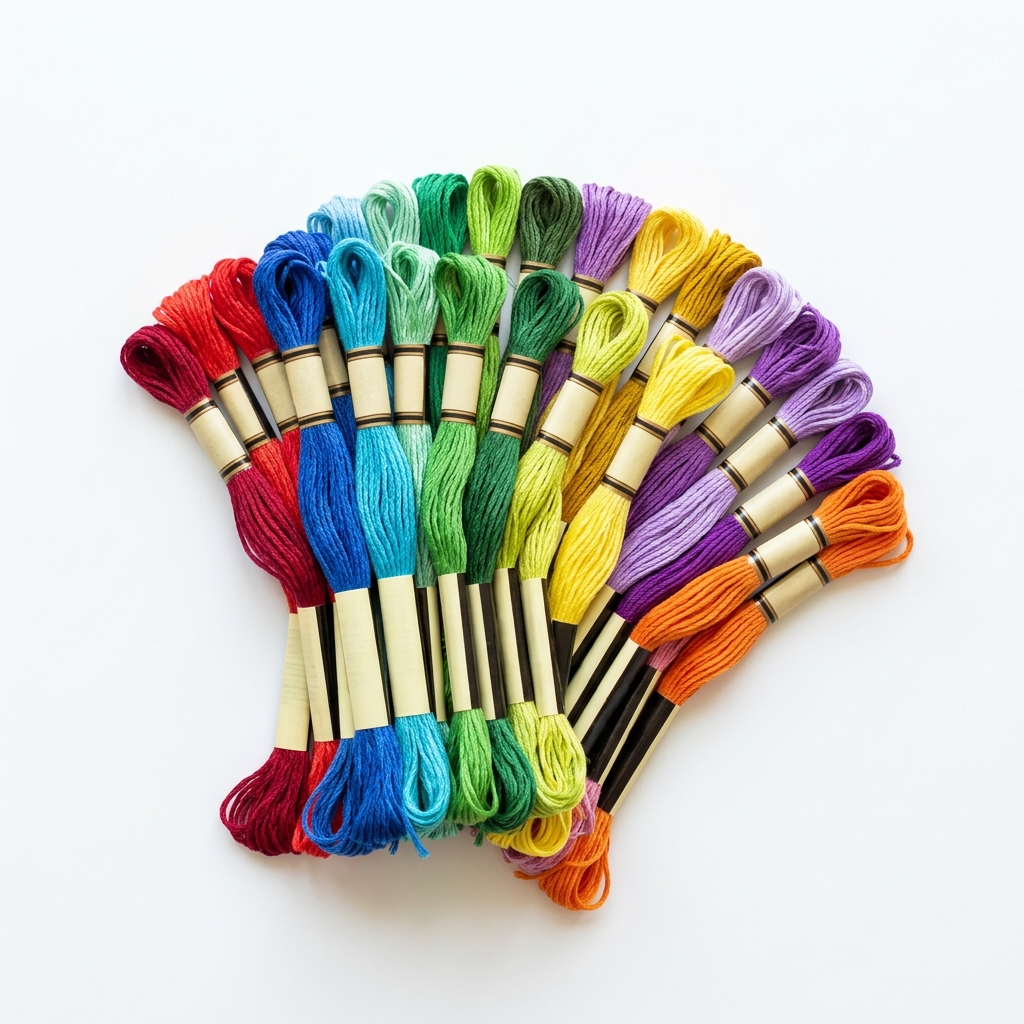
Tracey Recommends
DMC Embroidery Floss Starter Assortment
Learning the separation technique is so much easier when you're working with quality 6-ply floss. A DMC starter assortment gives you the color range to practice with and the consistency you can trust for your first real projects.
See on AmazonPull two strands at once and you get the twist-and-tangle nightmare every beginner has experienced. Pull one strand at a time, let the rest fall, and recombine. That's the whole secret.
Fabric Count Determines Strand Count: The Rule Nobody Writes Clearly
The number of strands you use is not arbitrary. It is directly tied to the count of your fabric — meaning how many stitches fit per inch. Higher count fabrics have smaller holes and require fewer strands. Lower count fabrics have larger holes and need more strands to fill them properly. If you use too few strands on a low-count fabric, your stitches will look sparse and the fabric will show through. If you use too many strands on a high-count fabric, your needle will barely squeeze through the holes and the stitches will look lumpy. Neither is a good outcome.
Here is the reference table I want you to bookmark. Eleven-count Aida — the large-grid fabric often used for kids' projects and quick stitching — calls for three strands of floss. The holes are large enough to accommodate the extra bulk, and three strands give full, rich coverage. Fourteen-count Aida cloth is the most common beginner fabric, and the standard is two strands. This is where most patterns are designed to land, and it's a very forgiving combination. Eighteen-count Aida has smaller holes and finer detail, and you'll typically use one to two strands depending on the pattern and the level of detail involved. One strand gives you very fine, precise coverage; two strands still work but require a thinner needle.
When you move into evenweave fabrics — 28-count linen or evenweave stitched over two threads — you're back to two strands in most cases. Stitching over two threads on 28-count gives you the equivalent visual stitch size as 14-count Aida, so the same strand count applies. It's worth understanding that comparison because some stitchers are confused about why evenweave and Aida can share the same strand count despite having different numbers. The over-two-threads technique is the bridge between them.
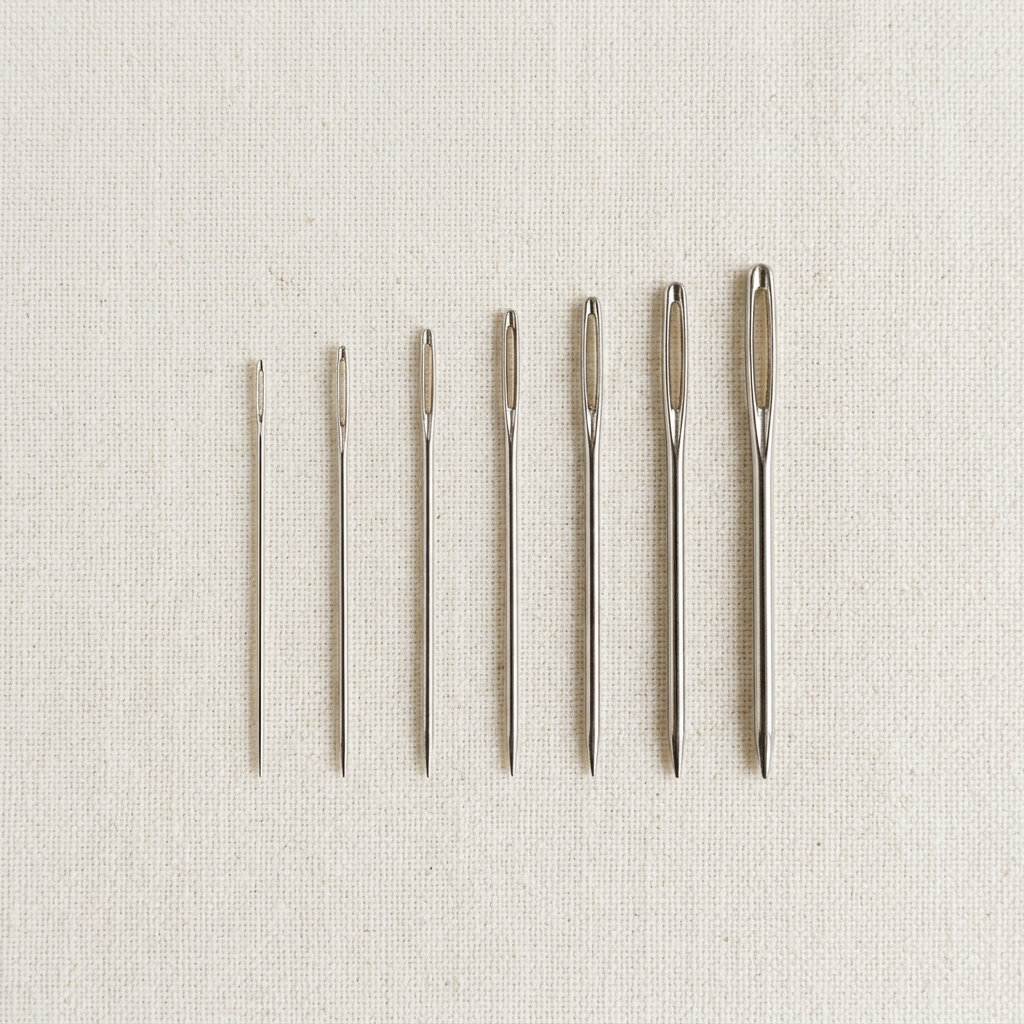
A good embroidery needle set (find on Amazon) is not a luxury — it's a practical necessity when you're working across multiple fabric counts. The needle size needs to track with both the strand count and the fabric. A needle that's too fine for three strands will be almost impossible to thread and will split your strands as you pull through. A needle that's too thick for 18-count Aida will distort the holes and leave gaps in your finished piece. Having a variety of sizes on hand means you can always match the right tool to the work, and that makes everything else easier.
If you're not sure where to start with fabric, I'd always point a beginner to 14-count Aida. The holes are visible, the two-strand rule applies across nearly all patterns designed for it, and it's forgiving enough to learn on without constantly fighting your materials. Once you feel comfortable there, 18-count opens up finer work, and evenweave opens up a whole world of texture and drape that Aida can't match.
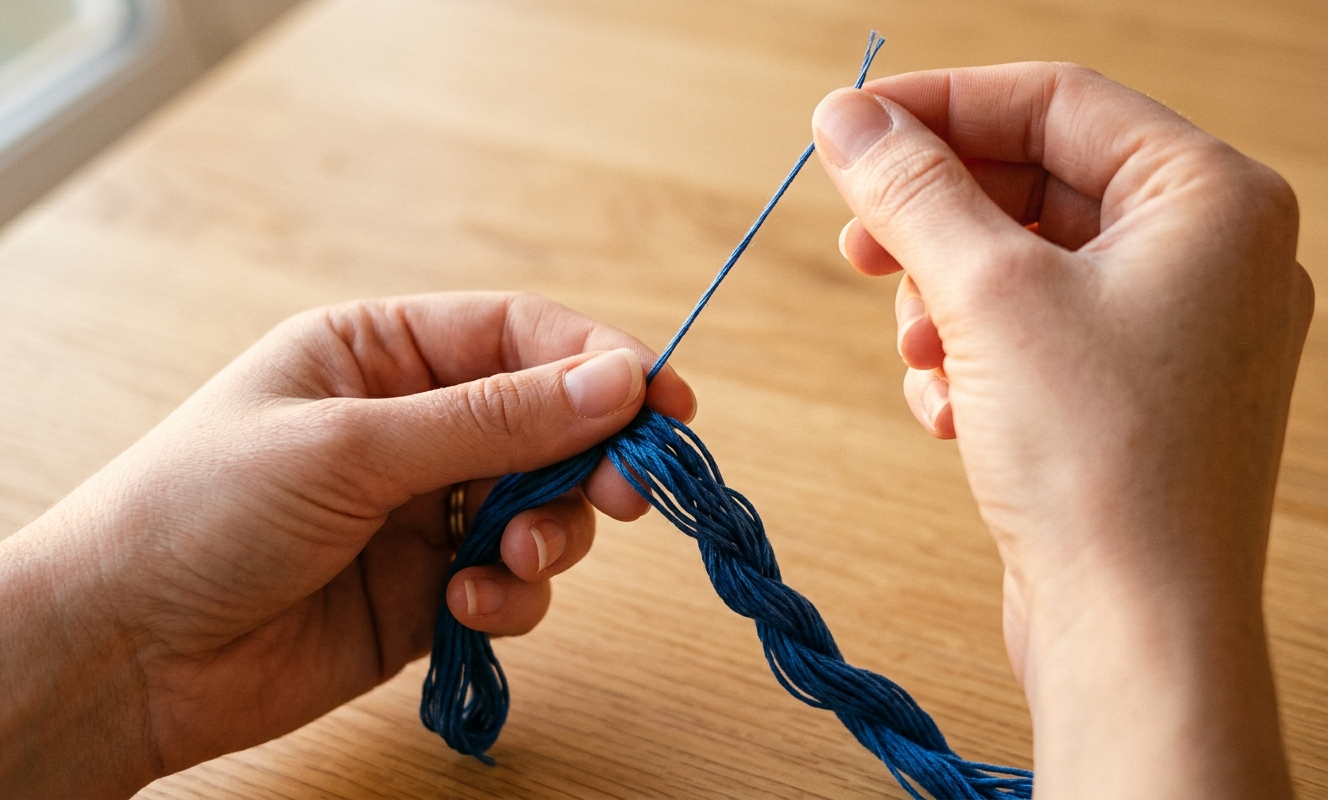
Close-up of hands separating one strand of embroidery floss from a six-strand bundle showing the correct technique
Backstitching: Almost Always One Strand, and Here's Why
This is the one that surprises most beginners, and it's worth saying directly: backstitching is almost always done in one strand of floss, even when your cross stitches are worked in two. The backstitch is the outline — the line that defines the edges of a flower petal, traces the features of a face, separates one color block from another. Its job is to be precise and clean. If you backstitch in two strands on top of two-strand cross stitches, the outline becomes thick and heavy, and the whole piece starts to look clunky rather than crisp.
One strand of backstitch on top of two-strand cross stitches creates a fine, clear outline that looks like it belongs there — like a drawn line, not a rope laid on top of the work. If you look at a well-finished piece and wonder why it has that polished, professional look, often the answer is this single detail: the backstitch is done in one strand. It's a small thing that makes an enormous visual difference.
Some patterns will specify this explicitly, and some will assume you know it. Now you do. When your pattern calls for backstitching and doesn't specify a strand count, default to one strand. If the fabric is very coarse — 11-count or lower — you might go to two strands for the backstitch as well, but on anything 14-count and above, one strand is the right call almost without exception.
The same logic applies to French knots, by the way. French knots worked in one strand are tight, clean little dots. French knots worked in two or three strands become larger, looser, and sometimes unpredictable. Match the strand count to the detail level, and always err on the finer side when you're dealing with accent stitches rather than fill stitches.
|
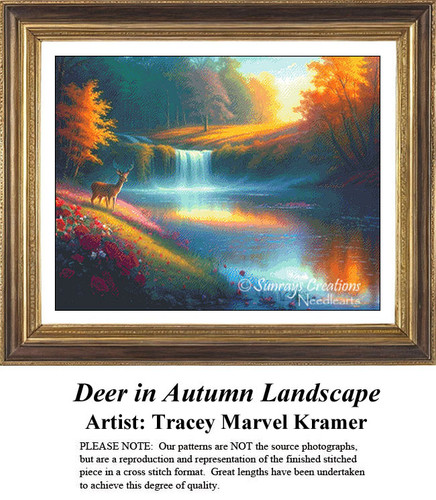
Patterns from the Sunrays Collection Tracey's Picks, designing cross stitch patterns since 2004 |
|||||
|
|||||
| Browse the full Sunrays collection → |

The Exceptions: When the Standard Rules Don't Apply
There are a handful of situations where the standard two-strand rule gets set aside entirely, and it's good to know them before you encounter them mid-project. The first is blended colors — when a pattern calls for a mix of two DMC shades in the same needle to create a visual blend. In this case, you separate one strand of each color and thread them together as a pair. The result is a color that doesn't exist in any single DMC skein but lives in the visual space between two shades. It's one of my favorite techniques, and I've written about it in detail in my article on blended colors vs. solid colors in cross stitch. The separation technique is the same — pull one strand at a time — you're just pulling from two different skeins instead of one.
The second exception is delicate facial features on fine evenweave. When you're stitching a portrait or a Victorian face on 28-count or higher evenweave, you may be working with a single strand over a single thread of fabric. This is where precision matters most and where the texture of the work becomes almost painterly. One strand over one thread gives you control that no other combination can match. It requires a fine needle, a steady hand, and patience — but the results are worth every slow stitch.
The third exception is needlepoint and rug canvas. These are entirely different grounds from Aida or evenweave — the holes are large, the canvas is stiff, and the goal is complete, saturated coverage. In needlepoint, all six strands are often used together, no separation required. You're filling a coarser mesh, and you need all the bulk the floss can offer. This is one of the rare cases where the DMC skein goes in whole. The DMC floss assortment (find on Amazon) is still a great choice for needlepoint practice because the colors are reliable and the range is extensive.
There's also the practical exception of working with specialty threads — metallics, silks, and overdyeds — where strand count behaves differently because the thread structure itself is different. Metallics in particular tend to be used in single strands regardless of fabric count, because adding more strands multiplies both the shine and the frustration. If you're working with specialty threads, always check the manufacturer's recommendation and consider using a needle threader (find on Amazon) to protect the thread ends during threading.
Get Stitching Tips & New Patterns from Tracey
Honest advice, new Sunrays designs, and occasional VIP-only offers. No fluff.
No spam. Unsubscribe any time.
Also Worth Having
Embroidery Needle Variety Pack
Needle size tracks directly with your strand count and fabric count. A variety pack means you always have the right needle for whatever you're stitching — from a thick 11-count project to a fine single-strand evenweave piece.
See on AmazonPutting It All Together: A Reference You Can Actually Use
Let me pull this all into a summary you can come back to whenever you're starting a new project. Cut your floss at 18 inches — no longer. Separate strands one at a time, pulling each strand individually upward while the rest hang below. Recombine the strands you need before threading. Match your strand count to your fabric count using this guide: 11-count Aida uses three strands, 14-count Aida cloth uses two strands, 18-count Aida uses one to two strands, and 28-count evenweave stitched over two threads uses two strands. Backstitch in one strand on anything 14-count and above. Blended colors use one strand of each shade. Needlepoint and rug canvas use all six. Fine evenweave portraiture may use a single strand over a single thread.
If you're just starting out, I'd also strongly recommend picking up a needle threader. It costs almost nothing and it saves your eyesight — especially once you're working with single strands on fine evenweave. Threading a needle with one thin strand of floss at the end of a long stitching session is its own special kind of challenge, and a threader makes it effortless.
The right tools and a clear understanding of the rules make this craft so much more enjoyable. God gave us these hands to make things, and it's a genuine pleasure to use them well — with the right materials, the right technique, and the knowledge to make good decisions at every step. That's what I want for every stitcher who comes to this site: not just a finished project, but a process that feels manageable and even joyful.
If you want to go deeper on fabric choices and how count affects your finished work, my article on cross stitch fabric color and count walks through everything you need to know about choosing the right ground for your project. And if you're building your first supply kit from scratch, what do you need to cross stitch covers every tool and material a beginner should have before starting their first piece.
Strand count is one of those fundamentals that, once it clicks, you stop thinking about and just do naturally. The fabric tells you the count, the count tells you the strands, and the separation technique handles the rest. If you're ready to put this into practice, browse the patterns in the Sunrays Creations shop — every design includes clear stitch and strand guidance so you can start with confidence.
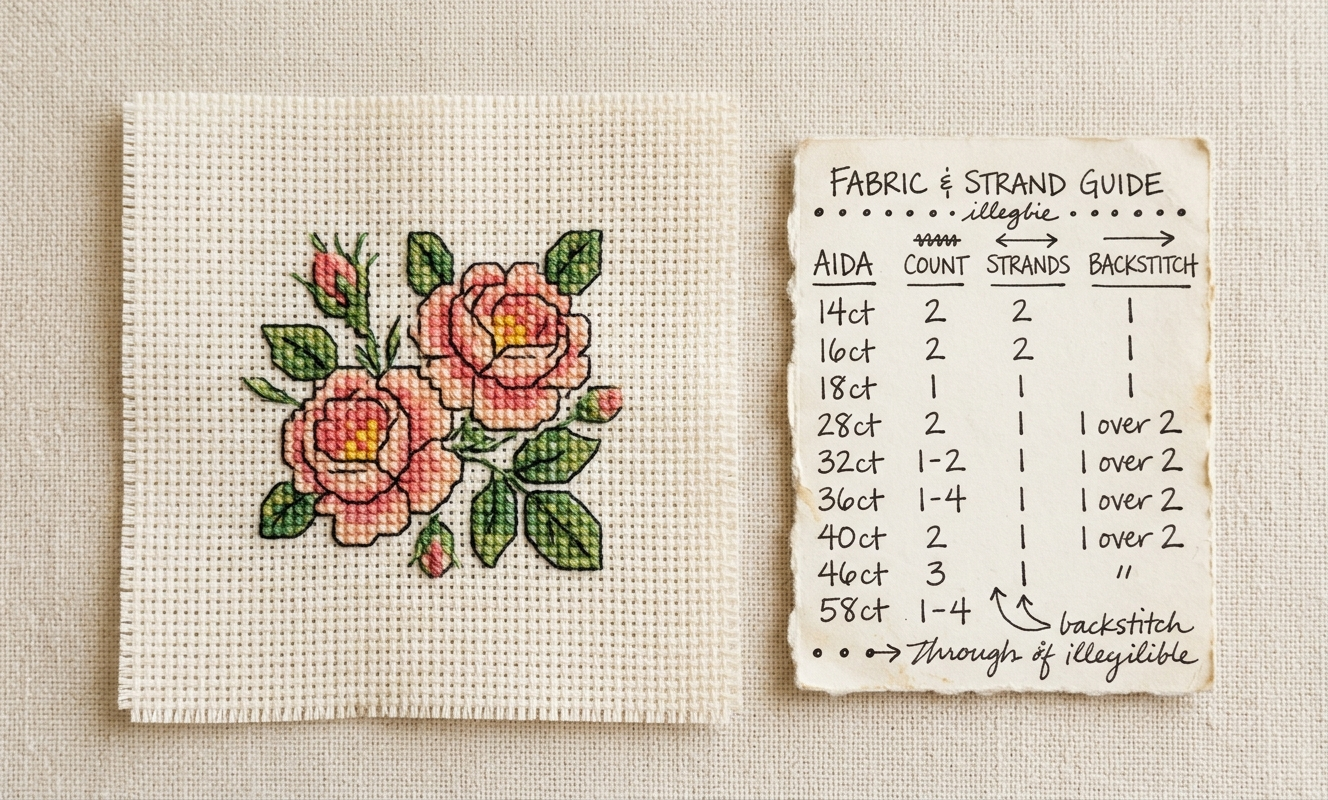
Finished cross stitch sampler showing two-strand stitches with fine one-strand backstitch outline beside a fabric count reference card
Keep Reading
What Do You Need to Cross Stitch?
Building your first supply kit? This is the complete beginner's list — every tool and material you need before you start your first project.
READ THE GUIDEBlended Colors vs. Solid Colors in Cross Stitch
The 1+1 strand blending technique creates colors that don't exist in any single DMC skein. Here's how it works and when to use it.
READ THE ARTICLECross Stitch Fabric: Color and Count
Fabric count directly determines how many strands you use. This guide walks through everything you need to know about choosing the right fabric for your project.
READ THE GUIDEFrequently Asked Questions
How many strands of floss should I use for cross stitch on 14-count Aida?
Two strands is the standard for 14-count Aida — the most common beginner fabric. See the full fabric count to strand count reference in the body above.
Why does my floss get tangled when I try to separate it?
Pulling two strands out at the same time causes the remaining strands to twist and lock. The fix is to pull one strand at a time — the separation technique section above explains exactly how.
How many strands do I use for backstitching in cross stitch?
Almost always one strand, even when your cross stitches are done in two. Using more makes the outline look heavy and clunky — the backstitching section covers why.
What is the right floss length to cut for cross stitch?
Eighteen inches. Longer lengths tangle and fray before you finish a section. The baseline section explains the 18-inch rule in detail.
How many strands do I use on 11-count Aida versus 18-count Aida?
Eleven-count Aida calls for three strands; 18-count Aida uses one to two strands. The full fabric count reference chart is in the fabric count section above.
When would I ever use all six strands of DMC floss?
Needlepoint and rug canvas projects often require all six strands for full coverage. The exceptions section covers this and other situations where the two-strand default doesn't apply.
-- Tracey Kramer
Founder & Designer, Sunrays Creations Needlearts
Hand-charted designs since 2004 • Marysville, Ohio